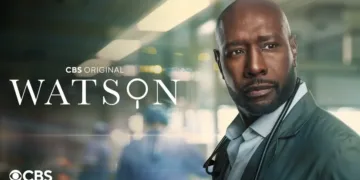































After a season finale that dispatched his arch-nemesis, one might expect Dr. John Watson to take a well-deserved holiday. Instead, he’s back at the Holmes Institute, attempting a return to medical normalcy. Morris Chestnut plays Watson with a steady, commanding presence, a man trying to focus on puzzling diagnoses and a new relationship with Dr. Laila Bynum.
The attempt at peace feels fragile from the start. His team is mostly intact. The Croft twins and Dr. Sasha Lubbock are back to their brilliant work, while Shinwell Johnson is on a path of atonement, studying to become a nurse. The atmosphere at the institute is one of cautious routine, but a conspicuous vacancy on the neurology team serves as a quiet reminder of past betrayals and the lingering chaos just beneath the surface. The calm is clearly temporary.
The Case of the Conveniently Timed Sibling
The season kicks off with a medical mystery that hits dangerously close to home. The patient of the week is Elizabeth Morstan, the mother of Watson’s ex-wife, Mary. Her sudden collapse while baking is initially chalked up to a kitchen mishap involving homemade almond extract and a touch of cyanide poisoning. An easy fix.
The episode quickly pivots to something far more alarming: a swift and devastating cognitive decline. Elizabeth’s memory evaporates, leaving her believing she is a young woman of twenty-five, pregnant and with no recognition of her own daughter. The personal stakes give the procedural formula a much needed jolt of emotional energy. Mary’s desperation is palpable, and Watson’s refusal to accept a simple dementia diagnosis provides the episode’s investigative engine.
He is relentless in his search for a physical cause, a puzzle he can solve. His efforts uncover a failing liver in desperate need of a transplant. The episode then takes a sharp turn into daytime television plotting. It is revealed that Elizabeth gave up a son for adoption decades ago, a son who just happens to be a perfect donor match.
This long-lost brother, Miles, is located with startling efficiency. After a moment of understandable hesitation, he has a change of heart upon realizing his birth mother is the kind older woman who frequents his bakery. The neatness of it all is staggering. The surgery is a success, a family is reunited, and the narrative ties itself into a perfect, if unbelievable, bow.
Romance on the Back Burner, Redemption on the Docket
Away from the central medical drama, the lives of the supporting cast appear to be in a holding pattern. Watson’s new relationship with Laila seems pleasant, though she exists more as a symbol of his moving on than as a fully formed character. That he immediately abandons an intimate evening to answer Mary’s call speaks volumes about where his loyalties are still tangled.
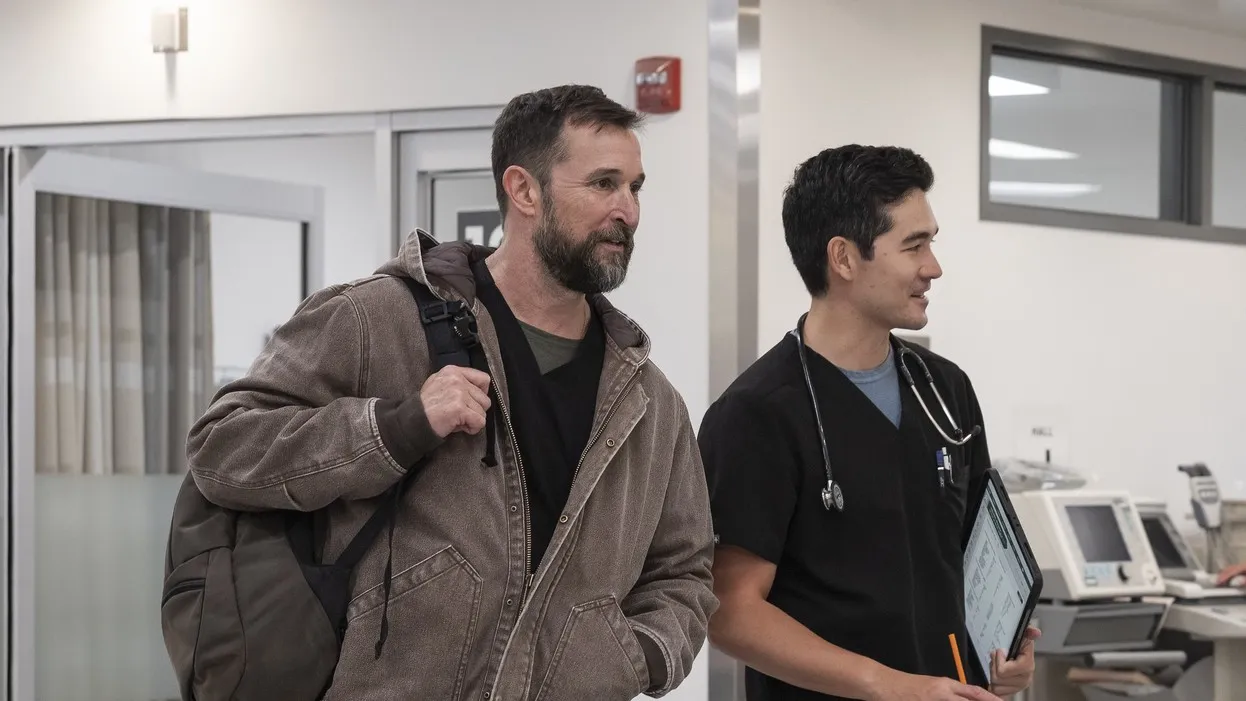
Elsewhere, the romance between Sasha Lubbock and Stephens Croft continues, but their scenes feel like brief check-ins. The script fails to explore the lingering trauma from Adam Croft’s near-death experience, leaving their connection feeling static. The more interesting subplot involves the potential return of the disgraced neurologist, Dr. Ingrid Derian.
Shinwell lobbies on her behalf, and her application is slyly slipped back into the hiring pile. In a therapy session, Derian reveals a diagnosis of Antisocial Personality Disorder, which the show offers as an explanation for her past betrayals. It is a weighty diagnosis for any series to tackle. The question is whether Watson can handle such a complex human condition with genuine care, or if it will become a convenient narrative shortcut for erratic behavior.
Two Shows in One Trench Coat
The premiere highlights the show’s persistent identity struggle. When it focuses on being a medical procedural, it works. The case of Elizabeth Morstan, with its intricate diagnostic process and high emotional stakes, is compelling television. It provides the perfect arena for Watson’s deductive genius, allowing his character to shine without being overshadowed.
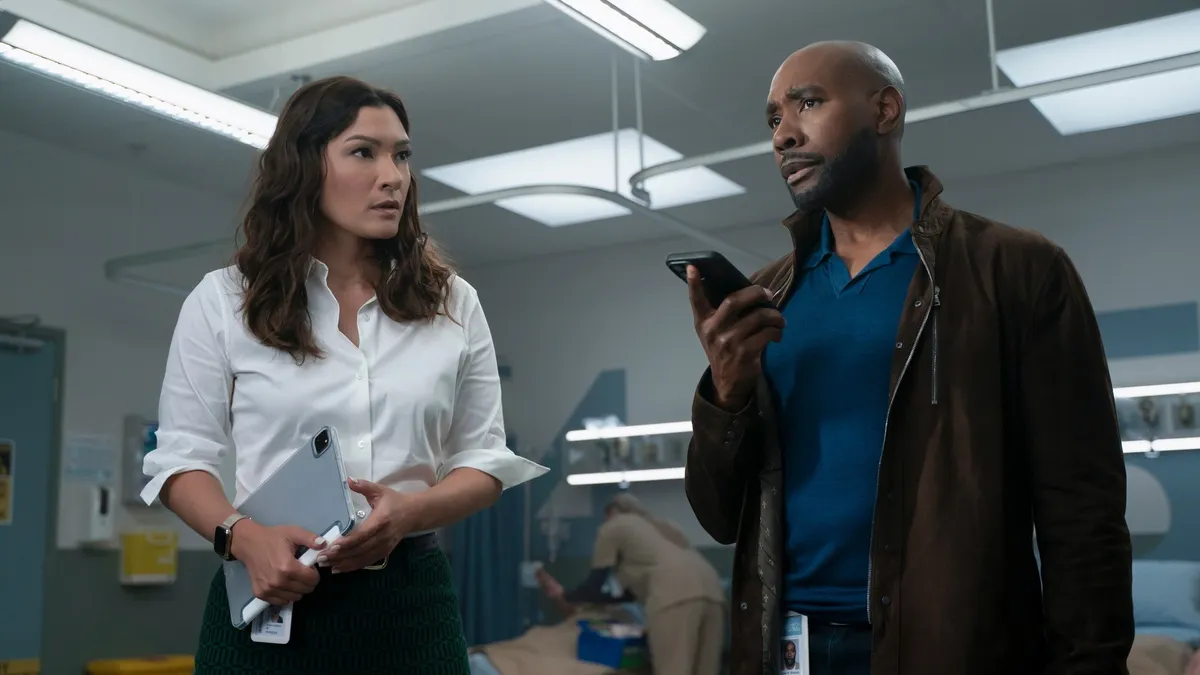
Yet the series seems perpetually insecure, constantly feeling the need to pepper its stories with Sherlockian lore. The weight of the source material from the first season often felt like an anchor, dragging down character development in favor of a Moriarty plot that crowded the narrative.
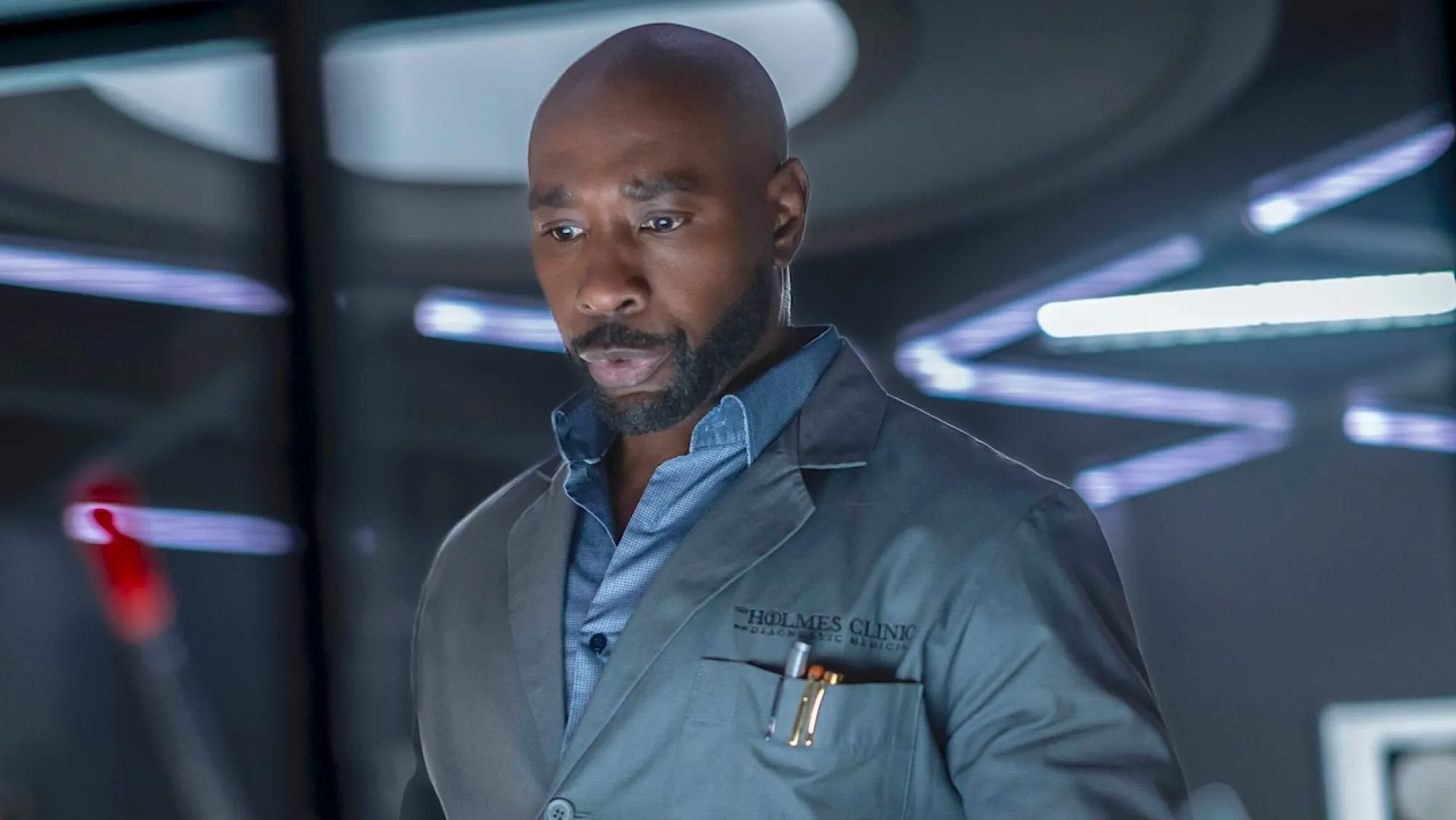
Morris Chestnut has more than enough charisma to carry the series on his own, but the writing frequently ties his hands. It forces his modern medical genius into a framework that feels less like a clever adaptation and more like a contractual obligation. The show remains a solid medical drama wearing a very famous, ill-fitting coat.
Guess Who’s Back for Breakfast
Just as the episode settles its heartfelt family reunion, the final scene detonates any sense of impending calm. Watson, drawn downstairs by a late-night noise, enters his kitchen to find a man helping himself to the contents of the refrigerator. It is Sherlock Holmes. Robert Carlyle steps into the iconic role of the man Watson believed was dead, an apparition in search of a snack.
Is he real? Is he a stress-induced hallucination, a symptom of Watson’s unresolved trauma? The reveal is a direct, almost comically literal adaptation of Arthur Conan Doyle’s famous plot twist from the original stories.
By bringing Holmes back from the dead, the series is making its boldest commitment yet to the mythology it has struggled to integrate. His arrival promises to change everything, but whether it will finally harmonize the show’s two competing identities or simply silence the medical drama for good is the real mystery.
Watson (which Season 2 continues) is a modern take on the Dr. John Watson character from the Sherlock Holmes stories. It stars Morris Chestnut as Dr. Watson, who, six months after the apparent death of his friend and partner Sherlock Holmes, returns to medicine as the head of a clinic dedicated to treating rare disorders. The show is described as a medical drama with a strong investigative spine, featuring Watson shifting his attention from solving crimes to solving medical mysteries. The series premiered on CBS on January 26, 2025, and you can watch it on the CBS Television Network or streaming on Paramount+.
Full Credits
Director: Craig Sweeny, Larry Teng
Writers: Craig Sweeny
Producers and Executive Producers: Shäron Moalem, Morris Chestnut, Brian Morewitz, Sallie Patrick, Aaron Kaplan, Larry Teng, Craig Sweeny, Scott Graham
Cast: Morris Chestnut, Eve Harlow, Peter Mark Kendall, Inga Schlingmann, Ritchie Coster, Rochelle Aytes, Noah Mills, Robert Carlyle
Director of Photography (Cinematographer): Brook Willard, Shamus Whiting-Hewlett, James Liston
Editors: Jesse Ellis, Sondra Watanabe, Aric Lewis
Composer: Paul Leonard-Morgan
The Review
Watson Season 2
Watson returns with a premiere that showcases its greatest strength and its most persistent weakness. The episode shines as a heartfelt medical mystery, powered by Morris Chestnut's compelling performance. However, its underdeveloped supporting cast and an almost comically convenient plot resolution highlight the show's ongoing struggles. With the shocking return of Holmes himself, the series places a huge bet on its own future. Will it finally find its footing, or will the detective's shadow consume the doctor entirely?
PROS
- Morris Chestnut’s charismatic and solid lead performance.
- The core medical procedural format is genuinely engaging and effective.
- The premiere's central case carries significant emotional weight.
CONS
- Supporting characters and their relationships feel underdeveloped.
- The resolution to the main plot feels overly convenient and predictable.
- The show struggles to integrate the Sherlock Holmes lore in a natural way.







