
























![Kingdom Hearts Collection [I-III] Review](https://gazettely.com/wp-content/uploads/2026/10/Kingdom-Hearts-Collection-I-III-1-360x180.webp "Kingdom Hearts Collection [I-III] Review: KHII Holds Steady as Newer Entries Fluctuate 37")




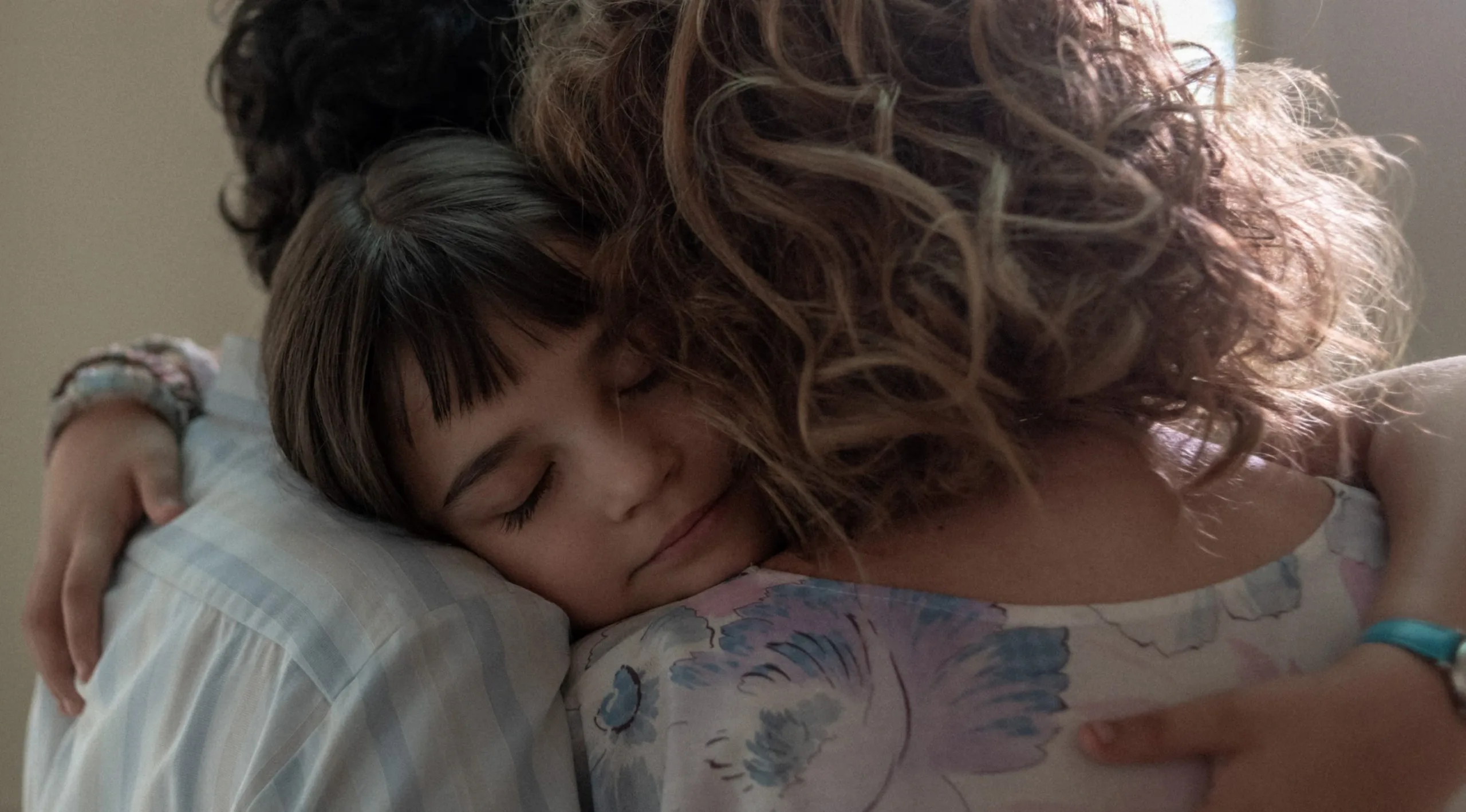
Elena dances flamenco for a dying grandmother who missed the ballet recital, and the small betrayal of form says what the child cannot yet name. Ballet belongs to instruction, posture, correction. Flamenco belongs to memory. To the body. To the woman in bed who gave Elena something freer than the world around her permits.
Ana Asensio’s Goat Girl takes place in Madrid in 1988, during the brief stretch between two ceremonies: the death of Elena’s grandmother and Elena’s First Communion. One is private, confused, almost hidden from her. The other is public, rehearsed, dressed in white. The film lives in the cruel distance between them.
Eight-year-old Elena, played by Alessandra González, is told her grandmother is in Heaven. Adults say this as comfort. Children hear geography. A place. A route. A destination with rules and penalties. The film understands the terror of that literalness. If Heaven is real, then Hell must be nearby.
What Adults Say, What Children Hear
Asensio keeps the camera close to Elena’s height, which matters. The world is not softened into nostalgia from above; it presses down from tables, church pews, apartment walls, adult knees, adult voices. Father Carrillo speaks of faith with the certainty of a man who has never had to translate doctrine into a child’s nightmare. Elena does that work alone.
The strongest passages come when the film allows religion to become image. Elena’s imagined visions of her grandmother moving toward Heaven, or falling toward something darker, carry the strange logic of silent cinema: stark, theatrical, frightening because they look handmade by a child’s fear. These scenes do not mock faith. They expose the violence of giving a child cosmic answers before giving her emotional ones.
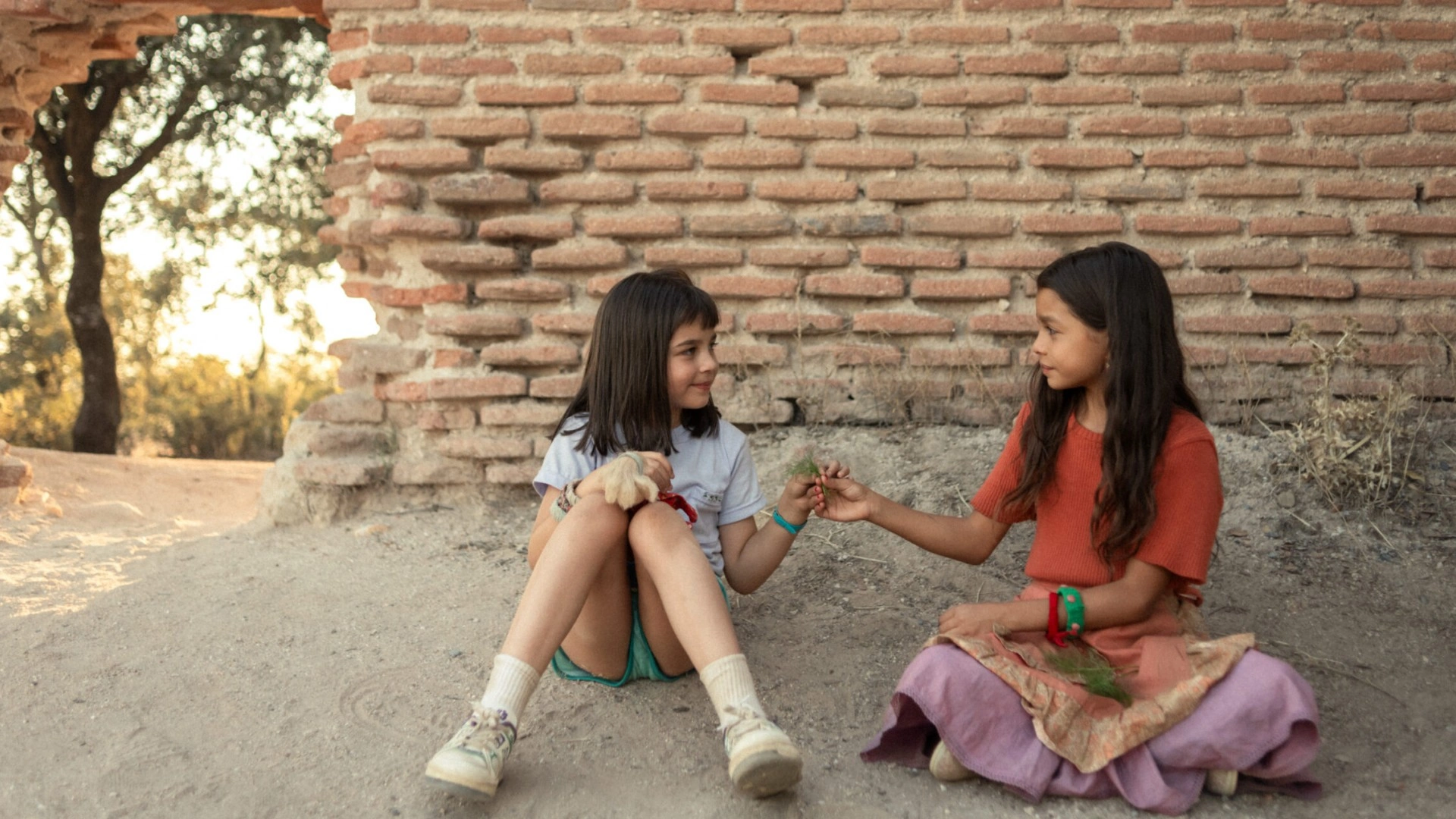
The black goat, Lola, becomes part of the same unstable mythology. Elena hears that goats belong to the Devil, then meets an animal whose chief crime is existing beside a Roma girl named Serezade. The contradiction is almost comic, then quietly terrible. The child has been taught to fear signs. She has not been taught to read people.
González is remarkable in these moments because she does very little. Her face receives the world before judging it. When her father pulls her away from happiness, when her mother forbids a friendship, when the adults throw away her grandmother’s possessions, Elena does not become precociously wise. She becomes watchful. Childhood, here, is surveillance without power.
The Girl With the Goat
Serezade enters as a figure of motion. She performs in the courtyard with Lola, living in public where Elena’s family tries to keep pain behind doors. Juncal Fernández gives her a looseness that the film never mistakes for simplicity. Serezade is free in Elena’s eyes, yet that freedom has its own fragility. Her family may trade their makeshift life for an apartment where Lola cannot follow. Every paradise in this film has rent due somewhere.
The adults’ prejudice toward Serezade’s family is one of the film’s sharpest wounds. Marisa forbids Elena from approaching the Roma girl, and the command reveals an inherited fear that Elena can feel before she can name it. The film’s portrait of class and racism works best in small frictions: the look toward the courtyard, the sudden interruption of play, the way a parent’s anxiety disguises itself as moral care.
Marisa and Pablo are not monsters. Lorena López and Javier Pereira play them as people trapped inside grief, money worries, and the brittle decorum of a Catholic household trying to appear whole. Their anxiety over Elena’s ballet lessons gives their strictness a practical edge. They are failing her, yet the failure comes from exhaustion as much as cruelty. That distinction gives the family scenes their ache.
Still, a child does not live inside her parents’ explanations. She lives inside their effects. Elena sees that Serezade is kinder than the girls who know the correct prayers. She sees that Lola is gentler than the adults who invoke evil. The world begins to split open.
Memory, Light, and the Film’s Soft Edges
The Madrid of Goat Girl feels remembered through heat and texture: social housing, green awnings, clothes drying outside, schoolyard hierarchies, church preparation, summer light turning ordinary walls into faded photographs. Asensio’s adult voice-over gives these details the tremor of recovered childhood. Sometimes it deepens the film, especially when memory admits that Serezade and her goat may have become partly mythical with time. Sometimes it explains too much, placing a hand over moments that needed to breathe.
The visual contrast between Elena’s home life and Serezade’s spaces is direct yet effective. Apartments, classrooms, and church interiors compress Elena inside rules. Courtyards and country paths widen around her. The film understands that freedom can be measured by how much sky a child is allowed to see.
Its limits are real. Grief, Catholic guilt, anti-Roma prejudice, family debt, political unease, childhood imagination, and the mystery of memory all pass through the film, and some are touched rather than fully shaped. The ETA audio fragments, for instance, create a period atmosphere but rarely enter Elena’s inner life with the same force as the goat, the Communion dress, or the discarded belongings of the dead grandmother.
Yet the film’s tenderness survives its thinness. Asensio has made a childhood film where innocence is not purity. It is exposure. Elena stands before death, doctrine, prejudice, and adult sorrow with no shield except curiosity. That is enough to make Goat Girl quietly painful, and sometimes beautiful.
Goat Girl, originally titled La niña de la cabra, is a Spanish drama directed by Ana Asensio that made its festival debut in early 2025 and saw its limited theatrical release in the United States on June 19, 2026. Set in Madrid during 1988, the narrative follows an eight-year-old girl named Elena who turns to an unexpected friendship with a Roma girl and her pet goat to process the grief of losing her grandmother. Viewers can catch this poignant coming-of-age feature through specialized theatrical screenings or watch it digitally via streaming platforms like Filmin in select regions.
Full Credits
Title: Goat Girl (La niña de la cabra)
Distributor: Avalon, Outsider Pictures
Release date: March 18, 2025 (Málaga Film Festival), April 11, 2025 (Spain), June 19, 2026 (United States)
Rating: 7+ (Spain)
Running time: 95 minutes
Director: Ana Asensio
Writers: Ana Asensio
Producers and Executive Producers: Pedro Hernández Santos, Stefan Schmitz
Cast: Alessandra González, Juncal Fernández, Lorena López, Javier Pereira, Gloria Muñoz, Enrique Villén, Zaira Romero, Iker Martín, Petrache Ninel, Silvia Torregrosa
Director of Photography (Cinematographer): David Tudela
Editors: Nacho Ruiz Capillas
Composer: Marius Leftarache, Ionut Adrian Radu
The Review
Goat Girl
Goat Girl is tender, watchful, and wounded in the way childhood memory often is. Ana Asensio’s film is strongest when it lets Elena’s face absorb death, faith, prejudice, and fear before language can organize them. Some themes remain faintly sketched, especially the political background and the wider social tensions around Serezade’s family, yet the film keeps returning to images that hurt softly: a flamenco dance by a sickbed, a goat mistaken for evil, a child asking Heaven for directions.
PROS
- Alessandra González’s quiet performance
- Strong child’s-eye perspective
- Tender grief and faith imagery
- Vivid 1988 Madrid setting
- Serezade and Lola’s mythic pull
CONS
- Some themes feel underdeveloped
- Political backdrop stays distant
- Voice-over can soften impact
- Social critique needs sharper edges