

















Martha Baquero carries five years and four months as a sentence still being served. She can state the duration automatically, without pausing to calculate, because every failed lead has become part of her internal calendar. The latest failure arrives with clinical efficiency: bones recovered from an exhumation do not match her missing son, Fabián. Another grave has been opened. Another answer has disappeared.
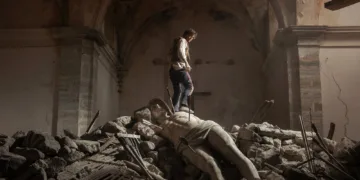
Juan Miguel Gelacio and Esteban Hoyos García build their Colombian drama around the time consumed by this process. Martha, played by Jenny Nava, travels to burial sites, completes paperwork, attends meetings, asks for money, and boards buses that seem to move through the night without getting anywhere. The film treats these stretches of transit as the substance of the story rather than connective material between revelations.
That approach creates an unusual dramatic shape. There is no conventional investigation with clues accumulating toward a solution. Each action returns Martha to uncertainty. The repetition could have flattened the film, yet the directors vary its emotional function. A bus ride can express exhaustion in one scene and dread in the next. An excavation can carry practical purpose while reminding Martha that success would mean identifying her child among the dead. The title records elapsed time. The structure shows what that time has taken.
The Cost of Looking
Martha’s search has consumed the life around it. She leaves her younger son with her mother, diverts her wages toward travel, and treats every rumour as a demand for immediate action. Her family has learned that Fabián’s absence will enter every conversation before they do.
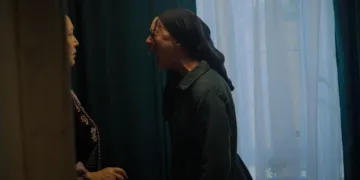
The film’s sharpest domestic scene comes when Martha’s mother tells her to think about the child who remains. It is a brutal accusation because it contains truth without offering a useful solution. Martha cannot stop looking for Fabián, yet her refusal to stop has consequences for the son still waiting at home.
This conflict deserves greater development. Martha’s mother appears mainly to articulate the price of the search, while the younger son barely receives enough screen time to become a full dramatic presence. The screenplay identifies a difficult question, then leaves it standing in the hallway. Apparently the buses had priority.
That omission narrows the family story, but it also keeps the film aligned with Martha’s own damaged attention. Everyone outside the search has moved toward the edge of her perception. Institutions fare worse. Police reports and identification procedures provide no momentum, leaving mothers to attend exhumations and exchange rumours among themselves. The women function as investigators because the official investigation has become an administrative loop.
A group therapy session offers a different form of support. The mothers move together through dance, expressing grief physically when language has been exhausted. Martha can briefly inhabit a shared space there, yet solidarity cannot supply the answer she needs. Community makes the waiting survivable. It does not end it.
A Performance Built from Withholding
Jenny Nava appears in nearly every scene and rarely announces what Martha feels. Her expression remains controlled, sometimes close to blank, but the performance is never empty. Nava changes the pressure behind that stillness. Her gaze hardens when a lead sounds uncertain. Her shoulders sag during travel. Her voice acquires a strained brightness when she must speak casually with someone who expects ordinary conversation.
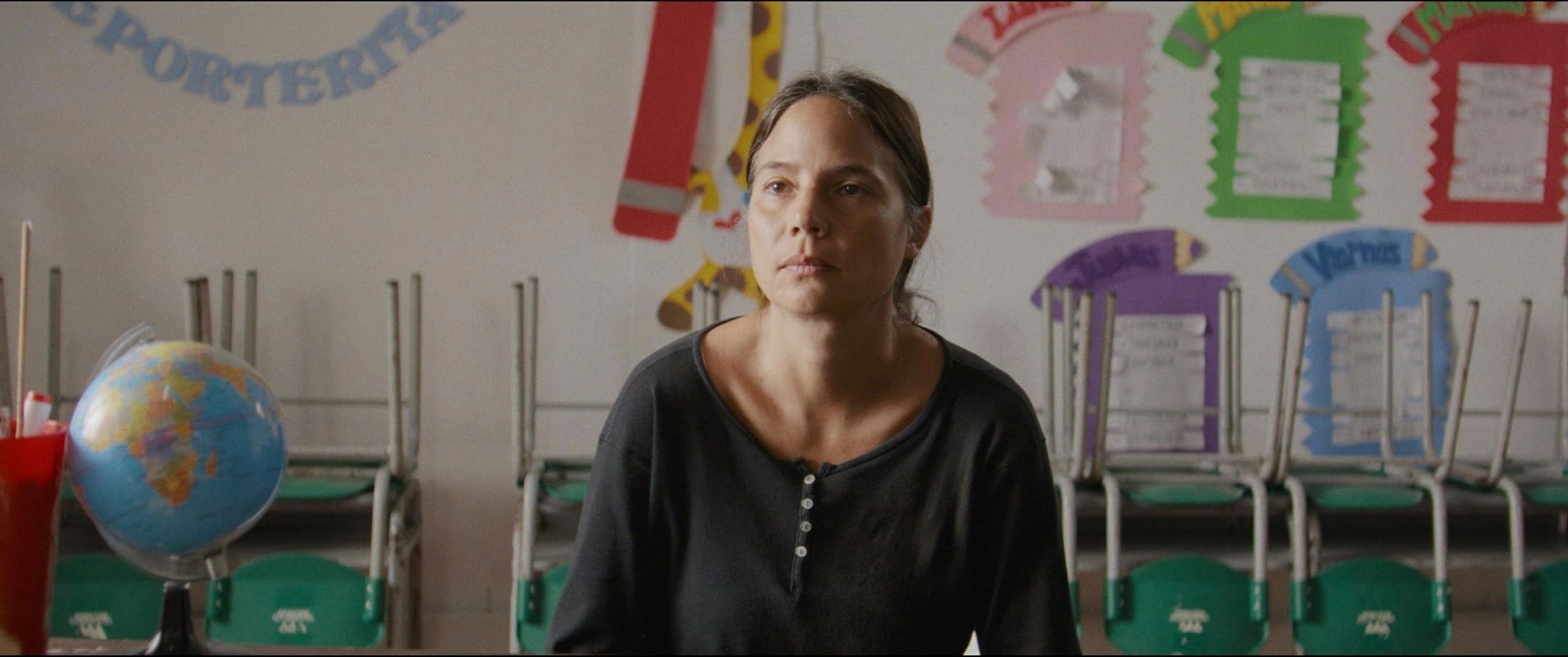
Those flashes of forced cheer are painful because they reveal the labour required to appear functional. Martha does not break down for the convenience of the audience. Nava keeps the grief contained, making each small release feel specific rather than scheduled.
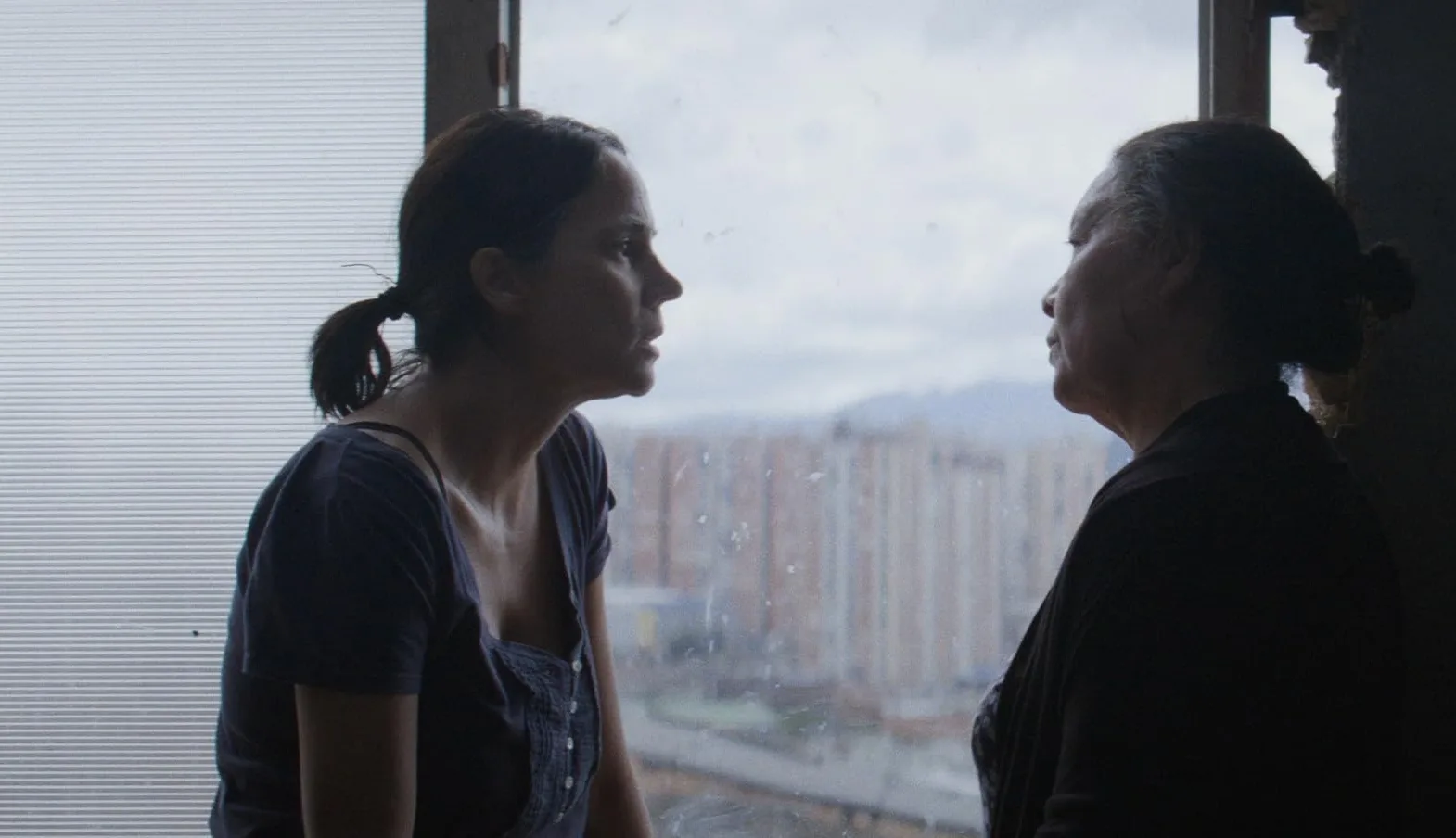
Paula Moreno Vergara’s cinematography supports that performance through close framing. Martha’s face often fills the image while the surrounding environment loses definition. The camera observes her carefully without claiming access to her thoughts. It leaves enough distance for curiosity and enough proximity for discomfort.
Darkness becomes the film’s other dominant image. During overnight journeys and rural passages, bodies disappear into black space while limited light picks out fragments of faces, roads, or vegetation. Martha appears to be moving through a country that refuses to disclose what it has buried.
The sound design extends that sensation. Engines, animals, traffic, wind, and distant movement remain unusually prominent. Martha looks detached from the world, yet she listens to it with constant alertness. The combination suggests a person numbed by repetition and trained by fear.
Her dreams make the fear visible. Naked, anonymous bodies emerge slowly in a dark forest, suspended between recognition and concealment. These scenes do not interrupt the realism. They reveal the image already governing Martha’s waking life: a body waiting somewhere to be found.
The Dead as a Lead
Sandra enters the film carrying twenty-four years of her own unanswered searching. Carmiña Martínez plays her with enough conviction to make her offer sound plausible for several seconds longer than it should. She knows of a remote place, Sandra says, where someone can ask a dead man for help. Martha agrees to go.
The decision shifts the film from procedural observation toward spiritual uncertainty. Sandra requires money for travel across land and water, raising the possibility that Martha is being exploited. The directors let this suspicion grow through practical details rather than ominous speeches. Each new expense makes the trip look less like guidance and closer to a transaction.
Yet Sandra does not behave like a simple fraud. Her companionship gives Martha something the state has withheld: recognition from a person who understands why an impossible lead can still demand pursuit. The journey becomes dangerous, strange, and emotionally rational.
Its strongest scene arrives before any supernatural answer. Martha speaks about Fabián directly, describing his energy and character while the film cuts to the vegetation around the women. For once, he exists as a young man rather than a file, a missing-person photograph, or an unidentified set of bones.
The final movement refuses to determine what Sandra’s promise has produced. That ambiguity fits the story, though the mystical framework remains less developed than the realism preceding it. The film does not solve Fabián’s disappearance. It shows why Martha may accept a conversation with the dead when every living institution has stopped speaking.
This Colombian drama premiered at the 2026 Karlovy Vary International Film Festival. The story follows Martha, a mother who has spent years searching for her missing son following an armed conflict in Colombia, as she finds a final, desperate glimmer of hope through a woman named Sandra who speaks of a remote place where one might petition the dead.
Full Credits
Title: Five Years, Four Months
Distributor: Selva Producciones, Redline Enterprises
Release date: July 2026 (Karlovy Vary International Film Festival premiere)
Running time: 84 minutes
Director: Juan Miguel Gelacio, Esteban Hoyos García
Producers and Executive Producers: Esteban Hoyos García, Carlos Piñeiro
Cast: Jenny Nava, Carmiña Martínez, Carolina Vivas, Rosalba García, María Doris Tejada
Director of Photography (Cinematographer): Paula Moreno Vergara
The Review
Five Years, Four Months
The film’s patience is its great strength and its main structural risk. Martha’s bus rides, failed exhumations, and hesitant conversations turn waiting into dramatic action, carried by Jenny Nava’s precise restraint. The supporting family conflict receives too little space, while the final mystical passage cannot fully develop the political and metaphysical questions it raises. Still, the directors understand that a clean resolution would betray Martha’s reality. The final uncertainty feels earned because the entire film has taught us how absence reshapes time.
PROS
- Jenny Nava’s controlled performance
- Patient, purposeful pacing
- Expressive darkness and close framing
- Immersive sound design
- Earned narrative ambiguity
CONS
- Thin supporting characters
- Underdeveloped family conflict
- Mystical ideas remain incomplete