



























The difficult thing about telling a story like Come With Me is that the destination announces itself early. Simon Ward is listening to the wrong man, buying into the wrong explanations, and beginning to see ordinary frustration as evidence of a larger conspiracy against him. Once that direction becomes clear, suspense can no longer depend on wondering where Simon will end up. Aaron Harvey’s film has to make the route matter. For much of its running time, it does.
Theo Rossi plays Simon as a man whose life already contains enough pressure before Dalton Kirby ever becomes an active influence. He works as a mechanic, comes home to his longtime girlfriend Rebecca, drinks with his friend Gary, and carries the familiar worries of someone whose financial security feels increasingly theoretical.
Ron Perlman’s Kirby is already there in the background, broadcasting through the radio with the soothing confidence of a man who has an explanation for everything. At first, Simon listens. The distinction matters. The screenplay, written by Harvey and Jonathan Croom, understands that radicalization is less interesting when the character arrives preassembled.
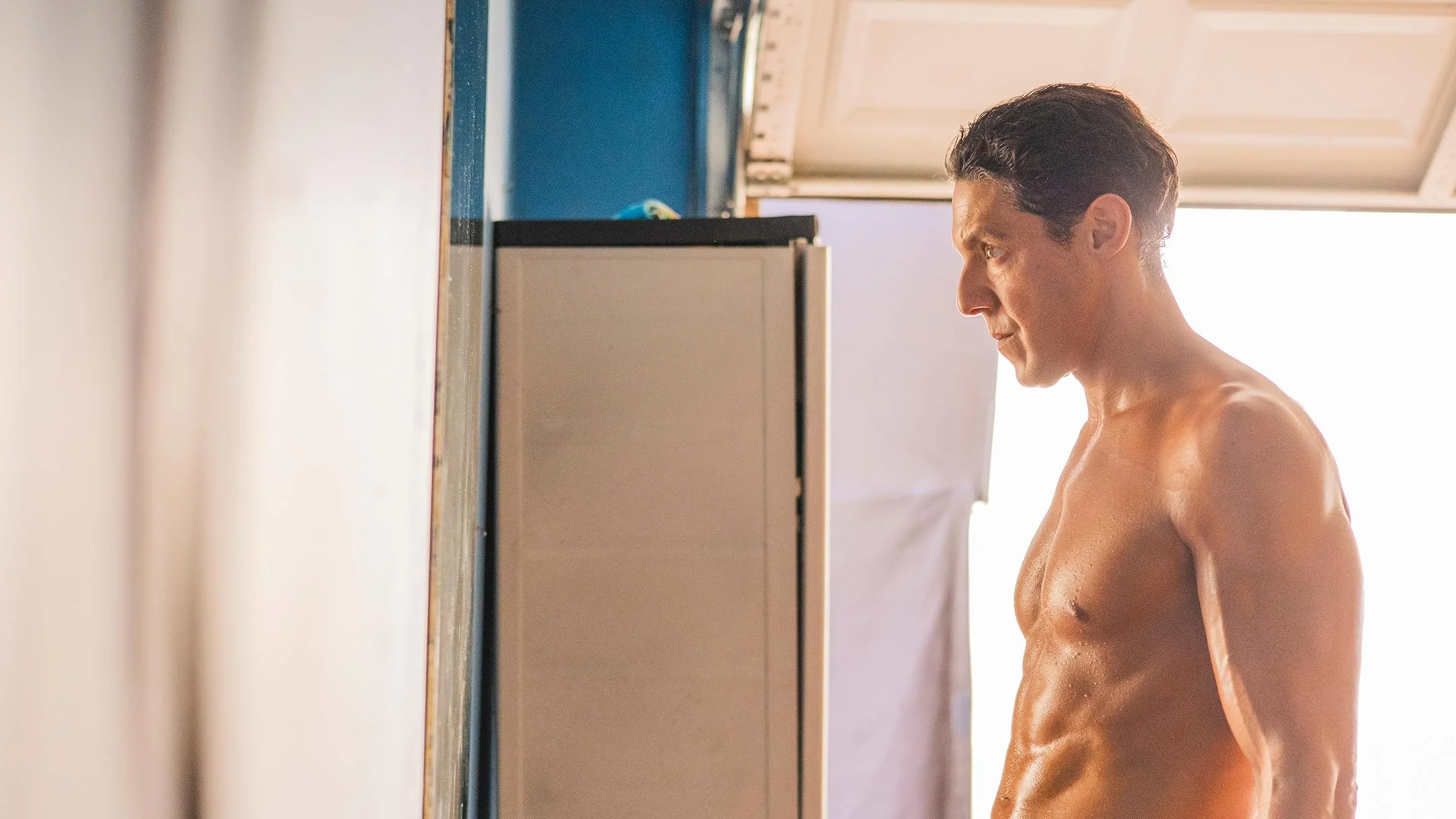
The home invasion is the first major shift in the machinery. Simon’s sense of safety is damaged, and firearms begin to offer something his ordinary life cannot: control. He starts visiting the firing range. Guns move from unfamiliar objects to sources of confidence, then toward obsession.
Other pressures accumulate around that change. His job becomes less secure. Conversations about marriage and children force him to articulate how little faith he has in the future. Gary’s suffering and the pain surrounding his family give Simon further proof, in his mind, that decent people are being ground down by forces nobody intends to fix.
Those events work because the film does not present Kirby as the sole cause of Simon’s collapse. Kirby supplies the framework Simon eventually uses to arrange them. His rhetoric turns random misfortune into evidence, frustration into persecution, and helplessness into anger. That is a stronger piece of storytelling than simply giving Simon a villain to imitate. The problems in his life are real. His interpretation of them becomes increasingly dangerous.
Perlman is particularly effective because Kirby spends much of the film as a voice rather than a physical presence. He rarely needs to shout. His delivery is controlled, patient, almost reassuring, which gives his worst ideas the rhythm of common sense. Kirby identifies enemies, warns listeners that ordinary Americans are being stripped of power, and encourages resistance while keeping his own prescriptions conveniently vague. He talks like someone selling certainty by the hour.
The screenplay gets one of its sharpest scenes from Simon’s visit to the radio station. He arrives with the expectation that his devotion has created some form of relationship. A producer tells him that messages from donors receive attention, a small exchange that exposes the business underneath the intimacy. Simon has been treating Kirby as a confidant. The station has been treating Simon as a listener with a wallet. The later restraining order makes the imbalance even clearer. Apparently parasocial loyalty has a fairly strict visitor policy.
That sequence also shows why the film works better when its political concerns remain embedded in story behavior. Kirby does not need to map cleanly onto one real broadcaster or one political faction for his function to make sense. His language is broad enough for Simon to pour his own grievances into it. During a social gathering, even a discussion of Kirby’s rhetoric becomes another opportunity for Simon to interpret disagreement as an attack. The words matter, but the listener completes the mechanism.
Rossi is the reason that mechanism rarely feels like a checklist. Simon could easily have become a collection of warning signs arranged in escalating order. Rossi keeps him recognizably human long after the trajectory has turned ugly. Early scenes with Rebecca and Gary establish someone capable of affection, routine, and ordinary companionship.
Later, his growing comfort around guns and his strained reactions to people around him register as extensions of the same man rather than the sudden arrival of a replacement character. Rossi is especially good when Simon says little. His expressions often reveal the moment when frustration stops being something he experiences and becomes something he needs explained.
The supporting characters help by refusing to cooperate perfectly with Simon’s worldview. Workplace figures who might have been written as easy villains receive enough dimension to complicate his sense that everyone above or around him is part of the problem. Rebecca serves a similar purpose.
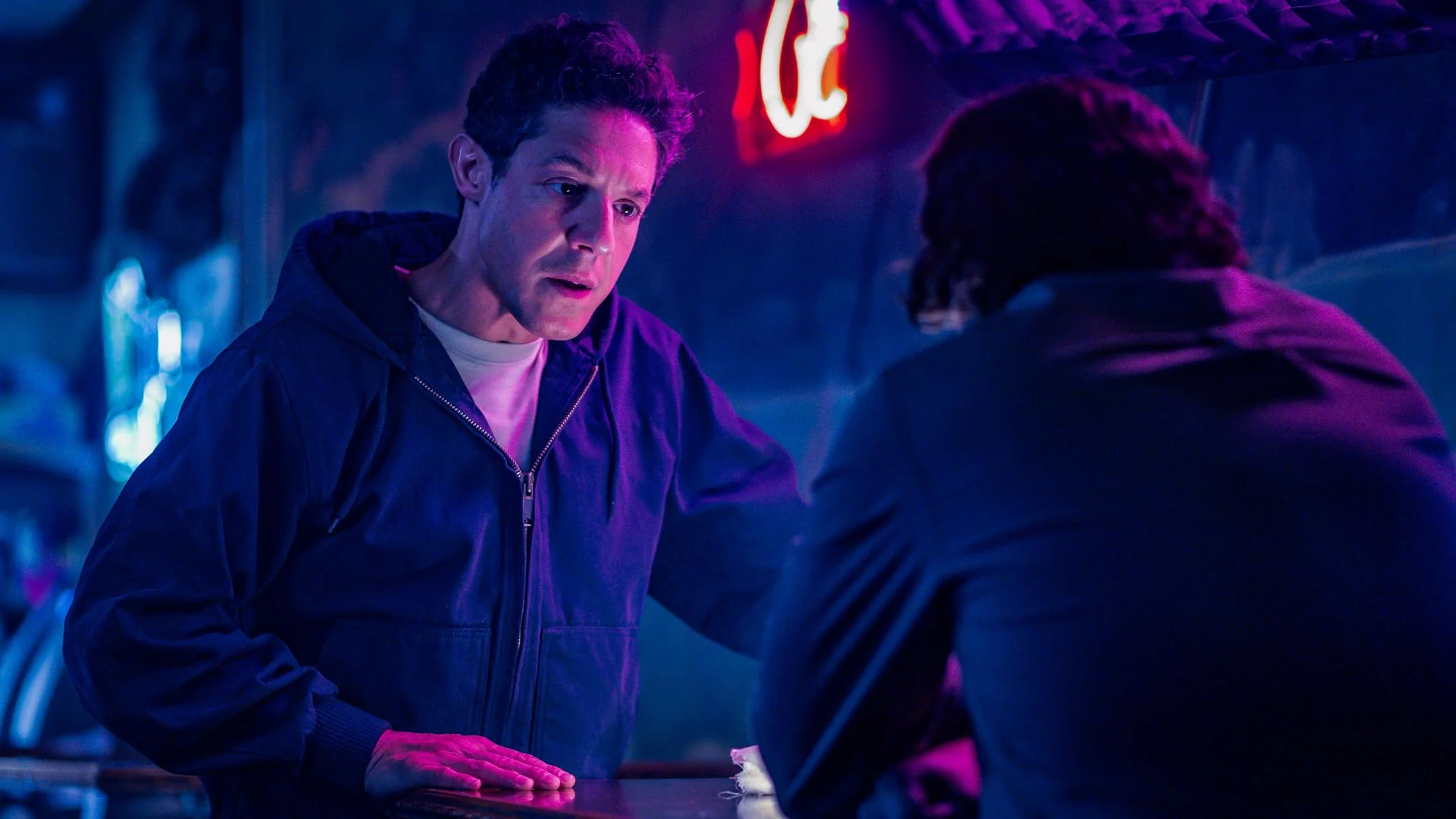
Her concern puts pressure on the story from outside Simon’s narrowing perspective, though the screenplay gives her less room than the relationship arguably deserves. There is a defensible reason for that absence, since Simon is withdrawing from her, but it still leaves the film with fewer opportunities to test his thinking against someone whose emotional investment in him is immediate and personal.
Harvey’s patient pacing initially serves all of this well. Simon’s routines need time to feel ordinary before they become contaminated by fear and grievance. The gradual repetition of Kirby’s voice lets influence accumulate without turning every scene into an obvious plot beat.
The problem arrives once the transformation has become unmistakable. The film continues returning to Simon’s isolation, the firing range, his growing fixation, and his increasingly distorted sense of justice after the dramatic direction is already settled. At 108 minutes, the issue is less runtime than information. Some scenes deepen the descent. Others confirm an appointment the audience has already written into its calendar.
That predictability does not ruin the final confrontation because the film has saved one important structural move for late in the story. After spending so long as a disembodied authority, Kirby finally becomes a man standing in front of Simon. Perlman’s physical appearance carries weight precisely because Harvey has withheld it. Simon has built an enormous relationship around this voice. Kirby has built a radio program.
The collision between those two realities gives the climax its tension, even if the violence itself feels inevitable. Simon finally reaches the person whose words have been filling the gaps left by fear, money, work, loss, and resentment. What he finds cannot match the figure he has constructed in his head, but by then the distinction hardly matters because the imagined Kirby has already done his work.
Come with Me arrived in theaters on September 4, 2026, distributed by Vertical Entertainment. The psychological drama follows a working-class man whose life unravels following a home invasion, leading him to fall under the dangerous influence of a radical radio host.
Where to Watch Come with Me (2026) Online






Full Credits
Title: Come with Me
Distributor: Vertical Entertainment
Release date: September 4, 2026
Running time: 1 hour 48 minutes (108 minutes)
Director: Aaron Harvey
Writers: Aaron Harvey, Jonathan Croom
Producers and Executive Producers: Aaron Harvey, Nicholas Carmona, Kevin Greene, Demetrius Stear, Colin Bates, Theo Rossi
Cast: Theo Rossi, Ron Perlman, Kate French, Ronnie Gene Blevins, Michael Sirow, Marion Kerr, Jay Huguley, Chris Mullinax
Director of Photography (Cinematographer): Ben Joyner
Editors: Jacob Kirby
Composer: James Curd
The Review
Come With Me
Come With Me builds its argument through careful escalation rather than shock, and Theo Rossi makes Simon’s deterioration feel like a continuous character arc instead of a stack of warning signs. Ron Perlman’s mostly disembodied presence gives Dalton Kirby exactly the influence the story needs. The slow burn occasionally repeats a point the audience has already absorbed, and Rebecca could use greater dramatic weight, but Aaron Harvey’s structural patience pays off when Simon finally confronts the man behind the voice.
PROS
- Theo Rossi anchors Simon’s descent convincingly
- Ron Perlman’s voice-first presence is highly effective
- Radicalization develops through clear cause and effect
- The radio-station sequence sharpens the film’s central idea
CONS
- The slow burn occasionally becomes repetitive
- Rebecca is underdeveloped
- The final direction becomes predictable fairly early