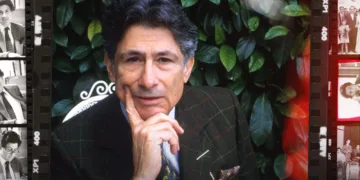



























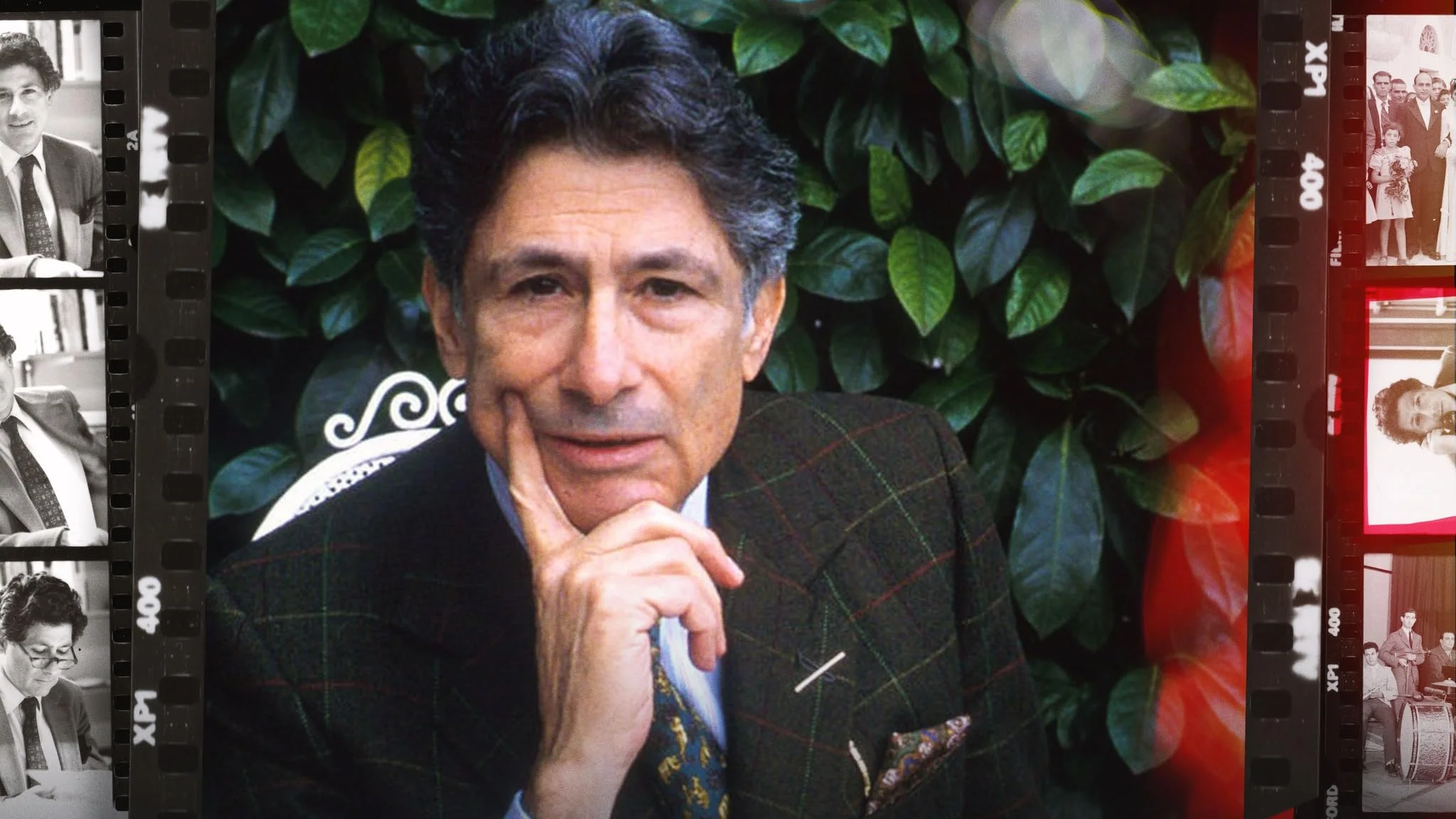

The 1967 war changes the direction of Edward Said’s account of himself. In archival interviews, he recalls how the Arab defeat forced him to reconsider an identity he had learned to keep at some distance during his academic life in the United States. Maiken Baird gives that recollection a pivotal place in Edward Said: Between Worlds. Before it, the film has followed a man trying to locate himself across countries and languages. After it, his work as a Palestinian public intellectual has a clearer urgency. The turn gives this wide-ranging biography a shape that a list of publications and appointments could not.
Earlier footage gains force because of that later change. Home movies shot by Said’s father accompany recollections of childhood in Jerusalem, while Said’s interviews describe a persistent sense of being out of place. Baird draws on news footage as well, setting the family material beside the history that would alter its meaning.
The home movies let us see something of the life Said is remembering; his older voice gives that life the perspective of someone who spent decades trying to explain it. The film is most persuasive when it lets the distance between those two things remain visible.
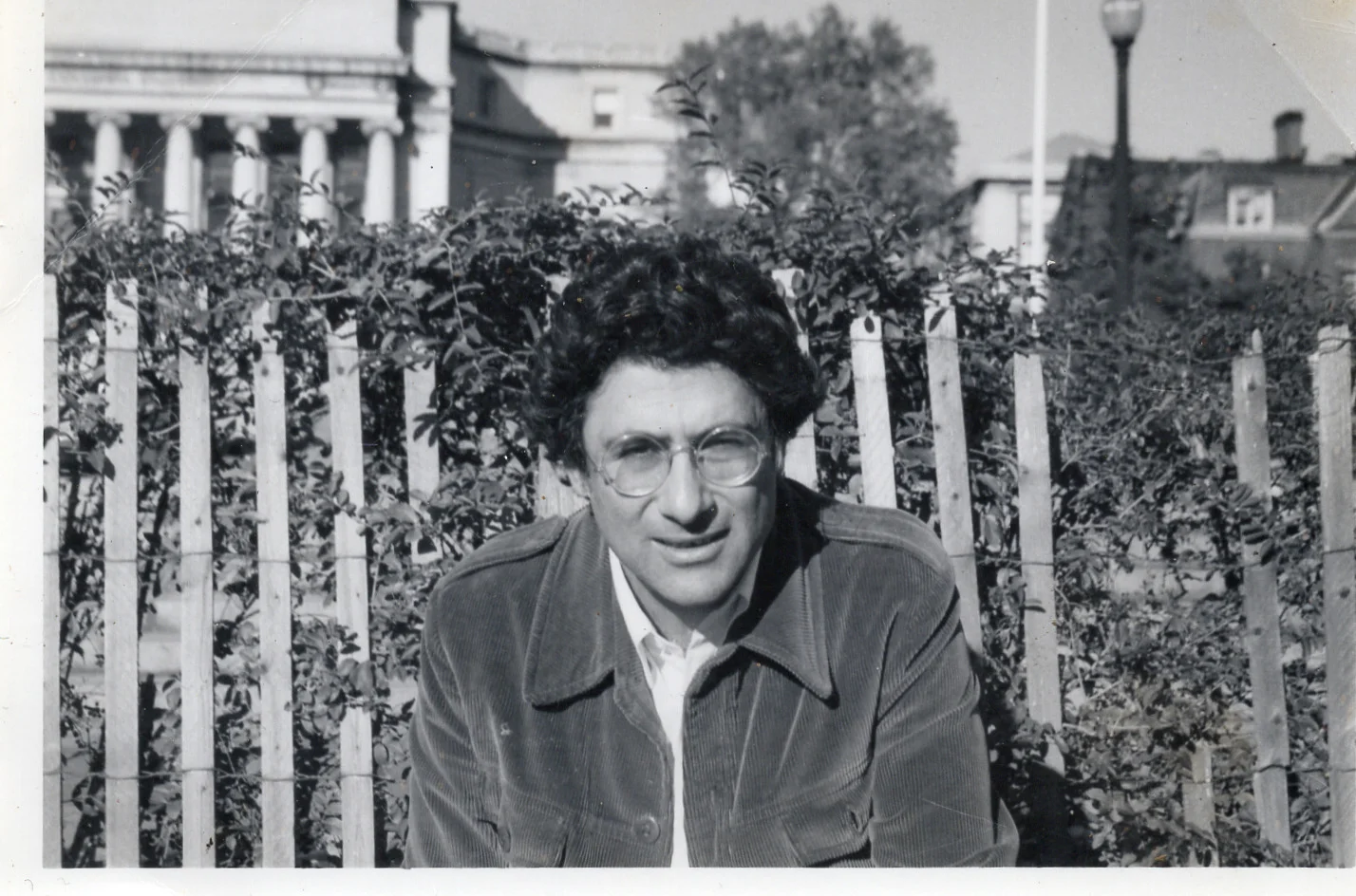
Its central storytelling choice is to let Said do nearly all the talking. There are no present-day interviewees assembled to interpret him for us. Instead, Baird and editors Jay Arthur Sterrenberg, Plummy Tucker, and R.A. Fedde arrange recorded interviews from different periods into a continuous account. That could have produced a very tidy biography, with each excerpt waiting patiently for its assigned year. Instead, we hear Said thinking back, not simply supplying narration for a timeline.
The approach is especially useful when the film reaches Orientalism. Rather than attempt a brisk lesson on the entire 1978 book, Baird concentrates on the experiences and questions that preceded it. Said’s renewed attention to Arabic and Palestinian identity connects his intellectual work to a developing political position.
The film makes the progression legible without suggesting that one event mechanically produced a book. It also leaves viewers unfamiliar with Orientalism with only a broad understanding of its argument. That is a real limit, though a detailed account of the text would have asked the documentary to interrupt the story it has spent so long constructing.
A recollection about Said’s passport brings the film’s method down to a practical dispute. He describes objecting when his birthplace was recorded as “Jerusalem, Israel”; the country designation was eventually removed, leaving “Jerusalem.” Here, a lifelong argument over identity takes the form of an exchange with an official and a change on a document. Said does not need a separate commentator to tell us why it mattered to him. The incident also shows why Baird’s reliance on his voice is effective: his political thinking repeatedly returns to experiences that can be described with this kind of precision.
As the film moves into Said’s later years, its task becomes harder. His positions develop, and the documentary includes anger and frustration alongside material that suggests a growing commitment to dialogue. Baird resists turning that development into a clean conversion story, although the sheer amount of ground covered in 107 minutes gives some changes less room than they deserve.
Said’s recorded reflections establish what he thought at various points. They cannot always show how he arrived at a changed view, or how others responded to it. The smoothness of the archival account occasionally gets ahead of the complexity it is meant to preserve.
That limitation follows from the film’s strongest decision. Giving Said command of his story restores the sound of a mind at work and avoids reducing him to a set of claims made on his behalf. It also leaves little space for a sustained challenge to those claims. Baird is chiefly interested in tracing the relationship between his life and his thought, and the care of her arrangement makes that account accessible.
Edward Said: Between Worlds stops with Said’s lifetime and does not ask its archive to comment directly on events after his death in 2003. That restraint matters. The footage can show how he formed an argument, revised a position, or insisted on naming an experience that others named differently. It cannot provide his answer to a history he did not live to see. Baird leaves us with his words, and with enough of their development intact to hear them as the record of a person thinking rather than a voice borrowed to settle the present.
Edward Said: Between Worlds world-premiered at the Toronto International Film Festival on September 12, 2026. The documentary feature explores the life, legacy, and political activism of the renowned Palestinian-American scholar and intellectual.
Where to Watch Edward Said: Between Worlds (2026) Online
Full Credits
Title: Edward Said: Between Worlds
Distributor: Impact Partners, Louverture Films
Release date: September 12, 2026 (Toronto International Film Festival)
Running time: 1 hour 47 minutes (107 minutes)
Director: Maiken Baird
Producers and Executive Producers: Sarah Mowaswes, Razan Ghalayini, Alex Gibney, Sawsan Asfari, Joslyn Barnes
Cast: Edward Said
Editors: R.A. Fedde, Alistair Mackay, Jay Arthur Sterrenberg, Plummy Tucker
Composer: Kareem Roustom
The Review
Edward Said: Between Worlds
Maiken Baird gives Said’s archival words a clear dramatic shape, with the 1967 war providing a turning point that connects his life to his intellectual work. The film is strongest when his recollections complicate the childhood footage and when a passport dispute makes questions of identity concrete. Its reliance on Said’s voice also leaves some changes in his thinking underexplored and his claims largely unchallenged. The result is an accessible, carefully assembled portrait that preserves the movement of his thought, even when the editing makes that movement look smoother than it was.
PROS
- Said’s own voice drives the account
- Archival editing gives the biography shape
- Personal details make its ideas concrete
CONS
- Later shifts receive limited space
- Said’s claims face little direct challenge
- Orientalism receives only a broad explanation