




























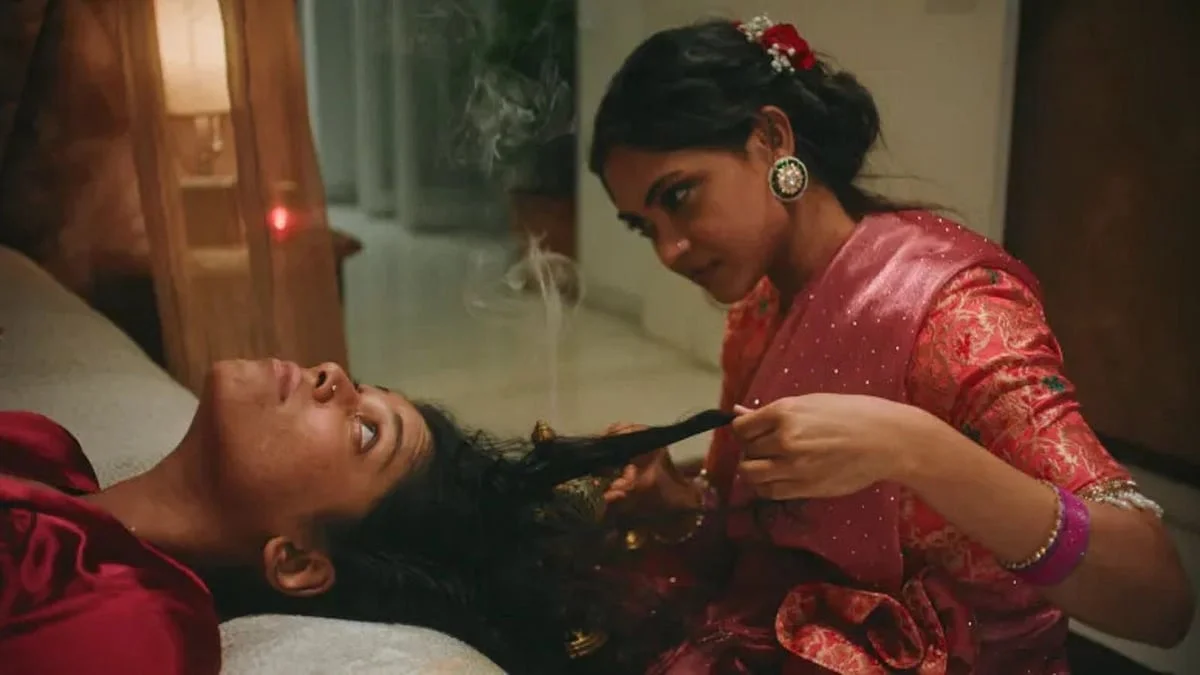
Perfection arrives in The Difficult Bride as a schedule of appointments. Zaineen, a wealthy young woman in contemporary Dhaka, enters the Mayfair beauty salon expecting the familiar machinery of wedding preparation and instead finds her body itemized. Weight, pores, stretch marks, facial scars and cellulite become defects requiring correction. When the beautician promises, “I will make her perfect,” Rubaiyat Hossain has already turned a bridal ritual into something faintly medical and increasingly coercive.
That shift gives Hossain’s 88-minute film its sharpest idea. Zaineen, played by Zaineen Chowdhury Karim, appears protected by every advantage. She moves through Dhaka in a chauffeur-driven SUV, lives in an opulent home and plans to marry Aarman, the apparently suitable groom. None of that wealth releases her from the expectation that marriage requires bodily transformation.
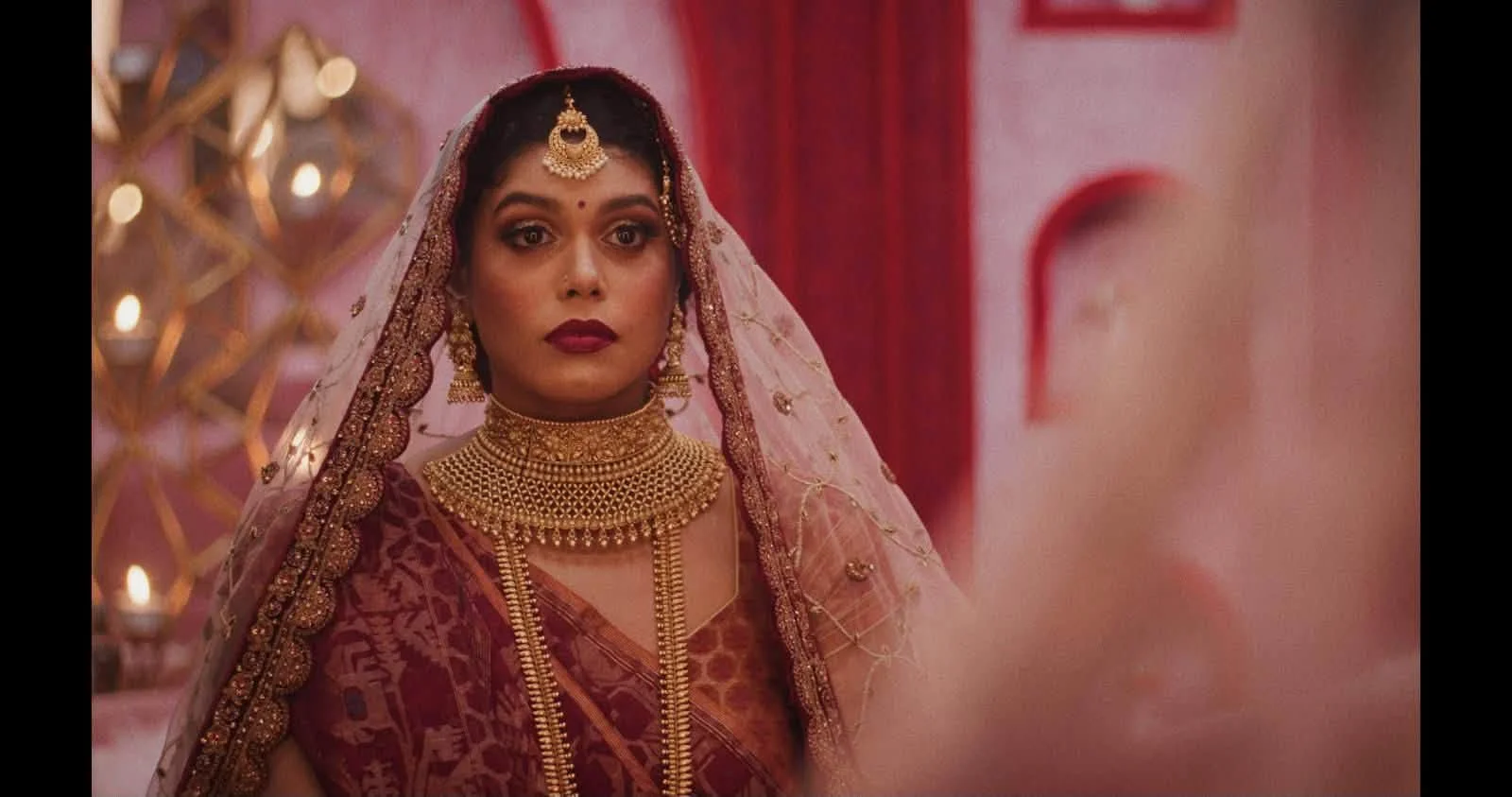
The setting matters. Hossain roots the pressure in Bangladeshi bridal culture without treating it as exotic spectacle for an international audience. Jamdani fabrics, ornate jewellery, elaborate salon rituals and family expectations belong naturally to Zaineen’s world. The film then corrupts their beauty from within.
Creatures Beneath the Makeup
PRP injections meant to treat Zaineen’s facial scars provide one of the clearest crossings from beauty procedure into horror. Needles puncture skin, blood becomes part of cosmetic improvement, and her worsening insomnia makes the entire ritual feel less like preparation than punishment. Scratches appear on her legs. Boils erupt on her inner thighs. She feels movement beneath her skin.
Hossain answers that sensation with an expanding bestiary. Lizards slip into bridal clothes and leave twitching tails on the floor. Snails crawl across skin and along a glossy red heel. Snakes, worms, dead fish and butchered flesh appear as Zaineen’s control deteriorates.
The snails are especially effective because their movement clashes so precisely with the salon surrounding them. Everything in that room exists to smooth, cleanse, shape and arrange the female body. A snail is wet, slow and indifferent to presentation. Its presence makes bodily life itself seem rebellious.
South Asian cinema has long associated brides, ghosts and interrupted marriages with supernatural dread. Hossain borrows that familiar vocabulary through the deceased bride haunting the salon mirrors, played by Sunerah Binte Kamal, then redirects it toward bodily autonomy. The apparition can be read as a warning from a woman already consumed by the same system, a projection of Zaineen’s anxiety, or something supernatural. Hossain wisely leaves that question unsettled.
Her other symbols receive less restraint. Once lizards, wounds, dead animals and crawling insects have established the revolt of Zaineen’s body, further repetitions sometimes explain an idea the images have already communicated.
Two Women, Two Kinds of Freedom
The film becomes more complicated around Minoti, the salon worker played by Rikita Nondine Shimu. She listens to Zaineen, helps her obtain marijuana and recognizes how violently the bridal regimen is wearing her down. Yet Minoti cannot treat rebellion as casually as her client can.
Their class difference gives the relationship its tension. Zaineen has enough money and social insulation to imagine refusing the wedding entirely. Minoti still dreams of becoming a bride, while understanding that the privileges surrounding Zaineen make defiance less economically dangerous for her. One woman experiences marriage as confinement while another sees access to it as aspiration.
Hossain extends that contradiction through the salon staff. Women inspect Zaineen’s body, identify imperfections and enforce standards learned from patriarchal culture. The film understands that social control rarely requires a man standing in the room issuing commands. Sometimes it arrives through another woman examining your skin under bright lights.
Outside those rooms, Dhaka is restless. Television reports mention sexual violence and homophobia. Student protests appear in news coverage and through glimpses of the streets. Zaineen watches some of this turmoil from behind the windows of her car, physically close and socially remote.
Those details suggest a larger argument about privilege that the screenplay never develops with equal force. Zaineen’s isolation from working-class Dhaka is visible, yet the connection between that insulation and her obsession with bodily perfection remains largely implied.
The Salon as a Gilded Cage
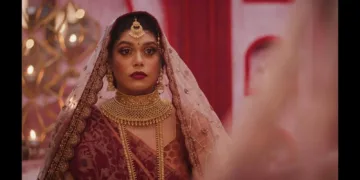
Leonor Teles photographs Zaineen’s enclosed world with seductive precision. Reds and pinks dominate the salon; mirrors multiply faces; flowers, embroidered fabrics and gold jewellery produce surfaces dense with ornament. Jonaki Bhattacharya’s costumes and production design make bridal culture look genuinely desirable before the film exposes the cost of sustaining that image.
Static compositions inside Zaineen’s home repeatedly contain her within rooms that should signify comfort. As sleeplessness takes hold, the camera becomes less settled. The visual change is simple, yet it makes her loss of control legible without dialogue.
Sound works even harder. Straighteners hiss. Jewellery rattles. Salon equipment hums with an almost clinical menace. The ugly cry of a lizard can rupture a polished room faster than another visual hallucination. Softer songs playing during treatments create their own unease, preserving the social performance of relaxation while Zaineen is being pierced, inspected and corrected.
Her reading of Sylvia Plath’s The Bell Jar and the appearance of the Tarot card associated with chaos risk stating the film’s concerns too neatly. Hossain is far stronger when a snail crosses a red heel or a lizard writhes beside bridal fabric and the collision is allowed to speak.
Karim understands that distinction. Her performance moves through clenched fatigue, embarrassment, fear and eventual refusal largely through posture and physical reaction. The final act gives that refusal a cleaner resolution than the film’s class tensions deserve, yet her body has already delivered the sharper argument: the bridal image can be perfected only for as long as the woman inside it agrees to remain still.
The Difficult Bride premiered at the 83rd Venice International Film Festival on September 6, 2026. The psychological drama follows a bride-to-be in Dhaka whose wedding preparations plunge her into an unsettling world of societal pressures, body anxiety, and supernatural disturbances.
Where to Watch The Difficult Bride (2026) Online
Full Credits
Title: The Difficult Bride
Distributor: Films Boutique
Release date: September 6, 2026 (Venice International Film Festival)
Running time: 1 hour 28 minutes
Director: Rubaiyat Hossain
Writers: Rubaiyat Hossain
Producers and Executive Producers: François d’Artemarre, Pedro Borges, Rubaiyat Hossain, Aadnan Imtiaz Ahmed, Ingrid Lill Høgtun, Anna Katchko, Md Shariful Islam
Cast: Zaineen Chowdhury Karim, Saberi Alam Motaher, Azmeri Haque, Reekita Nondine Shimu, Sunerah Binte Kamal
Director of Photography (Cinematographer): Leonor Teles
Editors: Raphaëlle Martin-Hölger
Composer: Jim Williams
The Review
The Difficult Bride
The Difficult Bride turns the rituals of bridal beauty into a language of bodily revolt, with lizards, snails, blood, mirrors, and invasive treatments disturbing the immaculate surfaces of upper-class Dhaka. Rubaiyat Hossain is strongest when local textures, class difference, and female social policing sharpen the horror, particularly through Zaineen’s bond with Minoti. The symbolism grows repetitive, while the screenplay leaves its class critique underdeveloped and resolves Zaineen’s resistance too tidily. Still, its culturally specific imagery gives familiar feminist body horror a distinct identity.
PROS
- Striking body-horror imagery
- Rich Bangladeshi cultural detail
- Strong Zaineen-Minoti dynamic
- Effective salon sound design
- Expressive costumes and production design
CONS
- Repetitive symbolism
- Underdeveloped class critique
- Some stiff supporting performances
- Overexplained visual metaphors
- Neatly resolved final act