

























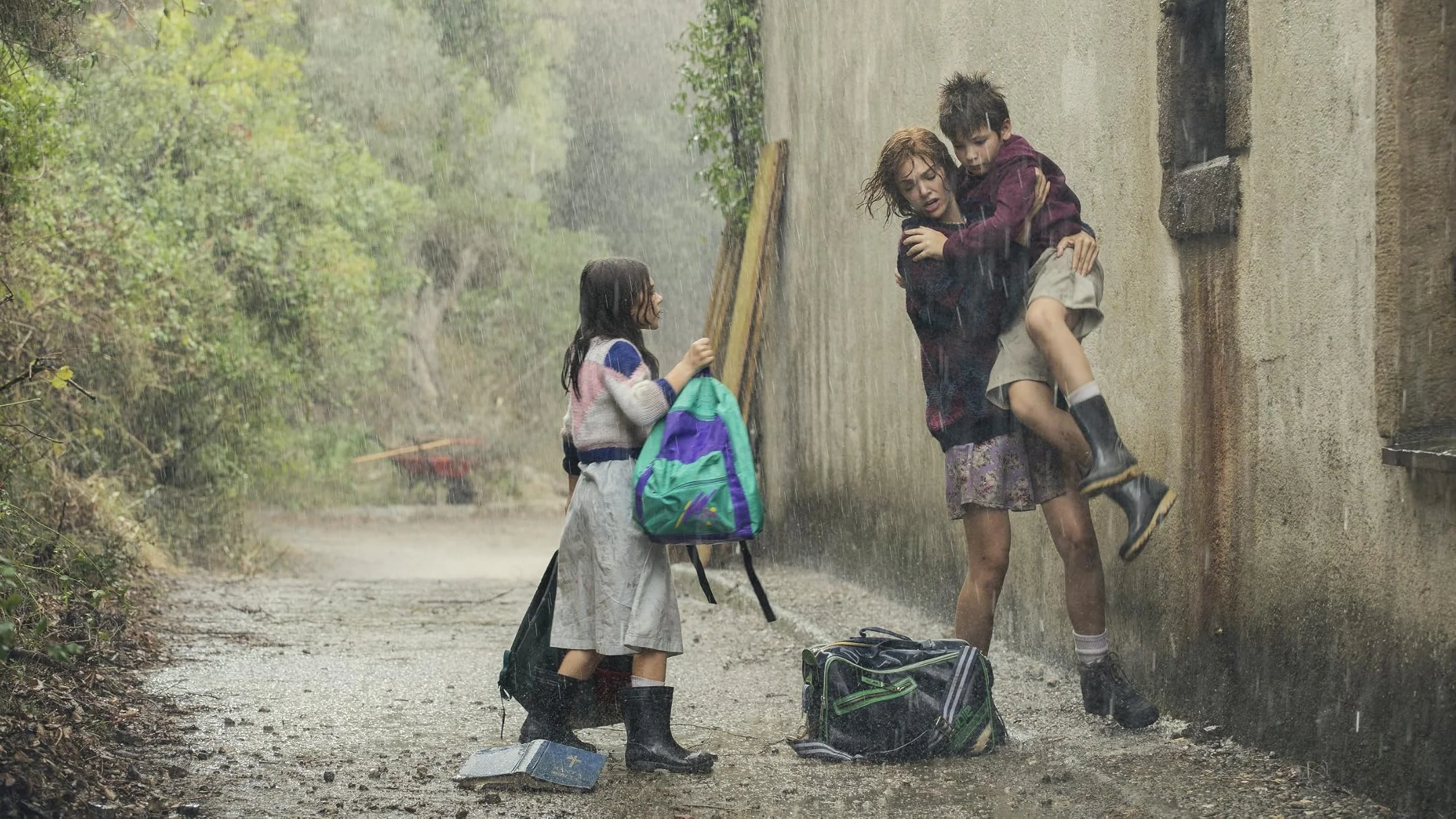

The Messiah understands that childhood does not disappear when people grow older. It remains inside the rooms where it happened, inside the songs that were forced upon them, inside the names they were given and later tried to abandon. Javier Ambrossi and Javier Calvo’s seven-episode Spanish series transforms a story of religious obsession and family damage into something stranger: a dreamlike wound that keeps reopening.
The series begins its emotional movement from the present, where Enric and Irene discover that their six younger sisters have become Stella Maris, a religious pop group whose homemade videos have spread across the internet. The performances are surreal collisions of devotion, glitter, choreography, and innocence.
Behind the strange beauty of those videos sits a much darker history. The siblings recognize something they escaped years earlier: a childhood shaped by their mother Montserrat’s instability, her devotion to increasingly extreme beliefs, and the prison-like home she built with her conservative husband Pep.
The brilliance of The Messiah comes from the way it refuses to separate the absurd from the horrifying. The series can make a religious music video feel like both a joke and a cry for help. It can find comedy in a social-services visit and then turn toward the emotional devastation hidden beneath the laughter. The world of the show feels slightly unreal because the family itself has created an alternate reality where suffering becomes destiny and control becomes love.
Three lives trapped inside one memory
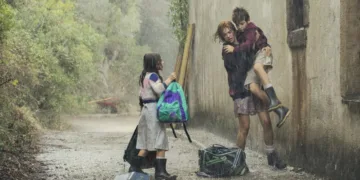
Ambrossi and Calvo divide the story across three timelines, each revealing another piece of the same tragedy. Childhood shows Enric and Irene before their world closes around them. Bruno Núñez Arjona and Carla Moral bring a painful clarity to the young siblings, especially as they endure a mother who treats her own desires as more important than her children’s needs. Ana Rujas captures Montserrat during this period as a person drowning in her own chaos, searching for meaning while leaving destruction behind her.
The teenage years are where the series becomes most suffocating. Enric becomes Isaías and Irene becomes Resurrección, names imposed by a household where religion has replaced ordinary life. The outside world is presented as corruption. Entertainment becomes forbidden. Curiosity becomes rebellion.
One of the series’ most powerful moments arrives when Enric secretly discovers Singin’ in the Rain. The discovery is simple, almost ordinary, yet it feels like an earthquake. He encounters a world of movement, color, and imagination that his family tried to erase. Cinema becomes a doorway. A child who has been told what reality is suddenly sees another possibility.
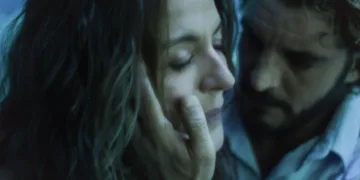
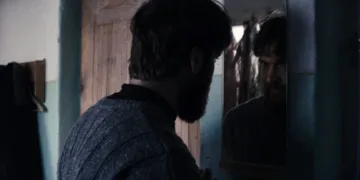
The adult timeline carries the weight of those memories. Roger Casamajor and Macarena García portray Enric and Irene as people who survived but never truly escaped. Stella Maris forces them to return to the place they left behind, not because they want to revisit the past, but because their sisters are still living inside it.
The many faces of a mother
Montserrat is the center of The Messiah, and the three actresses who portray her different stages create a portrait of a person constantly rebuilding herself through others. Lola Dueñas and Carmen Machi show the older versions of Montserrat as women who have transformed personal instability into religious authority. Their performances make her frightening because she rarely sees herself as cruel. She sees herself as necessary.
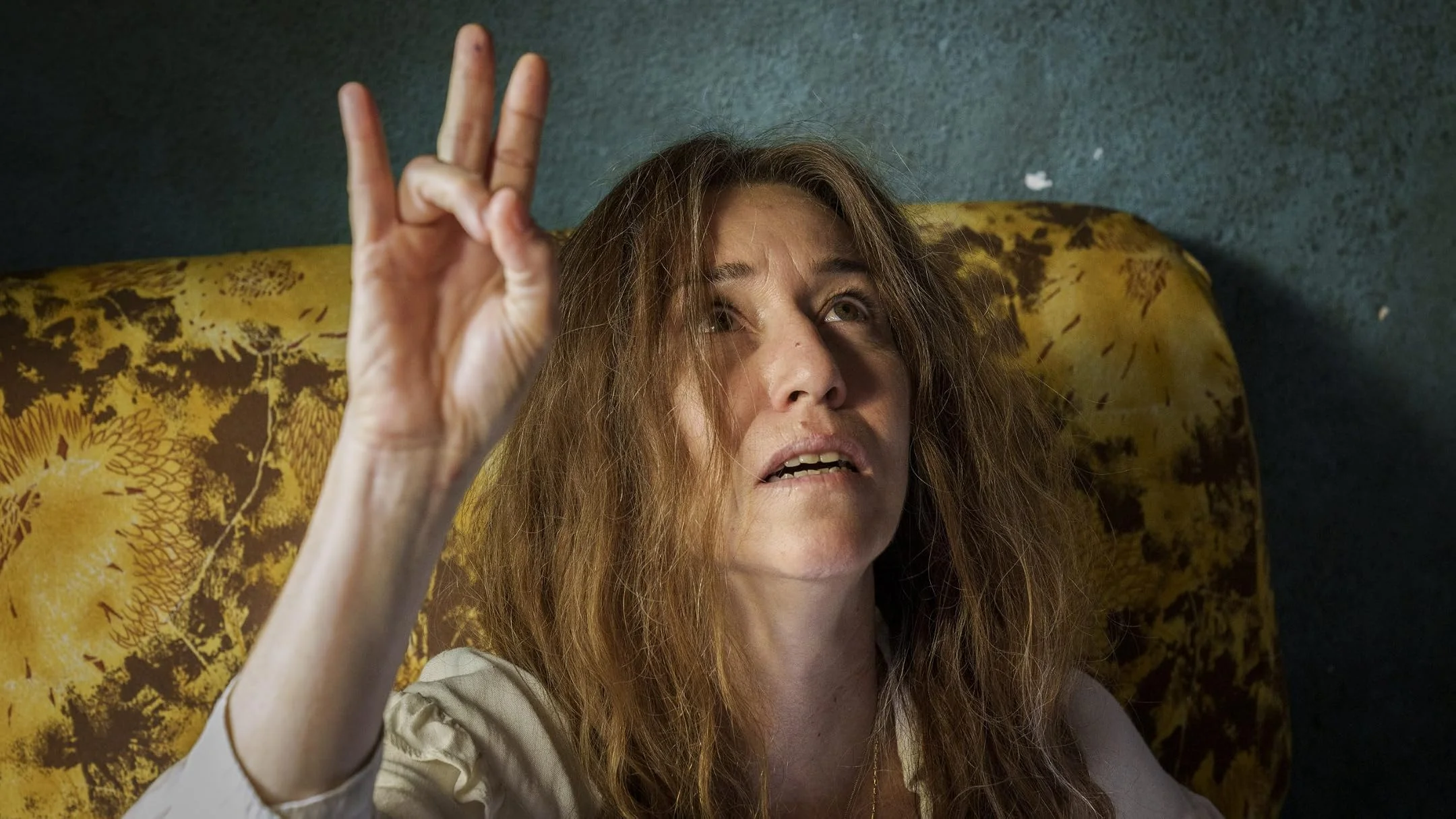
The series is less interested in attacking belief than examining what happens when belief becomes a weapon. Montserrat and Pep create a home where faith becomes a justification for isolation, control, and emotional imprisonment. The tragedy comes from watching children inherit a worldview they never chose.
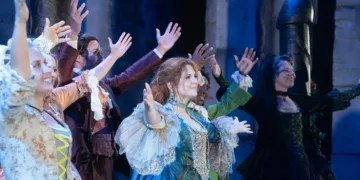
The Stella Maris videos capture that contradiction perfectly. The songs are genuinely catchy, the visual presentation is polished, and the performances have a strange charm. Yet the audience is also aware of the cost behind the spectacle. The internet sees a mysterious pop phenomenon. Enric and Irene see their childhood returning in a different costume.
A beautiful, unstable fever dream
The ambition of The Messiah is also its weakness. The series contains so many ideas that some struggle for space. Family trauma, religious fanaticism, UFO imagery, internet culture, music, and alternative spirituality all compete within the same structure. Some episodes carry their length heavily, and the final chapter’s movement toward another form of spirituality creates questions the series does not completely answer.
Still, the excess feels connected to the story it tells. A family built on confusion produces a narrative that refuses simple order. The strange opening credits, the vertical imagery, the sudden shifts between horror and comedy, and the unsettling musical sequences all reflect characters searching for meaning in a world that refuses to provide it.
The Messiah is a series about people looking upward because they cannot survive looking inward. It finds terror in devotion, sadness in performance, and unexpected beauty inside damaged lives. Its greatest moments feel like memories from a dream someone is desperate to forget. And some dreams refuse to end.
The Messiah premiered on Movistar Plus+ on October 11, 2023, and is available for streaming on platforms such as Hulu. The psychological drama follows a man whose childhood trauma under a religiously fanatical mother resurfaces when a viral Christian pop music video features his estranged sisters.
Where to Watch The Messiah Online

Full Credits
Title: The Messiah (La Mesías)
Distributor: Movistar Plus+, Hulu
Release date: October 11, 2023
Rating: TV-MA
Running time: 60–72 minutes
Director: Javier Ambrossi, Javier Calvo
Writers: Javier Ambrossi, Javier Calvo
Producers and Executive Producers: Domingo Corral, Susana Herreras, Javier Ambrossi, Javier Calvo
Cast: Roger Casamajor, Macarena García, Lola Dueñas, Carmen Machi, Ana Rujas, Albert Pla, Amaia Romero, Biel Rossell
Director of Photography (Cinematographer): Gris Jordana
Editors: Alberto Gutiérrez
Composer: Raül Refree
The Review
The Messiah
The Messiah turns childhood trauma into something feverish, comic, musical, and deeply unsettling. Its finest passages understand fanaticism as an atmosphere that children learn to breathe before they have words for what is happening to them. Montserrat’s shifting faces, Enric’s secret discovery of Singin’ in the Rain, and Stella Maris’ ecstatic pop videos give the series an eerie emotional texture. Seven expansive episodes occasionally buckle under competing timelines, paranormal digressions, and a spiritually ambiguous finale, yet the excess feels inseparable from its haunted imagination.
PROS
- Extraordinary performances across Montserrat’s three ages
- Haunting three-period family structure
- Stella Maris music is funny and disturbing
- Bold tonal shifts between horror and black comedy
- Memorable use of Singin’ in the Rain
CONS
- Several episodes run too long
- Too many competing narrative threads
- Stella Maris’ viral fame feels underexplained
- Some needle drops are painfully literal
- Finale’s spiritual turn is less convincing