









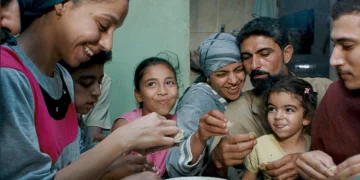


















Cenir is ready to put a million reais behind her knowledge of her daughter. Asked to identify something Karina has said, she confidently selects an ambition to become an heiress. Wrong answer. It is an efficient little reversal: parental certainty makes the setup, and the child supplies the correction without having to argue. The boast is funnier because Cenir has volunteered such an enormous sum. Nobody needed to raise the stakes quite that high. She brought her own humiliation budget.
The actual betting in Netflix’s Brazilian reality competition Mom Knows Best? is less reckless. Nine mothers make predictions about their adult children, with incorrect answers reducing a shared pot that starts at one million reais. Their relatively small wagers produce a curious separation between embarrassment and jeopardy. A spectacularly wrong guess can be personally mortifying while making a modest dent in everyone’s prospective winnings. Collective losses give the women reasons to resent one another, but the game keeps interrupting the clean comic pleasure of a confident mistake to administer its comparatively mild financial penalty.
Host Claudia Raia presides over a table resembling a casino’s, where the mothers place bets using figurines of their children. Parenthood has acquired gaming accessories. The women stay in luxurious accommodation, secretly watching their offspring inhabit a less comfortable shared house nearby.
The younger contestants believe they are on The House, competing for 250,000 reais to help them move out. That unequal information gives the early rounds their appeal: the mothers can see behavior they would ordinarily miss, while we can watch them discover the limits of their expertise. The problem develops when the show needs those discoveries to sustain seven episodes.
The mothers’ own house supplies an obvious second source of activity. Putting nine people with firm parenting opinions together produces disagreements before their children need to do anything particularly revealing. Inocencia’s declaration that she would prefer death to growing old provokes an early dispute that continues to occupy attention through the opening four episodes.
Dri becomes a recurring focus of hostility around episodes three and four, and the fifth spends considerable time with the other women discussing their objections to her. The volume of feeling is clear. Its development is harder to follow. Each return supplies another confirmation that living together has become unpleasant, with too little fresh understanding of how the situation reached this temperature.
Dri’s relationship with Diego offers a more concrete subject than the accumulating complaints about her. She puts her adult son’s socks on for him, an arrangement that makes moving out sound like a complicated staffing decision. Later, the other mothers object to how he speaks to her during their conversation.
Those details could sustain a sharper examination of the expectations an indulgent parent helps establish and then has to live with. Instead, the group’s dislike repeatedly takes precedence. Daniela’s eventual conversation with Dri brings a limited easing of tension, which is perfectly plausible; television owes nobody compulsory friendship. It does owe the dispute enough explanation to make repeated visits worthwhile.
The end of episode four changes the available drama by revealing the real premise to the younger contestants. Earlier advice-room encounters have already played with concealed contact: written advice arrives without its maternal source being identified, then later meetings expose the mothers and ask the children to keep quiet.
These stages give the deception something to do beyond waiting for a single surprise. Once the secret is public, the children can respond directly to the people interpreting their lives. Yet episode five continues to devote substantial attention to the Dri conflict. The format has opened another room and remains reluctant to leave the old argument.
A task asking the mothers to predict which subject their child wants to discuss makes better use of that access. The question provides a practical route into a conversation the family might otherwise avoid. Bea’s exchange with Monica carries particular weight after Monica’s earlier insistence that God could change her daughter’s sexuality.
Their conversation matters because the adult child gets to participate in defining the issue, after so much time spent hearing a parent describe it. There is emotional movement here, and the game deserves credit for creating the encounter. A difficult conversation can be valuable without serving as proof that Monica’s resistance has disappeared.
Inocencia and Vicktoria expose a different limit of the format. Vicktoria wants independence and recognizes her mother’s fear of missing her; Inocencia insists she would not permit her adult daughter to go backpacking. The family’s history of loss, with Vicktoria the surviving child of quadruplets, gives that fear painful context.
It cannot make every restriction reasonable. Nor does living with a parent establish that an adult is incapable of managing life elsewhere. Their exchange becomes revealing because Vicktoria can articulate a wish that her mother continues to treat as subject to permission. The hidden cameras have supplied information. Permission is still being withheld.
The later competition usefully reverses the direction of inquiry, asking children questions about their mothers while the mothers predict their success. A question about a mother’s first boyfriend tests family knowledge, though its fairness depends partly on what she has chosen to share.
The final challenge gets closer to the relationship itself: mothers predict their daughters’ yes-or-no responses to questions about them. Inocencia still misreads Vicktoria’s answers. After the conversations about independence, those errors carry a significance an early misidentified introduction could not. She is now being asked to recognize how her daughter sees her, and still answering from the position of the mother who gets to decide.
Mom Knows Best? premiered globally on Netflix on August 26, 2026. Hosted by Claudia Raia, the engaging reality competition series invites nine mothers to put their knowledge of their adult children to the test by secretly betting on the choices they make.
Where to Watch Mom Knows Best? Online


Full Credits
Title: Mom Knows Best?
Distributor: Netflix
Release date: August 26, 2026
Rating: TV-MA
Running time: 45–60 minutes per episode
Director: Lucas Diego Lopez
Writers: Andre Brandt, Gui Cintra
Cast: Claudia Raia, Adriana Alves, Pedro Alves, Ana Martinha Silva, Kaynara Silva, Carla Luvise, Patrick Luvise, Cassia Marques
The Review
Mom Knows Best
Mom Knows Best? has a dependable comic asset: mothers betting on parental omniscience and discovering the account is overdrawn. The modest wagers offer thin suspense, and the Dri disputes consume airtime without enough explanation or development. Direct conversations, especially Bea and Monica’s, give the children a meaningful say, while the later rounds ask sharper questions about mutual understanding. Across seven episodes, though, the show spends too long collecting complaints and too little changing the conversation.
PROS
- Maternal overconfidence produces sharp comic reversals.
- Direct family conversations deliver emotional substance.
- Later rounds deepen the test of mutual understanding.
CONS
- Small wagers against a shared pot weaken competitive suspense.
- Repetitive house disputes lack sufficient explanation and development.