



















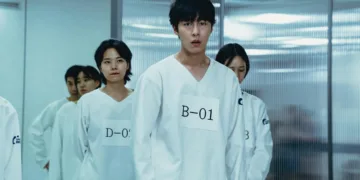










People were captivated by the Squid Game in 2021, which mixed harsh criticism of capitalism with the thrill of survival games. It became famous all over the world because it vividly showed desperation and morality. As the participants played deadly children’s games, stark societal differences became clear. It was a disturbing reflection of our own world, where the stakes often feel too high.
Now that Season 2 has begun, there is anticipation. Author Hwang Dong-hyuk hasn’t been back in three years, which makes me wonder what has changed in the world of culture. Hwang wants to learn more about what drives the characters and how the game’s evil tactics work. This time, it’s not only about survival but also about figuring out why people choose to be in such a mess.
However, with this anticipation comes a constant fear of the future. Will the movie keep its sharp edge or lose its edge by making the stakes too low? As we get ready for this new chapter, we must confront our own complicity in the systems that make it possible for such brutality to exist. Perhaps the real game isn’t just on the screen; it’s in our eyes.
The Weight of Choices: Character Arcs in Squid Game Season 2
Seong Gi-hun (Lee Jung-jae), the main character of Squid Game Season 2, is greatly affected by the terrible things that happened to him in the past. Gi-hun is less of a hero who has won and more of a shell grappling with the moral effects of his rise three years after his terrifying victory. A standard case of “survivor’s remorse,” if you will, he goes back and forth between a strong desire for justice and a crippling sense of guilt.
In contrast to many characters who try to find redemption through action, Gi-hun’s journey is one of reflection. He decides to destroy the system that took advantage of him, not because he needs money badly, but because he is angry at his friends who died. The nature of justice in an unjust world is compellingly questioned by this change from a desperate player to a determined assailant.
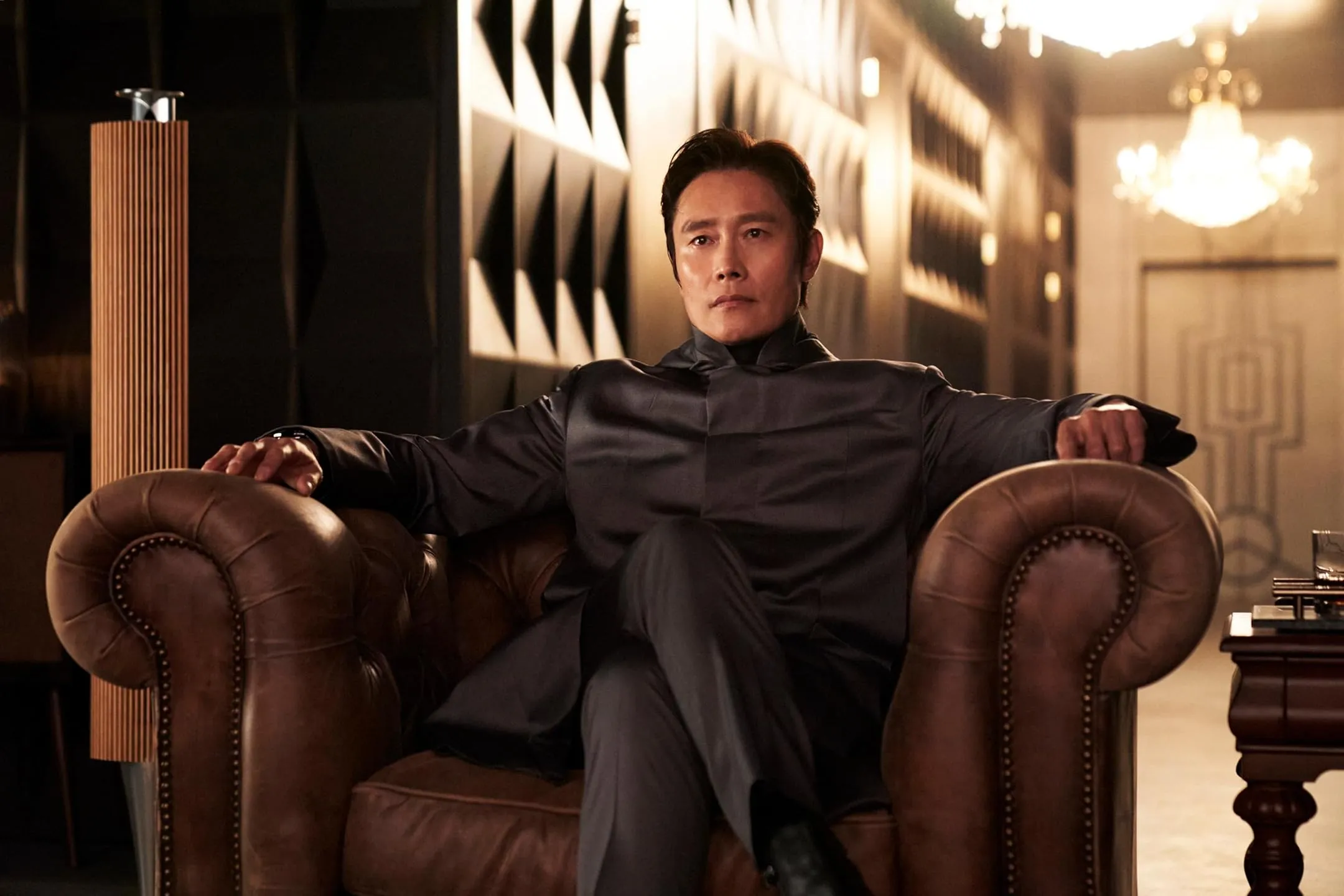
The moral complexity of finding the truth in a world full of lies is embodied by Hwang Jun-ho (Wi Ha-joon), who completes Gi-hun’s journey. Jun-ho’s journey, which began as an undercover guard, is full of personal stakes because his brother, the mysterious Front Man (Lee Byung-hun), plays a significant role in his narrative.
Their contentious relationship is a microcosm of the conflict between family loyalty and moral duty, mirroring larger societal issues (imagine a Shakespearean tragedy against a neon-lit horror backdrop). Gi-hun’s and Jun-ho’s quests are intertwined, creating dynamic tension that moves the narrative along.
More layers of complexity are added when new characters enter this crazy field. As a modern-day Icarus who got too close to the sun of fame and wealth, Thanos (Choi Seung-Hyun), a chaotic influencer-turned-player, embodies the dangers of social media culture. A touching examination of identity and resilience is introduced by Hyun-ju (Park Sung-hoon), a transgender woman who is trying to get money for surgery to change her gender. Each character stands for a different part of modern society, which shows how people play dangerous games for different reasons.
As these characters meet, the struggles of those caught in a system meant to pit them against one another are revealed, in addition to their own personal stakes. The meanings are deep, reflecting a world where survival is often a zero-sum game and the human experience is seen as nothing more than fun.
A Deliberate Descent: Plot Structure and Pacing in Squid Game Season 2
The pacing of Squid Game Season 2 is methodical, which seems very different from the fast-paced energy of Season 1. Through the first episode’s slow burn, people can get into Gi-hun’s (Lee Jung-Jae) mental turmoil and the bigger societal effects of his choices.
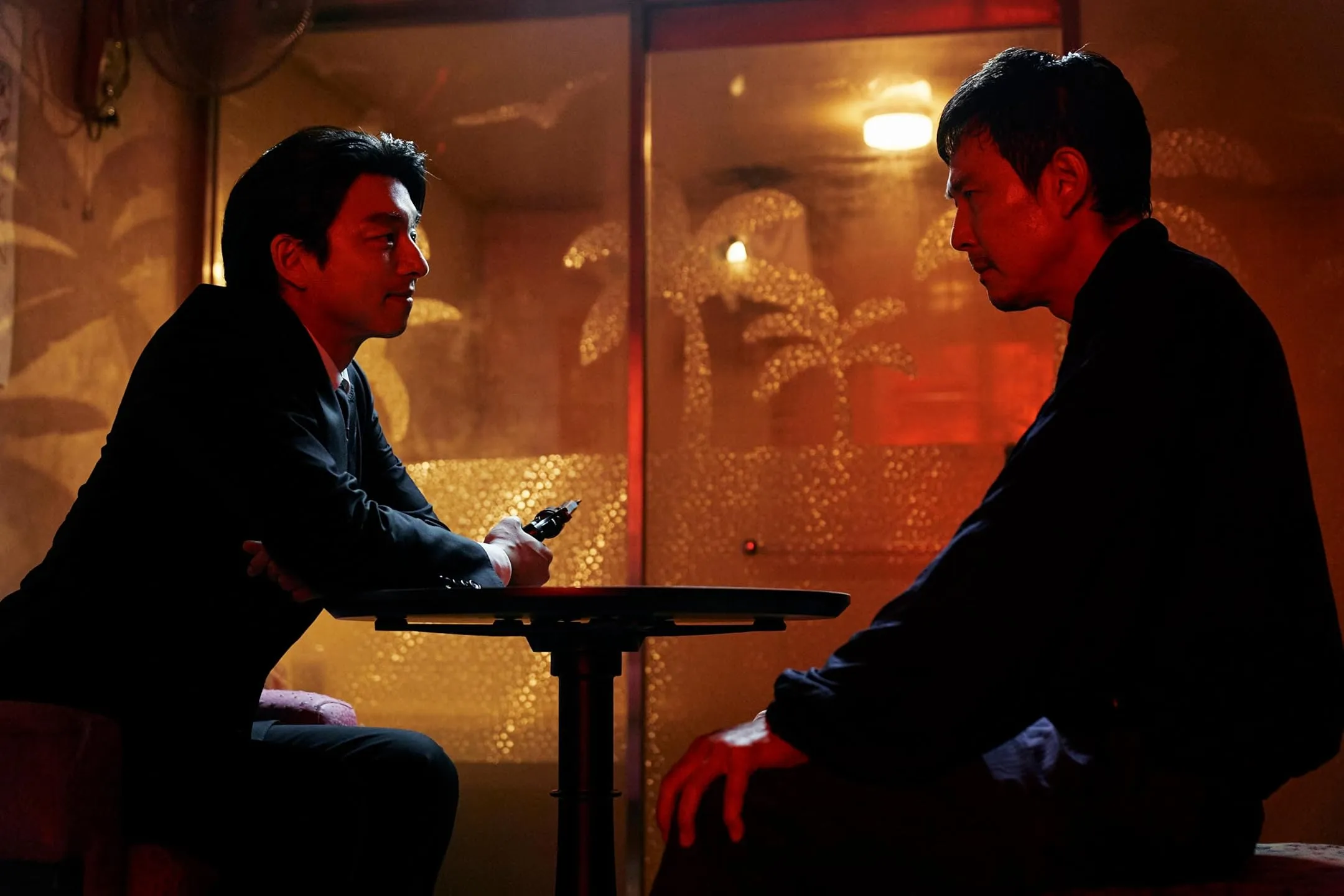
This deliberate buildup can sometimes feel like hard work, like a philosophical treatise on human pain with dark humor thrown in here and there. Instead of going right into the chaos, Hwang Dong-hyuk gives us a moving look at what happened afterward: how does one live with the weight of survival when so many others perished?
This slower growth does two things: it builds character depth and raises tension. When Gi-hun is pulled back into the dangerous games, the stakes are not just high; they feel like they might be the only ones that matter. The narrative changes from action-focused to choice and consequence, evoking historical events where powerful people take advantage of the desperate for their gain (think of it as a modern-day gladiator arena but with more existential dread).
When Gi-hun finally returns to the game, the structure of player interactions changes greatly. The dynamics are no longer just about individual survival; alliances, betrayals, and the constant threat of democratic voting complicate them. The introduction of this voting system reflects current societal tensions, suggesting that human nature’s propensity for self-preservation can lead to moral conundrums even in the worst circumstances.
In this context, the games take on the role of a microcosm of societal problems. At first, the pacing is annoying, but it turns out to be a deep commentary on the human condition—every moment of hesitation makes the coming disaster worse. A slow buildup? Maybe. But the buildup is full of philosophical questions that make viewers confront what it means to play and live in a game rigged by the powerful.
Games of Capitalism: Themes and Social Commentary in Squid Game Season 2
Season 2 of Squid Game goes deeper into its themes of capitalism and morality, building on the harsh ideas introduced in Season 1. The second season focuses on the personal reasons why people go back to the games they once tried to avoid, while Season 1 exposes the blatant injustices of a system made to take advantage of the desperate.
Gi-hun (Lee Jung-Jae) is no longer just a victim; he embodies the complexities of choice within a capitalist framework, where survival frequently necessitates unimaginable sacrifices. His search for justice is less about altruism and more about confronting the guilt of having survived while others perished (a classic case of the “survivor’s paradox”).
The narrative is further complicated by introducing a voting system, which is an unsettling departure from democratic ideals. Players in this dangerous competition have the option to end the games, which evokes democracy in a context that is anything but fair. This mechanism mirrors modern societal problems, where collective choices can lead to individual ruin. It makes you wonder if there can be real democracy in a system built on taking advantage of people.
The choices made by the players represent larger societal problems, bringing to mind times in history when people had a choice but could only choose between different levels of oppression. A constant lens is used to examine nature, especially its moral issues. Characters face moral conundrums that reveal the frequently blurry line between good and evil.
Their choices reflect the moral decay that can follow desperation and the stakes of life or death. When faced with existential dangers, the frailty of human ethics is highlighted by players’ conflict between self-preservation and loyalty. Thanos (Choi Seung-Hyun) and Hyun-ju (Park Sung-hoon) reflect different facets of survival instincts—chaos and resilience, respectively—and demonstrate this complexity.
We are asked to consider what these themes mean for us as viewers. Squid Game Season 2 serves as a spooky reminder that the games we play—both on and off-screen—might reveal more about our nature than we care to accept in a world where economic disparity and moral ambiguity are on the rise. It’s an insightful section on the human state that rings true in our disturbingly political world today.
Aesthetic Dread: Visual Style and Cinematography in Squid Game Season 2
Season 2 of Squid Game keeps the show’s signature look, a careful mix of bright colors and stark differences that raise the emotional stakes. The production design puts viewers in a strange, disturbing world where playgrounds look like nightmares.
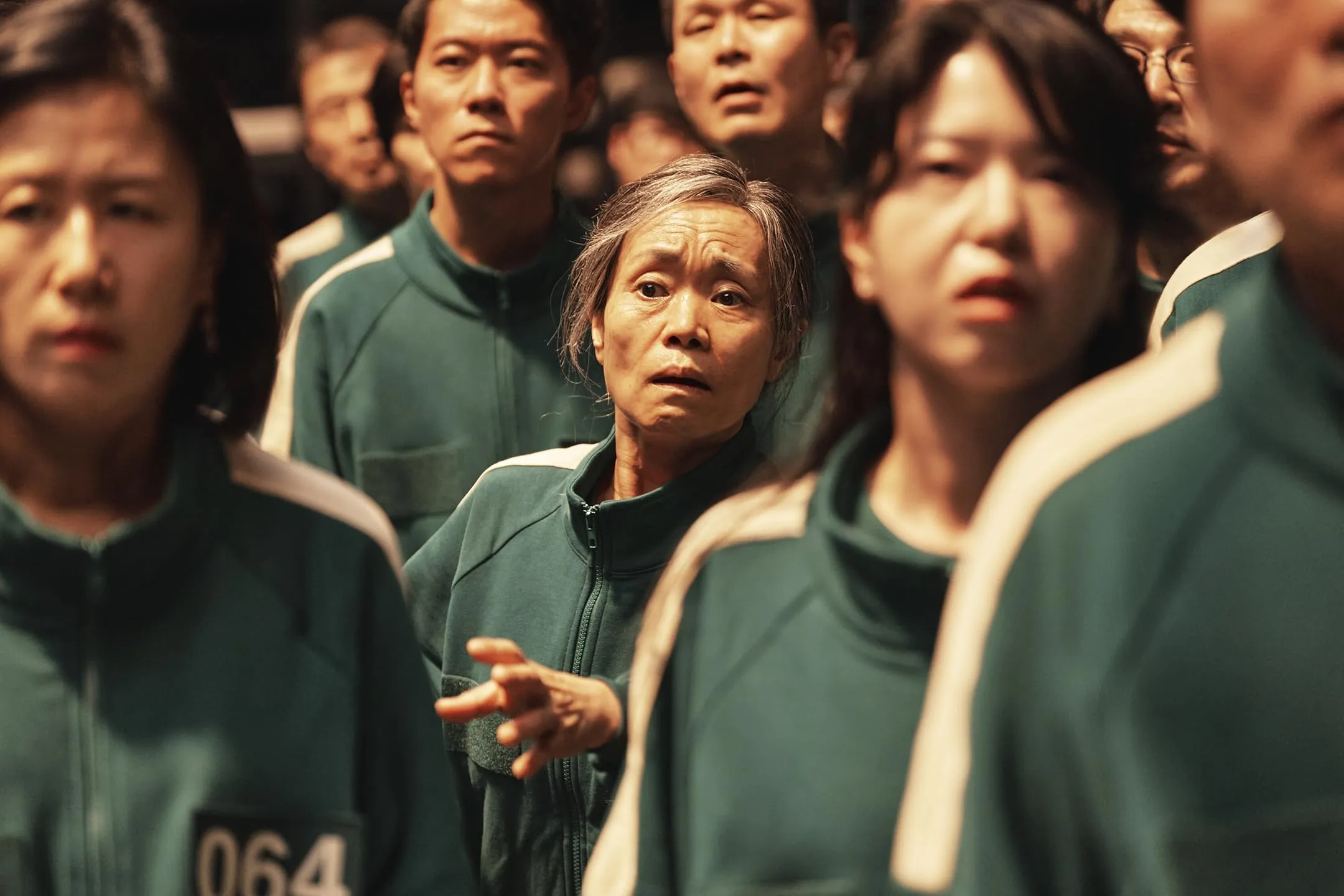
When you combine the childlike fantasy and the grim facts of the games, you get a strong visual metaphor for lost innocence. Think of it as a twisted fairy tale gone wrong. Every set piece, from the bright, oversized playgrounds to the clean, scary insides of the game offices, adds to an enticing and suffocating mood.
Techniques used in movies make this aesthetic fear stronger. It feels intimate and alone because of the way the camera works, which alternates between tight close-ups and wide shots. This duality is especially clear in scenes where characters have to make important choices, forcing viewers to confront their choices’ emotional weight. There are a lot of sudden cuts in the cutting, which works well to build tension and reflect the chaotic nature of the games.
For example, during the vote scenes, the fluctuating images of tense players and the looming presence of the game’s overseers emphasize the high stakes, individually and as a group. Every decision in this world carries the weight of life and death, and this stylistic choice turns everyday events into emotional experiences. Squid Game Season 2 creates a narrative that is as much about what we see as it is about the moral complexities beneath the surface through its arresting visuals and cutting-edge cinematography.
Threads of Anticipation: Impact and Future Directions in Squid Game Season 2
Season 2 of Squid Game has increased audience anticipation, especially as talk about Season 3 is flying around like confetti at a funeral. After the huge success of the last one, hopes have gone through the roof.
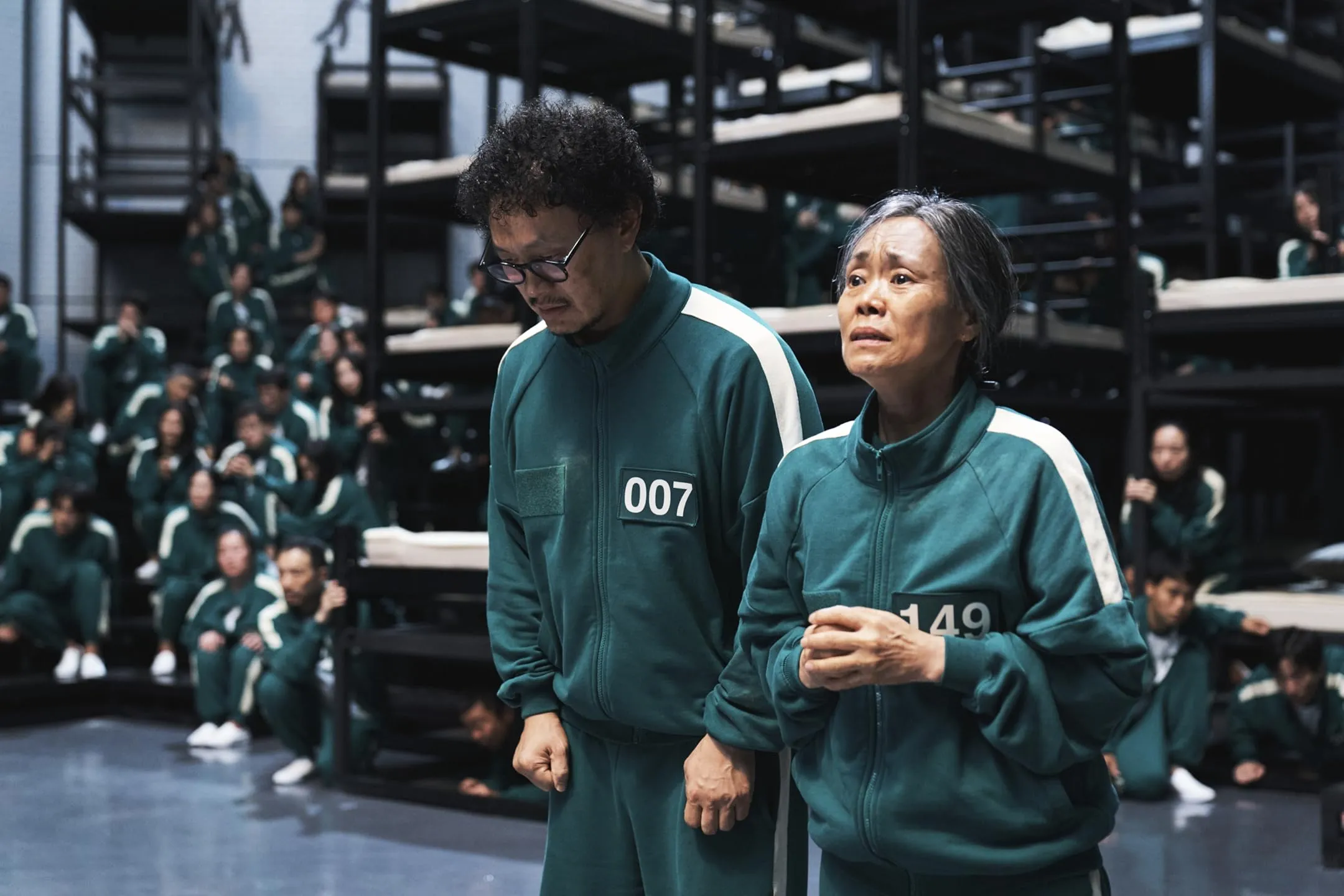
The game has changed into a societal commentary on greed, power, and moral decay, leaving viewers to wonder about the future of their favorite characters and the game’s larger meanings. Season 2’s cliffhangers and unsolved tensions—Gi-hun’s search for justice and the ominous power dynamics among the new players—lead to many possible directions for the next episode.
This season complicates the narrative tapestry of the Squid Game world with new threads that challenge the established lore. Introducing democratic elements into the games (a clever, if ironic, twist) begs the question of how effective choice is in a system set up to take advantage of people. The theme of agency and manipulation hits home in today’s political and social environment, and it compels viewers to think about it.
Thanks to the character arcs, which also raise the emotional stakes, what could have been a simple bloodsport is now a rich study of human resilience and frailty. It is unsettling to see how the moral ambiguities characters face reflect our societal problems. As the series goes on, there is a chance that the game’s history and effects could be explored in more depth, which could be both critically analyzed and darkly curious.
In essence, Season 2 adds to the Squid Game narrative by suggesting that the real games we play in society are just starting to play out. This is in addition to the anticipation it creates.
A Tapestry of Tension: Concluding Thoughts on Squid Game Season 2
In Season 2 of Squid Game, character changes happen with great skill. Gi-hun changes from a haunted survivor to a moral complexity figure grappling with justice in a broken system. At the same time, Hwang Jun-ho’s fight for truth against family ties adds more emotional complexity. The narrative is enhanced by adding new characters like Thanos and Hyun-ju, representing various facets of survival and societal criticism.

This season’s themes explore the moral problems of capitalism and the disturbing nature of democracy in the games. The visual style supports these themes by offering a powerful commentary on innocence lost in chaos. Even though the pacing is slow at first, it builds tension that matches the characters’ mental states, ultimately making the viewer more interested.
Season 2 lives up to the memory of the first season regarding how well it works, though it takes a more introspective approach. It encourages viewers to reflect on the nature of choice and complicity, ensuring that the Squid Game phenomenon remains a powerful cultural reference point.
The Review
Squid Game Season 2
Season 2 of Squid Game builds on Season 1 masterfully, offering a deeper look at morality, capitalism, and human nature in general. It challenges viewers to confront the complexities of choice in a morally ambiguous world through engaging character arcs and a visually arresting style. The rich thematic layers and psychological depth eventually improve the narrative despite the pacing being challenging for some. This season cements the show's cultural impact, ensuring its place as a profound commentary on societal problems.
PROS
- Deep character development and complexity.
- Rich thematic exploration of capitalism and morality.
- Visually striking production design and cinematography.
- Engaging narrative that builds tension effectively.
- Thought-provoking commentary on societal issues.
CONS
- Pacing may feel slow for some viewers.
- Some plot threads remain unresolved, leading to potential frustration.
- The darker tone may not appeal to all audiences.