



























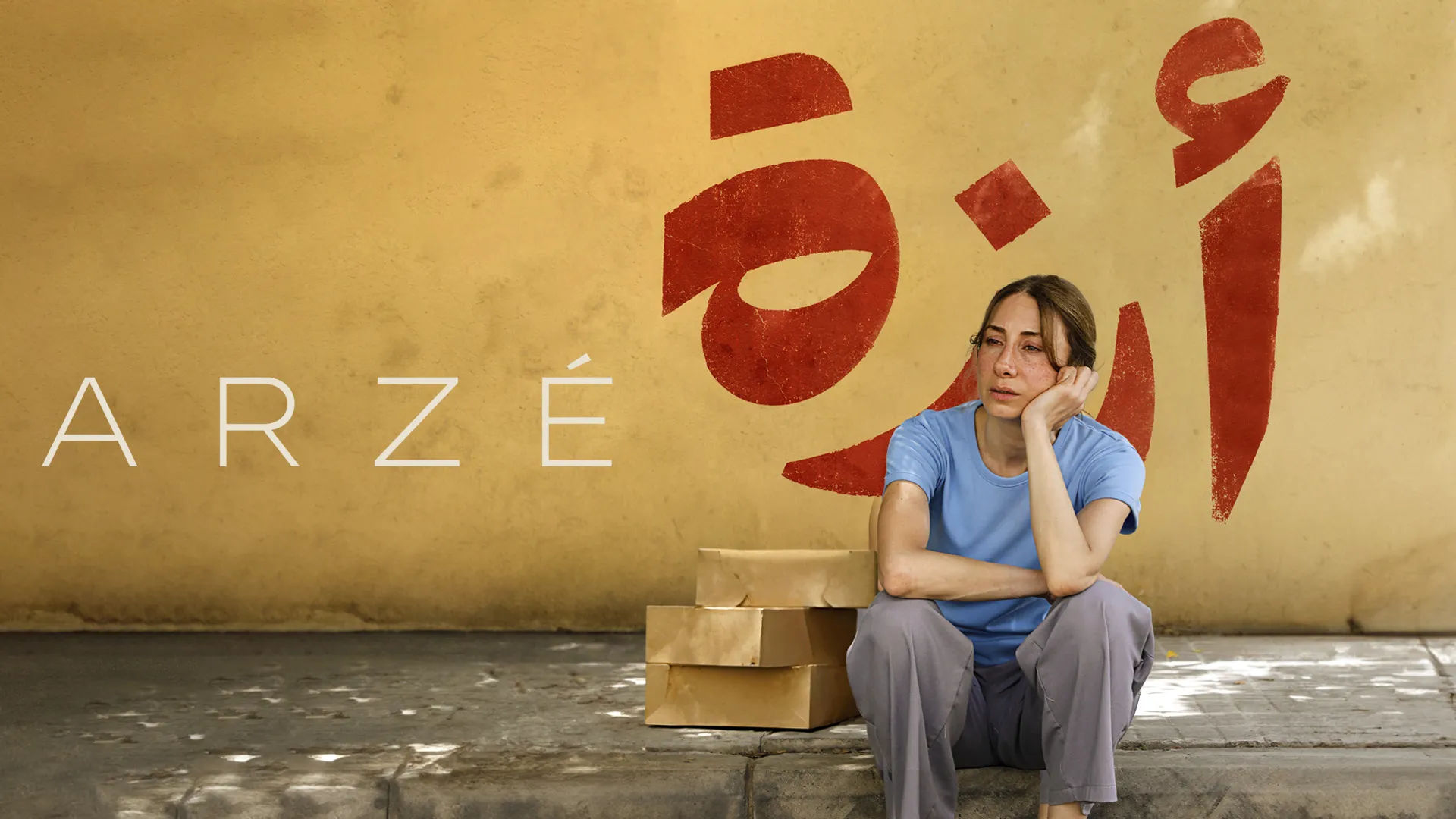

Mira Shaib’s Arzé pulls its framework from the shadow of Vittorio De Sica’s Bicycle Thieves (1948), but the parallels go beyond plot alone. Shaib re-contextualizes the journey of a stolen scooter, placing it firmly within the fractured landscape of modern-day Beirut.
In this sense, the film is as much a portrait of Lebanon’s internal divisions as it is a personal story of a mother’s desperation. The streets of Beirut, alive with movement and tension, act as more than just a backdrop—they embody the wounds of a nation split by sectarianism and economic instability.
Shaib’s debut feels grounded in a specific historical and cultural moment yet also speaks to a broader, almost universal reality: that survival—personal and familial—requires bending the rules, even breaking them. Arzé, a single mother striving to keep her family afloat, is pushed to extremes that are both heartbreaking and darkly comedic.
Her journey to reclaim the stolen scooter is more than an isolated event; it is a journey into the heart of a society where divisions are both social and moral. Arzé’s attempts to blend in with various communities—changing her clothes, her accent, her very identity—unveil the ugliness of a city where relationships are transactional, and identity is a currency that can only buy so much.
Through these interactions, Arzé doesn’t just critique the harshness of sectarianism; it paints a city where survival demands sacrifices of both personal ethics and familial ties. When Arzé steals from her sister to fund the scooter, it’s not simply an act of desperation—it’s an acknowledgment of a world where betrayal is, perhaps, the only true constant.
The Quest for a Scooter: Theft, Identity, and Fractured Connections
The plot of Arzé feels deceptively simple, but what unfolds is an intricate exploration of survival, survival that isn’t just about making ends meet, but also navigating an ever-shifting societal landscape. Arzé, a single mother trying to make a living by selling pies, works tirelessly to keep her family afloat.
But with her son Kinan uninterested in her business and dreaming of escaping Beirut, Arzé does what she must—she buys a scooter, using money she steals from her agoraphobic sister. This scooter isn’t just a means of transportation; it’s a lifeline. But the scooter, like so many things in Beirut, is stolen in turn, and the rest of the film is Arzé’s frantic attempt to recover it.
Kinan’s role in the narrative adds another layer of complexity. His longing to leave Beirut, driven by a sense of hopelessness, is a reflection of a generation that sees little future in the political quagmire.
His desire to escape, juxtaposed with his mother’s desperate attempts to hold the family together, creates an undercurrent of tension that plays out across the film. His personal struggles with the city mirror those of his mother, who, although more invested in the city’s survival, cannot escape its brutal realities.
Arzé’s search through Beirut’s divided neighborhoods adds another level of commentary. As she moves from district to district, attempting to find help, she must shift her identity to fit in. Arzé doesn’t just speak with different accents—she physically changes her appearance to match the demands of each neighborhood, her actions speaking to the fragmented nature of the city.
Each encounter, each neighborhood visited, serves as a mirror to the deep divides within Lebanon—divides that are not just political but also cultural and personal. The search for a scooter becomes a search for connection in a fractured society, where identity is both a barrier and a tool.
The Weight of Survival: Arzé, Kinan, and the Family Dynamic
The character of Arzé (Diamand Abou Abboud) stands as the emotional spine of Arzé, and Abboud’s portrayal makes her a compelling study in resilience and moral complexity. Arzé is a mother whose every action is driven by the pressing need to survive, yet she is not without contradiction.

She resorts to stealing her sister’s jewelry to fund a scooter, and yet her desperation is grounded in a desire to provide for her family. Abboud’s performance walks a fine line—her Arzé is at once tough and fragile, a woman whose strength comes from a quiet endurance rather than overt aggression.
The choices Arzé makes might seem morally questionable, but Abboud conveys an internal conflict that makes them understandable. There’s no glamorizing here, just a woman caught between a rock and a hard place, struggling to reconcile the needs of her family with the cost of those choices.
Then there’s Kinan (Bilal Al Hamwi), whose performance marks a clear evolution from youthful rebellion to reluctant maturity. His arc isn’t just about his desire to leave Lebanon, but about how he grapples with the expectations placed on him—both by his mother and by society.
Al Hamwi deftly conveys the shift in Kinan’s character: his angst and defiance give way to a quieter understanding. The emotional layers of his performance speak volumes, especially in moments where his anger boils down to something deeper, an awareness of the sacrifices his mother is making.
It’s a careful balancing act from Al Hamwi, whose Kinan slowly begins to see himself not just as a passive observer but as part of the problem and solution.
Supporting characters round out the family dynamic. Layla (Betty Taoutel) plays a sister trapped in her own grief and disconnected from the world outside her home. Taoutel imbues Layla with a fragility that provides a stark contrast to Arzé’s pragmatism.
The scene-stealing comedic touch of Shaden Fakih, as an exasperated shopkeeper, adds an unexpected burst of levity—though even in her lighthearted moments, there’s a sense that no one in this world is truly free from the need to survive.
Fault Lines and Symbolic Tokens
Arzé uses its simple plot to dive deep into Lebanon’s fractured society, with Arzé’s search for a stolen scooter acting as both a literal and symbolic journey. The sectarian divisions of Beirut are woven into the fabric of the film, especially through Arzé’s use of disguises.
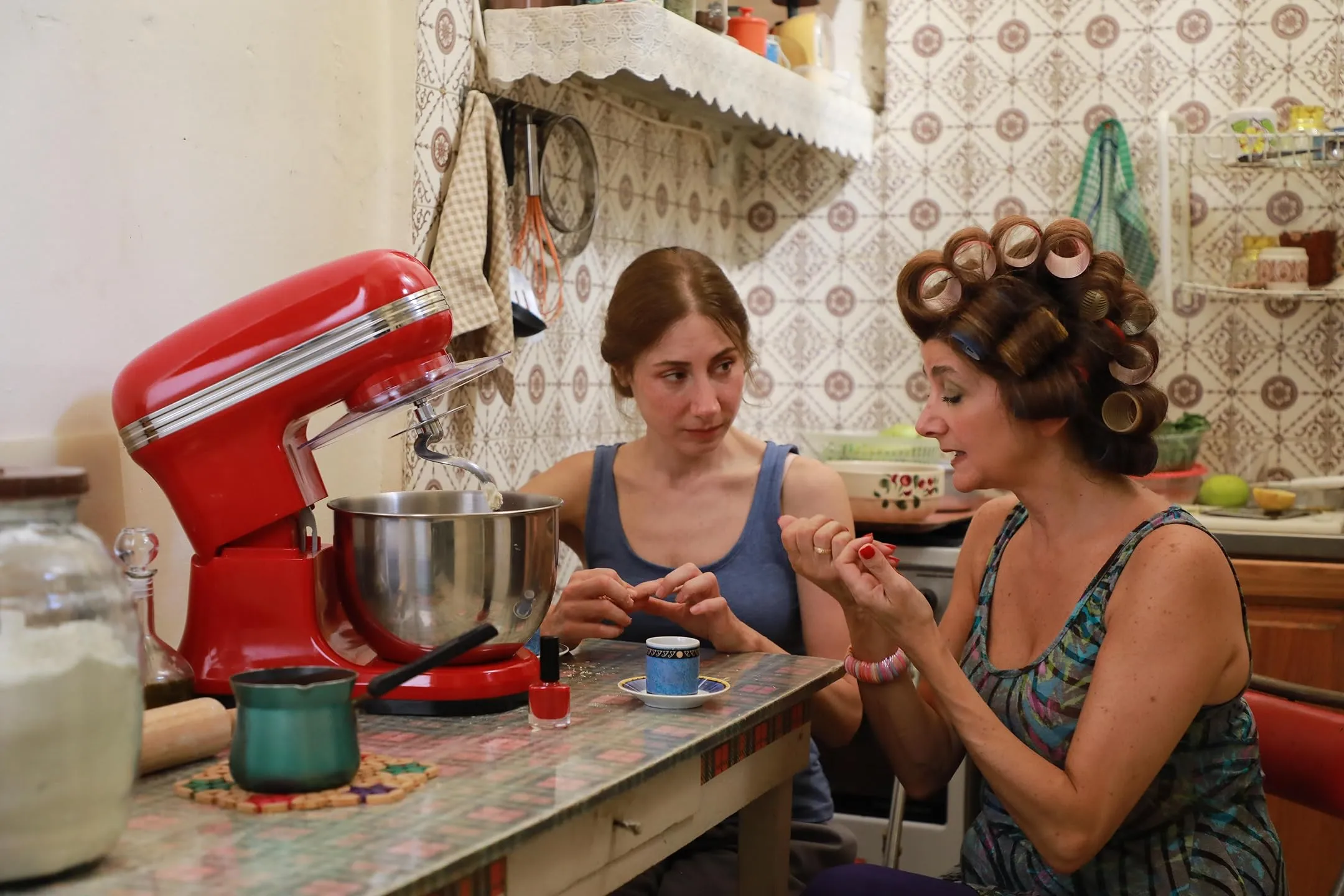
These shifts in her identity—from accent to appearance—are a commentary on the social necessity of adaptation. To survive in this city, Arzé must continually reshape herself to fit into spaces that otherwise wouldn’t welcome her. The act of changing is almost mechanical, as though survival hinges on the constant negotiation of who you appear to be rather than who you actually are.
The scooter, meanwhile, takes on a layered significance. It’s not simply a method of transportation; it becomes the very lifeblood of Arzé’s working-class family.
This object, initially seen as a practical necessity, turns into something more profound as it carries with it the weight of her hopes—hopes not just for herself, but for her son, and by extension, for an entire family trying to carve out some semblance of security in a city where stability is a rare commodity.
For women, in particular, who are too often left with few resources, the scooter represents both a stepping stone to autonomy and a symbol of the grinding reality of economic hardship. It’s no surprise, then, that its theft marks a moment where the carefully constructed semblance of order collapses, leaving Arzé with only the messy truth of what survival demands.
The film offers a subtle critique of how the pressures of identity and survival can warp the choices people make. In Arzé’s world, every mask is both a survival tactic and a reflection of the fractured nature of society itself. The scooter becomes something more than a mode of transport; it is a fragile thread tying her to the possibility of a better life.
The Invisible Hand of the Director: Mira Shaib’s Subtle Craft
Mira Shaib’s direction in Arzé strikes a delicate balance between humor and social commentary. There’s a quiet wit throughout, but it never feels forced—it complements the gravity of the film’s themes without diminishing them.
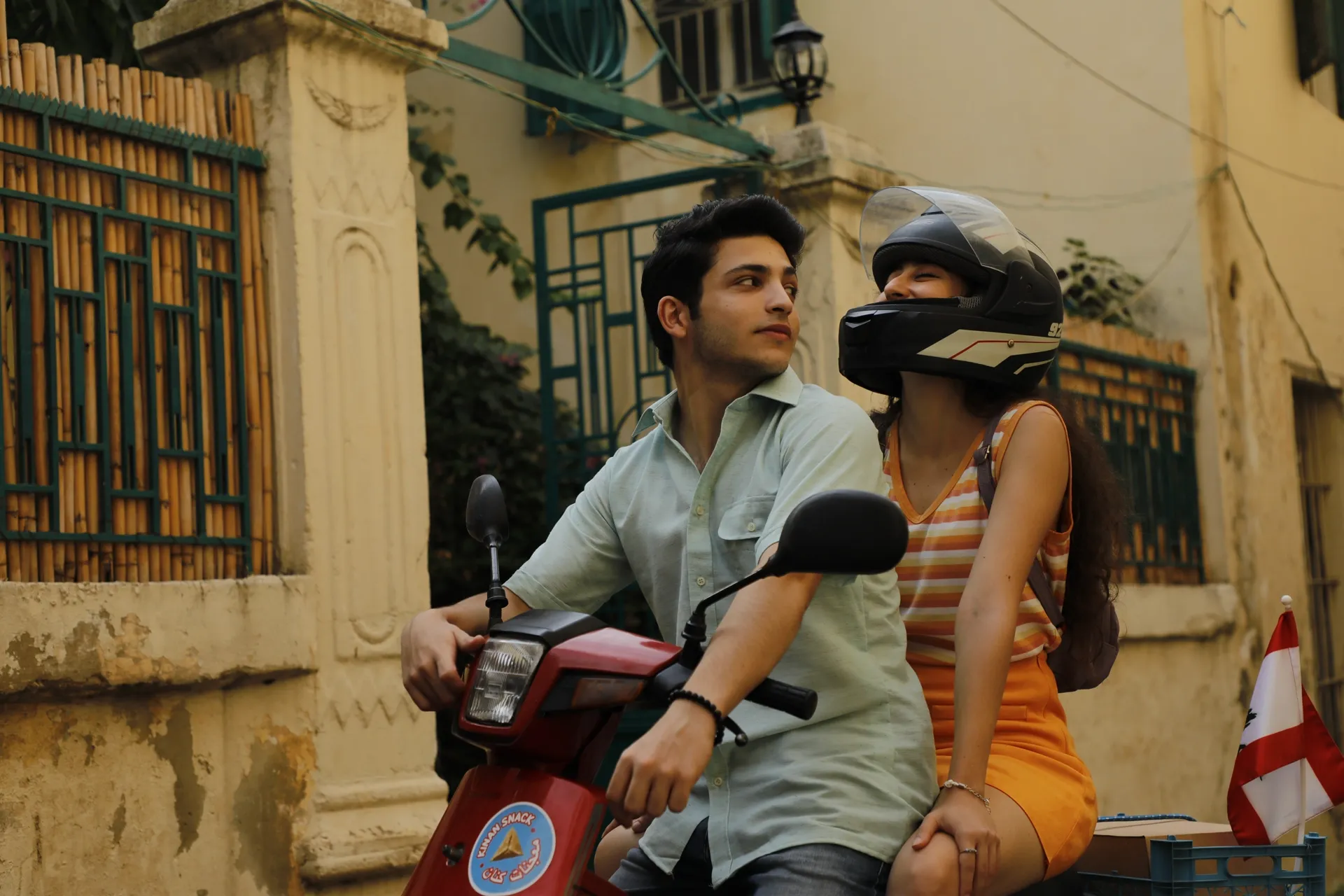
Shaib’s approach to character and tone avoids melodrama, opting instead for a more natural rhythm that allows the film’s tension to build organically. This is particularly evident in the way the camera lingers on Arzé, never rushing to over-explain the struggles she faces.
The subtlety of her direction allows the complexities of Beirut’s society to unfold, showing us the emotional and cultural landscape without explicitly spelling it out. It’s a narrative that trusts its audience, quietly revealing layers without ever resorting to heavy-handedness. (There’s a quiet intelligence in this—Shaib’s refusal to tell us everything outright.)
Visually, Arzé matches its thematic depth with striking cinematography. The saturated colors that flood the screen seem to echo the city’s vibrancy, even as it teeters on the edge of chaos. The bustling streets of Beirut are more than just a backdrop—they are a dynamic force, shaping the characters and their choices.
The framing often feels almost intrusive, as if the camera itself is trying to catch glimpses of the lives and struggles hidden in plain sight. This visual style speaks to the city’s intense contradictions: alive with energy, yet burdened by division. The streets reflect not just the external world but the internal fragmentation of its people, making the setting as much a character as any of the actors on screen.
A Fractured Bond: The Emotional Resonance of Arzé’s Family Struggles
Arzé examines contrasts—the intimate struggles of a mother and son set against a divided society. The film’s emotional depth arises from the nuanced relationship between Arzé and her son, Kinan.
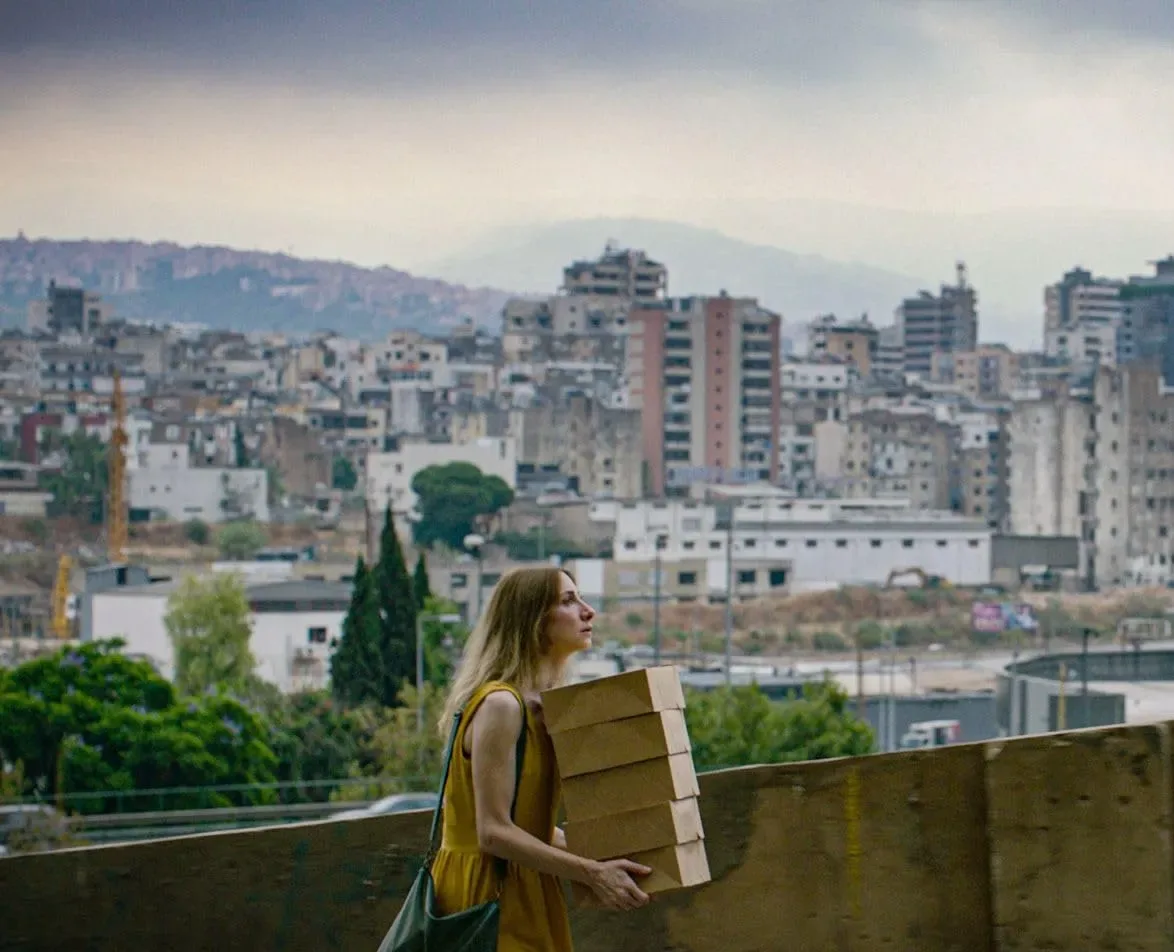
Their dynamic, marked by sacrifice and unspoken expectations, reveals the quiet ache of a mother’s love and the defiance of a young man determined to escape his confines. Arzé’s choices, whether stealing from her sister or insisting Kinan join the pie business, stem from a desperate kind of care that exacts a heavy cost.
Kinan finds himself torn between a yearning to break free from Lebanon and a sense of duty toward his mother. The film does not need to detail every facet of their bond; it is in the small moments—the shared glances, the silent frustrations—that their emotional arc emerges vividly.
What enlivens this dynamic is the film’s use of humor to ease the weight of its more somber themes. Arzé’s futile attempts to blend into various neighborhoods, adopting different identities in her search for the scooter, are absurd and darkly comic.
Yet, these moments also expose the desperation of a woman whose survival is constantly thwarted by the rigid walls of societal division. In these instances, the film intensifies its emotional impact: laughter comes first, followed almost imperceptibly by the burden of her struggle.
While the personal arc of Arzé and Kinan leaves a deep mark, the film’s wider societal message—touching on survival, loyalty, and the collapse of trust—extends beyond Lebanon.
The rift between mother and son mirrors the larger cultural and social fractures within the city. In a world of shifting identities and tested familial bonds, Arzé presents a society where every individual’s quest for meaning is interwoven with the fissures of the larger system.
Aftermath and Enduring Impact
Arzé displays a fine mix of performances, careful directing, and layered themes. The film examines the conflict between a mother’s unspoken sacrifices and a young man’s restless defiance, all set against the backdrop of a city marked by long-held divisions.

Arzé’s determined struggle and Kinan’s inner turmoil serve as a microcosm of personal hardship amid societal pressures. The film’s methodical pacing and measured visual style amplify the quiet intensity of its narrative.
Mira Shaib opts for subtlety rather than overt declarations, allowing the tension of familial discord and social strain to unfold naturally (a quiet nod to historical narratives of divided communities).
The visual choices—precise framing and a palette that mirrors the mood of its setting—enhance the portrayal of a place where everyday actions are steeped in meaning.
This work invites its audience to engage with its portrayal of individual duty and shared struggle, prompting discussions that may extend well beyond the local scene. Its blend of wry humor with moments of stark realism opens up space for viewers to reflect on personal and collective challenges without forcing a tidy wrap-up.
The Review
Arzé
Arzé presents a thoughtful exploration of personal sacrifice and societal division, anchored by strong performances and a careful visual style. The film captures its characters' struggles with subtle humor and intense emotion. Its measured pace and reflective tone offer a fresh take on familiar themes, prompting the audience to reflect on the price of survival.
PROS
- Strong performances that bring the characters to life
- Insightful portrayal of societal divisions
- Effective integration of subtle humor with emotional depth
CONS
- Pacing may feel slow at times
- Narrative complexity might challenge some viewers
- Some plot elements can seem overly familiar