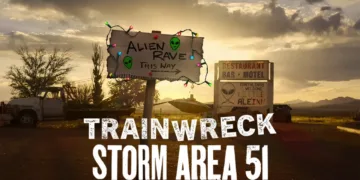

























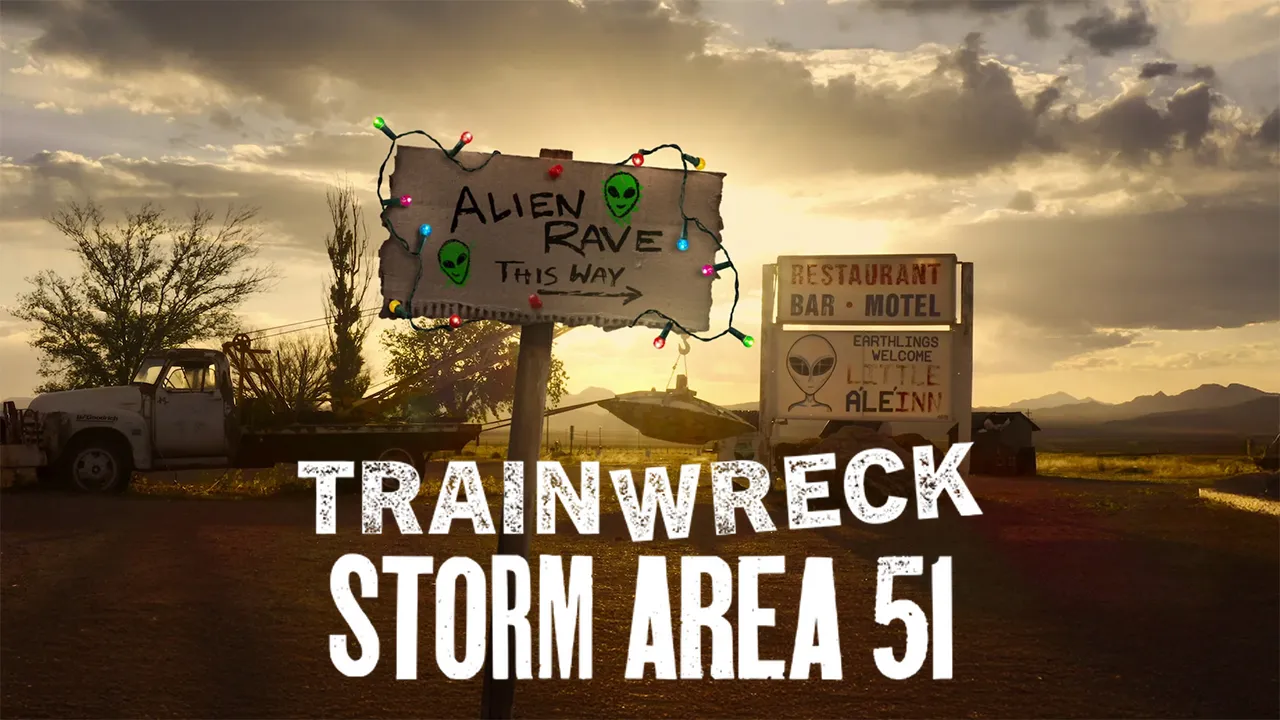

It is not every day that a sarcastic Facebook post mobilizes the US military, but the 2019 “Storm Area 51” phenomenon was a uniquely modern spectacle. This digital joke, born from boredom, metastasized into a real-world event that briefly captured global attention, blurring the lines between irony and intent. Netflix’s documentary series Trainwreck: Storm Area 51 serves as a chronicle of this absurdity, charting the story’s escalation from a meme to a matter of national security.
The two-part series unpacks how online fantasy collided with physical reality, drawing in a cast of characters from clout-chasing influencers to the stoic residents of a forgotten desert town. The show presents a fascinating, if sometimes bewildering, portrait of a culture where digital actions have tangible, and expensive, consequences.
From Shitpost to Spectacle
At the heart of the chaos is Matty Roberts, a 21-year-old from Bakersfield, California, who embodies a specific archetype of the terminally online. Working at a vape kiosk, Roberts passed the time by creating content for his “shitposting” page, a practice steeped in layers of detached irony.
The documentary presents this not merely as humor, but as a form of cultural jamming—a reaction against the curated sincerity and corporate gloss of mainstream social media. In this world, absurdity is a currency and virality is the ultimate goal. The event’s origin, inspired by a Joe Rogan podcast featuring Area 51 theorist Bob Lazar, is telling.
Rogan’s platform acts as a powerful cultural nexus, a space where fringe ideas are laundered for a massive, mainstream audience often primed for anti-establishment narratives. It was the perfect petri dish for a joke that would soon grow beyond its creator’s control.
The documentary effectively chronicles the mechanics of the viral explosion, showcasing it as a textbook case of algorithmic amplification. Platforms like Facebook and TikTok are not neutral conduits; their architecture is designed to reward provocative engagement. The “Storm Area 51” event was perfect fuel, a concept so audacious and shareable that it generated an endless feedback loop of comments, shares, and reaction videos.
The platform itself becomes a central character in the saga, an invisible force pushing the joke toward critical mass. When Roberts doubled down by suggesting participants should “Naruto run” to dodge bullets, it was not a deterrent but an accelerant.
This reference to a popular anime series acted as a cultural shibboleth, a piece of insider knowledge that transformed a vague plan into a participatory in-joke. For a generation that communicates through referential humor, it lowered the barrier to entry, making engagement feel like a fun, low-stakes act of communal performance rather than a commitment to a dangerous undertaking.
The Analog World Responds
The digital wildfire soon leaped into the physical world, landing on the doorstep of Rachel, Nevada, a town of just 50 residents. Trainwreck uses Rachel as a microcosm of forgotten, rural America, suddenly and violently thrust into the global digital spotlight.

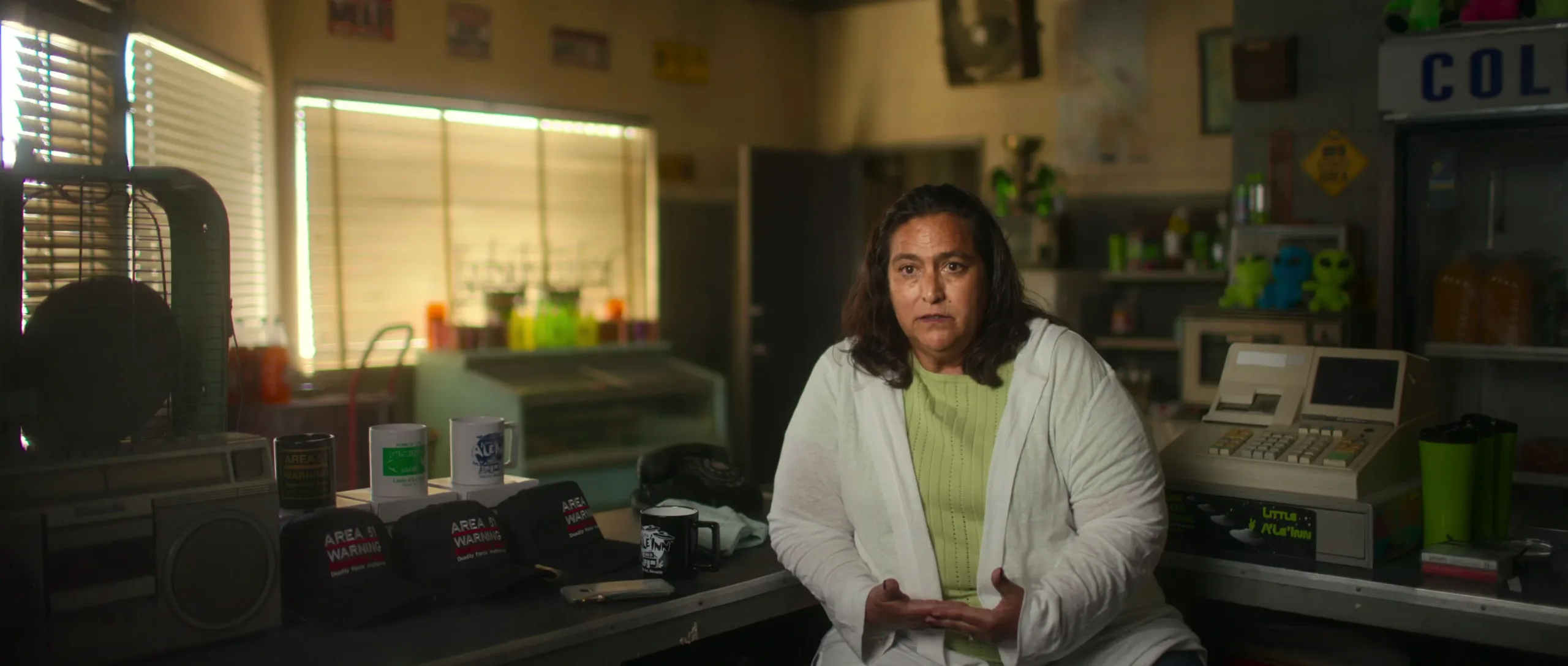
This recurring narrative of the internet age creates a stark contrast between the placeless, ephemeral nature of the online mob and the grounded reality of a community whose very existence is tied to its isolation. The documentary wisely centers this conflict in the character of Connie West, the proprietor of the town’s only inn, the Little A’Le’Inn.
She is portrayed as more than a simple business owner; she is a figure of rugged, frontier individualism, representing a traditional form of American opportunism. Her motivations—profit, survival, capitalizing on the moment—are clear and tangible, making her a perfect foil for the chaotic, irony-poisoned motivations of the online crowd who see her home as a playground.
On the other side of this cultural divide stands the state apparatus. The documentary uses the stern, no-nonsense interviews with US Air Force Colonel Cavan Craddock and local Sheriff Kerry Lee to symbolize the rigid, hierarchical structure of institutions struggling to comprehend a decentralized, leaderless threat. This is a fundamental clash of logics.
The military and law enforcement operate on clear chains of command and threat assessment protocols, none of which are designed to parse a meme. Their dilemma—how seriously to take a joke that two million people have signed up for—is the central tension of the series. The final bill of over $11 million in taxpayer money for military and police mobilization becomes a recurring, darkly humorous punchline.
It is the price of institutional illiteracy in the face of digital culture. The documentary suggests this is more than an anecdote; it reflects a widening gap where state power is ill-equipped to assess, let alone manage, the speed and scale of online phenomena, often defaulting to an expensive and excessive show of force.
The Great Unraveling
The moment the FBI paid a visit to Matty Roberts, the “Storm Area 51” movement shed its thin veneer of being a genuine raid and began its inevitable transformation into a commercial product. The pivot to a music festival called “Alienstock” marked the death of the joke and the birth of commerce, a textbook example of late-stage capitalism’s ability to absorb and monetize any form of counter-cultural energy.
The documentary meticulously charts this unraveling, revealing how the idealistic, communal rhetoric of the online event dissolved the instant real-world resources, risk, and liability were introduced. The “we’re all in this together” spirit evaporated into a series of bitter disputes over contracts and cash.
The messy public breakup between Roberts, Connie West, and a revolving door of promoters like Disco Donnie and Frank DiMaggio exposes the profoundly transactional nature of the relationships forged in this digital firestorm. This was never a community bound by a shared cause; it was a temporary alliance of individualistic pursuits, with each party seeking some form of profit, whether social or financial.
The eventual fracture of the event into two competing festivals becomes a potent metaphor for the entire affair: one festival, Alienstock in Rachel, represented the chaotic, “authentic” roots of the joke, while the other, the “Area 51 Celebration” in Las Vegas, embodied its safer, corporatized potential.
The final anticlimax at the actual gates of Area 51 is the documentary’s most powerful, if unspoken, piece of social commentary. Millions signaled their participation online, but only a few hundred appeared in person. This staggering gap between online performativity and offline action serves as a defining statement on the nature of digital “activism” in an era where a click is often mistaken for a commitment.
A Mirror to the Medium
As a piece of television, Trainwreck: Storm Area 51 is undeniably effective docutainment, a format that has become a staple of streaming platforms. It is fast-paced, character-driven, and edited for maximum binge-worthiness, making for a compulsively watchable experience.
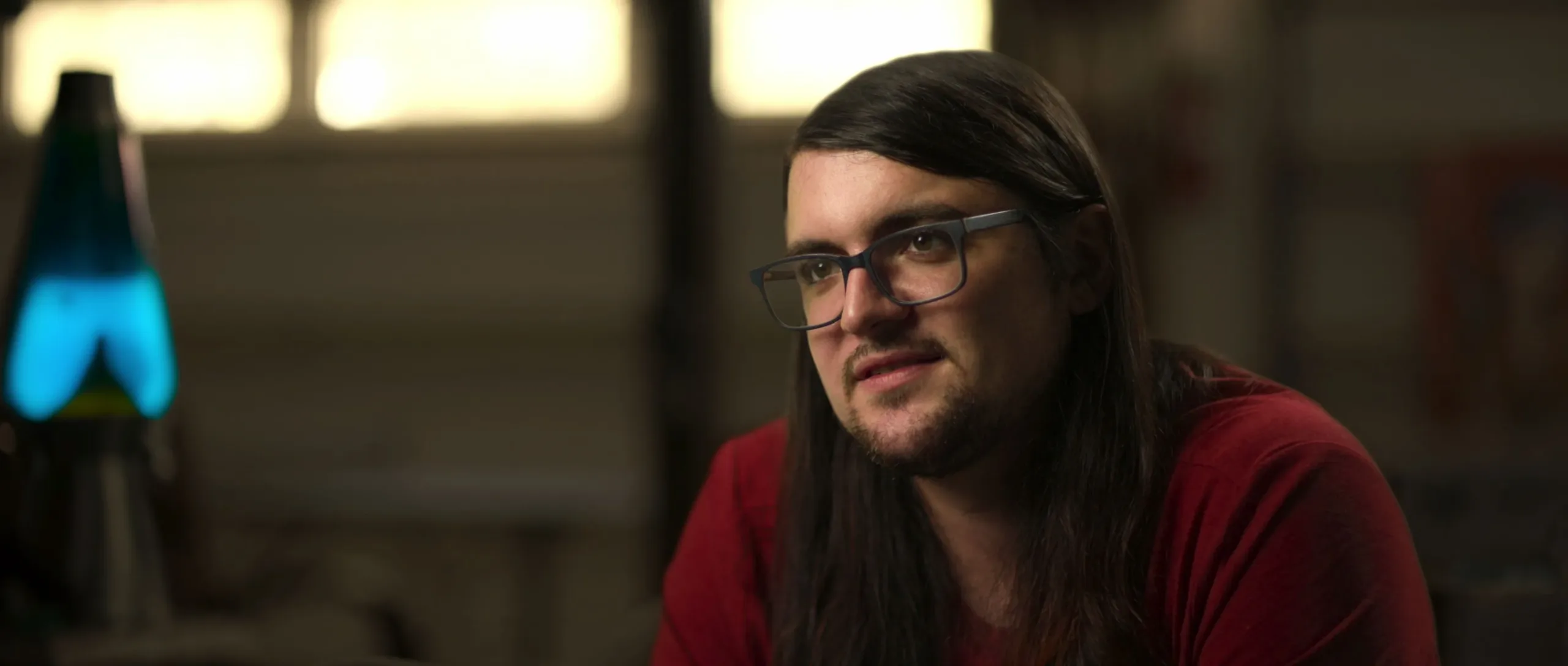
The story it tells is inherently captivating, filled with eccentric personalities and absurd situations that perfectly capture a strange cultural moment. Yet its greatest strength as entertainment is also its most significant flaw as journalism. The series excels at documenting the “what” but consistently shies away from a deeper investigation of the “why.”
It presents its cast of characters without seriously pressing them on their motivations or forcing them to confront the consequences of their actions. The documentary fails to situate the event within the broader political and social context of 2019, an era defined by deep institutional distrust, rampant conspiracy theories, and a growing sense of disenfranchisement that makes a collective, ironic gesture like storming a military base feel like a plausible form of expression.
Ultimately, the documentary’s form perfectly mirrors its content. Its rapid-fire editing, its reliance on quick soundbites from a sprawling cast, and its ultimate refusal to draw a firm analytical conclusion all reflect the chaotic, fragmented, and unresolved nature of the internet culture it portrays.
The series isn’t just about a viral event; its very structure is a product of the media environment that creates such phenomena. It sets a template for a new subgenre of rapid-response documentaries that package fleeting internet culture for mainstream consumption. While this makes for an engaging spectacle, it comes at the cost of genuine insight, leaving the viewer with a vivid memory of the circus but little understanding of the forces that brought the carnival to town.
“Trainwreck: Storm Area 51” is a two-part documentary that revisits the viral meme that dared the world to invade one of the most secretive military bases in the world and nearly turned into a national security crisis. The film was released on July 29, 2025. It is available to stream on Netflix.
Full Credits
Director: Jack Macinnes
Producers: Ruaridh Connellan, Emma Supple
Executive Producers: Alex Marengo
Cast: Matty Roberts, Guy Malone, Kerry Lee
Editors: Dan Ablett, Charlie Webb
The Review
Trainwreck: Storm Area 51
Trainwreck: Storm Area 51 is a compulsively watchable recap of a quintessential internet-age absurdity. While it effectively captures the chaotic energy and eccentric characters of the meme-turned-movement, it remains a surface-level account. The series entertains without enlightening, mirroring the shallow spectacle it documents rather than providing a deeper analysis of the cultural forces at play. It’s a fascinating snapshot, but not a profound portrait.
PROS
- The series is fast-paced, funny, and engaging from start to finish.
- It provides a clear and comprehensive timeline of how the phenomenon unfolded.
- It successfully highlights the eccentric and memorable cast of real-life individuals involved.
- It serves as a perfect time capsule of a bizarre and uniquely 21st-century cultural moment.
CONS
- The documentary focuses on the "what" but rarely explores the "why" behind the events.
- It fails to seriously probe the complex motivations of its key subjects.
- The series does little to connect the phenomenon to the wider social and political climate of 2019.
- It functions more as "docutainment" than as a serious piece of journalism, missing opportunities for deeper commentary.