
























![Kingdom Hearts Collection [I-III] Review](https://gazettely.com/wp-content/uploads/2026/10/Kingdom-Hearts-Collection-I-III-1-360x180.webp "Kingdom Hearts Collection [I-III] Review: KHII Holds Steady as Newer Entries Fluctuate 37")





To look at the night sky is to invite a particular kind of vertigo, a sudden awareness of scale that can either comfort or annihilate. Jem Cohen’s Little, Big, and Far operates entirely within that feeling. The film centers on Karl, an aging Austrian astronomer who spends his days in quiet contemplation, corresponding from a great distance with his cosmologist wife, Eleanor.
What unfolds is a quiet, patient work with the texture of a documentary but the soul of a scripted meditation. It is not a story in any conventional sense. It is an arrangement of ideas, setting the immense scale of the universe against the intimate frequency of human thought, all while noting the static of our growing disconnect from the natural world.
Correspondence from a Cold Universe
The film dispenses with plot almost entirely, building its delicate structure from the correspondence between its characters. The narrative progresses not through action but through relayed thoughts, a volley of monologues across a void.
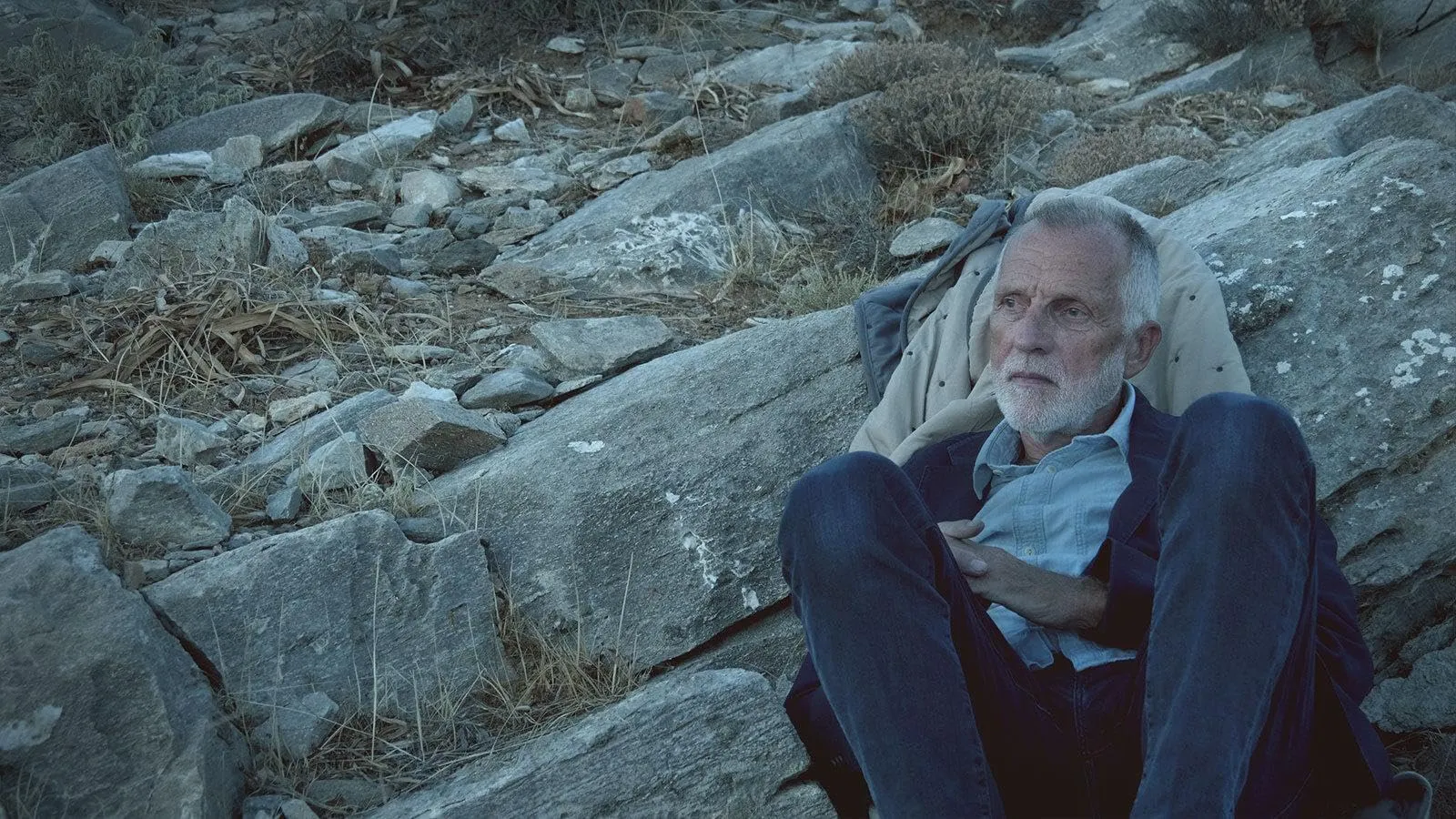
This epistolary choice forces a specific kind of attention; the viewer becomes a silent confidant, tasked with assembling a psychological portrait from fragments of introspection. Karl is the film’s quiet anchor, a man looking back on his life as his profession seems to fade alongside him. His anxiety about humanity losing its connection to the stars is palpable, a lament for a primal experience erased by the artificial glow of modernity.
His wife, Eleanor, exists as a voice and a series of texts from Texas, her physical absence making their intellectual bond the primary subject. Their connection is a theorem proven by words alone, an intimacy born of immense distance. Adding a third point to this constellation is Sarah, a younger colleague who carries the same scientific curiosity into a future far more precarious.
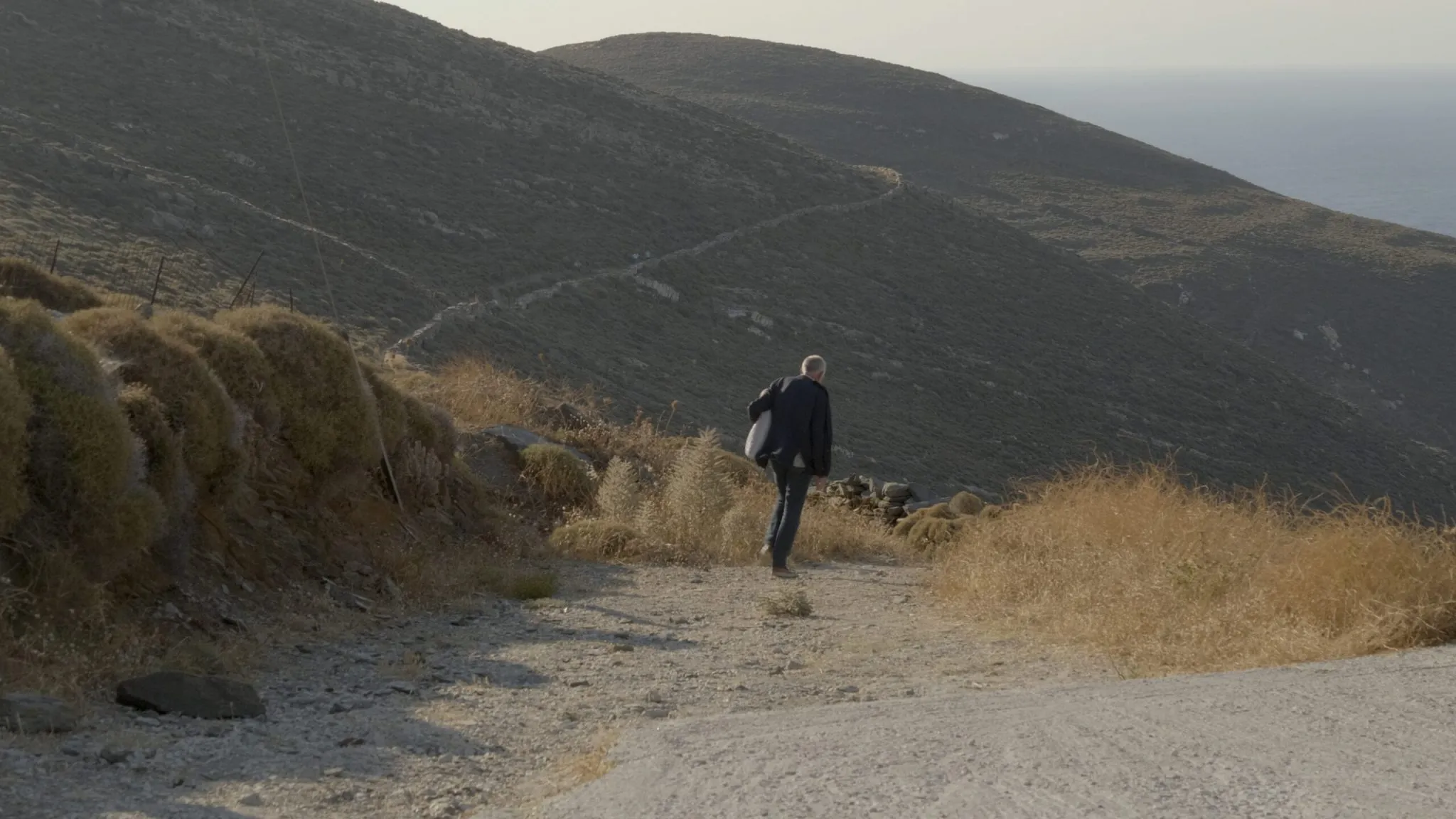
She represents a generation inheriting both the wonder and the decay, grappling with the same questions in a world with fewer certainties. The film’s only real narrative propulsion is Karl’s simple desire to travel to Greece for a sky dark enough for a proper look. This is less a plot point than an existential pilgrimage, a search for an authentic signal amidst the noise of contemporary life.
The Grammar of Stillness
Cohen’s aesthetic is one of radical patience, a direct counterpoint to the hurried grammar of mainstream cinema. His camera is a fixed instrument of observation, employing long, static shots that refuse to guide the eye, instead demanding that the viewer simply inhabit the frame.
This technique creates a non-hierarchical visual field where a crumbling brick wall or a dusty museum display holds as much significance as a human face. The film assembles a visual lexicon from these disparate sources: hypnotic computer visualizations of deep space, the industrial ruin of a factory, a face illuminated by a screen, the ordered silence of a library.
These images are not sequenced for narrative momentum but for thematic echo. Placing a shot of a distant nebula next to one of urban decay creates a friction that generates the film’s central questions about creation and entropy. Karl’s comparison of the cosmos to free jazz—a chaos that is not really chaos—becomes the film’s Rosetta Stone.
It is the key to its editorial logic, which values improvisation and finds a deep, underlying order in the dissonance between its parts. The sound design follows suit, a careful layering of gentle narration over the ambient noise of a city or the quiet hum of a room, grounding the cosmic talk in a tangible, immediate reality.
Humanity’s Place in a Vast, Fading World
The film operates on a constant toggle between the galactic and the granular, shifting from the birth of stars to the memory of a first love. This juxtaposition forces a confrontation with the core questions of existence without ever stating them explicitly.
It is a quiet document of the Anthropocene, where the consequences of human activity are written across the landscape and even into the sky itself. Light pollution here is not a mere nuisance; it is a profound form of cultural erasure, a severing of a bond between humanity and the universe that has stood for millennia. This anxiety is amplified in scenes discussing museum exhibits of animals that are now extinct, a haunting prolepsis for what is to come.
Melancholy is the dominant key, a feeling of witnessing a slow, inexorable decline, yet the tone never sinks into outright despair. It is pierced by moments of profound, unadorned beauty. Eleanor’s description of strangers gathered to watch a solar eclipse is not just a happy aside; it is a vital piece of evidence.
This scene of shared, unmediated wonder acts as a brief reprieve, a testament to a human capacity for awe that persists as a resilient, perhaps essential, force. The film offers no solutions, only a carefully framed space for reflection on our place within this fading world.
“Little, Big, and Far” premiered in the United States on October 5, 2024, and also screened at the New York Film Festival. It was released in theaters on July 11, 2025.
Full Credits
Director: Jem Cohen
Writers: Jem Cohen
Producers: Paolo Calamita, Jem Cohen
Executive Producers: David Frankel, Ryan Krivoshey, Scott Macaulay, Patti Smith, Michael Stipe
Cast: Franz Schwartz, Jessica Sarah Rinland, Leslie Thornton
Director of Photography (Cinematographer): Jem Cohen
Editors: Jem Cohen
The Review
Little Big and Far
Little, Big, and Far is a demanding, meditative piece that trades narrative for atmosphere and plot for philosophical inquiry. It is a film for the patient viewer, one willing to surrender to its quiet rhythms and contemplative gaze. While its deliberate pace and intellectual coolness will undoubtedly alienate some, those attuned to its specific frequency will find a profound and beautifully rendered exploration of our place in a vast, indifferent cosmos. It is a work of quiet, austere power.
PROS
- A deeply philosophical and thought-provoking exploration of humanity's place in the universe.
- Visually stunning, with deliberate, painterly cinematography that rewards close attention.
- A unique and challenging narrative structure built from correspondence and observation.
- The sound design and central metaphor of free jazz create a cohesive, immersive aesthetic.
CONS
- The extremely slow, meditative pace can feel lethargic and will not appeal to all viewers.
- A complete lack of conventional plot or character arcs may leave some feeling emotionally disconnected.
- Its intellectual and formal rigor can create a sense of distance and austerity.







