






















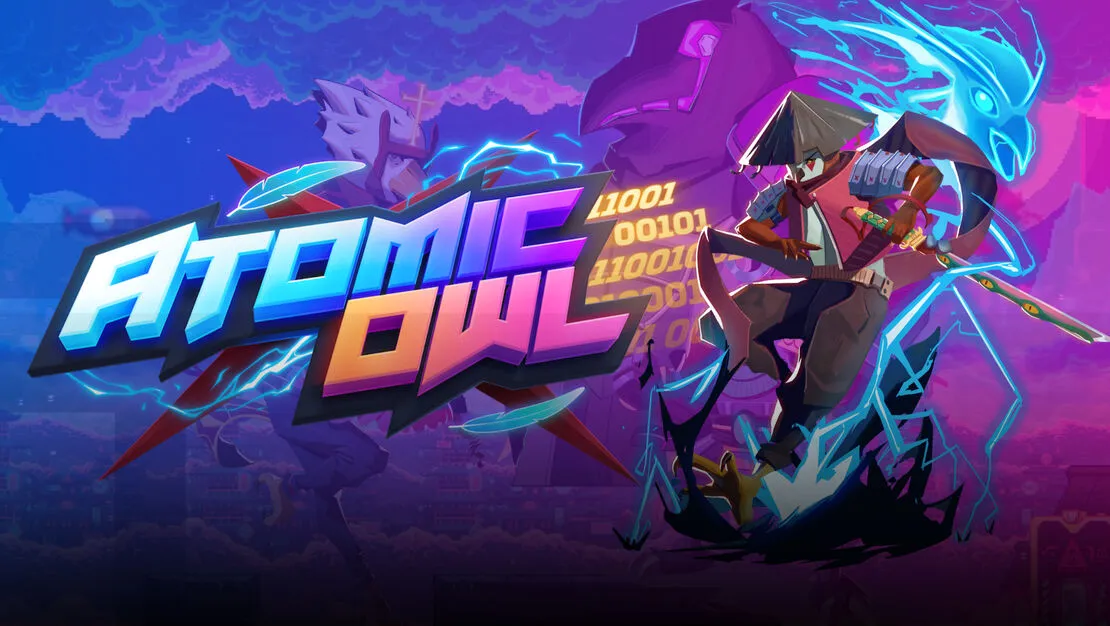

In the world of Judanest, a land populated by anthropomorphic birds, Hidalgo Bladewing is a celebrated hero. The story begins not with a grand battle, but with a simple plan: celebrate a successful mission with his friends over a bowl of ramen.
This moment of peace is shattered by the arrival of the Crow Sorcerer, Omega Wing. In a swift ambush, Omega Wing unleashes a dark energy called Meza, corrupting Hidalgo’s comrades and turning them into his loyal enforcers. Hidalgo is defeated and left bound to a tree, a fallen hero.
Two years pass. Freedom comes from an unlikely source: his own sword, Mezameta, now sentient and snarky after being touched by the same dark energy. With his blade as his guide, Hidalgo’s quest is set. He must hunt down his former friends to free them from their curse, seek vengeance against Omega Wing, and restore order to his shattered world. The premise is a straightforward revenge tale, given a fresh coat of paint with its distinct avian characters and world-building.
The Repetitive Cycle of a Hero
Atomic Owl presents itself as a modern roguelike, a genre defined by its cyclical nature of trial, death, and gradual empowerment. The core loop is immediately recognizable to anyone familiar with the genre. You guide Hidalgo through hostile territory, fall in battle, and awaken back at the Twilight Perch hub area.
Here, you invest the fruits of your failed run into permanent upgrades before venturing out once more. This meta-progression is the engine that drives the roguelike experience, creating a palpable sense of growth that turns impossible odds into achievable goals. The game splits this progression into two distinct streams. The most direct system involves collecting blue Meza Souls from fallen enemies.
This currency is spent at the campfire on a modest tree of permanent buffs. These are primarily quality-of-life improvements, such as granting an extra revival upon death or expanding the magnetic pull for collecting other resources. They are functional and necessary, yet they lack the excitement found in contemporaries like Hades, where upgrades can unlock entirely new ways to play.
The second form of progression happens during each run. Collecting green Meza dropped in the environment permanently raises Hidalgo’s level, which in turn increases his maximum health. This is a clever touch, ensuring every attempt, no matter how brief, makes Hidalgo slightly more durable for all future endeavors.
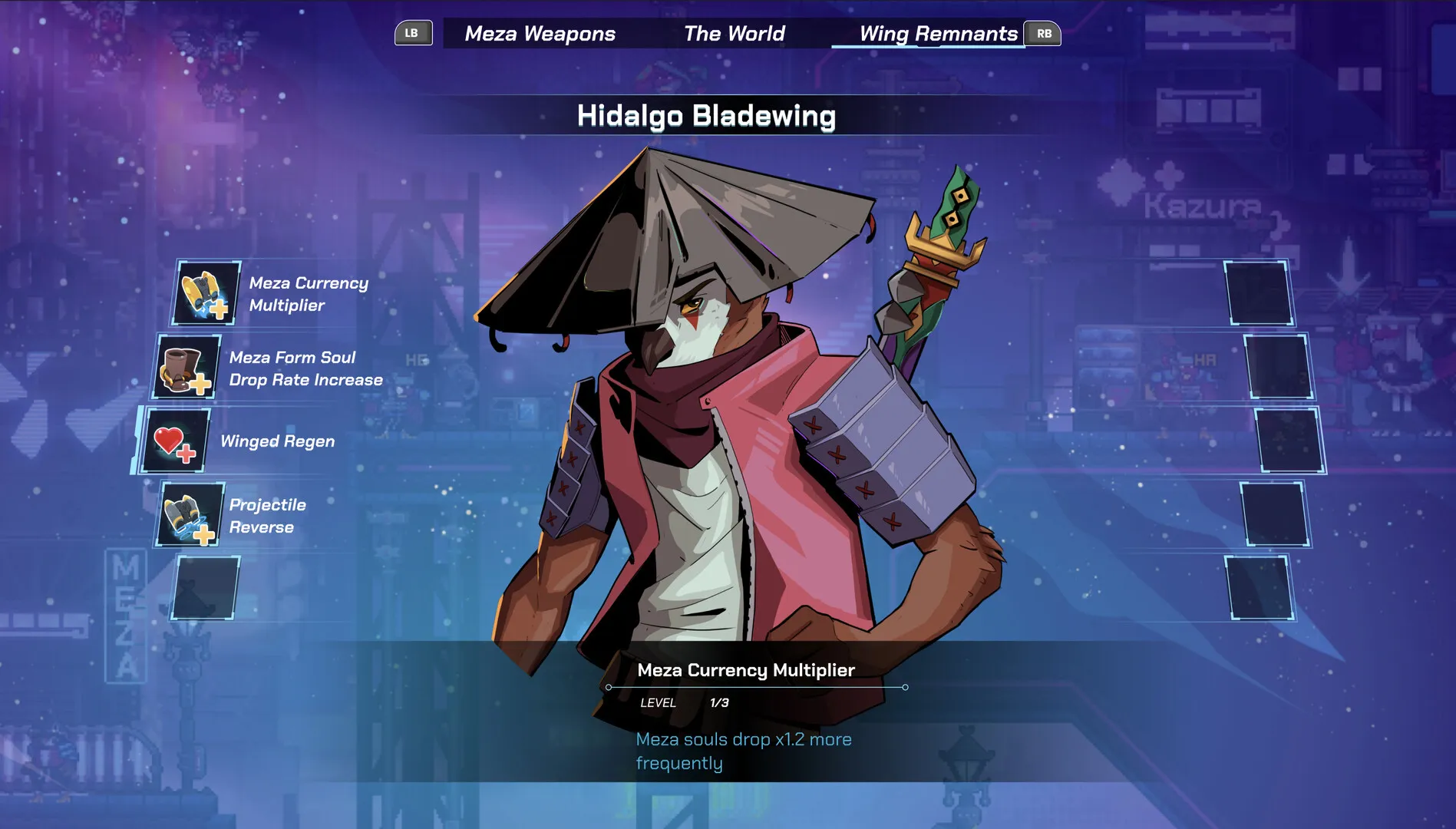
Augmenting this are the Wing Remnants, temporary powers dropped randomly by enemies. These are the classic boons of the genre: one might grant a triple jump, another might add fire damage to your attacks, while a third could allow you to deflect projectiles. A lucky combination of these Remnants can transform a run from a desperate struggle into a satisfying power trip.
The game’s core problem lies in its interpretation of the roguelike structure. A central pillar of the genre, from The Binding of Isaac to Slay the Spire, is procedural generation. Randomized layouts, enemy encounters, and item placements ensure that no two runs are the same.
This constant novelty forces the player to adapt and strategize on the fly, making each journey into the unknown a unique story. Atomic Owl omits this feature entirely. Its levels are handcrafted and static. The architecture, enemy positions, and platforming challenges are identical every single time. The consequence of this design choice is profound. After a few attempts, the gameplay shifts from one of discovery to one of rote memorization.
The thrill of improvisation is replaced by the methodical execution of a known sequence. The game becomes less a dynamic adventure and more a linear action-platformer with an exceptionally punishing death mechanic. Without the promise of a different world to explore, the repetitive cycle feels less like a journey of growth and more like a grind.
Wielding Blades and Navigating Ledges
The moment-to-moment action is built on two pillars: combat and platforming. Hidalgo is a capable warrior from the outset, equipped with an arsenal of four distinct weapons he can switch between at any time.
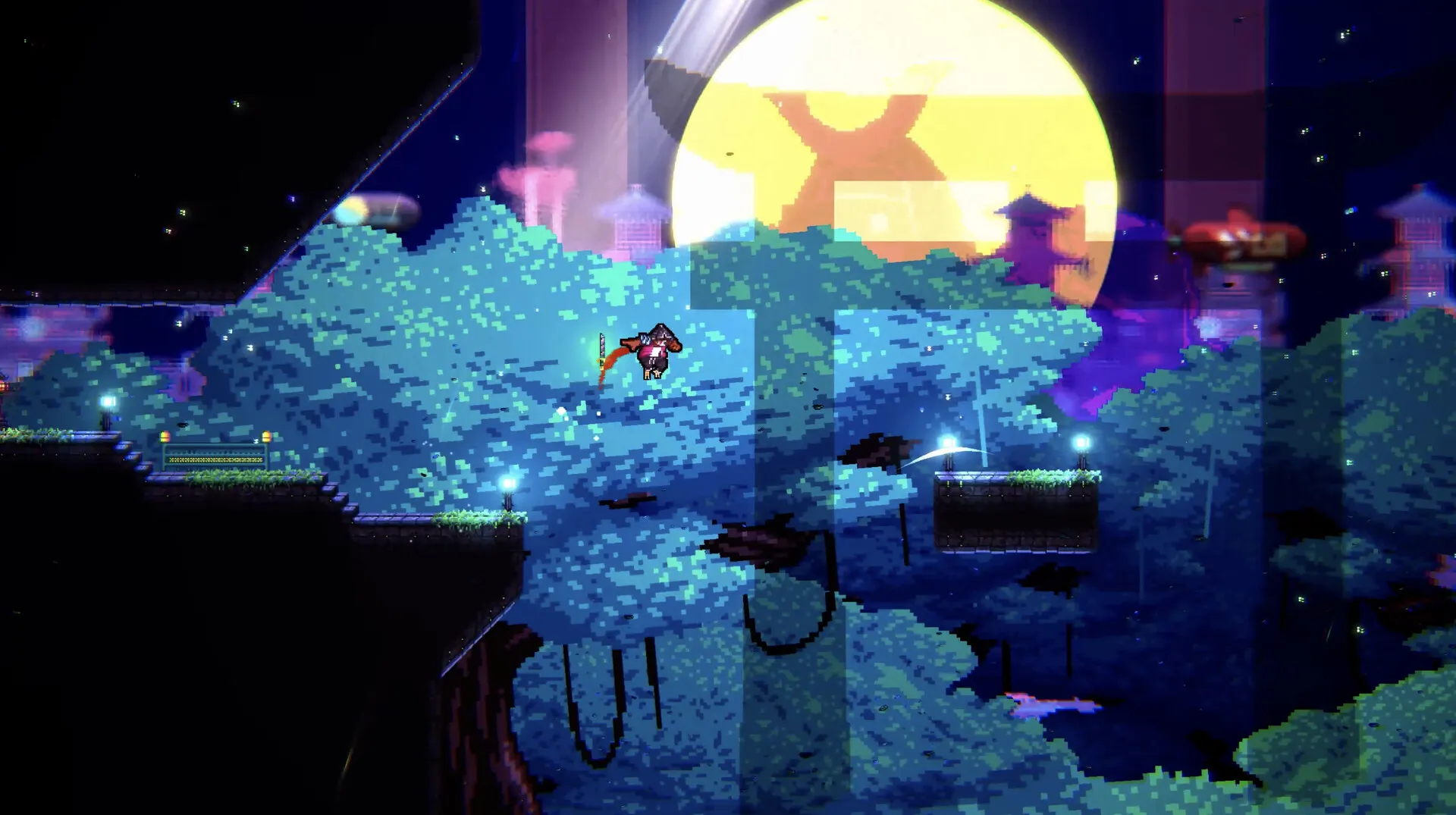
The standard sword is a reliable all-rounder, the heavy hammer delivers slow but powerful strikes ideal for breaking enemy guards, the chain-whip offers reach at the cost of leaving you exposed, and throwable axes provide a limited ranged option.
This is supplemented by the Yutameta, a rechargeable homing scythe that can clear out multiple foes at once. This system encourages experimentation, as certain enemies are more susceptible to specific weapon types.
The feel of combat is fast and fluid, yet it is consistently undermined by a chaotic presentation. The camera remains pulled back, rendering Hidalgo as a small sprite in a sea of particle effects and enemy projectiles. It is often difficult to track your own character, let alone read enemy attack patterns in a hectic melee. This visual confusion is compounded by the surprisingly low difficulty.
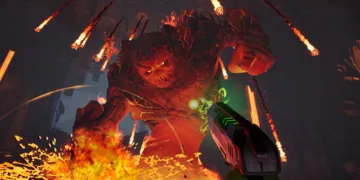
Standard enemies pose little threat, and the bosses—Hidalgo’s corrupted former friends—are narrative titans but mechanical pushovers. Their attack patterns are simple and highly telegraphed, allowing you to defeat them with minimal effort. This creates a dissonance between the story and the gameplay. The narrative builds up these encounters as emotionally charged confrontations, yet the mechanics reduce them to trivial roadblocks. The game fails to make the player feel the struggle of fighting a brainwashed ally.
While the combat may be forgiving, the platforming is anything but. The game demands a high level of precision from the player, utilizing Hidalgo’s full suite of moves including double jumps, wall jumps, and directional dashes. The challenge often feels less like a fair test of skill and more like a battle against the game’s own design.
Moving platforms can be finicky, dropping you into a pit for no discernible reason. The most significant issue stems from the camera’s tendency to pan far ahead in large platforming sections, leaving Hidalgo completely off-screen. This forces you to make blind jumps, turning a test of timing into a frustrating exercise in guesswork.
The punishment for failure is severe. There are very few checkpoints, meaning a single missed jump can send you back to the beginning of a long and arduous area you’ve already cleared. This design feels punishing for the sake of being punishing, lacking the tight controls and instant restarts that make difficult platformers like Celeste feel rewarding instead of simply aggravating.
Pixelated Feathers and Pulsing Beats
Visually, Atomic Owl is a striking creation. The game is rendered in a detailed and expressive pixel art style that brings the world of Judanest to life. The aesthetic blends a traditional Japanese influence with futuristic, neon-drenched cityscapes, creating a unique visual identity.
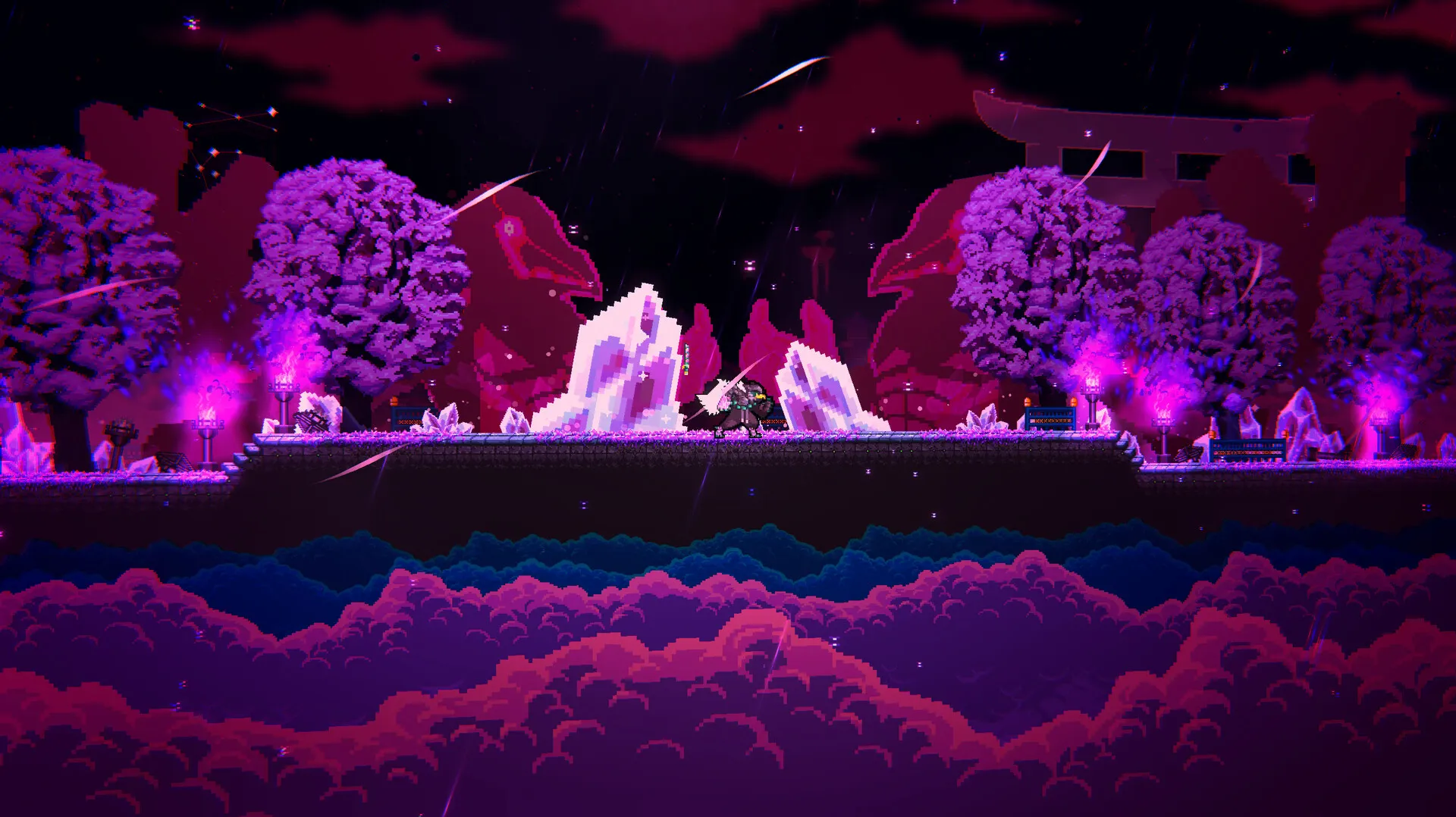
Environments are rich with color and small details, from bustling city streets with ramen shops to stark, retro-futuristic training facilities. The developer also includes optional visual filters, such as a CRT scan-line effect or a black-and-white “Samurai Cinema” mode, allowing players to tailor the presentation to their liking. This artistic strength, however, can interfere with gameplay clarity.
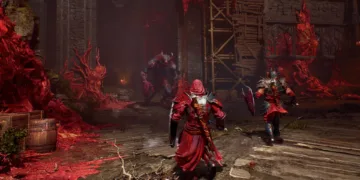
The combination of the vibrant color palette, flashy special effects, and the persistently zoomed-out camera frequently results in a visually cluttered screen. This lack of readability can make enemies and their projectiles difficult to distinguish from the background, directly impacting the player’s ability to react. The distant camera also creates a sense of detachment from Hidalgo, making it harder to connect with the hero’s plight when he is just a tiny figure on a chaotic screen.
The game’s audio design is a standout success. The soundtrack is a fantastic collection of high-energy synthwave and chiptune tracks that perfectly complements the fast-paced action and retro-futuristic setting. The music drives the rhythm of combat and exploration, adding a layer of intensity and style that elevates the entire experience. It is a score that is not just background noise but an integral part of the game’s personality.
Further enhancing the presentation is the inclusion of animated cutscenes and partial voice acting. For an independent title, these features add a welcome touch of cinematic flair and help to flesh out the characters and narrative. The application of voice work is inconsistent, which can be slightly jarring, but its presence at all is a commendable effort that speaks to the game’s high artistic ambitions.
A Flawed Gem
Atomic Owl is a game of conflicting qualities. Its core is built on a foundation of enjoyable action, a compelling visual style, and a fantastic soundtrack. There is a genuinely good game here, one with a clear vision and a lot of heart. This makes the numerous technical problems and frustrating design choices all the more disappointing.
Reports from players describe a litany of issues that go beyond minor annoyances, including frequent game crashes, instances of clipping through solid geometry, and game-breaking bugs that can completely halt progress. Boss encounters might fail to trigger their concluding cutscene, leaving players stuck in an endless loop, or bugs might render a boss completely passive, trivializing what should be a climactic fight.
Beyond these major technical failings are smaller design frictions that constantly work against the player. Enemies can attack you while you are locked in a dialogue box, moving platforms behave with an infuriating lack of consistency, and the controller vibration can get stuck, buzzing incessantly. Each of these problems, on its own, might be forgivable.
Taken together, they paint a picture of a game that needed more time in development. They erode the player’s trust and break the immersion that the art and music work so hard to build. The result is an experience defined by its potential. It is an attractive and mechanically sound action game that is held back from excellence by a lack of polish and a series of choices that create unnecessary frustration.
The Review
Atomic Owl
Atomic Owl is a visually stunning action-platformer with an incredible soundtrack and a fun, flexible combat system at its core. However, its potential is severely hampered by a repetitive structure that lacks true roguelike variety, frustrating platforming sections, and a significant lack of polish. What could have been a standout indie title is instead a flawed gem—beautiful to behold, but often a headache to play. The experience is rewarding in moments but is ultimately held back by its technical shortcomings and questionable design choices.
PROS
- Beautiful pixel art and a strong, cohesive aesthetic.
- An outstanding and energetic synthwave soundtrack.
- Fast-paced combat with a good variety of weapons.
CONS
- Static level design makes the loop highly repetitive.
- Significant technical bugs and a general lack of polish.
- Frustrating platforming, made worse by camera issues.
- Shallow roguelike progression systems.