





























Before Ms. magazine, the American media landscape for women was largely a monochrome terrain of domestic instruction. Publications taught how to achieve the perfect casserole or select the right shade of lipstick, framing a woman’s world within the four walls of her home and the confines of her marriage.
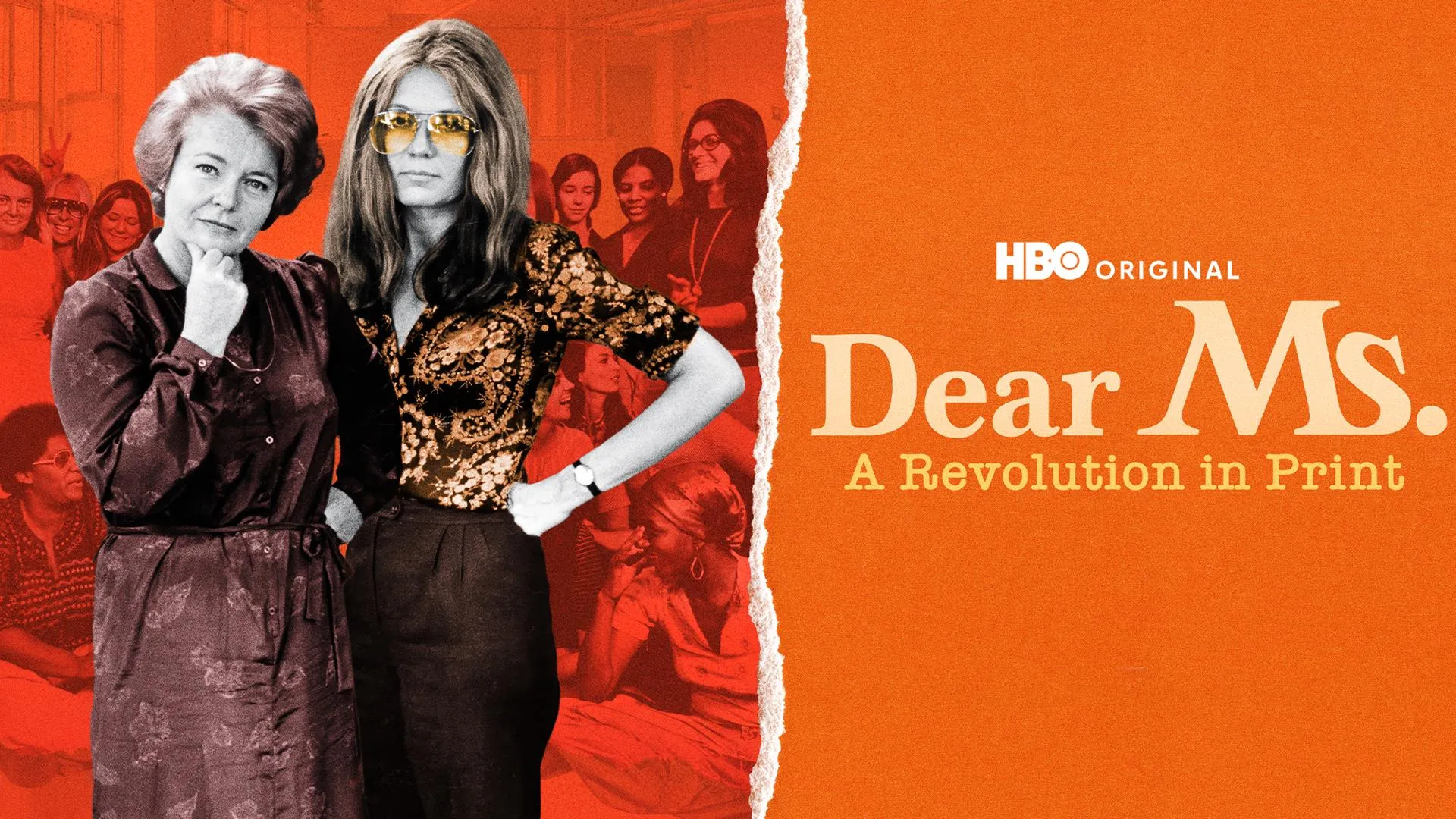
The documentary “Dear Ms.: A Revolution in Print” chronicles the audacious publication that shattered this mirror. It follows Gloria Steinem and a team of visionary women who built a platform not for advertisers, but for the silenced truths of women’s lives.
The film powerfully argues that the political and personal battles ignited by Ms. fifty years ago have not faded; they have simply shifted battlegrounds, their echoes reverberating in the global discourse of today.
The Click Heard ‘Round the World
The genesis of Ms. was a moment of journalistic epiphany. The film recounts Gloria Steinem’s assignment covering a women’s liberation meeting, an experience that revealed a story too vast for a single article. The result was an experimental insert in New York magazine that became a cultural phenomenon. Its first standalone issue sold out its entire 300,000-copy print run in eight days, signaling a deep, unaddressed hunger in the American public.
The documentary’s visual style, mixing grainy archival footage with punchy, retro animations, captures this vibrant, chaotic energy. This success was met with institutional scorn. The film skillfully uses archival footage of ABC news anchor Harry Reasoner confidently predicting the magazine’s imminent, embarrassing demise, a clip that perfectly encapsulates the era’s patriarchal dismissiveness. Ms. was not just a publication; it was a re-education.
It gave language to concepts previously confined to whispers, exemplified by Jane O’Reilly’s landmark essay describing the “Click!”—that flash of realization when a woman suddenly sees the systemic nature of her personal frustrations. By putting terms like “sexual harassment” and “battered wives” onto coffee tables, it shifted the national lexicon.
Also Read





The flood of letters from readers, both venomous from threatened men and jubilant from validated women, gave the film its name and demonstrated the publication’s most profound effect: it transformed isolated frustrations into a collective political consciousness, proving to countless women that they were not alone.
The Politics of the Page
The documentary moves beyond external praise to examine the magazine’s internal contradictions. The film is frank about the magazine’s initial blind spot: its six founding editors were all white women. This fact created a complex dynamic with publications like Essence, a magazine for Black women founded a year earlier.

The documentary features the sharp perspective of Marcia Ann Gillespie, who edited both magazines and speaks to the tension of Ms. being designated the “mainstream” feminist voice while Essence was carving out its own vital space. The film does not shy away from the material consequences of this dynamic, highlighting writer Michelle Wallace’s recollection of being asked to remove her braids for a Ms. photoshoot, a request unimaginable at Essence.
This internal struggle for representation was compounded by external market forces. The film notes that when Ms. put politician Shirley Chisholm on its cover, it knew distributors in the American South would refuse to sell it. The resignation of contributing editor Alice Walker, who left because she felt the magazine failed to feature enough women of color on its covers, is presented as a critical turning point.
This was mirrored by an external fight for survival. Ms. faced a commercial paradox: it ran articles exposing the dangers of chemicals in hair dyes while needing revenue from cosmetics companies like Clairol. It was a revolutionary project wrestling with the pragmatic realities of the very capitalist system it sought to critique.
Divided Gazes, Divided Selves
The documentary’s final act confronts the schism that nearly tore the feminist movement apart: the “sex wars.” It explores how Ms. tried to navigate this minefield by proposing a distinction between mutually pleasurable “erotica,” from the Greek erōtikos (sexual love), and violent, power-based “pornography,” from pornographos (depicting prostitutes).

This attempt to define terms only exposed the chasm between anti-porn activists like Andrea Dworkin and sex-positive advocates like Candida Royale, whose perspectives as a woman working in the adult film industry were largely excluded. The film’s own structure mirrors this division. By employing three different directors, the narrative becomes fragmented.
The first part’s colorful animations disappear in the later sections, and the final chapter often presents interviews as voiceovers without showing the speakers, creating a sense of detachment. This disjointed form powerfully reflects the messy, unresolved nature of the debates it portrays. However, the synergy breaks at the end.
The documentary’s abrupt conclusion, fast-forwarding through decades of history and the rise of the internet, feels less like a deliberate choice and more like a narrative failure. It leaves the story feeling unfinished, yet what remains is a vital document of a complicated and essential fight for control over bodies, language, and power.
The documentary Dear Ms.: A Revolution in Print is a three-part film that premiered on July 2, 2025, on HBO and is available to stream on Max. This film explores the legacy of Ms. magazine, tracing its impact from its launch in 1972 to its role in challenging the male-dominated media and amplifying women’s voices.
Full Credits
Director: Cecilia Aldarondo, Alice Gu, Salima Koroma
Writers: Cecilia Aldarondo, Alice Gu, Salima Koroma
Producers: William Ventura
Executive Producers: Dyllan McGee, Amy Richards, Cindi Leive, Regina K. Scully, Nancy Abraham, Lisa Heller, Sara Rodriguez, Anna Klein
Cast: Gloria Steinem, Patricia Carbine, Letty Cottin Pogrebin, Lindsy Van Gelder, Marcia Ann Gillespie, Suzanne Braun Levine, Jane O’Reilly, Lisa Coleman, Michele Wallace, Alan Alda, Ellen Sweet, Robin Leonardi, Robin Morgan, Annie Sprinkle, Paulette Barnes, Shirley Chisholm, Andrea Dworkin, Jerry Falwell, Warren Farrell, Dorothy Pittman Hughes, Jean Last, Lisa Leghorn, Gloria Leonard, Catharine A. MacKinnon, Del Martin, Barbara Mikulski, Susan Myer, Ronald Reagan, Harry Reasoner, Robert Redford, Candida Royalle, Phyllis Schlafly, Gene Shalit, Linda Lee Tracey, Carole S. Vance, Veronica Vera, Alice Walker, Diane Williams
Director of Photography (Cinematographer): Alice Gu, Maria Rusche
Editors: Jessica Miller, Carol Martori, Terra Jean Long
Composer: Sajjad Hossain, Wynne Ashley Bennett, Angélica Negrón
The Review
Dear Ms.: A Revolution in Print
"Dear Ms.: A Revolution in Print" is an essential, if imperfect, chronicle of a cultural earthquake. It powerfully captures the magazine's audacious birth and its vital role in shaping modern feminism, using incredible archival footage to transport viewers. While its fragmented three-part structure and abrupt ending prevent it from being a cohesive masterpiece, it succeeds as a vital, thought-provoking document of a revolution that is still being fought.
PROS
- Fascinating archival footage that brings the 1970s to life.
- Honest exploration of the feminist movement's internal conflicts.
- Clearly establishes the magazine's historical importance and ongoing relevance.
- Intelligent analysis of the intersection of politics, media, and commerce.
CONS
- A disjointed narrative due to the three-director structure.
- An abrupt ending that neglects the magazine's more recent history.
- Inconsistent visual style across its different sections.