























The figure of the struggling artist, sacrificing comfort for creation, is a story told across cultures, from the garrets of Paris to the intellectual circles of Indian Parallel Cinema. Director Valérie Donzelli’s At Work offers a modern, quietly piercing version of this timeless narrative.
The film introduces us to Paul, a 42-year-old novelist who has willingly traded a stable career in photography for the unpredictable pursuit of literature. His choice has cost him dearly. Though he has a few critically noted books to his name, commercial success has eluded him. Now, his savings are depleted, his marriage has ended with his ex-wife and children moving to Montreal, and his comfortable apartment is a memory.
Stripped of his former life, Paul faces the fundamental conflict between creative ambition and the stark necessity of survival. His predicament is framed not as a midlife crisis, but as a deliberate and profound commitment to an artistic life, forcing him to discover just how much he is willing to endure for his work.
Working for the Algorithm in Paris and Beyond
Paul’s new life is governed by the cold glow of his smartphone and a gig-work app called “Jobber.” This digital platform becomes his sole source of income, offering a stream of menial tasks that he must win by constantly lowering his rate. The work is varied and physically taxing: one day he is hauling rubble from a home demolition, the next he is assembling flat-pack furniture for an impatient client or trimming a lawn with inadequate tools.
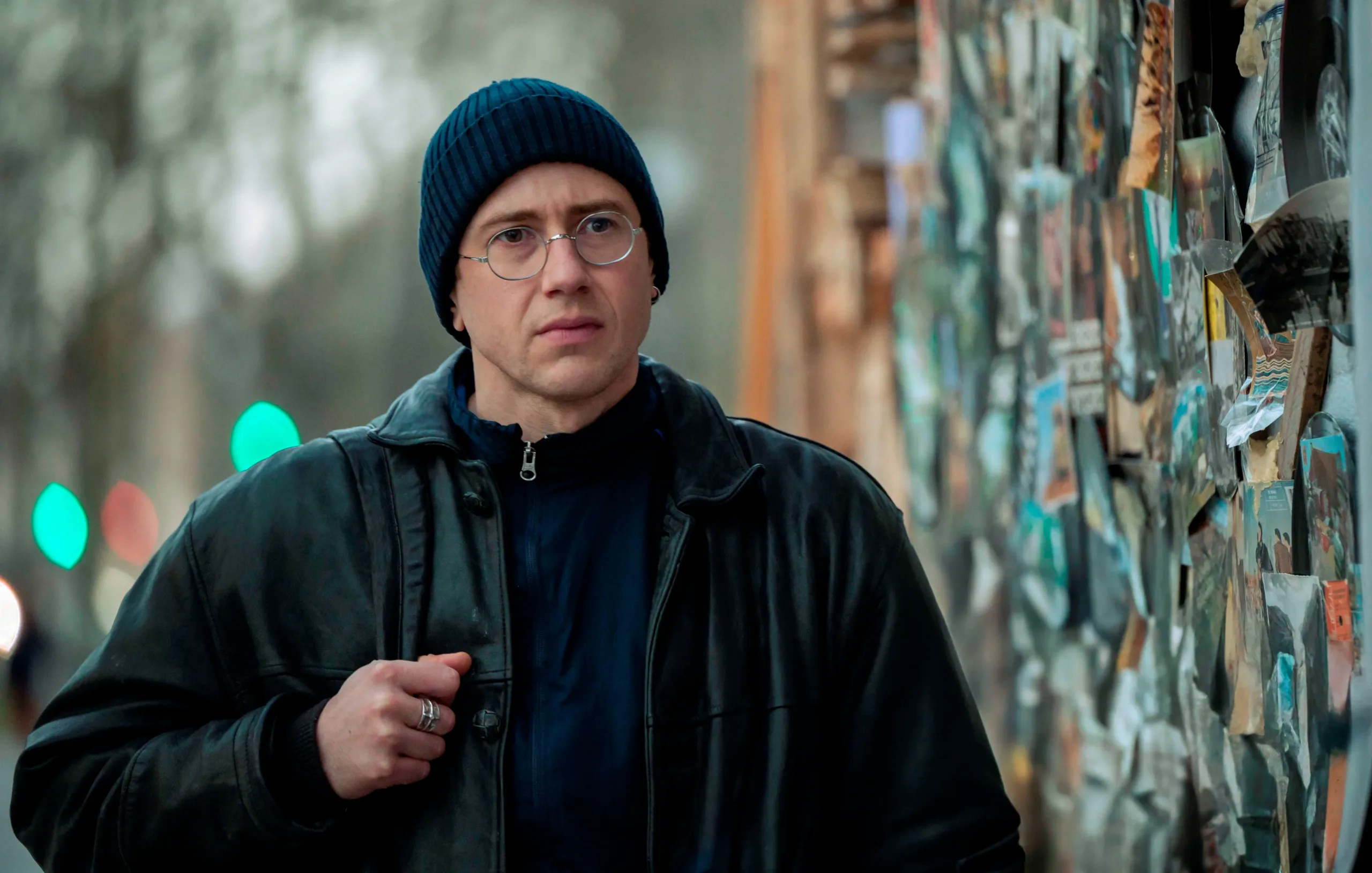
Donzelli uses these episodes to create a powerful commentary on the modern labor landscape. This places At Work in a vital global cinematic dialogue with films like Nandita Das’s Zwigato, which follows a food delivery driver in Bhubaneswar, India. Both films dissect the false promise of the gig economy, revealing a system where workers are isolated, rated, and pitted against one another. Paul’s fleeting interactions with his employers offer a sharp critique of Parisian class dynamics. He is an invisible man, a temporary solution to a domestic problem.
Also Read





In one potent scene, a client casually locks a balcony door, subtly reinforcing the barrier between her comfortable world and his. The film’s perspective on poverty is complex; because Paul comes from a privileged background, his foray into this world is a choice, which distinguishes him from immigrant workers who have no other option. This raises difficult questions about the nature of his experience and his right to document it.
A Portrait in Quiet Desperation
The film is anchored by its deep focus on Paul’s inner world, a space of quiet resolve and profound uncertainty. His character is deliberately ambiguous. Is his passive acceptance of his situation a sign of artistic integrity, a refusal to compromise his calling? Or is it a form of self-indulgent martyrdom, a luxury afforded by his middle-class safety net? The script leaves these questions open, allowing the viewer to contemplate the fine line between dedication and delusion.
Bastien Bouillon delivers a remarkable performance, conveying Paul’s state of being through a carefully controlled physicality. His shuffling walk, tired posture, and the deep stillness he exhibits in moments of solitude speak volumes where dialogue is absent.
This understated acting style finds parallels in the protagonists of India’s Parallel Cinema, particularly the disillusioned intellectuals in the works of Shyam Benegal, who often wrestled with societal alienation. Paul’s isolation is amplified by the supporting characters who orbit his life.
His father, portrayed by André Marcon, embodies a generational pragmatism, his disapproval stemming from a genuine fear for his son’s well-being. His publisher, Alice (Virginie Ledoyen), represents the cold, commercial logic of the literary world, a force that Paul is actively resisting. These figures are not villains; they are the voices of a world he has chosen to leave behind.
The Austere Gaze of Valérie Donzelli
Director Valérie Donzelli employs a sober and naturalistic style that feels both intimate and observational. Her approach connects to a long tradition of social realism, echoing the humanistic focus of filmmakers like Satyajit Ray, who found universal truths in the specific details of ordinary lives. Donzelli occasionally switches to what looks like Super 8mm footage, lending certain moments a raw, nostalgic texture that contrasts with the harshness of Paul’s present.
The cinematography by Irina Lubtchansky is essential to the film’s mood, often framing Paul as a small figure in large, impersonal domestic spaces, visually emphasizing his outsider status. The delicate piano score likewise underscores his melancholy without becoming sentimental. The film’s narrative culminates with Paul finding new inspiration and writing a book based on his experiences.
This development avoids easy triumph, instead prompting a deeper reflection on the ethics of art. Does the act of writing about hardship redeem the experience or simply commodify it for an audience? The film offers no simple answers. It remains a thoughtful, empathetic character study that finds its power in examining the difficult, often unglamorous process of creating meaning in a world that increasingly measures value in economic terms alone.
At Work is a French drama film that premiered out of competition at the 82nd Venice International Film Festival on August 29, 2025. Directed by Valérie Donzelli, the film is an adaptation of Franck Courtès’s novel À pied d’œuvre. It is scheduled for a theatrical release in France by Ad Vitam on January 21, 2026.
Full Credits
Director: Valérie Donzelli
Writers: Valérie Donzelli, Gilles Marchand, Franck Courtès
Producers and Executive Producers: Alain Goldman
Cast: Bastien Bouillon, Virginie Ledoyen, Marie Rivière, André Marcon
The Review
At Work
At Work is a sober and deeply humanistic film, anchored by a wonderfully understated performance from Bastien Bouillon. Director Valérie Donzelli offers a poignant critique of the modern gig economy through the eyes of a struggling artist, crafting a quiet character study that resonates with universal questions about creative sacrifice and the true meaning of work. While its deliberate pacing and narrow focus may not suit all tastes, the film's thoughtful execution and emotional authenticity make it a compelling and relevant piece of contemporary social realism.
PROS
- A powerful and nuanced lead performance by Bastien Bouillon.
- A timely and sharp critique of the gig economy.
- Sober, naturalistic direction and cinematography.
- A thought-provoking exploration of artistic sacrifice and the value of work.
CONS
- The deliberate, slow pacing may deter some viewers.
- The narrative's central turn can feel somewhat predictable.
- The stakes for the protagonist may feel low due to his middle-class background.
- A narrow focus that primarily concentrates on one character's internal experience.