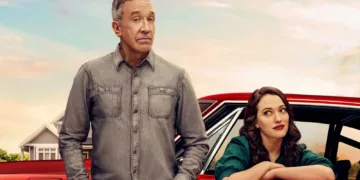




















There is a peculiar type of television show that functions less as a story and more as a living archive. It exists primarily to remind viewers of other, more successful television shows, building its identity from the spare parts of its star’s previous triumphs. ABC’s Shifting Gears has, in its second season, fully embraced this role. The series has shed the thin pretense of cultural commentary that defined its beginnings and has settled comfortably into the well-worn grooves of the domestic sitcom.
Its engine is no longer fueled by manufactured political debate but by the quieter, more reliable currents of budding romance and unresolved attraction. The season premiere announces this pivot not with a whisper but with a reunion, assembling a cast of ghosts from sitcoms past. This gathering serves as an admission: the show is no longer trying to carve its own path but is content to be a monument to the road already traveled, a curated tour through the Tim Allen cinematic universe.
A Legacy Act: The Sitcom Reunion as Strategy
The deliberate marshaling of actors from Tim Allen’s past sitcoms is the defining tactic of the second season premiere, a move that transcends gimmick to become a revealing portrait of a network’s creative priorities. In an age saturated with reboots and legacy sequels, Shifting Gears offers a more curious hybrid: the stealth reunion, smuggled into the mundane setting of a grief support group.
Here, Matt Parker finds himself surrounded by the familiar faces of Patricia Richardson, Richard Karn, and Debbe Dunning, actors who once formed his on-screen family in Home Improvement. The scene is further complicated by the presence of Nancy Travis from Last Man Standing, who acts as his guide into this strange confluence of television timelines. This is not merely a collection of cameos; it is the construction of an Allen-verse, a pocket dimension where all of his patriarchal sitcom characters and their various satellites coexist.
This strategy is, on one level, a shrewd commercial calculation. It taps directly into a powerful current of audience nostalgia, offering the low-friction comfort of pre-established chemistry, especially in the easy rapport between Allen and Travis. For a broadcast network competing against the narrative ambitions of streaming giants, such a move is a form of insurance, a guarantee of a familiar product. Yet this reliance on the past hobbles the show’s potential to create anything new. It becomes a closed loop, endlessly referencing its own history.
The presence of these actors prevents the new characters from taking root, their own stories overshadowed by the ghosts of characters we already know. The show becomes a tribute act, performing the greatest hits of a bygone television era instead of writing its own music. This creative conservatism, while perhaps commercially sound, ensures that Shifting Gears remains an artifact, a reflection of past success rather than a success in its own right.
Also Read





Shifting Character Dynamics: Grief, Growth, and Stagnation
As the show retreats from broad social commentary, it magnifies its focus on the personal lives of its protagonists, yielding a significant evolution for one and a frustrating regression for the other. The primary beneficiary of this narrative shift is Matt Parker. His hesitant courtship of Eve, played with a sharp directness by Jenna Elfman, forces him out of his comfortable shell of grumpy certainty.
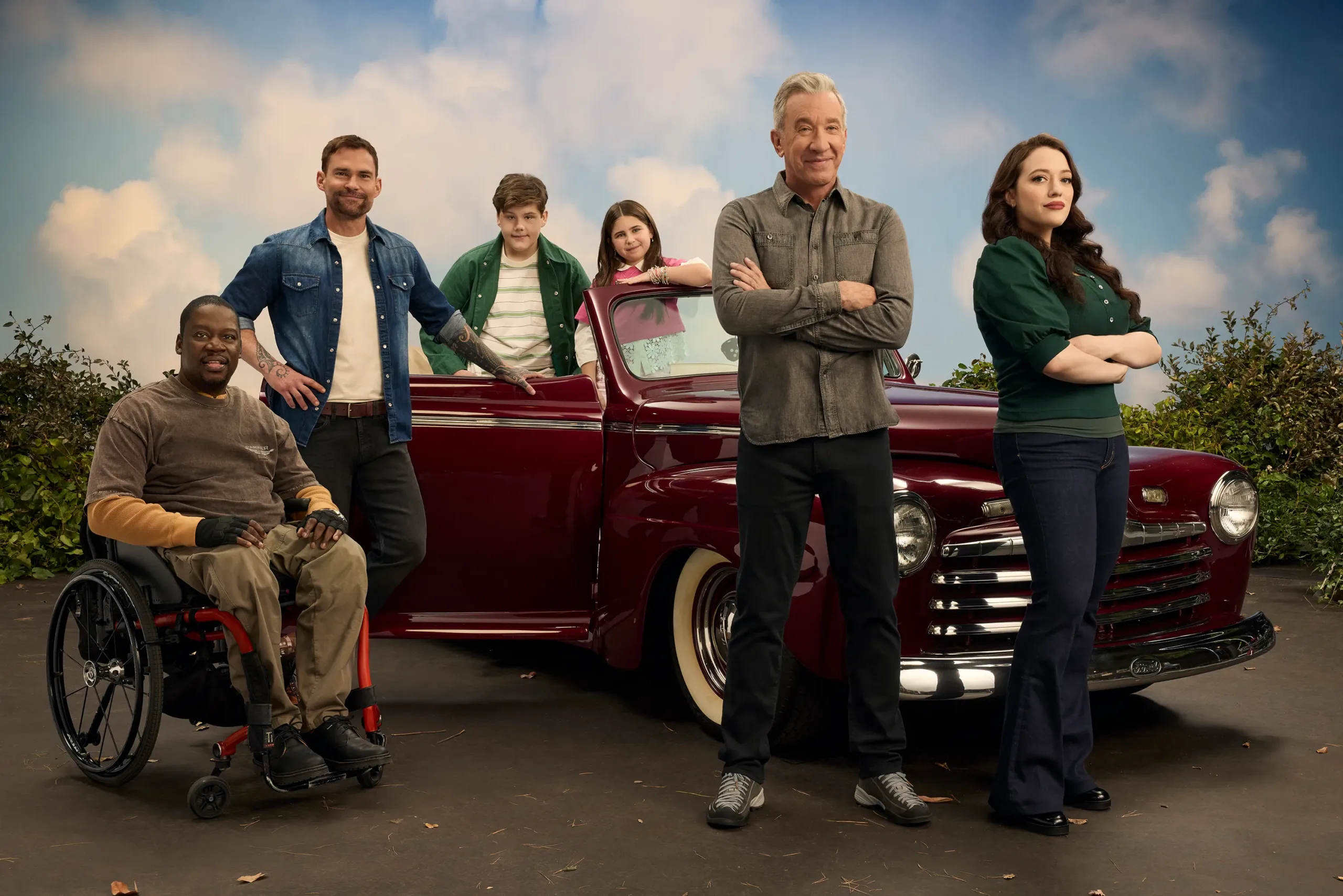
The relationship effectively neuters his political crank persona, replacing it with a far more interesting portrait of a man grappling with the alien mechanics of dating after decades of marriage. This exploration of late-life masculinity finds its most poignant expression in his awkwardness, his fumbling attempts at communication, and his visible discomfort with emotional vulnerability.
These scenes, contrasted with his solemn visits to his late wife’s mausoleum, paint a picture of a man caught between devotion to his past and a tentative desire for a future. The character is allowed to be more than a set of opinions; he is a person navigating the messy territory of loss and renewal.
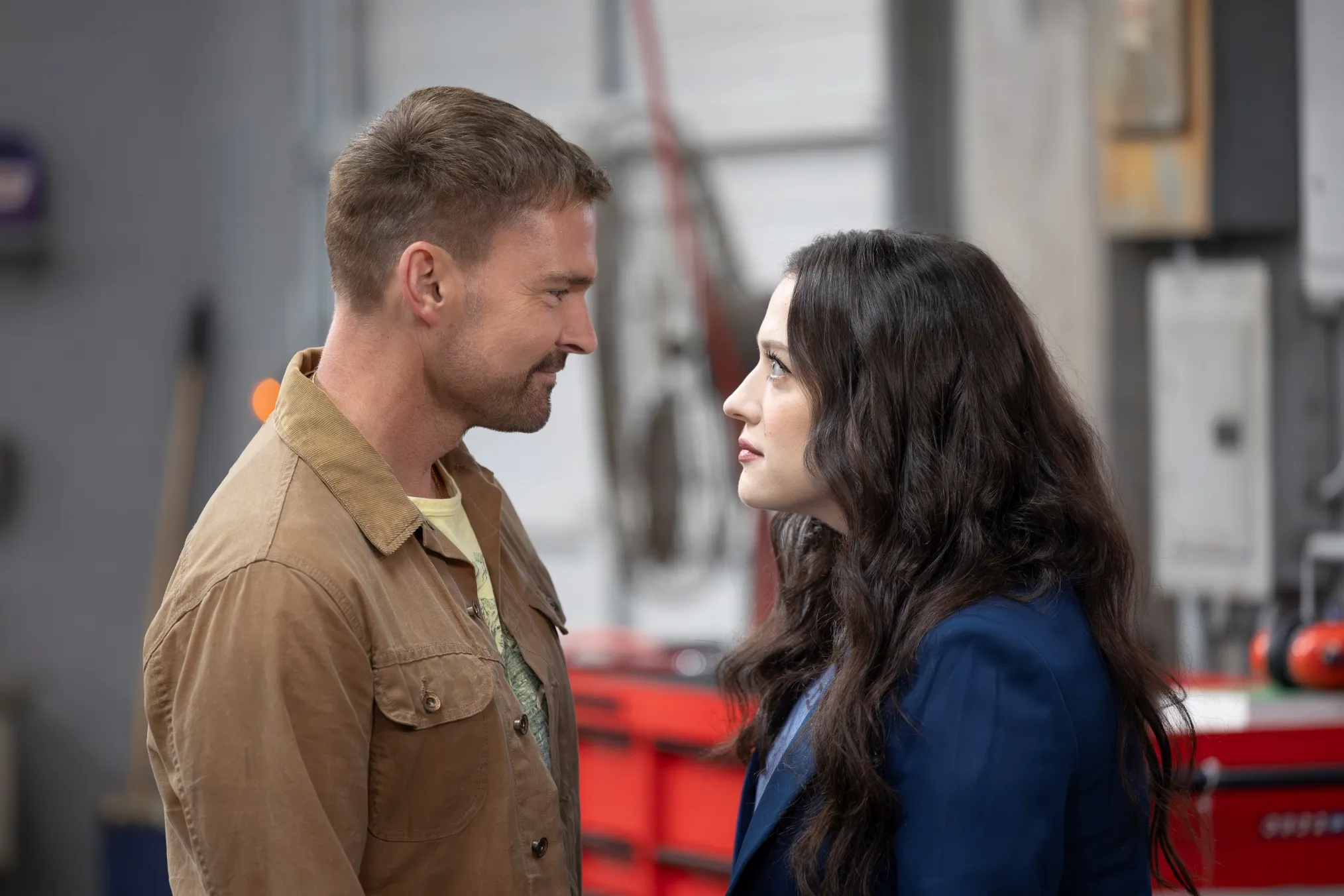
In stark contrast, Riley’s storyline represents a failure of imagination. After being set up as a newly single mother seeking independence, her character is now almost entirely defined by a stale romantic plot. The “will-they-won’t-they” dynamic with Gabe is executed with a paint-by-numbers predictability that feels beneath an actor of Kat Dennings’ talent.
The narrative arc, which culminates in her decision to confess her feelings at the exact moment Gabe enters a new relationship, is a contrivance of the highest order. It reduces Riley to a passive figure, her emotional state dictated by a man’s actions rather than her own choices.
This is a significant failing in representation. Instead of exploring the complexities of her career goals, her identity post-divorce, or her challenges as a parent, the show defaults to placing her in romantic limbo. Her potential as a modern, self-determining female lead is sacrificed for the sake of a tired plot device, leaving her character treading water while waiting for a man to become available.
The Mechanics of Humor
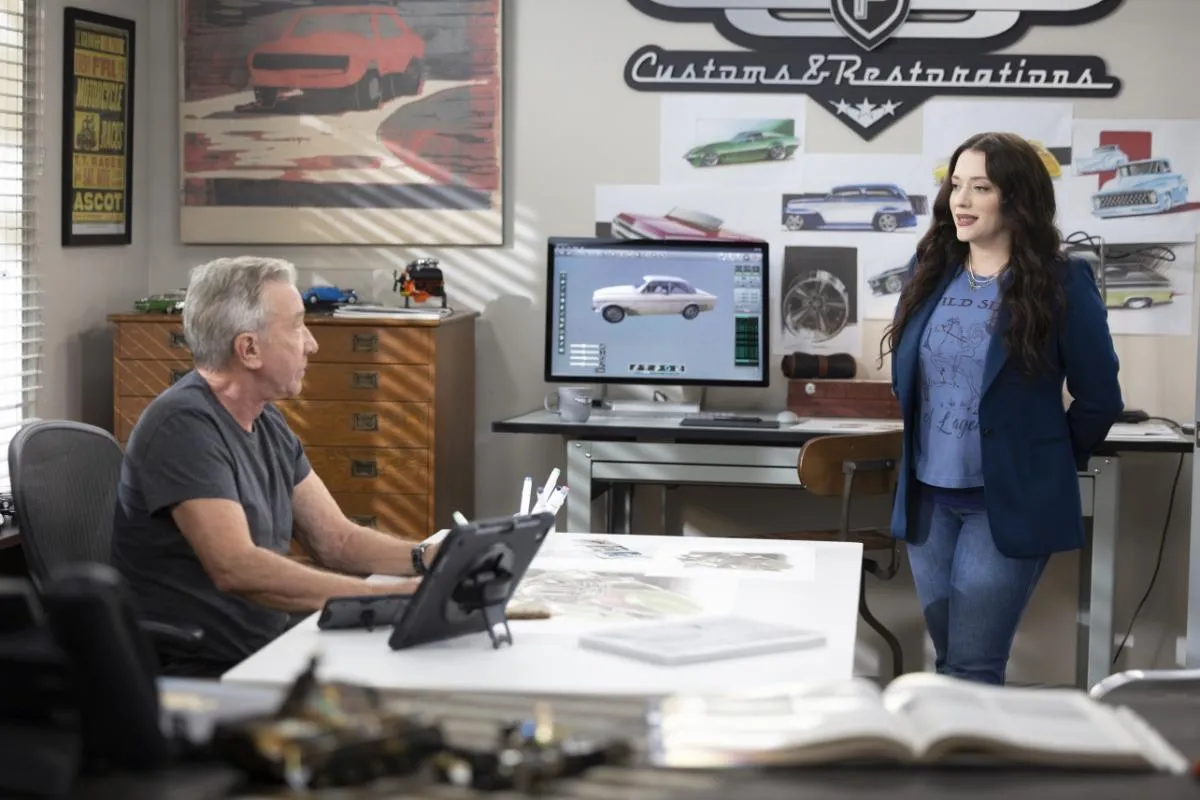
Even as its dramatic ambitions have grown more focused, the comedic foundation of Shifting Gears remains profoundly weak. The show’s humor is built on a framework of predictable punchlines and lazy observational jokes that feel airlifted from a sitcom writers’ room of thirty years ago. The writing consistently defaults to the easiest possible gag, a tendency exemplified by a painfully contrived exchange involving a screwdriver.
The dialogue’s descent into clumsy wordplay about “righty-tighty” and “lefty-loosey” is not merely unfunny; it is a sign of creative exhaustion. This reliance on broad, unsophisticated humor feels fundamentally at odds with the show’s attempts to explore more nuanced emotional themes. The jokes do not arise organically from character or situation; they feel like mandatory interruptions, fulfilling a perceived sitcom quota at the expense of narrative flow and authenticity.
This deficiency creates a jarring tonal dissonance that the show never resolves. Scenes intended to carry emotional weight, such as Matt’s struggles with grief, are often immediately followed by a flat punchline and a wave of manufactured laughter from the studio audience. The laugh track itself becomes an antagonistic force, a relentless narrator insisting that everything is light and amusing, even when the on-screen events are not.
In the modern television landscape, where the single-camera format has allowed for a more sophisticated blend of comedy and drama, the rigid structure of the multi-camera sitcom, especially when paired with weak writing, can feel incredibly dated. The auditory insistence on humor during moments of quiet sincerity highlights the show’s artifice and prevents it from achieving the genuine emotional depth it seems to be seeking.
An Underutilized Ensemble
The world of Shifting Gears is remarkably small, a universe that orbits tightly around its central star and leaves little oxygen for its supporting players. The ensemble is populated by capable actors who are largely wasted in roles that are more functional than they are human. Seann William Scott, an actor known for his chaotic comedic energy, is confined to the role of Gabe, a character whose primary traits are his good looks and a gentle simplemindedness.
He exists as a plot device in Riley’s story, a handsome object of affection with little discernible inner life. The most glaring misuse of talent, however, is the casting of Daryl Mitchell as Stitch. As a sharp and charismatic actor, Mitchell is relegated to a role that is both physically and narratively static. He delivers his quips from behind a desk, an observer who rarely participates in the action. This choice feels like a profound missed opportunity for richer storytelling and more dynamic representation.
This pattern of underdevelopment extends throughout the cast. Riley’s children, Carter and Georgia, are less like characters and more like generational props, wheeled out to spark predictable conflicts about modern parenting and teenage behavior. Their personal stories are superficial and serve only to reflect back on the adult leads. Even the season’s key new additions, Eve and Charlotte, are defined almost entirely by their relationship to Matt.
They are emotionally intelligent, direct, and capable women whose primary narrative function is to facilitate the male protagonist’s emotional growth. They challenge him, guide him, and react to him, but they are rarely afforded the same interiority. This instrumental approach to character writing keeps the show’s world from feeling truly lived in. It is a collection of satellites, all dutifully revolving around a single star.
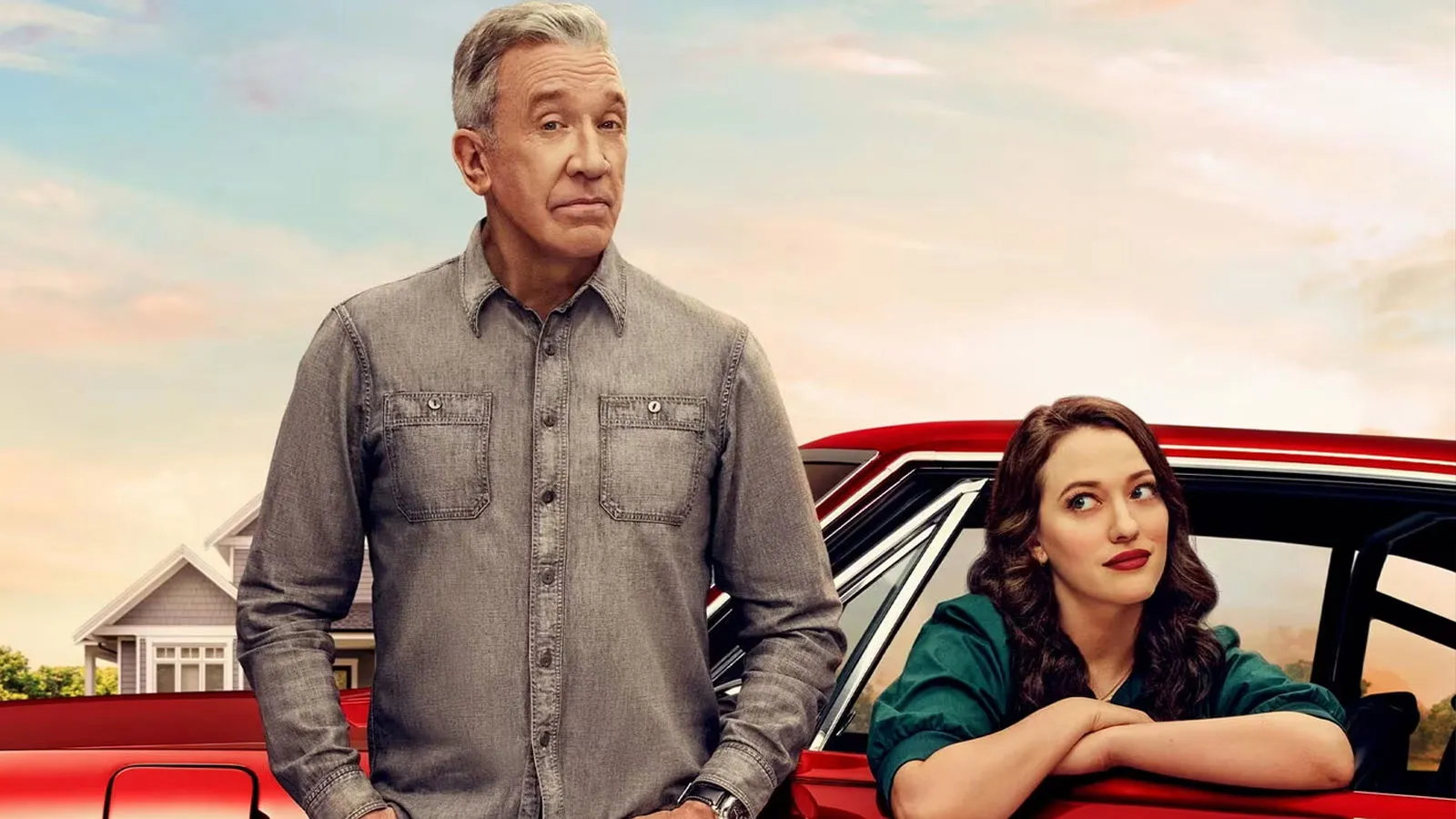
Shifting Gears is an American television sitcom that premiered its first season on ABC on January 8, 2025, with the second season following on October 1, 2025. The series stars Tim Allen as Matt Parker, a stubborn, widowed owner of a classic car restoration shop, whose life is upended when his estranged daughter, Riley (Kat Dennings), and her two children move back home with him. The show, created by Julie Thacker Scully and Mike Scully, is produced by 20th Television and airs on the ABC network.
Full Credits
Director: John Pasquin, Danielle Fishel, Victor Gonzalez
Writers: Julie Thacker Scully, Mike Scully, Michelle Nader, Bob Daily, Jim Patterson, Morgan Murphy, Kevin Hench, Feraz Ozel, Saladin K. Patterson
Producers and Executive Producers: Tim Allen, Michelle Nader, Marty Adelstein, Becky Clements, Richard Baker, Rick Messina, John Pasquin, John Amodeo, Julie Thacker Scully, Mike Scully, Bob Daily, Jim Patterson, Kat Dennings
Cast: Tim Allen, Kat Dennings, Seann William Scott, Daryl Mitchell, Maxwell Simkins, Barrett Margolis, Cynthia Quiles, Jenna Elfman, Lucas Neff, Nancy Travis
Director of Photography (Cinematographer): Donald A. Morgan
Editors: Pamela Marshall, Scott Ashby
Composer: Tony Kanal
The Review
Shifting Gears Season 2
While Shifting Gears finds moments of genuine heart in Matt Parker’s journey through grief, the season is ultimately a retreat into the past. It leans so heavily on the legacy of Tim Allen’s former sitcoms that it fails to build its own. Hamstrung by dated humor, a stagnant storyline for its female lead, and an underutilized supporting cast, the show chooses the safety of nostalgia over the risk of creating something memorable. It is a comfortable but creatively conservative series, content to drive in circles rather than explore new territory.
PROS
- Provides a more nuanced and emotionally grounded character arc for Tim Allen's Matt Parker.
- The established chemistry between Allen and guest stars from his past shows offers moments of warmth and familiarity.
- Pivots away from divisive political humor toward more universal themes of love and loss.
CONS
- An over-reliance on nostalgia and stunt casting prevents the show from developing its own unique identity.
- The comedic writing is frequently weak, relying on dated formulas and uninspired punchlines.
- Riley’s character is relegated to a predictable and regressive romantic subplot.
- A talented supporting cast is largely wasted in one-dimensional, functional roles.