



























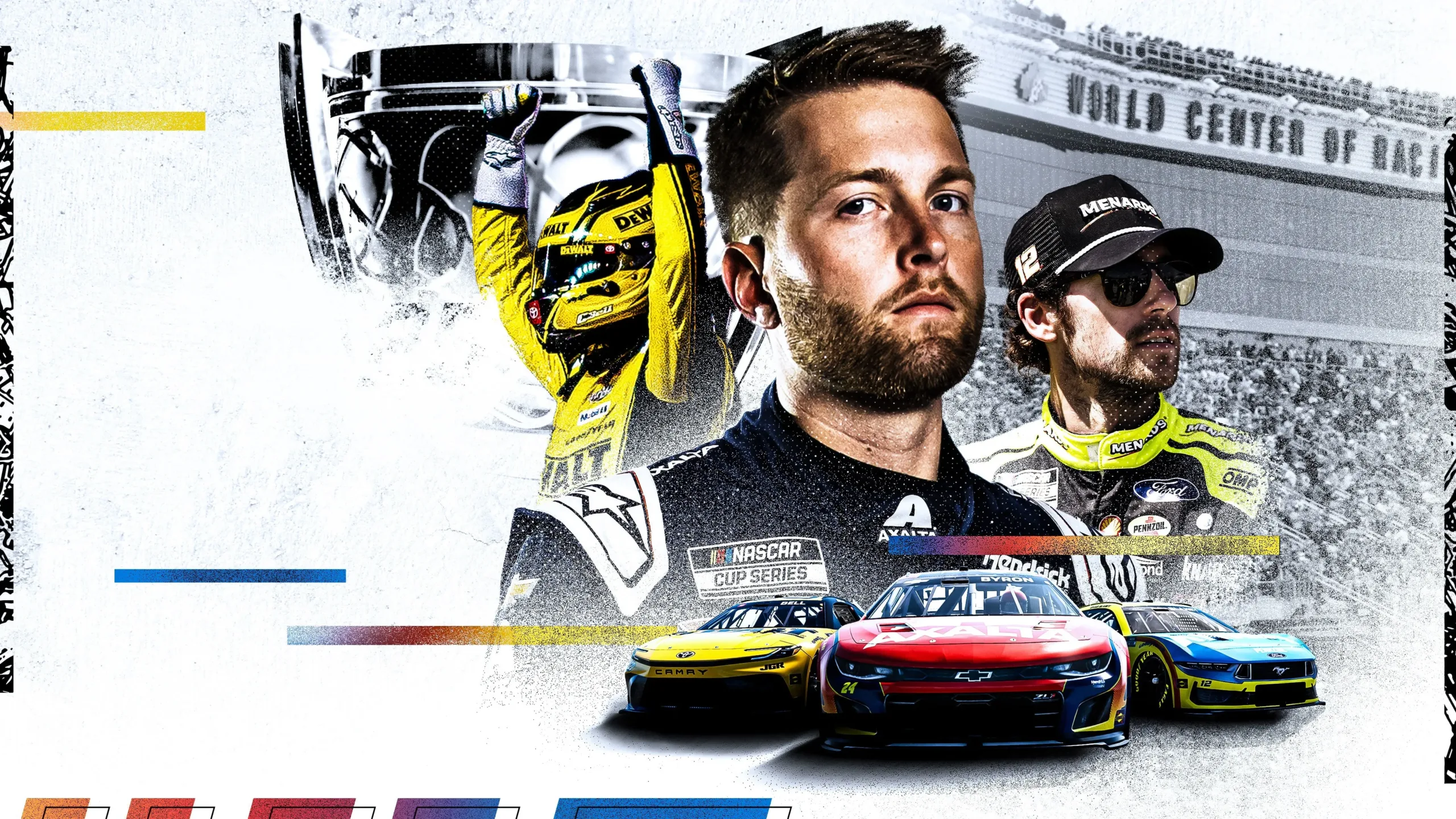

After a three-year absence, NASCAR returns to consoles with iRacing Studios taking the wheel from 704Games. NASCAR 25 represents a complete franchise reboot built on Unreal Engine 5, and the change in developer brings fresh perspective to a series that desperately needed one. This marks iRacing’s first console venture, translating their renowned PC simulation expertise to PlayStation 5 and Xbox Series X/S (with PC release scheduled for November 11th).
The game includes all four major NASCAR series—Cup, Xfinity, Trucks, and ARCA—featuring over 204 licensed drivers across 90+ tracks. iRacing has crafted the most authentic NASCAR console experience in two decades, delivering exceptional AI and satisfying driving physics. Technical limitations and shallow progression systems prevent this from being the definitive racing package fans hoped for, yet the foundation here suggests a promising future for the franchise.
A Visual Spectacle with Notable Gaps
The jump to Unreal Engine 5 delivers the visual overhaul this franchise desperately needed. Laser-scanned tracks capture every banking angle and surface texture with precision, making venues like Daytona and Bristol feel authentic down to their smallest details. The dynamic lighting system shines during day-night transitions, casting realistic shadows and creating gorgeous reflections off car bodies.
Each circuit has distinct visual personality—the sprawling infield of Charlotte, the tight confines of Martinsville, the desert backdrop of Phoenix. Performance holds steady on both base PS5 and Xbox Series X, maintaining smooth framerates that keep the racing fluid and responsive.
Car models look fantastic, their paint schemes gleaming under stadium lights or afternoon sun. The cockpit view deserves special praise for its immersive quality, placing you convincingly behind the wheel with clear sightlines and authentic dashboard layouts. Broadcast-style overlays mimic real NASCAR telecasts, displaying position, gaps, and timing information that enhances the professional racing atmosphere.
The damage modeling, however, creates a jarring disconnect. Enabling “full damage” doesn’t produce the crumpled bodywork you’d expect from hard impacts. Major collisions result in minor visual dings that fail to convey severity. This gap between driving realism and crash physics undermines immersion during intense racing moments. Scripted wrecks compound the issue—tire blowouts trigger awkward spin animations that look unnatural.
Audio design strengthens the sensory experience. Engine notes capture the raw power and deep rumble of stock cars, while tire squeal provides audio feedback for grip levels. The soundtrack stands out as exceptional, featuring 28 tracks from artists like System of a Down, Jelly Roll, and Killer Mike. It’s genuinely one of the best racing game soundtracks in recent memory.
Where audio falters is in repetition. Commentary cycles through the same lines too frequently, becoming background noise. The team radio voice never changes across any mode or race, creating a generic feel. Replay camera angles similarly lack variety, showing races from the same perspectives repeatedly. The visual foundation is strong, but these rough edges prevent the presentation from reaching its full potential.
Driving That Hits the Sweet Spot
iRacing has nailed the most critical element—the cars feel fantastic to drive. This represents a massive leap forward from previous console NASCAR games, capturing weight transfer, momentum, and tire behavior in ways the franchise hasn’t achieved before. Each input matters. Throttle modulation affects how the car settles through corners, brake pressure determines entry speed and stability, and steering precision separates clean laps from wall-scraping disasters. The physics model sits comfortably between NASCAR Heat’s arcade accessibility and iRacing’s unforgiving PC simulation, creating a sweet spot that challenges without punishing.
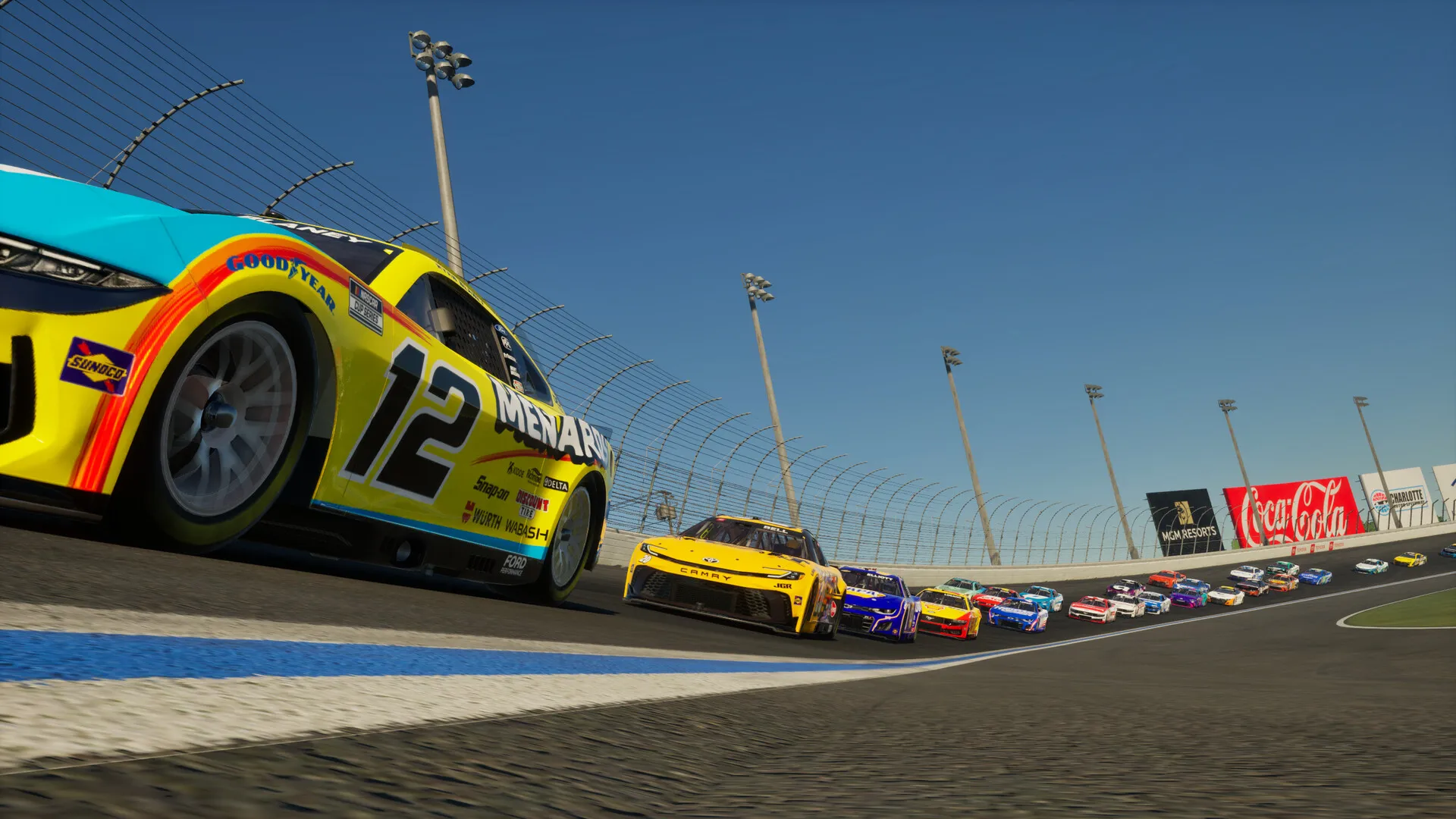
The four NASCAR series feel appropriately distinct. Cup cars carry serious speed and demand respect through high-speed corners. Xfinity machines offer slightly more forgiving handling while still requiring finesse. Trucks feel heavier and more momentum-dependent, teaching patience and smooth inputs. ARCA cars serve as the perfect learning platform, responsive enough to build confidence while introducing core concepts.
Controller implementation deserves recognition for how well it translates these physics. The triggers provide excellent throttle and brake modulation, letting you feather inputs with surprising precision. Analog stick steering feels tight and responsive, handling the constant tiny corrections oval racing demands. Vibration feedback communicates tire slip and road texture effectively, giving you sensory information about what the car is doing.
Wheel support, oddly, disappoints given iRacing’s expertise. Force feedback feels severely limited, providing resistance during high-speed cornering but little else. You don’t feel traction loss developing, rough pavement sections barely register, and collisions produce no feedback through the rim. For players who invested in wheels specifically for more immersive racing, this represents a significant missed opportunity.
Track variety creates interesting handling challenges. Charlotte threw me off initially with its specific corner entries and exit requirements. Intermediate tracks like Las Vegas proved more approachable while still rewarding clean technique. Superspeedways deliver the flat-out, adrenaline-pumping experience you expect from Daytona and Talladega. Road courses introduce a different problem—understeer becomes pronounced at venues like Watkins Glen and Circuit of the Americas, requiring frustrating throttle lifts through corner exits.
The drafting system works beautifully, particularly at superspeedways where bump drafting and pack racing create thrilling scenarios. Stability here strikes the right balance—you can push another car without immediately triggering catastrophic spins, but sloppy execution still carries consequences. Tire management and setup adjustments add meaningful strategic layers. Wear accumulates realistically over long runs, forcing you to manage pace and avoid overworking the tires early. The wear and tear system extends beyond tires—pushing the car consistently hard damages components, impacting the Performance Rating and requiring costly repairs.
Brake feedback could use improvement. Lockups happen easily without clear indication of how much pressure you’re applying, particularly problematic on road courses where precise braking defines corner entry. Crash physics lag behind the driving model’s quality. While damage affects car performance appropriately, the actual collision dynamics feel unconvincing.
AI That Finally Delivers Competition
The AI represents NASCAR 25’s standout achievement and its biggest departure from previous franchise entries. Racing against computer opponents actually feels like competition rather than following predetermined paths. The AI takes multiple racing lines while maintaining speed, abandoning the single-groove preference that plagued earlier games. You can’t establish a dominant line and expect easy passes—the AI adapts, defends intelligently, and creates genuine battles for position.
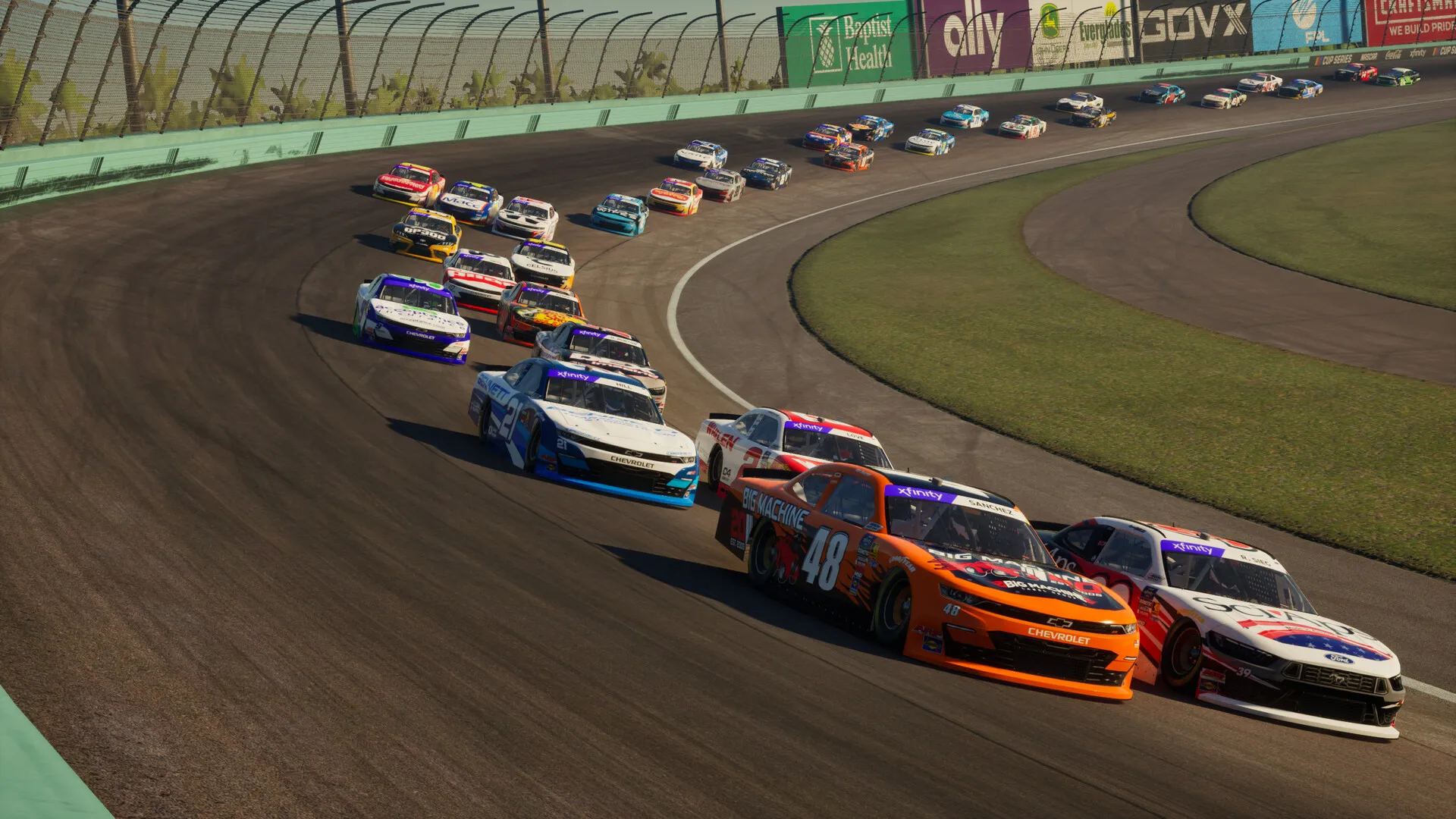
Multi-groove racing fundamentally changes how races unfold. The AI might run high through a corner while you attempt the low groove, both lines remaining viable and creating side-by-side racing that feels natural. They’ll challenge your positioning, defend without being overly aggressive, and make you work for every pass. Dive-bombing doesn’t work because the AI anticipates these moves and adjusts accordingly.
Lapped traffic transitions from pure annoyance to strategic consideration. AI lap cars sometimes yield cleanly, recognizing they’re being overtaken by leaders. Other times they’ll race you hard, forcing you to make a clean pass rather than expecting automatic clearance. This variability creates realistic scenarios where lap traffic can cost you positions or provide opportunities to gain them.
Superspeedway racing showcases the AI at its best. Pack racing with 40 cars at 200 mph could easily descend into chaos or feel artificially safe. NASCAR 25 finds the middle ground, with AI willing to take risks, push in the draft, and race multi-wide through corners. These races capture the edge-of-your-seat intensity that makes real superspeedway events so compelling.
The AI handles position battles throughout the field, not just at the front. Midpack racing feels competitive and engaging, with cars defending positions meaningfully rather than simply maintaining intervals. Fights for 15th place can be as intense as battles for the lead.
Limitations exist despite the impressive performance. The AI remains mostly tame with occasional erratic moments thrown in to maintain unpredictability. Fuel and tire strategy decisions sometimes confuse—the AI makes poor pit calls that can gift wins to attentive players, and tire wear rates don’t always match between player and AI cars.
Career Mode Prioritizes Racing Over Story
Career mode provides the structure for long-term progression, starting you as a rookie in the ARCA Menards Series and challenging you to climb through the Craftsman Truck Series and Xfinity Series before reaching the NASCAR Cup Series. Dale Earnhardt Jr.’s introduction sets an appropriate tone, his genuine passion for racing coming through clearly and giving weight even to early events.
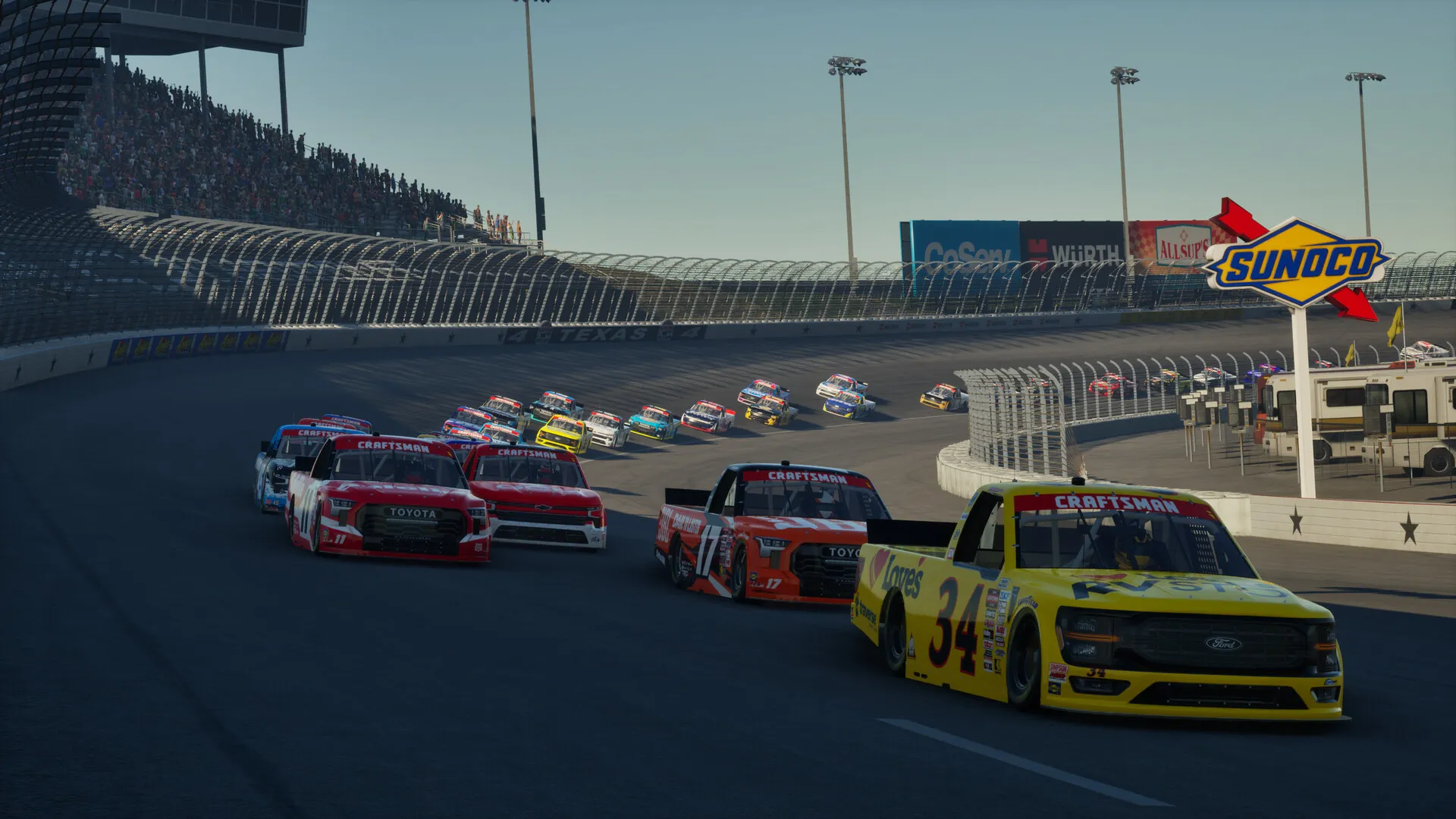
The progression system itself is straightforward—win races cleanly, build reputation, advance to better opportunities. This simplicity works for the racing but exposes how thin the career structure really is. You’re essentially running through a checklist: race at this track, repair your car, make upgrades, move to the next event. Over 150 officially licensed drivers populate the series, yet you interact with exactly none of them in any substantial way. Social media posts appear briefly after races, showing other drivers reacting to your performance, but these screens vanish in seconds and carry no consequences.
Character creation offers the bare minimum—name selection and gender choice. Your driver appears as a blank silhouette throughout the career, with no face customization or styling options. You express identity through car livery customization rather than any personal touches. The livery editor provides 24 base designs with adjustable paint colors and decals, supporting four different styles per car and driver suit.
Team management adds some depth to the race-to-race loop. The garage serves as your hub, where you hire crew members and upgrade facilities using Work Points earned through racing. Limited staff Working Points get allocated to repairs after each event, forcing decisions about whether to fix the chassis, engine, suspension, or body. Your vehicle’s Performance Rating directly affects race potential, so managing these repairs strategically matters.
The progression pacing stumbles badly. I maxed out my ARCA car by race six, becoming overpowered for most of the season. Career advancement depends heavily on Reputation Points, which unlock major events. The system feels too race-dependent—you need to keep winning events to progress, but alternative paths to build reputation remain sparse.
Sponsor opportunities occasionally offer choices between earning reputation or gaining Work Points. In practice, I found myself choosing Work Points almost every time simply to ensure adequate repair resources between races. Wrecking other drivers affects your car’s condition and repair costs but doesn’t influence reputation or create rivalries. Clean racing and aggressive driving produce the same career trajectory if you’re winning races.
Strategic depth feels underdeveloped across the career. Tire and fuel strategy exists mechanically but receives minimal attention in presentation or decision-making. Pit crew performance has almost no impact on race results. The career mode functions adequately for players who simply want structured progression through the series, but modern racing games have demonstrated how much richer these modes can be.
Online Flexibility with Community Chaos
Championship mode offers the most straightforward racing experience, bypassing career management entirely. You can select any of the four NASCAR series and choose from seven different season layouts. AI difficulty adjusts to match your skill level, and you’re free to race without worrying about upgrades or repairs. This mode serves players who want pure racing sessions without commitment.
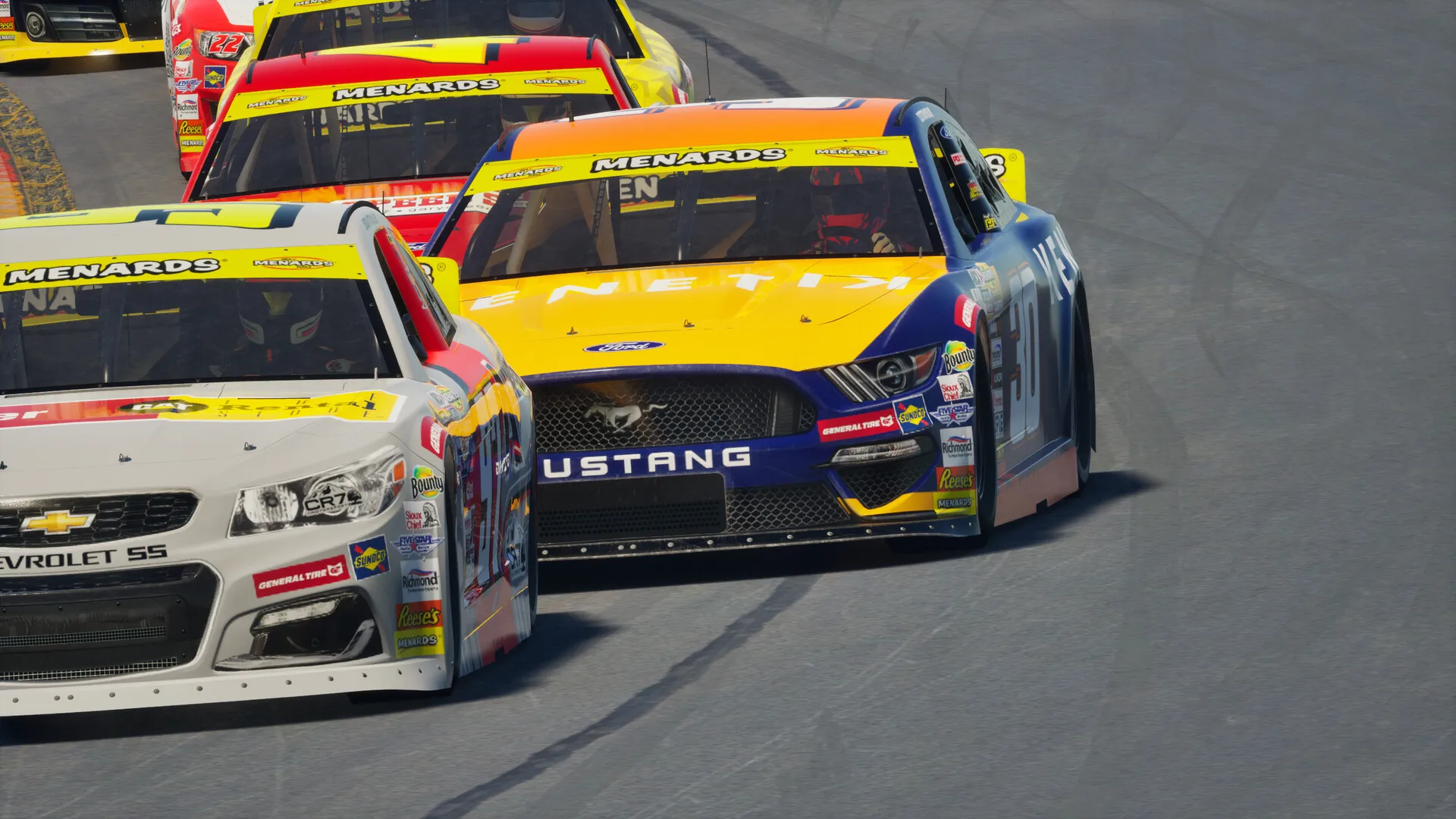
Online play uses player-hosted servers rather than official matchmaking. Event lobbies come with preset configurations—specific track, race length, and series selection—letting you jump into organized races quickly. Custom lobbies provide full host control over race parameters: track selection, lap count, damage settings, AI car inclusion, yellow flag rules, and public or private access.
Joining lobbies feels seamless, with healthy player populations ensuring you’ll find active races. The netcode performs surprisingly well given the nature of tight pack racing and constant proximity between cars. Minimal ghosting and lag keep races feeling solid even during chaotic multi-car battles.
The racing experience itself varies wildly based on community behavior. Clean, competitive races happen, but they’re inconsistent. Public Event lobbies often descend into carnage by turn two, with players deliberately crashing, executing pit maneuvers, and disregarding basic racing etiquette. The game lacks effective penalties for wrecking others or driving recklessly. Private lobbies with friends or organized groups provide much better experiences.
Starts and restarts present ongoing frustration. The transition when you gain control feels jarring, and the player almost always launches slower than AI opponents regardless of transmission settings. Some tracks exacerbate this issue, immediately dropping you multiple positions or causing you to redline the engine if your timing isn’t precise.
The spotter system undermines immersion, particularly for players using cockpit view. Spotters frequently provide incorrect calls about car positioning—clearing you when cars remain alongside, missing nearby vehicles entirely, or warning about phantom cars that don’t exist. This unreliability forces you to make judgments based purely on what you can see and hear.
A Strong Foundation Awaiting Refinement
iRacing has accomplished something significant with NASCAR 25—they’ve created the best console NASCAR racing experience in 20 years. The AI stands out as exceptional, setting new standards for how computer opponents should behave in racing games. The driving physics strike an excellent balance between simulation depth and console accessibility.
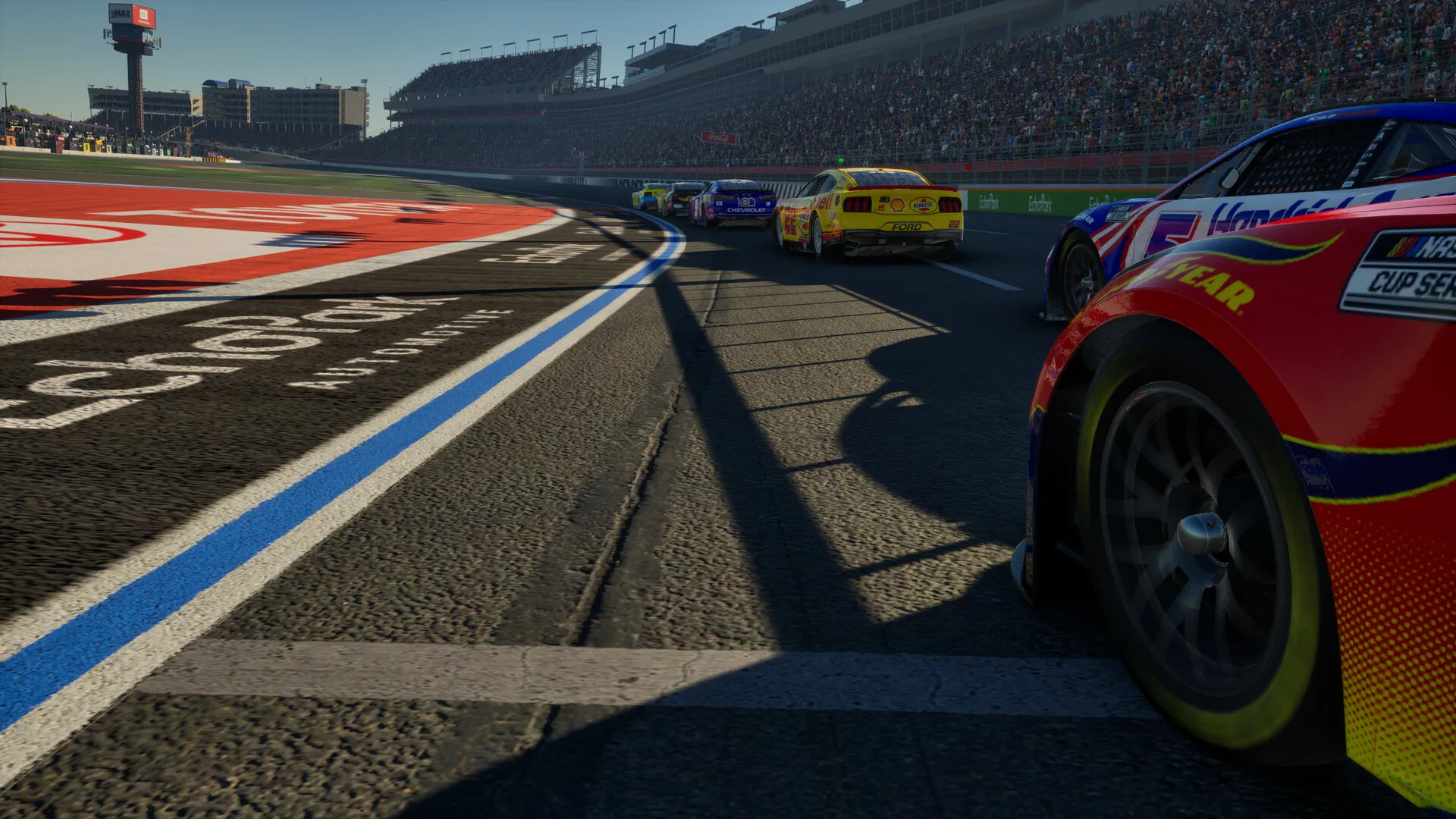
Superspeedway racing captures the authentic thrill of pack racing and drafting battles that define NASCAR’s most exciting moments. The visual presentation impresses with laser-scanned tracks, dynamic lighting, and smooth performance. The soundtrack deserves special mention as one of the strongest in recent racing game memory.
Yet the game stumbles in areas that prevent it from achieving greatness. Career mode lacks the narrative depth and meaningful progression systems that modern racing games have established as standard. The damage modeling disappoints, failing to visually convey the severity of impacts. Force feedback issues plague wheel users. Understeer problems on certain tracks create handling frustrations. Repetitive presentation elements reveal a game that nailed the racing core but rushed surrounding features. The spotter’s unreliability undermines immersion during intense racing.
NASCAR enthusiasts will find the most authentic console experience available. Racing simulation fans seeking a console-friendly challenge that rewards precision without demanding expensive equipment will appreciate what iRacing has built. The technical issues and missing features feel addressable through patches and updates. This feels like a game sitting one major update away from excellence, with the core elements working well enough to support the franchise’s revival. For players willing to accept current limitations, there’s genuine enjoyment to be found. This is stock car racing done right on consoles, finally delivering on the potential this franchise always had.
The Review
NASCAR 25
NASCAR 25 marks a triumphant return for the franchise, delivering the finest console stock car racing in two decades. iRacing nails what matters most—exceptional AI that creates genuine competition and driving physics that balance simulation depth with accessibility. The laser-scanned tracks look stunning, and superspeedway racing provides authentic thrills. However, a shallow career mode, disappointing damage modeling, and force feedback issues hold it back from greatness. This is a stellar foundation that needs refinement, making it essential for NASCAR fans while showing clear room for growth.
PROS
- Outstanding AI that creates genuine, competitive racing
- Excellent driving physics balancing realism and accessibility
- Beautiful laser-scanned tracks with smooth performance
- Exceptional soundtrack featuring 28 diverse tracks
- All four NASCAR series with 204 drivers and 90+ tracks
- Thrilling superspeedway pack racing and drafting
- Well-optimized controller support
CONS
- Shallow career mode lacking narrative depth or meaningful choices
- Weak damage modeling doesn't match visual quality
- Poor force feedback implementation for wheel users
- Understeer issues on road courses
- Unreliable spotter calls undermine immersion
- Minimal character customization options
- Repetitive commentary and presentation elements
- Online racing plagued by destructive community behavior