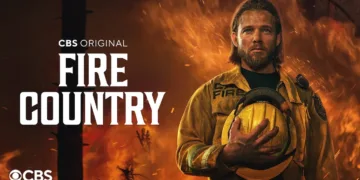

























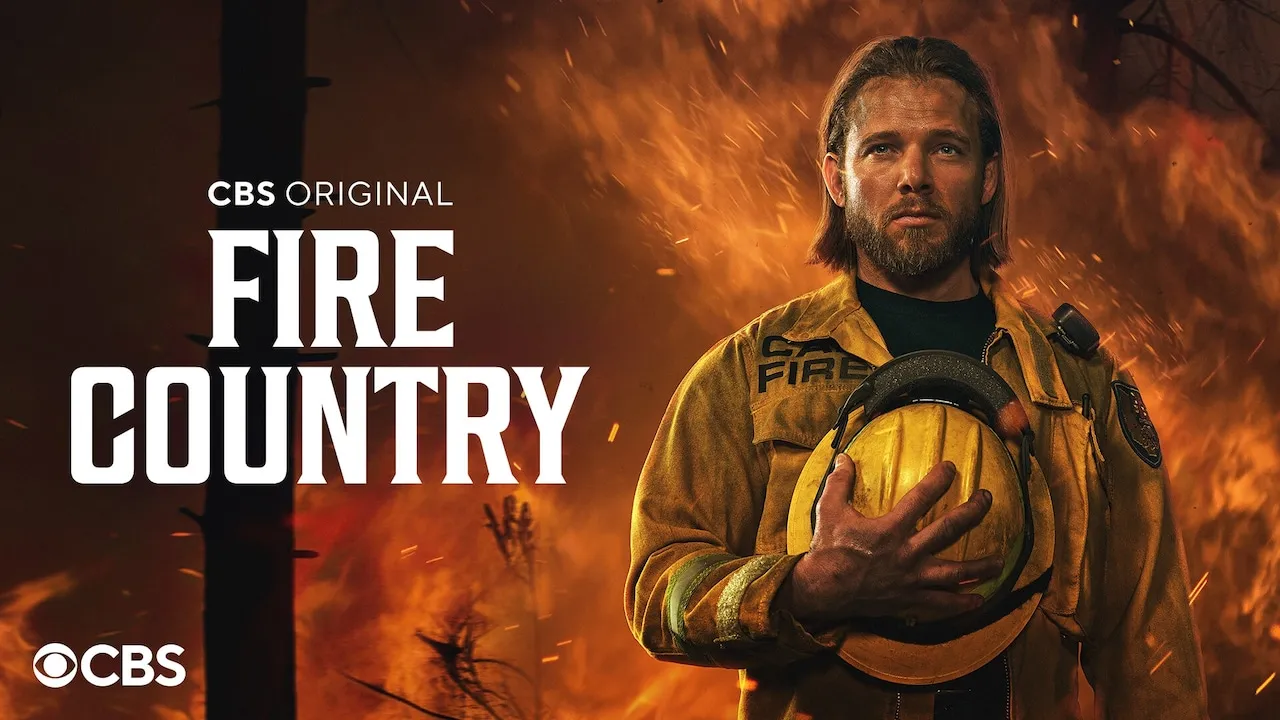

Fire Country operates as a network procedural set inside Cal Fire, tracking the Station 42 crew in Edgewater and the Leone family at its core. The show frames its emergencies around personal redemption, family forged under pressure, and the emotional cost of service. Procedurals often parse social contracts through weekly crises, and this one keeps that focus.
Season 4 opens directly after the catastrophic fire at a memory care facility. The premiere faces loss in real time, defined by the sudden absence of Vince Leone (Billy Burke), the family patriarch and stabilizing leader of Station 42. His death leaves an emotional and professional void that shapes the coming episodes. The choice to sit with raw grief, rather than tidy closure, mirrors a growing preference for honest portrayals of tragedy in long-running series.
Turbulence in the Wake of Tragedy
The premiere shows how that loss fractures the station’s order and sets off volatile emotions. Division Chief Sharon Leone (Diane Farr) holds the line in public while her private mourning grows messy and complicated, including misplaced blame aimed at her father-in-law, Walter.
The writing allows a powerful woman to falter under pressure, an approach that aligns with richer portraits of leadership on television. Bode (Max Thieriot) reacts with outsized guilt and volatility, convinced Jake (Jordan Calloway) blocked a chance to save his father. His ongoing struggles with impulse control surface immediately.
Jake then heightens tensions by pressing for Vince’s Battalion Chief job at the memorial wake. He frames the move as honoring Vince’s legacy by stepping into his role, yet the timing reads as self-serving and tone-deaf. The conflict forces Sharon, in her official capacity, to suspend Station 42 from active duty.
A two-month jump reveals a crew adrift in grief and restlessness. The stress becomes a major trigger for Bode’s addiction history. He has kept prescription pain pills from a past injury and lied about discarding them, a clear signal that relapse risk now shadows his redemption arc.
A Professional and Personal Restructuring
The premiere resets the show on two fronts. Professionally, a succession crisis arrives. Luke Leone calls Sacramento, and a new Battalion Chief is appointed. Brett Richards (Shawn Hatosy), an old rival of Vince, takes command with a mission to “reinvent” Station 42.

He enters as a pointed mirror for the unit, challenging a tightly bonded culture to measure itself against safety and best practices. That pressure tests loyalty to Vince’s memory and the station’s habits, and it immediately places Richards at odds with Sharon and Bode.
On the personal side, Gabriela (Stephanie Arcila) leaves for a custom Cal Fire role recruiting ambitious newcomers, a move that draws on her status as an Olympian paramedic. Her exit removes a key support for Bode at a precarious moment. Their final scenes together feel tender and clear-eyed, a farewell to the “Bodiela” dynamic that hints at unrealized narrative paths.
Stagnation Versus Stability in the Ensemble
Bode remains the show’s most fragile pillar. Three seasons in, anger, impulsiveness, and emotional shortfalls keep overriding his growth. His stalled arc weakens any claim to leadership, even with talk of a “birthright” to follow Vince.

Season 4 carries the responsibility to move him forward if the series wants durable momentum. The ensemble around him continues to function as the strongest asset. Jake and Eve (Jules Latimer) land comfortable, lived-in banter, and Manny (Kevin Alejandro) brings team chemistry to life through scenario play that balances tension with levity.
The series feels most grounded when it focuses on those relationships and the actual craft of firefighting, a combination that builds a credible sense of found family. Vince’s absence presses on every scene. Billy Burke’s quiet authority once held the family and the station in place. The season now measures whether the team can operate with that anchor gone and still maintain coherence under pressure.
The Mandate for Change and Growth
The premiere makes a clear dramatic choice by confronting tragedy without a time skip, which heightens emotional stakes and scrambles relationships and routines. Richards’ command and Gabriela’s departure intensify Bode’s vulnerabilities and expose the station’s culture to direct scrutiny.

The season poses a central question for the unit and the series: does the sentimental “Leone way” align with the demands of high-risk service, or does the culture need revision under new leadership. Richards drives that confrontation and insists on adaptation. The path forward lies in the show’s proven strengths: the authenticity of the crew’s camaraderie and the realism of the fire service work.
Those elements let characters breathe inside a crisis without tipping into overheated melodrama. Concerns linger about Vince’s irreplaceable presence and Bode’s stalled development, yet the emotional setup and the arrival of a forceful antagonist create a promising engine for conflict.
The structural recalibration signals a willingness to question house style and format, a practical move for a long-running network drama that aims to retain cultural relevance. Viewers who seek high-stakes character drama rooted in service will find a season poised to test its own habits and recalibrate its future.
Fire Country is an action drama television series that first premiered on October 7, 2022. The series, which focuses on a young convict who joins a firefighting program to shorten his prison sentence and finds himself working in his Northern California hometown, airs on the CBS Television Network. New episodes of the series, including Season 4 which premiered on October 17, 2025, are available to stream live and on demand on Paramount+.
Full Credits
Director: James Strong, Bill Purple, Kevin Alejandro, Dermott Downs, Eagle Egilsson, Jacquie Gould, Gonzalo Amat, Erica Watson, Antonio Negret, Sarah Wayne Callies, Laura Nisbet Peters, Anton L. Cropper, Marie Jamora, Kantú Lentz, C. Chi-Yoon Chung, Lisa Demaine, Joy Lane, Max Thieriot, Diane Farr, Nicole Rubio, Mark Tonderai, Alexis Ostrander
Writers: Max Thieriot, Tony Phelan, Joan Rater, Tia Napolitano, Natalia Fernàndez, David Gould, Tonya Kong, Barbara Kaye Friend, Sara Casey, Manuel Herrera, Dwain Worrell, Julia Fontana, Joelle Garfinkel, Anupam Nigam, India Gurley, Jen Klein, Joe Hortua, Jacqueline Furnare Donabedian
Producers and Executive Producers: Tony Phelan, Joan Rater, Tia Napolitano, Max Thieriot, Jerry Bruckheimer, KristieAnne Reed, Bill Purple, Jonathan Littman, Val Stefoff, Barbara Friend
Cast: Max Thieriot, Billy Burke, Kevin Alejandro, Diane Farr, Stephanie Arcila, Jordan Calloway, Jules Latimer, W. Tré Davis, Shawn Hatosy, Leven Rambin, Michael Trucco, Jeff Fahey
Director of Photography (Cinematographer): Gonzalo Amat, Rick Maguire, Samy Inayeh, Craig Wrobleski
Editors: Amy McGrath, Meridith Sommers, Roderick Davis, Steven C. Brown, Eric Jenkins, David L. Bertman, Robert K. Lambert
Composer: Fil Eisler
The Review
Fire Country Season 4
The premiere successfully burns down the show's foundation with Vince Leone's death, immediately creating a powerful emotional void. While the supporting cast shines in moments of authentic camaraderie, the season's fate hinges on whether the protagonist, Bode, can finally mature beyond his self-sabotaging impulses. The arrival of the antagonistic new chief promises necessary disruption, forcing the remaining crew to redefine their professional identity. This turbulent start offers high-stakes drama and a clear path forward for the narrative.
PROS
- Immediate and emotionally potent confrontation with the loss of a main character (Vince Leone).
- Strong portrayal of grief and leadership complexity through Sharon Leone's character.
- The supporting cast continues to provide authentic, stabilizing camaraderie.
- Introduction of Brett Richards creates a compelling new source of professional and cultural conflict.
- Bold structural narrative shift with both a death and a major character departure (Gabriela).
CONS
- The protagonist, Bode, remains emotionally stagnant and prone to impulsiveness three seasons in.
- The loss of Vince removes a crucial, irreplaceable stabilizing force from the series dynamic.
- Melodrama risks overshadowing the genuine high-stakes procedural drama.
- Wasted potential in the "Bodiela" dynamic before Gabriela's swift exit.