
















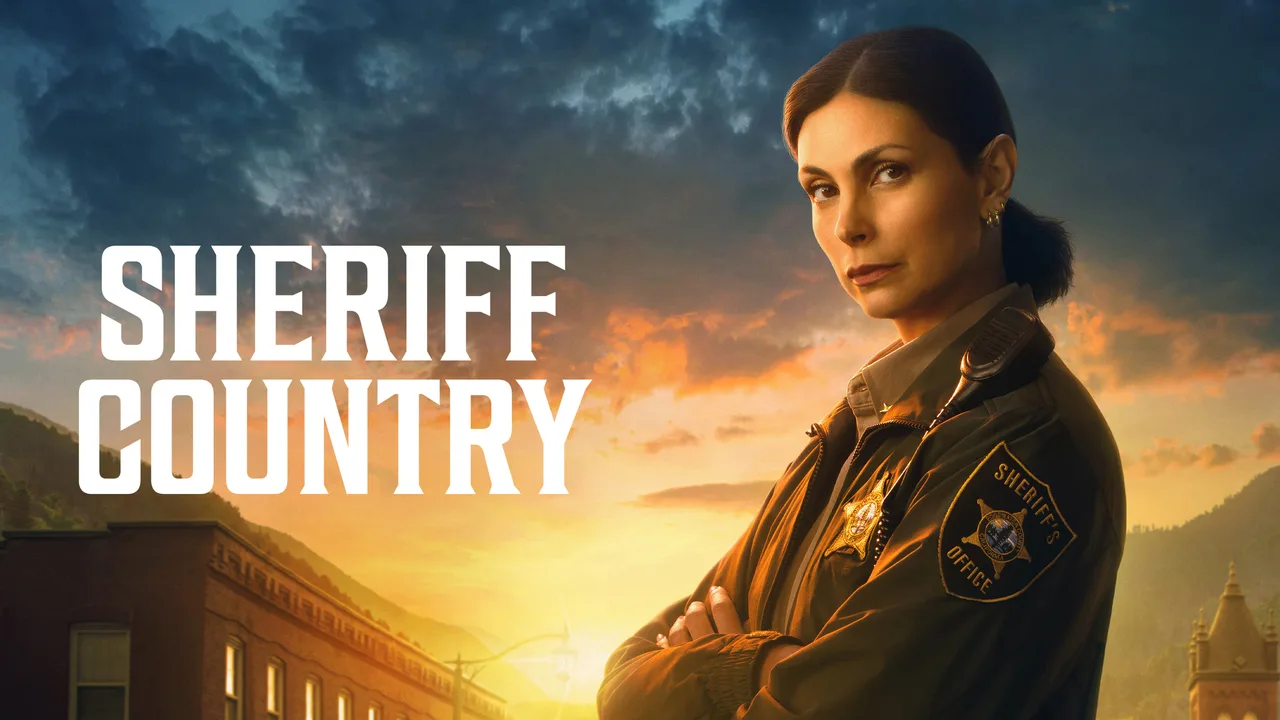

There is a particular darkness to policing a place where every corner stores a memory and every suspect’s face reads like a return of the past. Sheriff Country settles into that moral fog, moving Edgewater away from the acute violence of raging fire into the quieter, persistent ache of law enforcement. The town, placed in a deliberately worn imagining of Northern California, functions as a stage for internal warfare.
Mickey Fox (Morena Baccarin), who once fled and now returns as the interim executor of state power, finds herself contained by questions of identity. She seeks to impose an impersonal code over a geography that remains deeply personal. The immediate pressures are clear: win an elected sheriff campaign while preventing the slow disintegration of home life.
The shadows that follow her include her recovering daughter Skye (Amanda Arcuri), her father Wes (W. Earl Brown), an ex-con whose legend complicates the badge, and the persistent presence of her ex-husband Travis (Christopher Gorham). The series adopts the procedural frame, yet its aim is the serialization of private sorrow.
The Weight of Kinship and the Moral Abyss
Mickey Fox is the series’ point of gravity, a figure whose apparent strength rests on an internal fragility. Morena Baccarin’s turn captures that necessary doubleness. She presents authority with a surface calm while a subterranean empathy keeps threatening to reshape every decision. The campaign for the elected sheriff post becomes an outward audit of inner virtue. Personal history shapes professional action and makes every tactical choice a moral test. The central philosophical question the show asks: can justice be true when the executor recognizes the condemned by name?
The Fox family acts as a diminished Greek chorus reflecting Edgewater’s larger tensions. Wes, as Mickey’s father, embodies that tension most forcefully. His reputation as the “patron saint of Edgewater outlaws” challenges the uniform in a way that feels mythic and corrosive. Their bond stages a contest between ordered law and the fierce loyalty of blood, where abstract legal principles repeatedly collide with visceral familial obligation. Wes’s proximity to the margins of the law operates as a constant, quiet indictment of Mickey’s chosen role.
Skye is the literal locus of Mickey’s private failures and exposed vulnerabilities. Addiction pushes Mickey from the formal precinct into ethically compromised terrain. Skye’s urgent need for rescue collides with Mickey’s need for legitimacy, forcing agonizing choices between badge and family.
Professional pressures bleed into personal space. Rising tension with deputy Boone (Matt Lauria), driven by an electoral contest and clashing procedural instincts, fractures the department’s equilibrium. Deputy Cassidy Campbell (Michele Weaver) dating Travis adds another layer of emotional scrutiny, making every patrol and interview subject to intimate complication.
Edgewater: A Geography of Compromise
Making Edgewater a richly described community separates Sheriff Country from its predecessor’s immediacy. The town appears less as a backdrop for catastrophe and more as a self-contained system, a field for human compromise. The series populates it with small business owners, old money bankers, and mountain-fringe communities of cannabis growers and trimmers. This social distribution creates a structural friction between the town’s conventional centers and the hardy independence of those who operate outside formal state contracts.
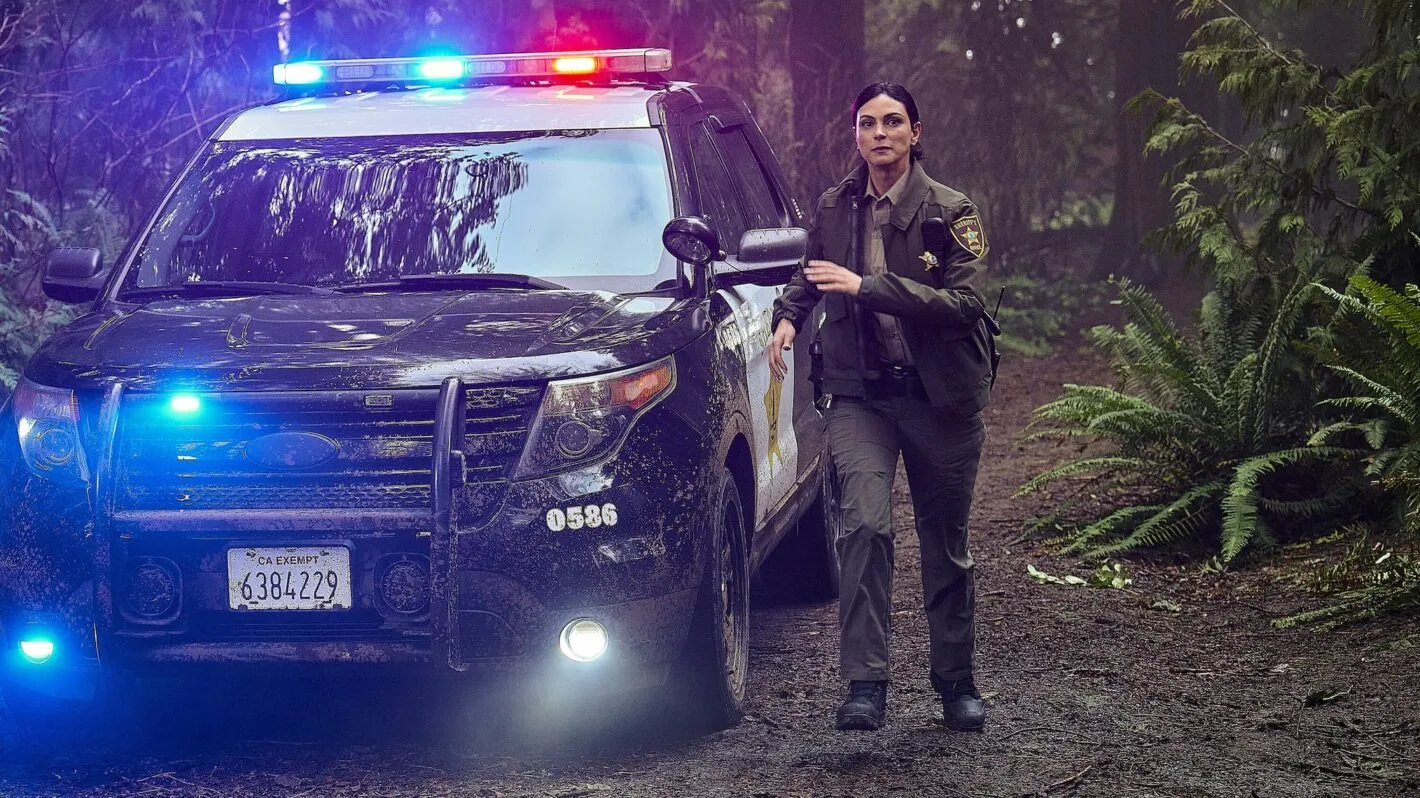
The show chooses to linger in the moral gray around the drug-farming community. It rejects the simplest procedural villainy and acknowledges that legality and morality rarely overlap neatly in a remote place. That stance offers relief from standard network formulations. Mickey’s rootedness in Edgewater becomes a cultural bridge that burdens her.
Her local knowledge lets her read cases through history and social context in addition to forensic signifiers. That intimacy turns enforcement into a continuous act of social arbitration: arresting, questioning, and sometimes betraying the people who formed her youth. Wes, in the role of outlaw sage, articulates the shadow community and helps give the town its authenticity and complicated humanity.
The Procedural Illusion and Chronic Pain
Structurally, the series performs as an exercise in distraction. It pairs case-of-the-week mechanics with a slow, corrosive serialized arc. Quick movements across petty theft, kidnapping, and child endangerment satisfy the procedural desire for closure while creating minor, contained tensions among Mickey’s team. Those solvable incidents carry momentum and a feeling of accomplishment.
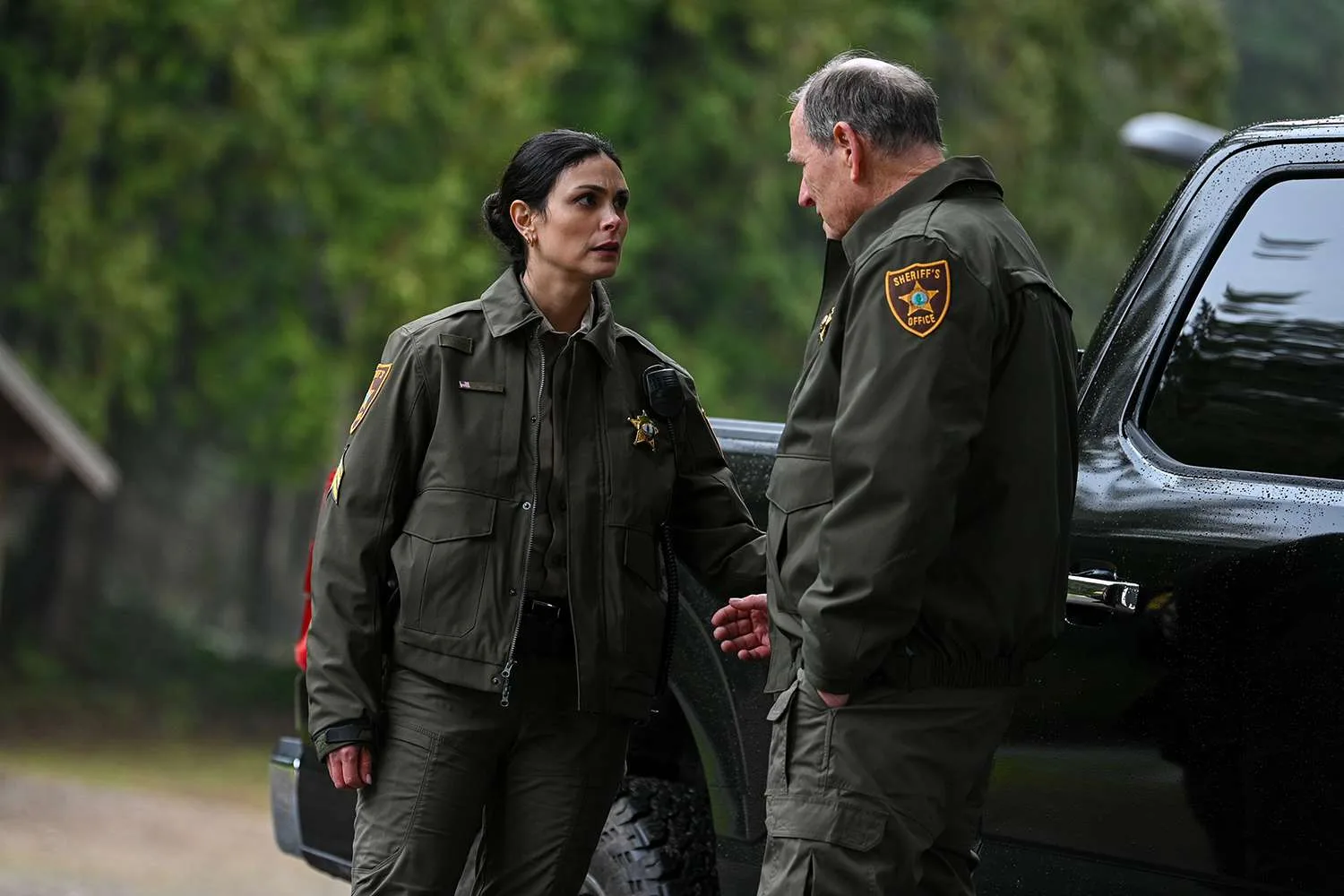
At the same time, the season’s dominant current is the chronic and seemingly insoluble conflict around Skye. Her multi-episode arc and the dark incident tied to her life insist that profound human suffering resists tidy resolution. The serialized material operates as a philosophical undertow, pulling viewers beneath the superficial order of weekly cases toward the more painful, persistent stakes in Mickey’s life.
The hybrid format works as a dramatic mechanism: the temporary solutions of the week distract both protagonist and audience from the larger, looming tragedy that defines the series’ emotional center, mirroring a human tendency to focus on small crises while enormous wounds persist.
Establishing this world fast requires a rough opening. The early episodes, including the pilot, shoulder the burden of reintroducing Mickey’s backstory for new audiences, and those sequences risk tipping into melodrama and clumsy exposition for viewers already familiar with the character. That ritual of recap trades some immediate authenticity for the necessary work of setting the pieces on the board. The series asks that the serialized engine lift its stakes so that the personal crisis does not function merely as episodic material but as the show’s guiding emotional compass.
The Failure of Narrative Conviction
A core structural problem appears in the show’s unsettled ethical orientation. A long-form series needs a stable moral logic for its lead; Mickey Fox is presented with two divergent codes. At times she insists on warrants, evidentiary rules, and courtroom discipline. At other moments she violates procedure, breaking into evidence lockers or conducting unauthorized interrogations and abandoning her procedural grounding.
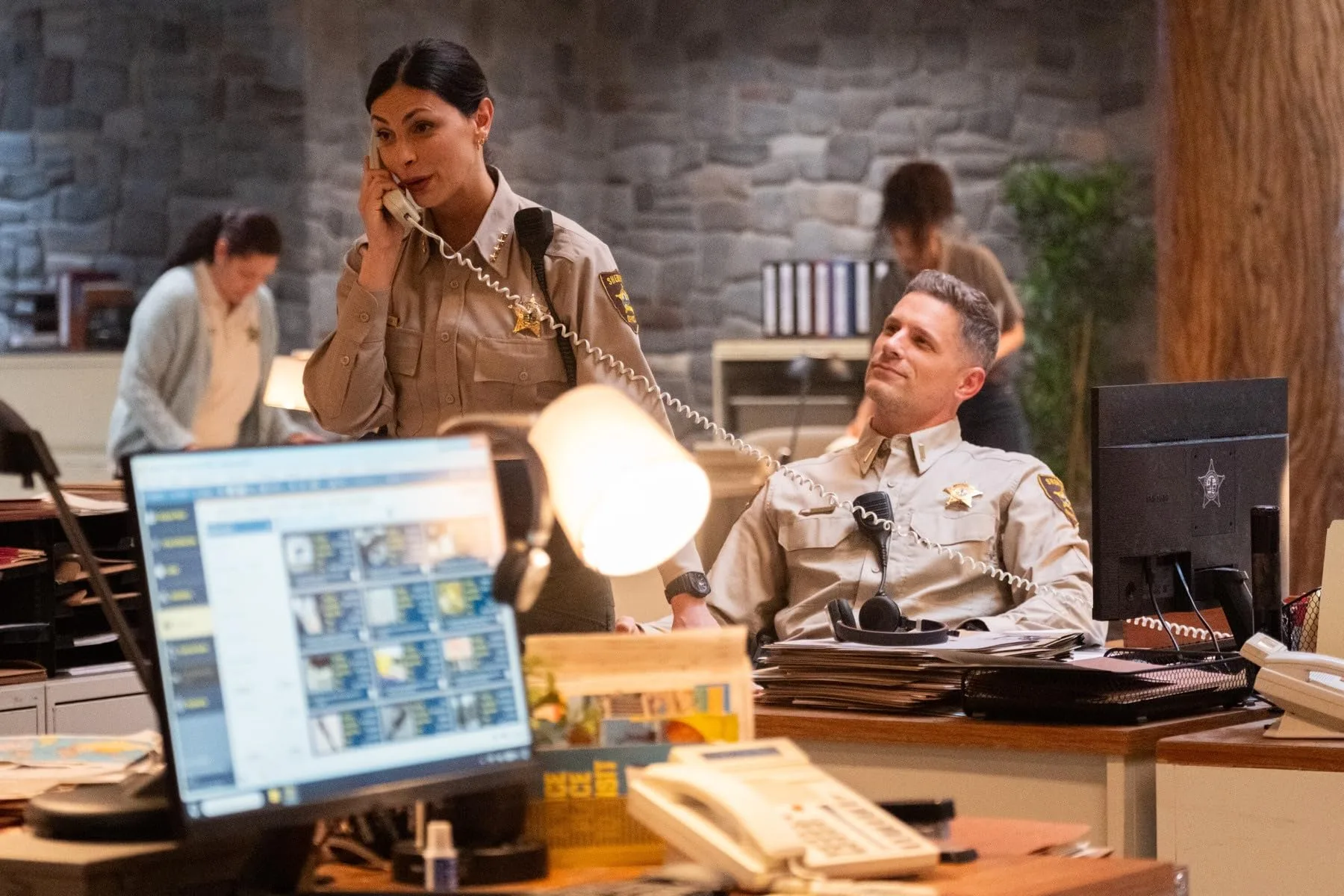
This oscillation reads less like layered complexity and more like a lapse in narrative certainty. It suggests the writers permit the world’s rules to bend around immediate sensational beats. The result is a fracture in the reality the show constructs. Investment in Mickey’s dilemmas depends on consistent constraints; when those constraints appear arbitrary, immersion loosens and the figure of the protagonist begins to function as an instrument of plot convenience rather than a fully argued moral agent.
The series therefore suffers from an identity rupture. When the focus shrinks to the intimate conflicts of the Fox family, dramatic force emerges. Those moments reveal where the series’ devotion to character is strongest. The episodes that lean toward kinetic, action-oriented spectacle and improbable stunts risk degrading into soaplike excess.
The program must decide rapidly on a sustained dramatic proposition: persist in probing the subtle, painful demands of devotion and duty, or supply transient sensory diversion. The material contains real promise in its character studies and its depiction of a divided town, but that promise will remain prospective until the show adopts a coherent and steady dramatic reality.
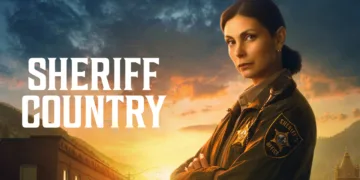
Sheriff Country is a police procedural drama series and the first spin-off of the successful show Fire Country. It stars Morena Baccarin as Sheriff Mickey Fox, who navigates criminal activity and complex family dynamics in the small town of Edgewater, California. The series is produced by Jerry Bruckheimer Television and CBS Studios and premiered on October 17, 2025, on the CBS Television Network. Episodes are also available for streaming on Paramount+.
Full Credits
Director: James Strong, Kevin Alejandro, Ed Ornelas
Writers: Matt Lopez, Max Thieriot, Tony Phelan, Joan Rater, Safia M. Dirie, Obiageli Odimegwu
Producers and Executive Producers: Max Thieriot, Tony Phelan, Joan Rater, Jerry Bruckheimer, KristieAnne Reed, Matt Lopez
Cast: Morena Baccarin, Christopher Gorham, Michele Weaver, Matt Lauria, W. Earl Brown, Amanda Arcuri, Caroline Rhea, Tony White, Max Thieriot, Diane Farr
Composer: Fil Eisler
The Review
Sheriff Country
Sheriff Country is a study in internal conflict, strong when it allows its protagonist, Mickey Fox, to wrestle with the existential burden of policing her own kin. Morena Baccarin anchors a compelling family drama set against a rich, nuanced community portrait. However, the series routinely undermines its emotional weight by adhering inconsistently to its own procedural logic, creating jarring shifts in reality. To survive, it must rapidly abandon the urge for high-octane spectacle and commit fully to the complex, painful human stakes it initially establishes.
PROS
- Morena Baccarin’s layered portrayal of authority mixed with raw empathy.
- Detailed, nuanced exploration of the Edgewater community, especially the complex drug-farming subculture.
- The high-stakes conflict between Mickey, her ex-con father Wes, and her recovering daughter Skye provides powerful serialization.
- Successfully blends the weekly procedural format with a gripping, long-form personal mystery.
CONS
- The protagonist frequently and illogically violates legal protocol, breaking immersion.
- The show wavers between being a grounded character drama and an over-the-top action procedural.
- The initial episode relies heavily on exposition, feeling like a re-tread for existing fans of the connected series.
- The rapid, severe rift with deputy Boone feels sudden, serving immediate plot rather than organic development.