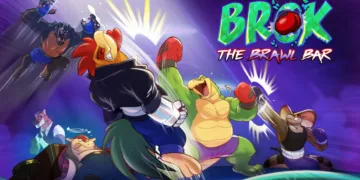



















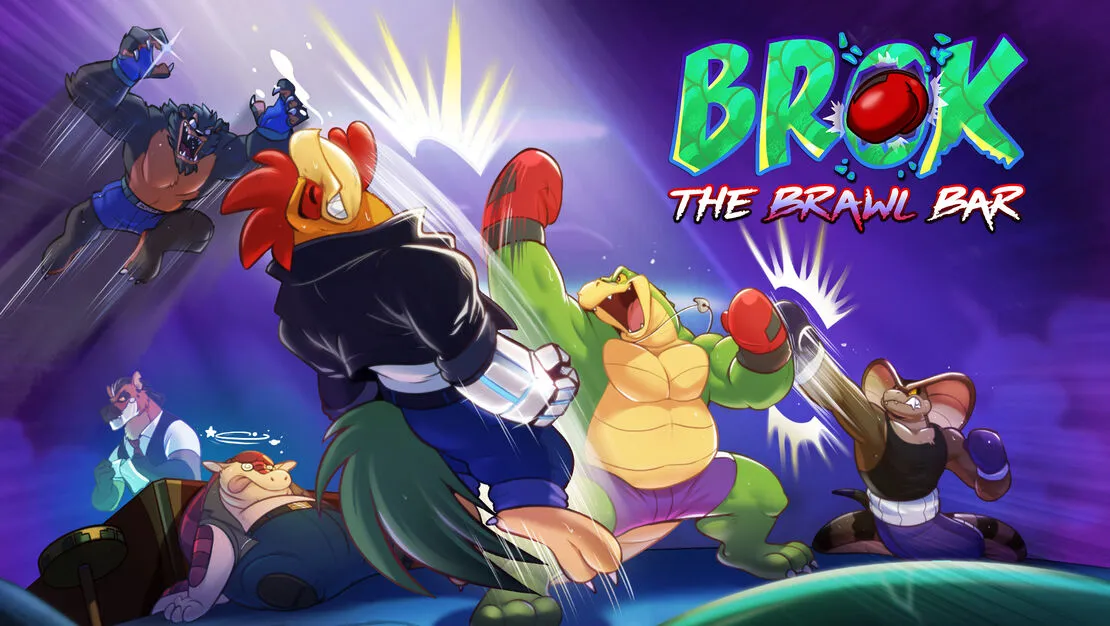

Brok returns, but this time he leaves his detective work behind. COWCAT Games removes the point-and-click puzzles that defined the earlier title and concentrates entirely on the sensation of fists connecting with jaws. BROK: The Brawl Bar functions as a standalone spin-off in which the story exists mainly to carry the action. The opening premise sends the alligator brawler into a hidden bar in the Slums, where he stumbles across a high-tech VR simulation machine built to push any challenger to their limits.
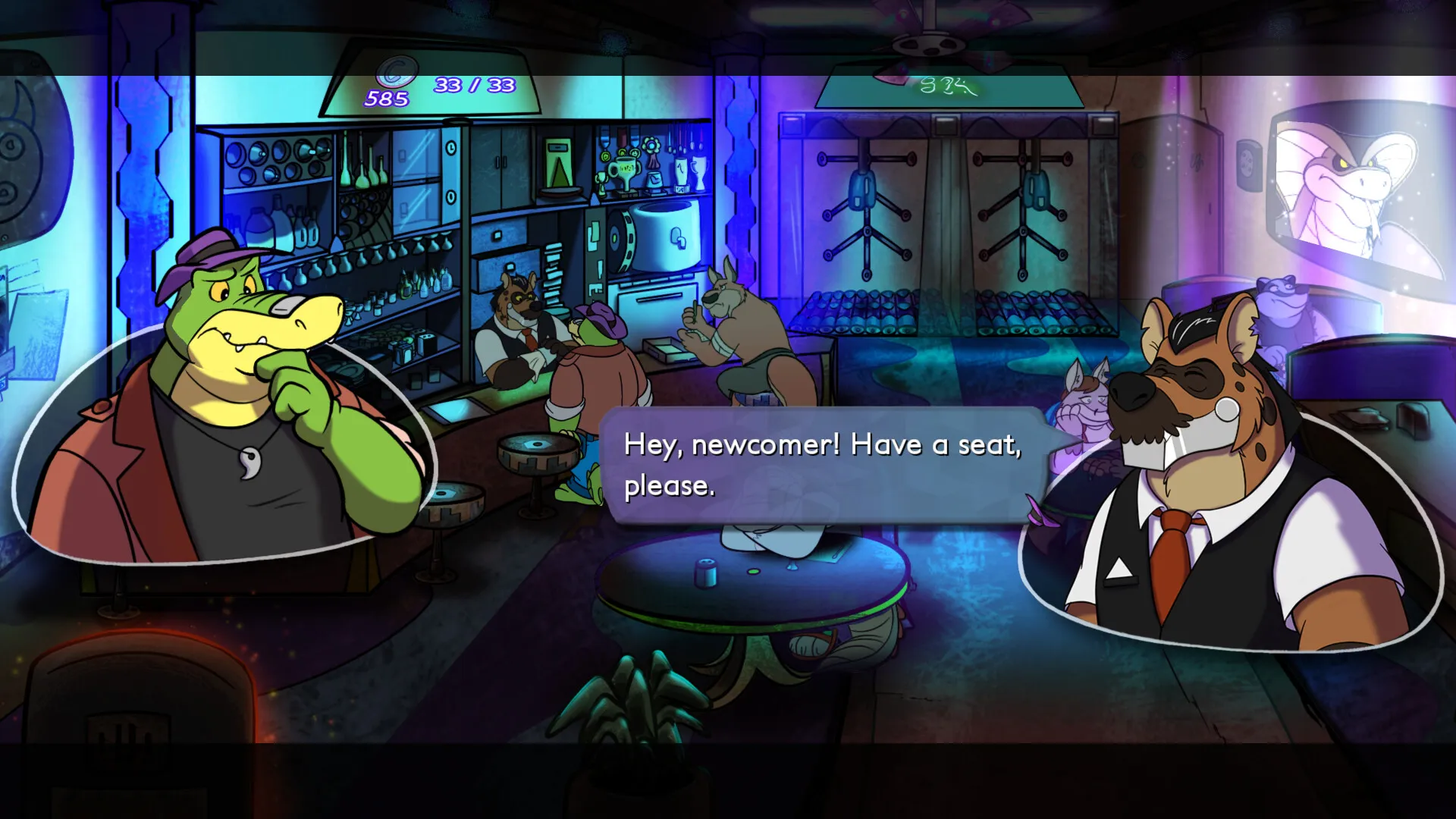
The game uses a tight, deliberate structure. Downtime plays out in the Hub world, the bar itself, where you can chat with a varied group of anthropomorphic regulars. Once conversations wrap up, the focus shifts to Action Mode inside the VR headset. Newcomers who never touched the first game can still read the stakes clearly. The experience plays like a pure arcade cabinet. Brok heads into each bout to prove he still carries the instincts of a champion boxer. The core loop stays clean and addictive: you fight, you earn currency, and you spend that income to unlock the next trial.
Combat Mechanics and “Event Match” Gameplay
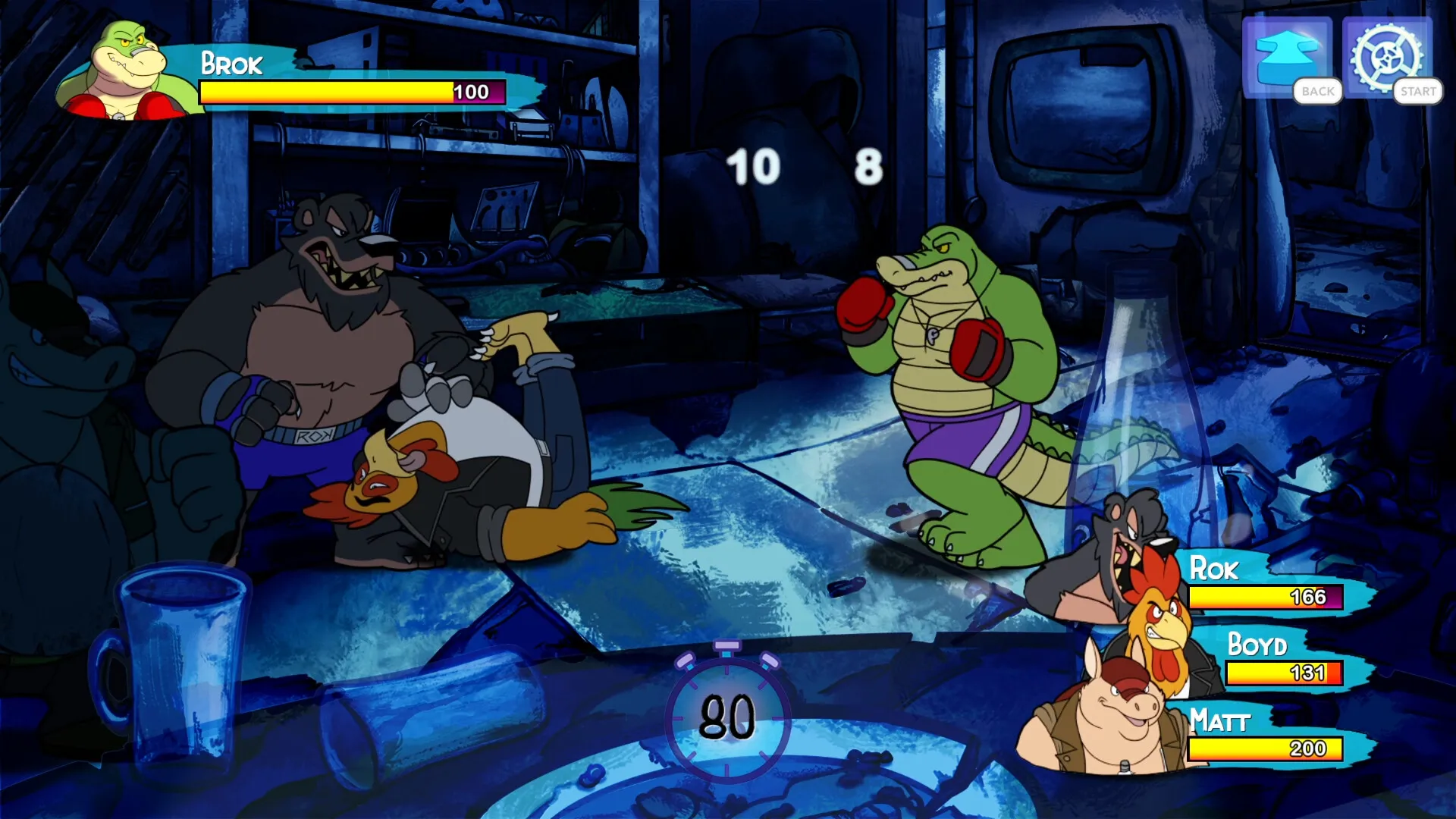
The developer builds the action on a classic beat ’em up control scheme that feels responsive from the first punch. Light attacks provide fast jabs, heavy attacks deliver slower but stronger hits, and a separate block button and jump input complete the basic toolkit. Directional inputs add nuance.
Attacking while pressing up or down changes the strike, turning it into an uppercut or a sweeping hook. Fights have a strong sense of weight. Every blow lands with impact, and enemies react in kind, tumbling backward or flying into invisible walls. The wall-bounce system invites players to keep opponents airborne and stack damage through improvised juggles.
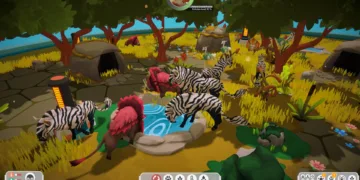
The structure of each encounter sets the game apart from more traditional side-scrolling brawlers. Classic genre entries often send you marching across endless city streets, while Brok confines its action to discrete “Event Match” scenarios that evoke the specific challenge modes seen in platform fighters.
Each one is a contained skirmish. Some finish in half a minute, while others stretch on for several tense minutes. The roster features six playable characters. Brok fills the role of heavy bruiser, and the rest of the cast brings distinct styles that lean toward speed, ranged pressure, or throw-focused play.
Improvisation defines the flow inside the arena. Weapons litter the ground during clashes, so you can grab bottles, pipes, or baseball bats to extend your reach and damage output. Paying attention to the environment feels just as important as reading enemy patterns. Stages frequently include hazards such as electric fences or bottomless pits.
Forcing a stubborn foe into one of these traps becomes a reliable answer once the screen fills with enemies. Managing health introduces another layer of decision-making. Food pickups drop in the middle of fights or can be purchased ahead of time. Snagging a burger mid-combat restores Brok’s vitality, which means you must carve out a brief moment of safety while the arena descends into chaos. Local co-op lets friends jump into the brawl, turning the frantic screen into a coordinated team effort.
Challenge Variety, Economy, and Customization
The core campaign consists of over 60 distinct challenges, and these stages rarely settle for a simple “defeat every foe” objective. The developers experiment constantly with win conditions. One scenario pits you against a robot panther and a cleaning droid that steadily grow in size and power, transforming into screen-filling threats if you fail to finish them quickly. Other levels remove the health bar entirely.
In these “1 HP” matches, a single touch spells failure, which demands sharp defense and nearly flawless play. Platforming-style tests appear as well. These ask you to pop balloons or move through trap-filled obstacle courses under strict time limits, shifting the focus toward precision movement and away from raw damage.
An involved economy system underpins progression. Every victory pays out C-Tokens, the key currency of the bar. Tokens can be traded for short-term boosts before a difficult battle. A shot of concentrated helium can raise your strength for thirty seconds, while flowing honey can shore up defense for the same brief window. This setup lets players lean on preparation and resources to push through tough skill checks if they have saved enough currency. The game also includes a “skip” option. If a particular challenge becomes exhausting, you can spend a large number of C-Tokens to bypass it, so one brutal level never completely stalls your run.
Customization tools give players wide control over how punishing the experience feels. Difficulty settings range from Relaxed to Mania. Relaxed makes opponents sluggish and fragile, and Mania turns each error into a potential run-ending blow. Accessibility features expand this tuning further, with options for adjusting game speed and enabling high-contrast visuals.
Outside the main campaign, “Creator Mode” opens things up even more. A full-featured level editor lets players assemble their own arenas, place enemies, drop in hazards, and define the victory conditions. Sharing these stages helps the game retain momentum long after the initial list of 60 events is complete. Side offerings such as Survival, Versus, and Daily Challenges keep throwing fresh scenarios at players who want to stay in the ring.
Visuals, Audio, and Atmosphere
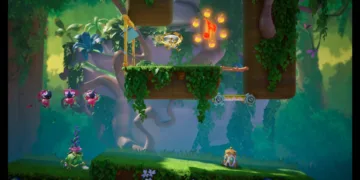
The art direction calls back to a polished Saturday morning cartoon. Character designs read clearly and communicate emotion with ease. Brok carries a worn-out but steadfast look, and the supporting cast swings from menacing bruisers to outright goofballs. Animation quality holds up once the punches start flying, with moves that blend smoothly into one another. Special attacks burst across the screen with strong visual effects that reinforce the arcade energy. The difference between the dim, grimy bar and the bright, digital sheen of the VR arenas creates a striking visual split.
Sound design pulls the presentation together. Full voice acting runs through both the quiet bar interludes and the rowdy matches, with characters trading quips over drinks and hurling taunts mid-fight. Performances give the cast definition, so these figures read as personalities with histories, far removed from the feel of anonymous sprites. Effects lend every hit and explosion a satisfying punch, from the crack of a baseball bat to the blast of dynamite. Music carries a big share of the mood.
New tracks for the Jukebox can be unlocked through the bar’s prize wheel, and the soundtrack matches the tempo of the action, mixing energetic electronic tracks with harsher pieces that fit the Slums backdrop. The hub bar itself projects a surprisingly cozy atmosphere. Watching the regulars drink and chat between VR sessions makes the setting feel lived-in before you strap back into the machine and return to the controlled chaos of digital brawling.
The Review
BROK: The Brawl Bar
BROK: The Brawl Bar succeeds as a focused, arcade-style companion to its predecessor. It strips away the adventure elements to deliver a pure, satisfying brawler with excellent impact and variety. While the story takes a backseat, the wealth of challenges, creative level editor, and charming presentation offer significant value. It is an honest, punchy title that respects your time and rewards skill, even if the loop inevitably becomes repetitive over long sessions.
PROS
- Satisfying combat with weighty impact and responsive controls.
- High-quality animation and expressive anthropomorphic art style.
- Over 60 varied challenges prevent the gameplay from feeling stale.
- Robust level editor and accessibility options extend replay value.
CONS
- The repetitive nature of the genre sets in during longer play sessions.
- Narrative is thin compared to the deep storytelling of the original game.
- Some difficulty spikes may force players to grind for tokens.