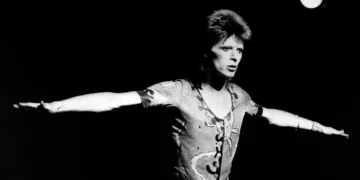





















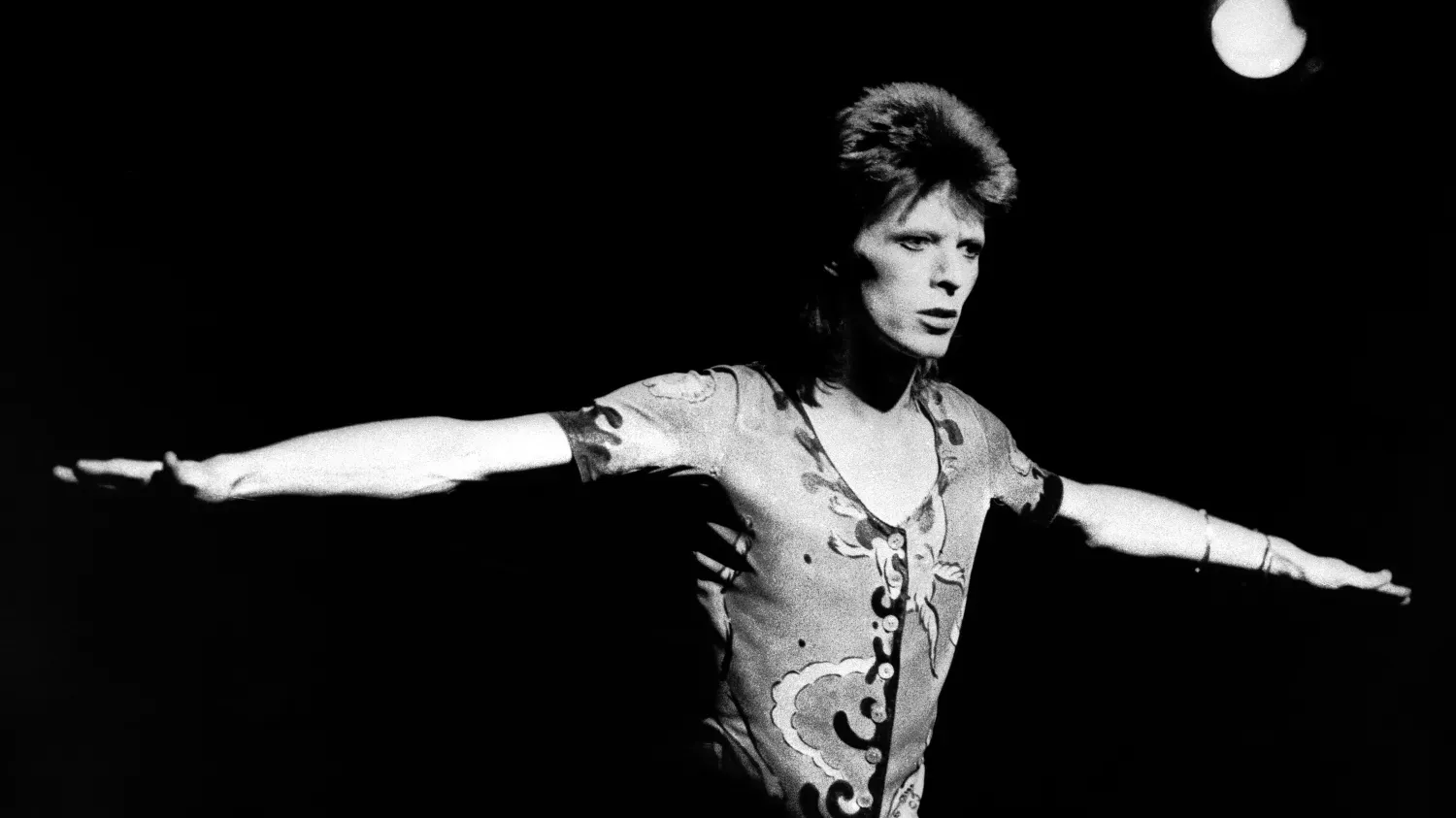

Jonathan Stiasny trains his lens on David Bowie’s late period, a stretch that can vanish behind the louder mythology of the 1970s. Released to mark ten years since Bowie died, the film takes a clear stance on form: it rejects the usual cradle-to-grave template and builds its structure around Blackstar (2016). That final work becomes the organizing principle, a “last transmission” that lets the documentary sift through the decades after Bowie’s 1980s commercial peak.
The framing leans on two recurring ideas in Bowie’s public imagination: outer space and “otherness.” Stiasny uses them as a throughline linking the wide-eyed optimism of the Apollo era to the frail, formidable figure seen near the end, asking how a persona built for mass attention can still speak to intimacy and self-invention.
Stiasny’s visual language carries that argument. Grainy archival material sits beside the sharp, unsettling polish of contemporary music-video imagery, with “Lazarus” serving as a key reference point. The juxtaposition reads like a shift in media grammar: one mode speaks in historical fragments, the other in curated iconography designed for modern circulation.
Quiet, reflective interviews sit in the same frame of meaning, less interested in reinforcing the Thin White Duke mask than in peeling back the professional decisions that sustained it. In tracing Bowie’s later chapters, the film also tracks a cultural swing: from global pop commodity toward a single, experimental artist, and the tensions that come with trying to be both.
The Friction of Creative Deconstruction
A large portion of the documentary lives in the late 1980s and 1990s, when Bowie set out to dismantle the stadium-sized version of himself. Stiasny treats this era as deliberate self-sabotage in the service of authorship, an attempt to break the expectations attached to a famous face and a proven setlist.
Tin Machine enters as the clearest symbol of that gamble, and the film does not soften how the project was received. Stiasny includes harsh archival reactions, including the infamous Melody Maker piece that labeled Bowie “a disgrace.” The inclusion lands as more than period color; it makes the risk measurable, reminding the viewer that artistic reinvention can cost credibility in real time.
The documentary draws a line from the glossy excess of the “Serious Moonlight” tour toward a search for a more grounded identity. That movement takes on a regional texture through Bowie’s collaboration with Hanif Kureishi on The Buddha of Suburbia, which the film presents as a meaningful reconnection with his south London heritage. It is one of the documentary’s strongest reminders that “global” fame does not erase place, and that a return to local reference points can function as creative recalibration. Stiasny treats these years, so often dismissed, as necessary conditioning for a later return to grace.
That arc finds its peak in Bowie’s 2000 Glastonbury headline set, staged as the climax of this long negotiation. The film frames it as a hard-won reconciliation between the pull of experimental anonymity and the immovable reality of his status as a global legend. In cultural terms, it plays like a negotiation between public ritual and private agenda: a massive audience expecting the familiar, an artist still testing the limits of recognition. Stiasny’s portrait of Bowie gains texture here, shaped by a willingness to fail in public while chasing a new creative language.
Collaborative Echoes and Professional Intimacy
The film’s emotional force comes from the people who worked beside Bowie, and producer Tony Visconti anchors that chorus with a deeply personal account. His reflections give the documentary its clearest view of process: the private mechanics of a decades-long partnership, described from within the room where decisions were made.
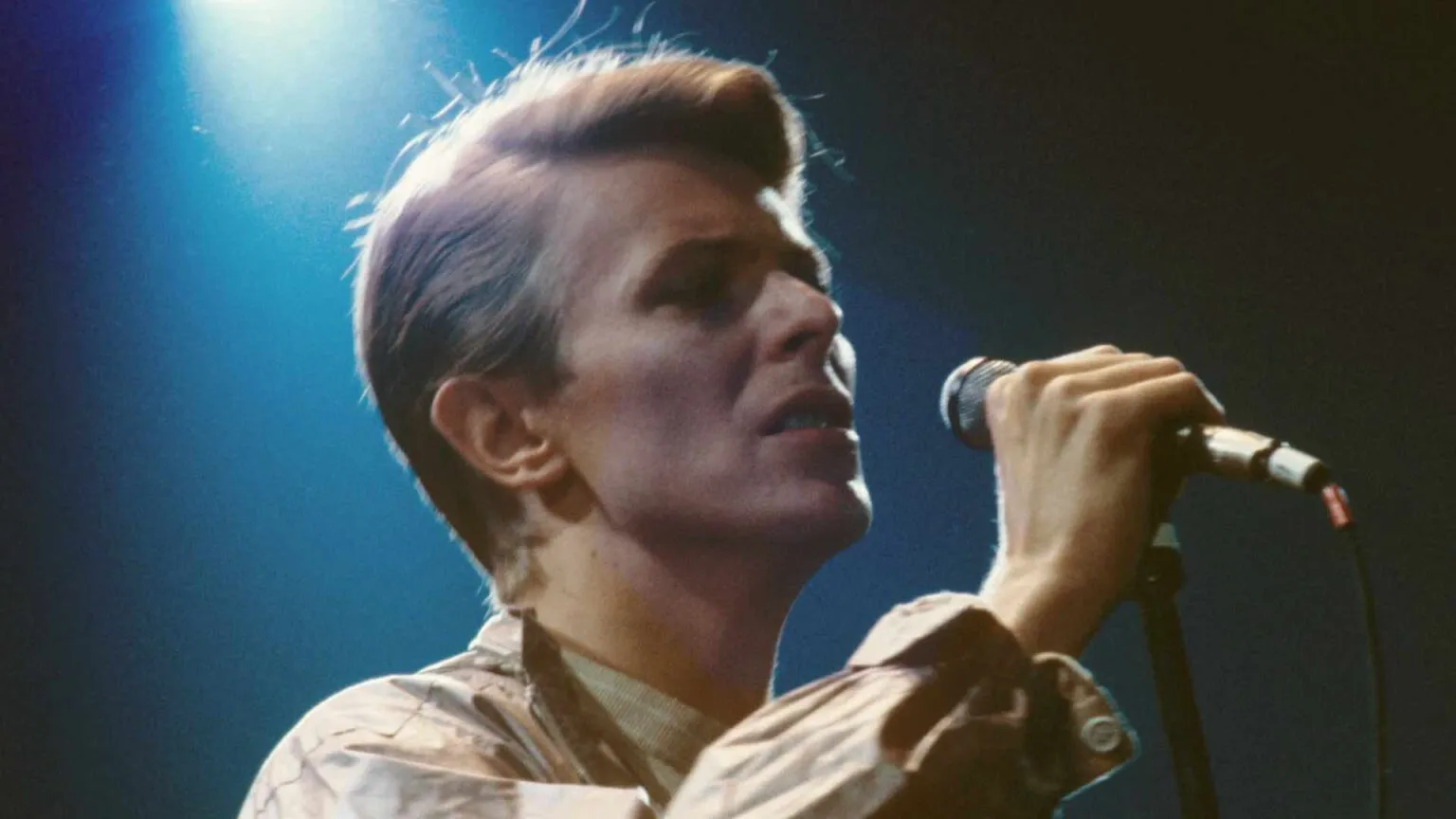
Around Visconti, Stiasny assembles a wide range of voices, including Rick Wakeman and Mike Garson, along with Hanif Kureishi and longtime friend Dana Gillespie. The mix matters. It suggests a creative life built through intersecting disciplines, where musicians and writers share a vocabulary of craft even when their tools differ.
One absence stands out: the film does not include interviews with family members such as his wife Iman. The choice tightens the documentary’s focus on professional evolution, and it also shapes the kind of intimacy on offer. Stiasny is after the intimacy of work, where affection and conflict share the same air because the stakes are artistic. That approach pays off in the anecdotes: Michael Eavis reportedly walked out of a show when Bowie refused to play the hits, a story that captures the friction between industry expectation and artistic integrity without needing extra commentary.
These interviews also challenge the mythology of effortless stardom. Contributors describe nerves and vulnerability that persist even under a “celestial” reputation. Stiasny uses those details to recast “otherness” as lived experience, not a slogan: a person who carried the pressure of being watched, and who still demanded space to experiment. From these testimonies, Bowie emerges as generous and exacting, a collaborator whose influence traveled through professional gravity and shared labor, shaped by people who could meet him in the work.
A Final Performance in the Event Horizon
The documentary’s final movement turns to the clandestine making of Blackstar during Bowie’s terminal cancer diagnosis. Stiasny keeps the focus on intent and choice: decisions made under severe constraints, treated as design rather than resignation. The film highlights one defining move, the recruitment of rigorous jazz musicians to create a sound that slipped free of traditional rock categories. That shift reads as both musical and cultural, a way of refusing a familiar genre language at the point where convention might feel easiest to lean on.
“Lazarus” becomes the centerpiece of this section, examined as meta-commentary and performance art. Bowie’s physical decline is presented as material within the work, shaped into a final statement that is haunting because it stays composed. Stiasny connects the “Starman” of youth to the “ultimate space traveler” at the end, suggesting a career-long commitment to outer space imagery that gains a sharper edge in its last use. The film reaches an intensity that feels deeply moving while avoiding cheap sentimentality, guided by a portrait of a storyteller who held tight control over his narrative to the last.
Stiasny also points to the film’s contemporary audience, noting how this final act resonates with younger viewers and the queer community, who read Bowie’s lifelong embrace of difference as a blueprint for authenticity. The documentary goes further, treating his death as a planned artistic event, a final transmission from a life spent exploring the unknown. In this framing, legacy becomes an act of defiance, creativity maintained in the face of the inevitable.
Bowie: The Final Act is an evocative documentary scheduled to premiere in UK and Irish cinemas on December 26, 2025. This film explores the final decade of David Bowie’s life, charting his creative journey from the mid-1990s through to the release of his haunting final album, Blackstar. Following its theatrical release, the documentary will be available to watch on Channel 4, with its television premiere set for January 3, 2026, at 10:00 PM. Through rare archival footage and heartfelt interviews with his inner circle, the film reveals how the iconic artist transformed his own mortality into a final, powerful piece of performance art.
Full Credits
Title: Bowie: The Final Act
Distributor: Channel 4, Dogwoof, Rogan Productions
Release date: December 26, 2025 (Cinema), January 3, 2026 (Channel 4)
Rating: 15
Running time: 90 minutes
Director: Jonathan Stiasny
Writers: Jonathan Stiasny
Producers and Executive Producers: Dan Hall, Jan Younghusband, Shaminder Nahal
Cast: David Bowie, Tony Visconti, Rick Wakeman, Dana Gillespie, Hanif Kureishi, Earl Slick, Reeves Gabrels, Mike Garson, Chris Hadfield, Jayne Middlemiss, Jon Wilde
Director of Photography (Cinematographer): Jonathan Stiasny
Editors: Jonathan Stiasny
Composer: David Bowie
The Review
Bowie: The Final Act
This documentary is a masterfully restrained exploration of an artist who viewed his own departure as a final creative transmission. By linking his early celestial preoccupations to the haunting reality of his final days, the film offers a profound study of professional legacy and human vulnerability. It avoids common biographical clichés, focusing instead on the intellectual weight of artistic resurrection and the dignity found in silence. While the exclusion of family voices might feel distancing for some, it reinforces the film’s intent to document the craftsman rather than the celebrity.
PROS
- Deeply emotional testimony from longtime producer Tony Visconti.
- Excellent use of archival footage to contextualize the Tin Machine era.
- Insightful analysis of the Blackstar recording sessions and jazz influences.
- Powerful framing of Bowie as a storyteller who directed his own end.
CONS
- Absence of family voices (e.g., Iman) may feel incomplete to some viewers.
- Chronological shifts between decades can occasionally feel disjointed.
- Relatively brief focus on his personal life and domestic history.
- Sparse coverage of his late-career literary and artistic promotion.