




























Netflix has made the start of the year feel like a small digital rite: another Harlan Coben adaptation arrives, and a familiar itch for secrets gets scratched. Run Away is the newest entry in that relationship, converting a distinctly American suspense novel into a British limited series. The series follows Simon Greene, a financier with a gilded routine that shatters after his daughter Paige disappears into the fog of addiction. The eight-episode story unfolds in London, where cold architecture provides a harsh backdrop for a father’s desperation.
The spark comes fast. Simon spots Paige in a public park and lunges at the chance to pull her back. The “rescue” turns ugly, ending with Simon brutally assaulting her boyfriend, Aaron. That act of naked violence becomes the hinge the show keeps swinging on. It sets off criminal repercussions that steer the narrative toward the hard machinery of a crime thriller. The pace tightens. Private anguish shares space with public violence, and the series keeps snapping between those registers with restless energy.
The Architecture of a Private Collapse
Simon behaves like a man trained by wealth to expect compliance. His bank balance has taught him that problems can be contained, negotiated, bought. He assumes the same logic applies to Paige. Ingrid, his wife, offers medical pragmatism: Paige needs to reach her own bottom before recovery can begin.
Their argument reads as a marital dispute and as class anxiety wearing domestic clothing. Simon treats addiction like a bad investment, something salvageable through force and persistence. He refuses to let Paige hit the pavement, and his intervention accelerates their collective ruin. There is a bleak irony in watching a financier who understands risk keep mispricing it at home.
The Greene household becomes a study in diverging outcomes. Sam and Anya embody the expected path of success, the story society likes to tell about stability. Paige has embraced “destitutism” (a term the series practically invites, describing a performative or tragic rejection of middle-class safety). That split stings because it feels personal and structural at once. James Nesbitt charts Simon’s shift from controlled professional to a man unmoored by his own temper, with each new outburst pulling him farther from the controlled professional he once was.
Minnie Driver plays Ingrid with a subtle luminosity that suggests calm and concealment in the same breath. Her work as a pediatrician lands as pointed irony. She spends her days saving children and cannot mend the child living under her roof. The writing hints that her composure hides secrets, and the park confrontation becomes an “unmasking” event. It strips Simon of respectability in public, turning him from a wronged parent into someone hunted by the law.
The Convergence of Misfit Proxies
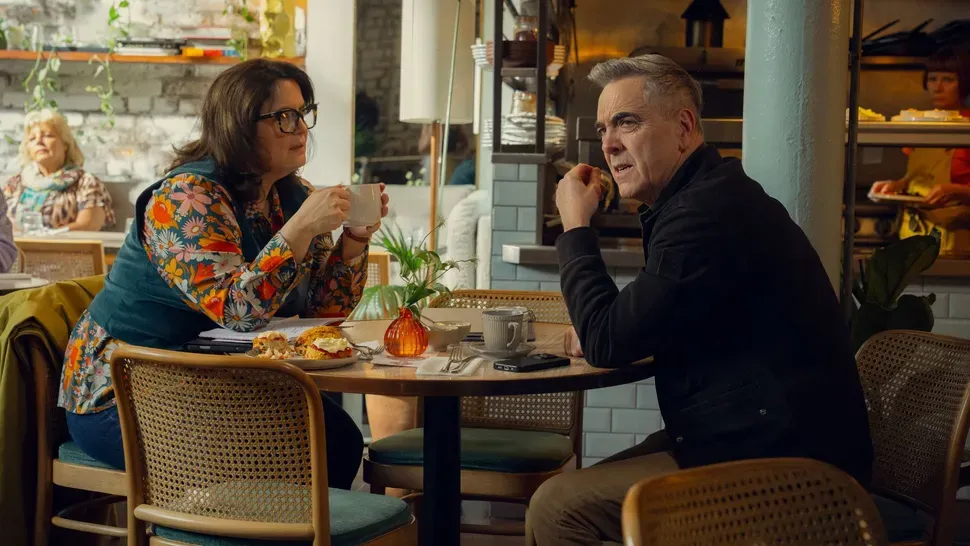
As Simon’s crisis narrows his vision, the narrative widens its field. Parallel threads unfurl and then drift toward collision. Elena Ravenscroft arrives as a private investigator with a needed lightness, a small dose of wit in a show allergic to relief. Ruth Jones gives her a grounded warmth that cuts the grimness without dissolving it. Elena connects Paige’s disappearance to a wider pattern of missing people, and the series starts hinting at something planned, a design that reaches beyond one family.
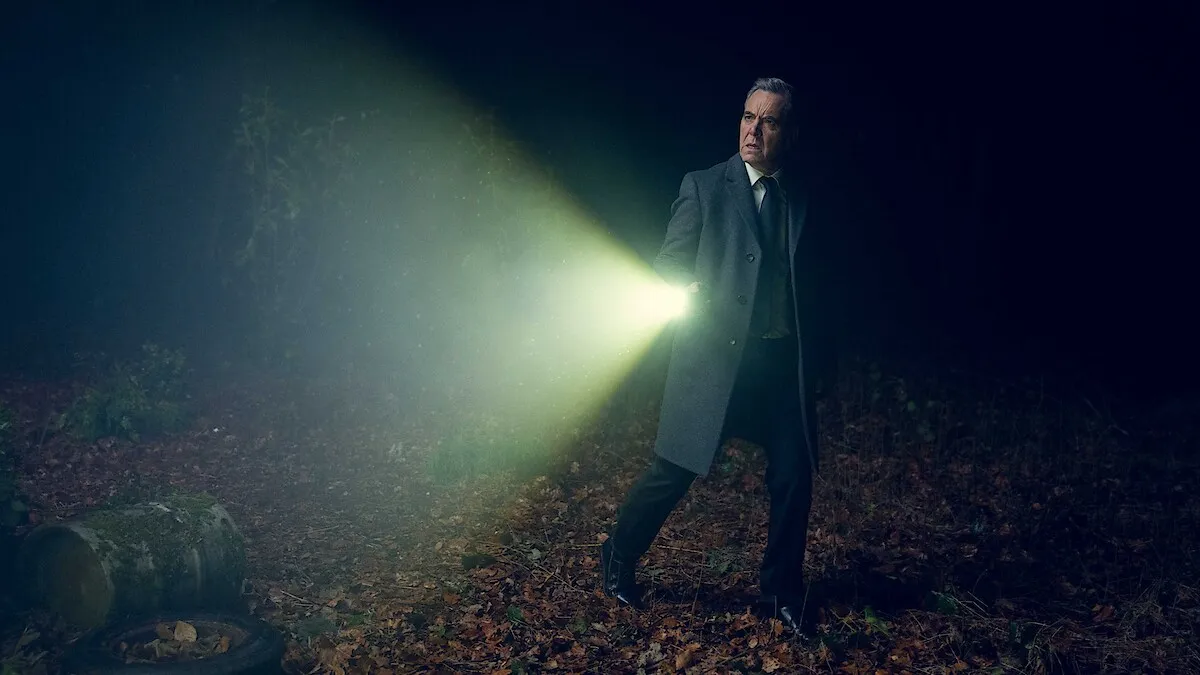
Detectives Isaac Fagbenle and Ruby Todd represent the official lens. Fagbenle is drawn as a study in professional distance, standoffish in a way that reads like self-protection. He seems to guard a private interior life from the rot he handles daily. His secret personal life becomes a mirror for the show’s fixation on masks, on the social demand to keep the messy self hidden behind a functional role.
Then the series introduces the “enforcers,” Ash and Dee-Dee, roaming assassins who feel like a tonal disturbance. They bring a jolt of near-surreal menace, hovering between gritty thriller and dark comedy. Their presence marks the moment the show begins living in two genres at once. The grief story remains, yet pulp enters the bloodstream. These disparate figures stand in for different angles of a society obsessed with tracking and being tracked, and their eventual alignment forms a web that feels both inevitable and slightly absurd.
The Iceberg Logic of Modern Secrets
Run Away operates through “iceberg storytelling.” The visible calamity, a runaway child, sits above a much larger submerged reality. Each answer Simon uncovers exposes more hidden matter, and the truth begins behaving like a recursive loop. That structure speaks to a contemporary obsession with data and hidden histories. Everyone carries an emotional trail and a digital trail. Both trails have weight, and the series treats them as evidence waiting to surface.

The thematic through-line is the terrifying opacity of the people nearest to us. Intimacy becomes a polite fiction sustained by selective attention. Families project roles onto each other and then recoil when reality refuses the casting. The series names the buried engine as “traumata” (a plural that sounds clinical, which feels grimly appropriate), the private damage that keeps driving public behavior. The pacing stays relentless. Flashbacks and perspective shifts keep the viewer from staring too long at any single logical inconsistency. It is a tactic, and it is a tell.
The social commentary lands through its treatment of addiction and homelessness. The depiction avoids syrupy sentimentality and focuses on invisibility: the way people who fall through the cracks vanish from the moral accounting of a wealthy society. The park assault takes on an extra life once it goes “viral.” A private failure becomes a public spectacle, packaged and circulated. Digital exposure becomes punishment, separate from any courtroom outcome, and the series treats that exposure as its own sentence, regardless of the legal outcome.
The Friction Between Realism and Melodrama
A shift arrives in the later half. Early episodes live in recognizable terrain, shaped by parental anxiety and the failures of the social safety net. Then the story pivots into cults and improbable murders, a turn that throws a spotlight on the “Coben Formula.”
The method leans on rapid revelations and shock, with less patience for slow psychological accumulation. Momentum rises while realism thins, and the series seems to accept that bargain with a grin. I admired the propulsion and also wanted the show to breathe.
The escalation reaches “theatricism.” Events stack up with such density and improbability that the narrative threatens to buckle. That quality fits the modern bingeable thriller, built to keep attention even when plausibility starts slipping. Between episodes five and eight, belief gets pushed to the edge and the focus drifts away from family pain toward the mechanics of mystery writing itself. The show begins performing its tricks more loudly, as if it knows the viewer is watching for the next one.
Performance and the Weight of the Reveal
Nesbitt supplies the emotional anchor. His Simon is flawed in plain view. He can be naive, he makes “stupid” choices, and he keeps lunging forward anyway. The performance makes that desperation feel honest even as the plot grows more ornate. The British setting is used well, and the relocation from American source material to a UK environment feels natural. London’s streets and facades add a cold urban detachment that suits a story about exposure, surveillance, and shame.

The supporting cast helps tether the far-fetched elements. Ellie de Lange gives Paige a haunting presence that keeps her from evaporating into pure device. Alfred Enoch’s work as Fagbenle offers a subtle critique of the hard-boiled detective archetype. He plays him as a man clearly overwhelmed by the complexity he is expected to control, the polished exterior cracking under the pressure of what he sees.
The final twist is a gamble. It reframes what came before and shifts the tone again in the closing minutes. Some viewers will call it necessary, others will call it excess. It lands as a last hand-over-mouth shock that matches the series’ commitment to the unpredictable. The closing note is sour: looking into other lives can uncover truths that are impossible to live with.
Harlan Coben’s Run Away is a British mystery thriller series scheduled to premiere on January 1, 2026. This eight-part limited series is an adaptation of Coben’s 2019 novel of the same name and marks the latest collaboration between the author and the streaming giant. Viewers will be able to watch the entire series exclusively on Netflix upon its New Year’s Day launch.
Full Credits
Title: Harlan Coben’s Run Away
Distributor: Netflix
Release date: January 1, 2026
Rating: TV-MA
Running time: 60 minutes per episode
Director: Nimer Rashed, Isher Sahota
Writers: Danny Brocklehurst, Tom Farrelly, Amanda Duke, Harlan Coben
Producers and Executive Producers: Guy Hescott, Will McDonagh, Harlan Coben, Danny Brocklehurst, Nicola Shindler, Richard Fee
Cast: James Nesbitt, Ellie de Lange, Ruth Jones, Minnie Driver, Alfred Enoch, Lucian Msamati, Jon Pointing, Adrian Greensmith, Ellie Henry, Maeve Courtier-Lilley, Amy Gledhill
Director of Photography (Cinematographer): Richard Stoddard, Alistair Upcraft
Editors: David Fisher, Kyle Ogden, Nikki McChristie, Daniel Gale-Coyne
Composer: David Buckley, Luke Richards
The Review
Run Away
Run Away succeeds as a high-octane distraction. It prioritizes the adrenaline of the reveal over narrative consistency. James Nesbitt anchors the chaos with a raw performance. While the plot stretches logic until it snaps, the sheer momentum makes it an addictive experience for those who enjoy the specific rhythm of a Coben mystery. It is a messy, camp, and effective thriller that demands nothing but your attention.
PROS
- Powerful lead performance by James Nesbitt.
- Ruth Jones provides refreshing moments of levity.
- Rapid-fire pacing keeps the viewer engaged.
- A final revelation that remains genuinely unguessable.
CONS
- Noticeable gaps in narrative logic.
- Character motivations feel erratic in later episodes.
- Supporting roles lack depth.
- Excessive reliance on melodramatic coincidences.