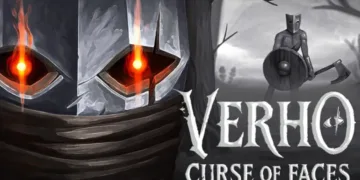























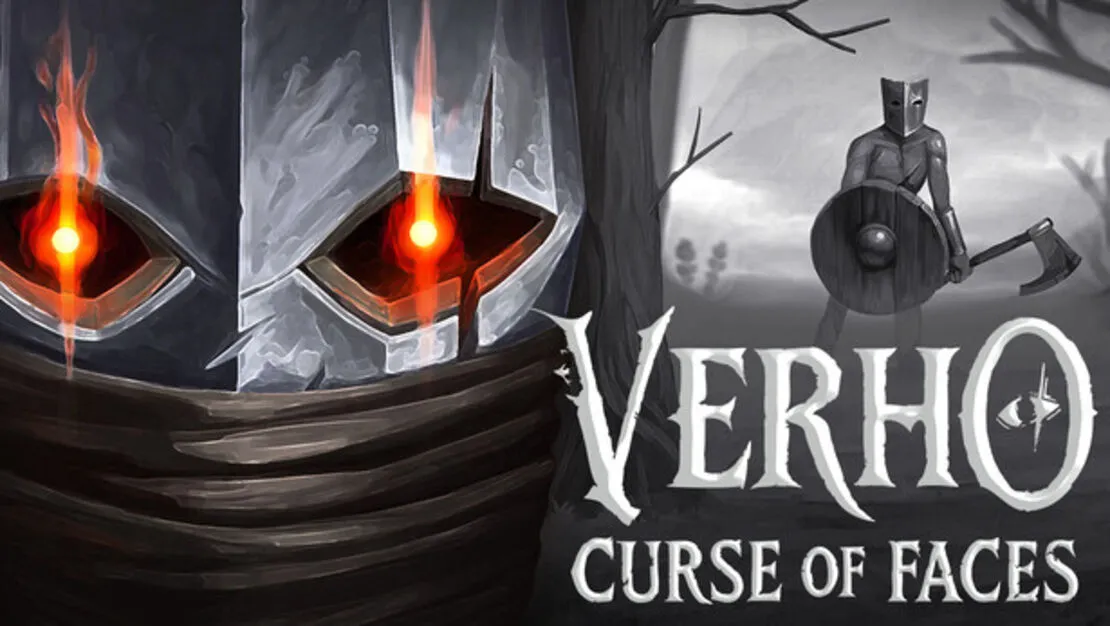

Verho: Curse of Faces plays like a digital haunting, software that feels pulled from a dusty mid-nineties archive and booted up again with all its rough edges intact. The premise focuses on a world broken by an ancient, catastrophic duel between two arch-wizards, their final malice taking shape as a metaphysical plague.
The curse lays down a brutal rule: seeing a human face triggers an immediate, violent death for both the person who looks and the person being looked at. Human connection becomes a lethal wager, and the remnants of society respond by living behind permanent, rigid masks. Choosing a mask at the start sets your class and locks in a social and functional identity inside a culture built around concealment as survival.
That idea carries straight into the presentation. The low-poly look and 32-bit graphical style work as mood, not decoration. Jagged silhouettes and muddy textures create unease, echoing a society that has lost clarity and clean lines. The game drops you into a dark, hostile space with no guidance, then asks you to rebuild the ruin’s history through cryptic NPC exchanges. Their voices come through muffled, reinforcing the mask as both literal barrier and social code. The story avoids big exposition dumps and leans on the environment’s oppressive weight, letting geography, texture, and silence do the heavy lifting.
The Architecture of Fluid Combat and Growth
Progression in this cursed landscape rejects rigid archetypes common in modern role-playing games and treats character building as mechanical transformation. Your starting mask establishes a baseline in Strength, Dexterity, Intelligence, or Constitution, then the game hands you the steering wheel. Each level grants three points to distribute, letting you shift course over time from physical fighter to arcane specialist.
That flexibility supports long-form reinvention. A nimble Thief can begin pouring points into Intelligence, equip spell crystals, light up dark caverns with magic, then still slip back into the shadows to land a fiery strike when timing lines up.
Combat’s cadence comes from what the system removes and what it demands. There’s no stamina bar, so movement and offense open up into sprinting, leaping, and swinging at a frantic pace that clashes with the slower, measured rhythm associated with earlier genre traditions. The balance arrives through a timing-based critical system that turns every weapon into a small study. Each choice has a specific weight and wind-up, and landing the blow at the instant the swing hits full charge grants a massive damage bonus. Fights shift into a rhythm exercise, where understanding tempo matters as much as raw stats.
Also Read






Ranged options offer a tempting safety layer against melee enemies with erratic, sometimes unreactable hitboxes. The promise is distance and control, and the cost shows up fast. Traditional armor is absent, so one mistake at close range can end a run. The environment also shapes how you prepare. Enemies respawn every time you use a save point, creating a repeating loop of clearing areas, harvesting experience, returning to safety, then raising stats to keep pace.
That grind feeds into equipment demands later on, where stronger gear expects higher requirements. Combat becomes a constant negotiation between aggressive melee timing and the cautious, resource-consuming nature of bows and spells. Even as your character grows stronger, the world keeps its teeth, ready to punish overconfidence and sloppy planning.
The Burden of Uncharted Exploration
Movement through Verho: Curse of Faces asks for mental mapping and environmental literacy, turning away from the hand-holding that defines much contemporary design. There’s no mini-map and no quest log, so direction lives in your memory. A rudimentary compass helps, yet real progress depends on recognizing distinct, often alien landmarks and recalling how interconnected zones fold back into each other. Travel stops being downtime between objectives and becomes core play, with intuition and attention carrying as much weight as combat skill.
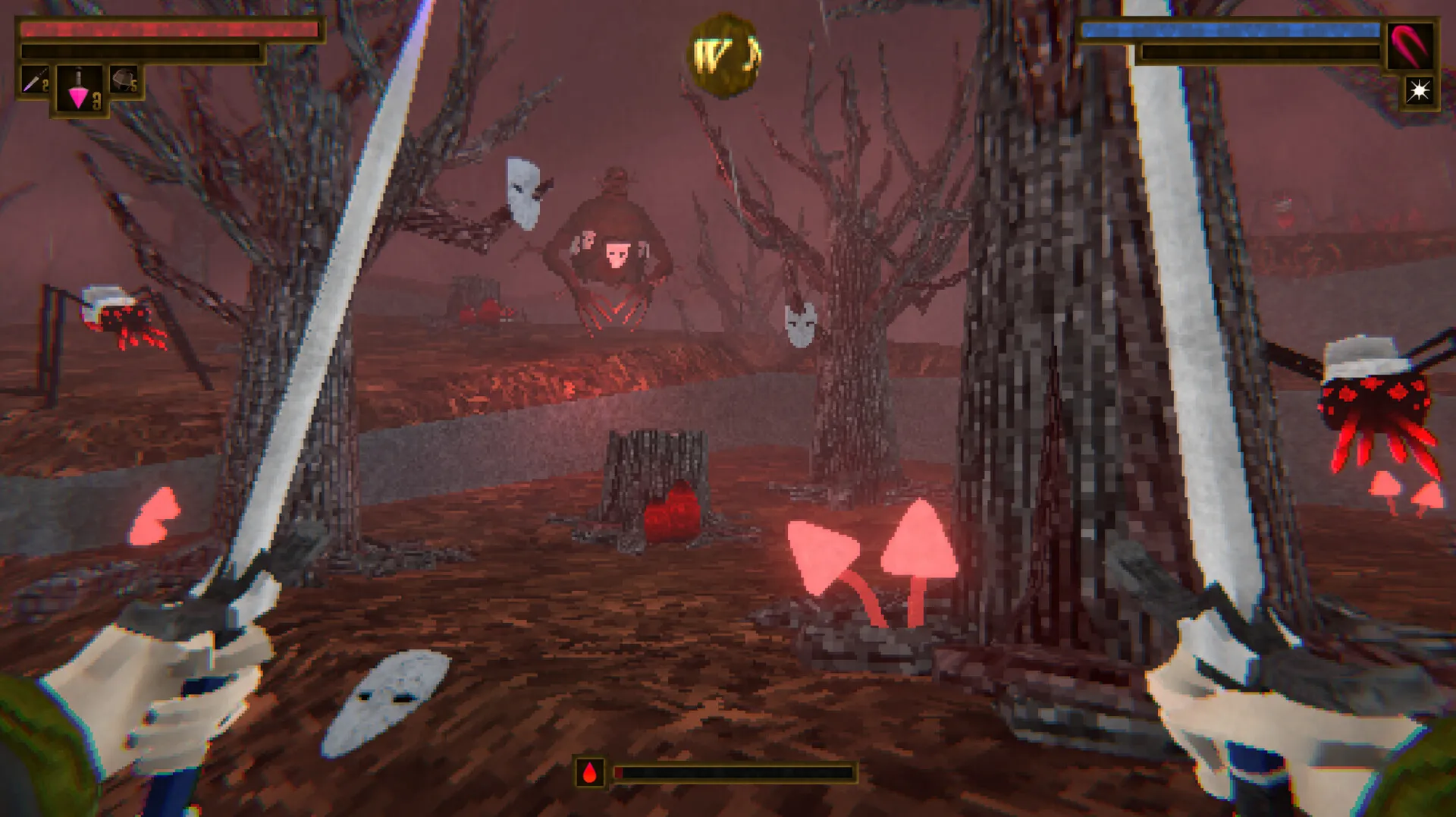
Level layouts reinforce that priority. Secrets sit everywhere, with valuable treasures and achievements placed in spots that reward patience and spatial reading. Many meaningful finds hide behind precise platforming or the kind of scavenger’s eye that learns what looks “off” in a low-detail world. Some rewards sit in hard-to-reach places that look impossible at first glance, pushing you to test jump mechanics and probe the geometry for routes the game never explains.
That spirit of discovery turns harsher once you start hunting items tied to progression, like the keys needed to open new areas. These objects demand intense visual focus because they blend into the drab gray textures. A key can sit almost invisible on the floor of a monster-infested enclosure, and the game’s answer is physical persistence: waggle your character against surfaces and corners to confirm nothing got missed.
Progress also depends on reading item descriptions with real care. Environmental puzzle hints and guidance toward the next destination often hide inside inventory flavor text, and skipping that reading can strand you in previously cleared zones, looping aimlessly through familiar corridors.
Resource management adds another pressure layer. Health potions can be limited at village vendors, forcing you to farm them from the environment. Mask shards carry even higher stakes. Using one carelessly, or attempting parkour into unintended spaces, can trap you in a state where progress gets blocked permanently. The game offers no safety net here. Every push into the unknown carries consequences, and the punishment can be structural rather than temporary, turning exploration into a risk calculation you feel in your hands.
The Technical Ghost and Late Game Trials
The game’s sensory identity leans into a deliberate 32-bit invocation, building something nostalgic that still feels unsettling. Low-resolution textures and shimmering polygons pair with a soundtrack tuned to lonely, atmospheric dark fantasy tones. Voice work, likely handled by a very small cast, brings an odd charm that fits the project’s singular independent personality. There’s a sense of playing an artifact that belongs to a particular era of texture and sound, yet the design keeps reasserting itself through hostility and friction.
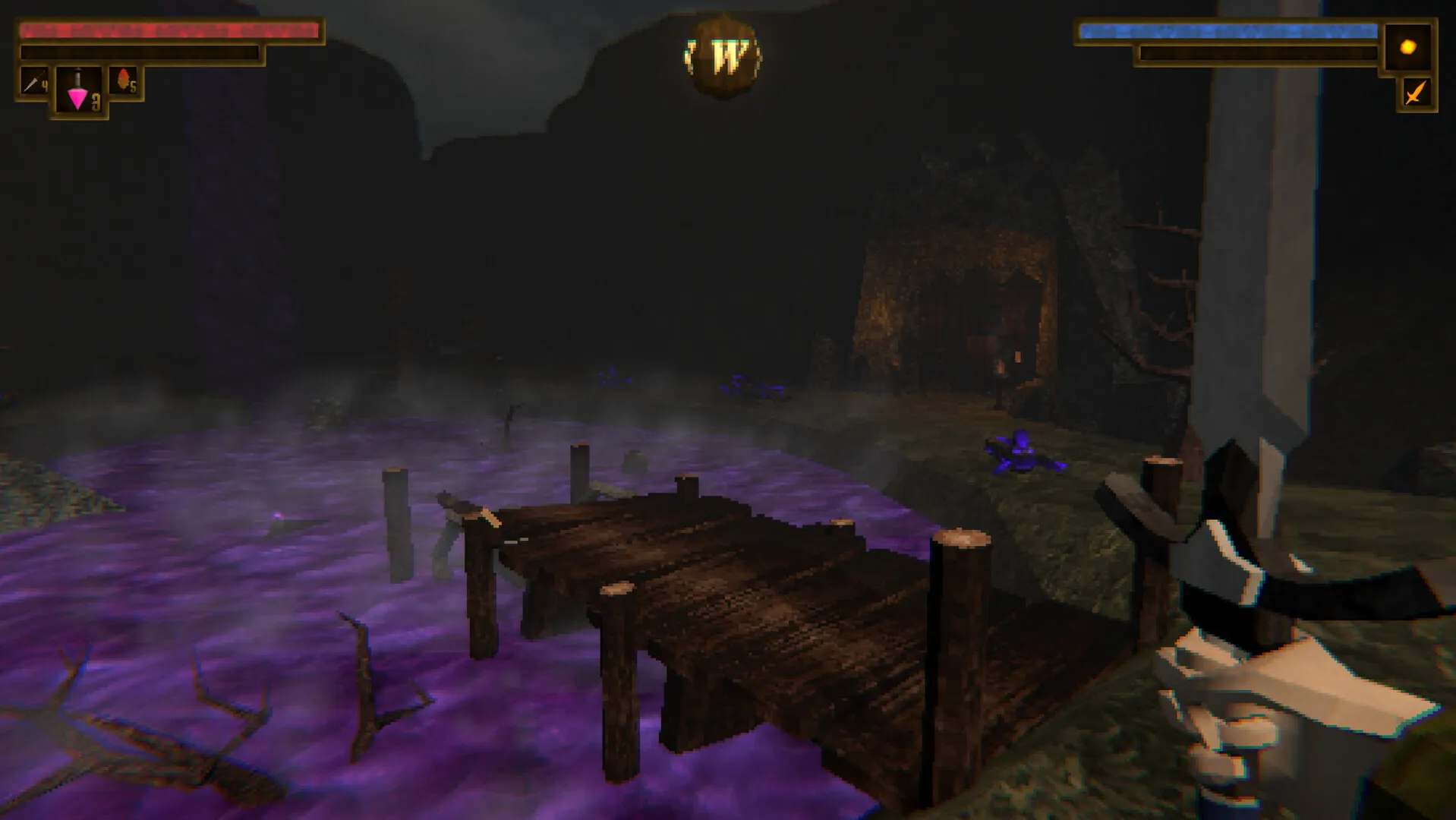
As you descend deeper, early simplicity gives way to tougher demands. Enemy behavior shifts from predictable patrols to complex patterns with the density of a bullet-hell shooter. Bosses and elite foes start throwing area-of-effect nukes and hitscan attacks that can erase your health pool in a heartbeat. That escalation forces tactical adaptation. Survival often depends on learning how to cheese terrain or exploit the limits of AI pathfinding, turning level geometry into a shield and enemy logic into something you study and manipulate.
Later encounters sharpen that edge through teleporting enemies like the Chaos Knights. These foes can close distance instantly and unleash devastating attacks with zero frames of warning, sometimes tracking you through solid walls or across large gaps. The result is technical friction where engine limitations, like enemies clipping through geometry, become part of what you fight.
The save system adds pressure in a blunt way: death means a hard game over. Without mid-mission checkpoints, an unexpected encounter can wipe out thirty minutes of progress, sending you back through previously cleared halls for another run at the same stretch. The stakes rise, and the repetition becomes impossible to ignore.
Small inconsistencies deepen the sensation of playing a “scuffed” relic. A light spell can flicker in deep caverns. Hitboxes can deal damage per frame. These flaws don’t erase what works; they reinforce the feeling of moving through a digital maze that doesn’t care about your comfort, mirroring the cold spite baked into the world’s original curse.
The Review
Verho - Curse of Faces
Verho – Curse of Faces succeeds as an uncompromising tribute to a forgotten era of first-person exploration. The atmospheric weight of its mask-based society and the freedom of its character growth offer satisfaction for those who value discovery. While late-game technical friction and punishing difficulty spikes create hurdles, the central experience remains a captivating look into digital antiquity. It is a specialized title that rewards patience. Players seeking modern polish might find it abrasive, yet for the dedicated seeker of secrets, it provides a rare sense of accomplishment.
PROS
- Evocative 32-bit visual style.
- Flexible character attribute system.
- Timing-based melee combat.
- Richly hidden environmental secrets.
CONS
- Punishing late-game enemy patterns.
- Technical issues with wall clipping.
- Obscure key placement.
- Repetitive loops upon death.