




























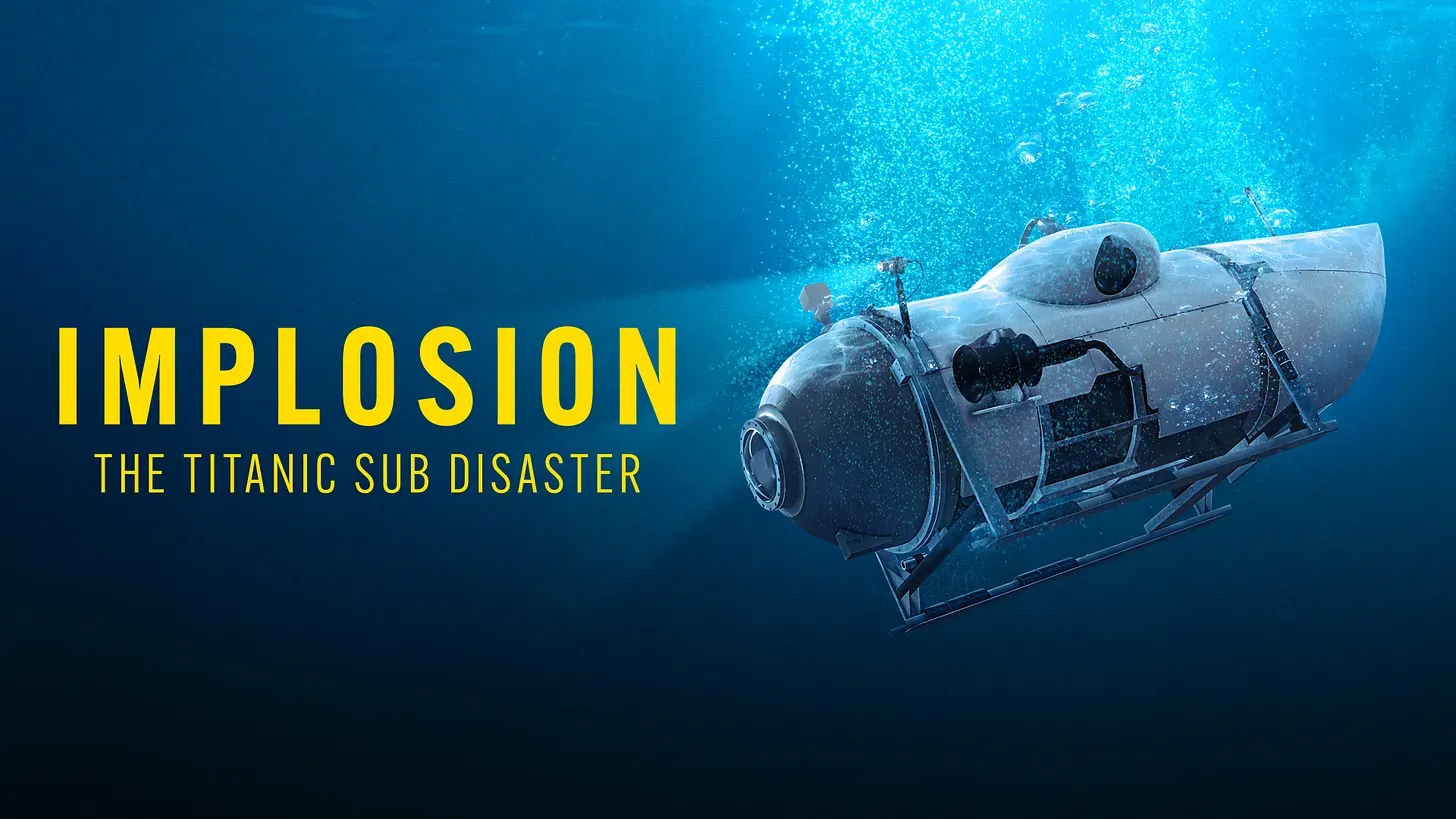

The Atlantic reads like an eye that never closes, staring back at our vanity from a place without warmth. Two and a half miles down, pressure turns into a sentence that human bone cannot survive. In 2023, the Titan submersible dropped into that hush in search of a relic. This film follows the 2023 expedition and the violent rupture that cut it short. It watches what happens when wealth pretends to be wisdom, and when confidence borrows the language of knowledge.
The story holds to the final timeline of the dive, moving step by step through the decisions tied to OceanGate. The ocean sits in the frame as an indifferent law of physics, a world ruled by force and measurement. Stockton Rush led a crew toward the Titanic for a glimpse of a legendary shipwreck.
The descent ended with a fresh grave on the ocean floor. From the start, the documentary sets a tone of cold inevitability, fixed on the mission and the mechanical failure that killed five people. The sea has no regard for dreams or status. It knows pressure, distance, and collapse. The film treats the loss as human agency, as a failure of will that took form in metal, carbon fiber, and choice.
The Digital Residue of Ruin
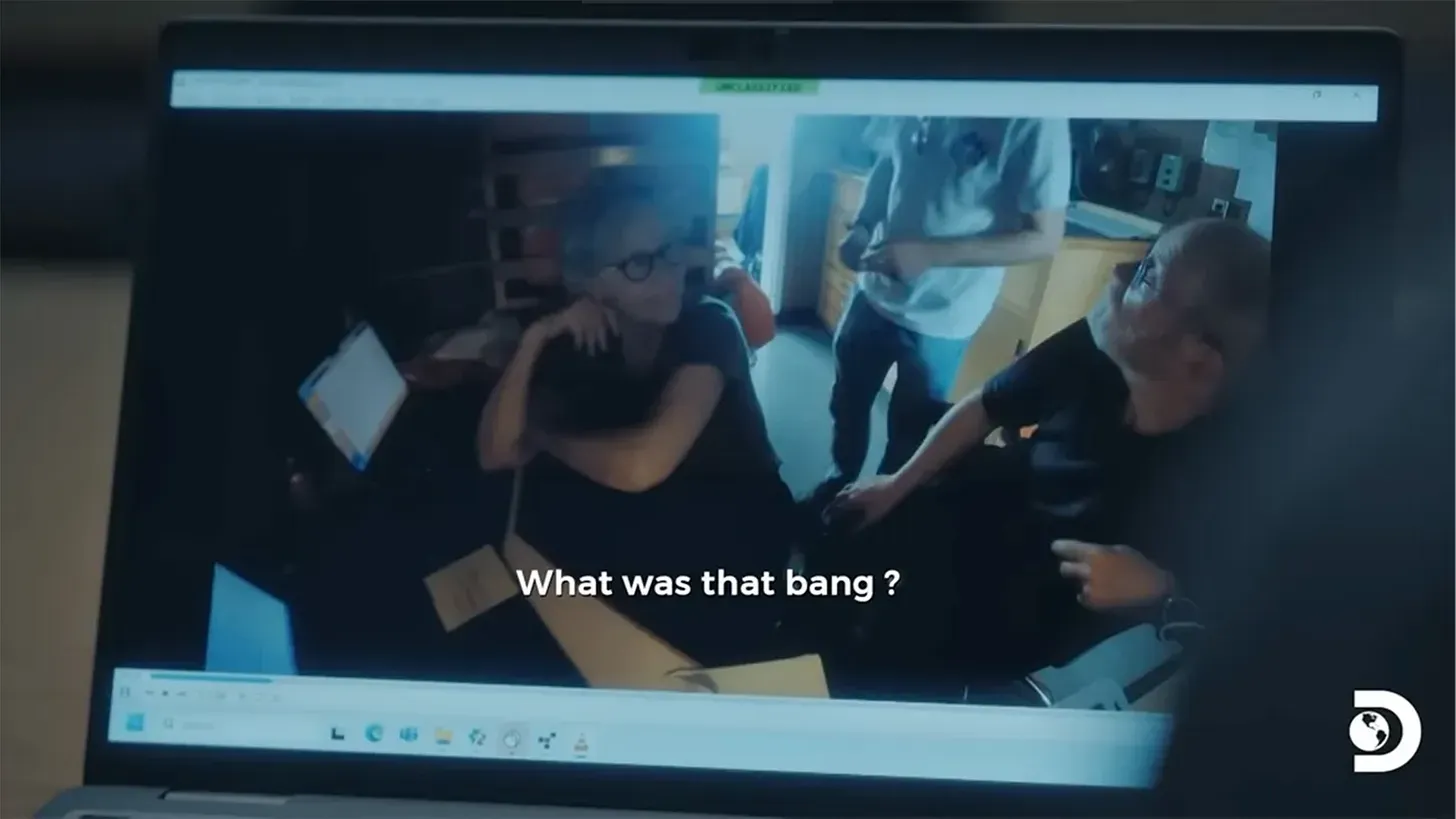
The filmmakers approach the wreck through the digital afterlife of the investigation. Footage from U.S. Coast Guard marine board hearings maps the legal fallout, giving the screen a forensic weight. Black-box audio from the support ship carries a muffled thud, the exact instant of the implosion. It arrives as a quiet final sound, the lone record of the end.
The documentary also reaches back to earlier footage from Josh Gates, present during a 2021 test shoot that exposed the vessel’s weaknesses. He watched the thrusters fail. He heard the hull groan under the weight of the water. His choice to abandon the project lands as a warning with clean edges, then the film shows how the company ignored it.
Pitch decks and internal emails sketch the internal culture of OceanGate, where marketing took priority over basic engineering safety. A public image of a safe vessel sits beside the unstable reality of a carbon fiber hull. Raw video reconstructs the final hours of the mission, keeping the account grounded and refusing the pull of dramatization. Primary sources speak, and the viewer measures the Titan’s mechanical decline through the voices of those monitoring from the surface. The evidence makes the disaster feel like a calculation that carried its own failure from the beginning.
The Psychology of the Unchecked Ego
Stockton Rush emerges as a figure of tragic arrogance, rendered with the clarity of a character study. He saw the deep sea as a frontier to be conquered through disruption. The film traces his shift from space enthusiast to underwater entrepreneur, a change that carries a familiar philosophical temptation: the belief that vision can substitute for restraint.
He used the phrase “explorer mindset” to dismiss the concerns of seasoned professionals, and that posture allowed him to reject regulatory oversight. Safety certifications became barriers in his mind, obstacles to personal innovation. The irony lands with a heavy thud. He brushed aside rules built in the wake of the 1912 Titanic sinking, then chased the ship’s shadow anyway.
The documentary interrogates the ethics of a leader who places others in danger without sufficient testing. Rush appeared to believe his social status and education granted immunity from nature’s limits. Experts lay out the structural shortcuts taken to meet deadlines. His desire for social fame pushed him to treat engineering cautions as personal attacks.
The film watches him succumb to his own marketing materials, convinced he was a first-mover in a new industry. The pattern reads as old. The mistakes belong to the past, and he repeated them. The documentary points to his ego as the driving force behind the catastrophic failure, a man persuaded that will could overpower the sea.
The Sound of the Crushing Deep
The hull’s failure comes across as a physical certainty that many people expected. Whistleblowers like Antonella Wilby speak for engineering truths that were pushed aside. She reported a loud cracking sound during a 2022 dive. OceanGate fired her and said she lacked the spirit their brand required. The film uses this thread to show the danger of carbon fiber in high-pressure environments. The material can delaminate, its layers separating until they lose the strength needed to bear the ocean’s weight.
The documentary treats Titan as a vessel built on a flawed premise, and the human cost keeps breaking through the technical language. Christine Dawood brings dignity to the narrative. She lost her husband and her young son in the final rupture. Her presence anchors the investigation in grief that cannot be diagrammed or audited. She speaks, and the weight of that loss sits in every frame.
The final images show the shattered remains of the hull on the seabed, a cold reminder of what negligence costs. The wreckage stands as a silent witness to a tragedy that could have been avoided. The film leaves a lingering sense of loss, the story of a dream crushed by forces it refused to respect.
“Implosion: The Titanic Sub Disaster” premiered on May 28, 2025, on the Discovery Channel. This production provides an examination of the 2023 OceanGate expedition. You can watch the documentary on platforms such as Discovery+, HBO Max, or CBC Gem. It uses footage from the U.S. Coast Guard inquiry to reveal the mechanical failures that led to the event near the site of the Titanic. The film includes interviews with people connected to the mission. It provides a look at the technical errors and personal loss associated with the dive.
Full Credits
Title: Implosion: The Titanic Sub Disaster
Distributor: Discovery Channel, BBC, CBC, HBO Max, Discovery+
Release date: May 28, 2025
Rating: TV-PG
Running time: 120 minutes
Director: Pamela Gordon
Writers: Pamela Gordon, Gary Lang, Natalie Dubois, Adam Wanderer
Producers and Executive Producers: Pamela Gordon, Livia Simoka, Natalie Dubois, Adam Wanderer, Arnie Gelbart, Alan Hayling
Cast: Josh Gates, Christine Dawood, Antonella Wilby, Wendy Rush, Tony Nissen, Sara Powell
Director of Photography (Cinematographer): Alex Margineanu, Jake Pennington
Editors: J. Enrique H. Careaga, Mark Summers
Composer: Eric LeMoyne, Vincent Watts
The Review
Implosion: The Titanic Sub Disaster
"Implosion" stands as a chilling artifact of human pride meeting the absolute limit of the physical world. It captures the moment when a manufactured myth of safety collapsed into a violent reality. The film acts as a mirror to our own vanity. It asks if we can ever truly conquer the dark through wealth. By stripping away the corporate veneer, the production leaves us with the cold, silent weight of the abyss. It is a sober look at the price of a refusal to listen.
PROS
- Usage of raw, primary source evidence from the U.S. Coast Guard hearings.
- Unfiltered look at the internal culture of OceanGate.
- Dignified interviews with the families left behind.
- Effective, high-tension procedural pacing.
CONS
- Occasional shifts toward a sensationalist tone.
- Limited analysis of the systemic regulatory gaps.
- A runtime that feels stretched during the middle act.