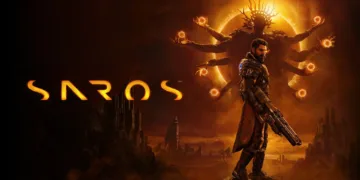



























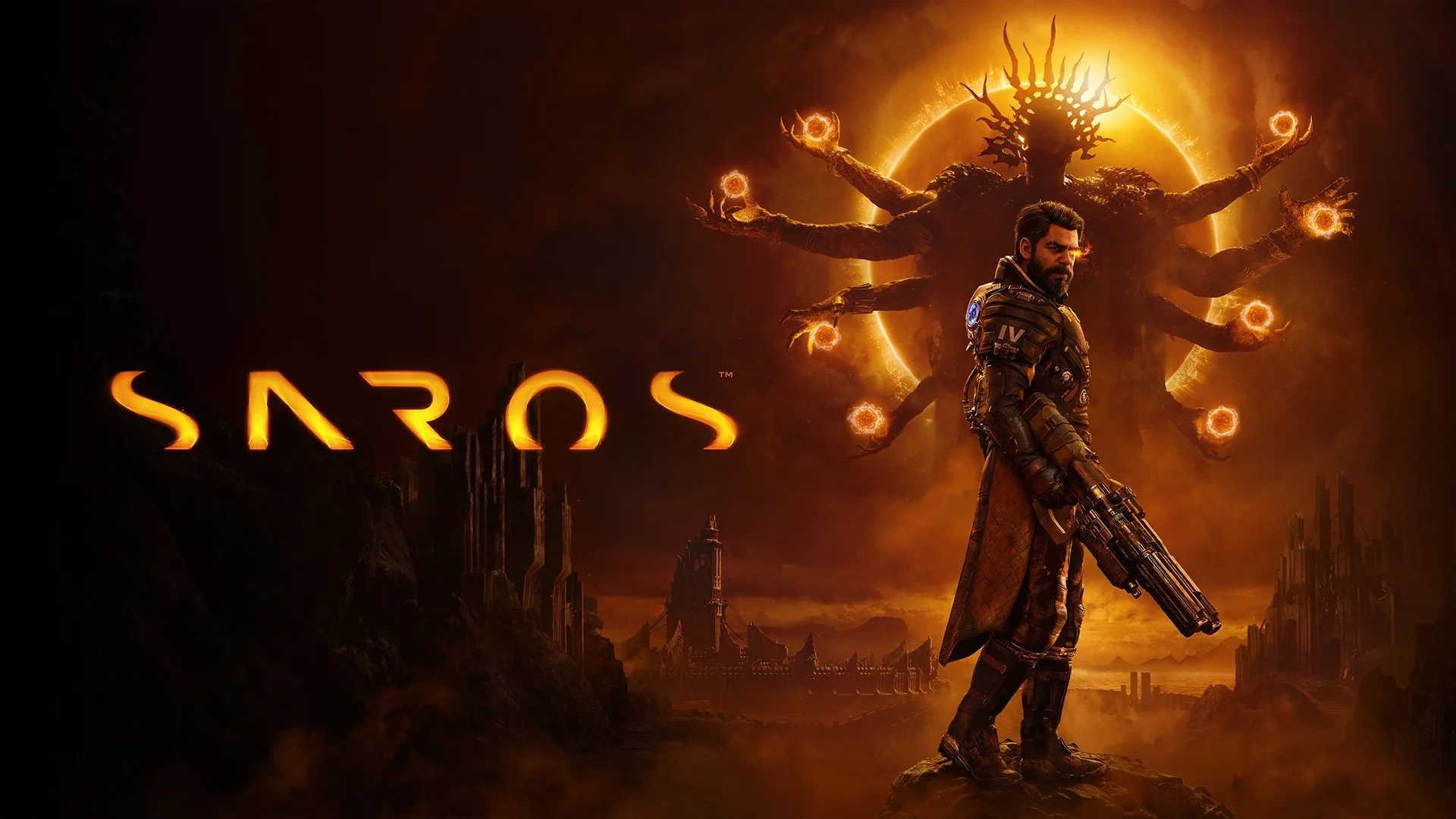

Arjun Devraj faces a sun that remains out of reach. After the Echelon IV crash leaves him stranded on Carcosa, he becomes an instrument of the Soltari corporation, a professional Enforcer sent into a planet that changes after every death. His mission is to locate a survivor from the first expedition, and that search gives shape to his life among the ruins. Carcosa is built from stark monochrome structures, grey dust, and sudden red blooms that cut through the desolation.
Cosmic horror informs every encounter, every silence, every return to camp. Death sends Arjun back to the start of the cycle, and each restart carries the weight of what has already been lost. Corporate ambition drives the mission, and the planet pushes back as if it wants the crew erased. Arjun stands between professional duty and personal desperation, tracking signals, listening to echoes from earlier waves, and moving through wreckage for answers about the missing colonists.
The camp’s quiet suggests losses that have already hollowed out the survivors. Carcosa hides its history beneath an industrial shell, feeding out fragments of truth with each life lost. The unknown forces around Arjun give the horror its pressure, and his refusal to stop turns the search for his partner into the game’s emotional engine. He keeps moving through grey dust, broken machinery, and signals that feel like traces of people swallowed by the planet.
The Mechanics of the Bullet Ballet
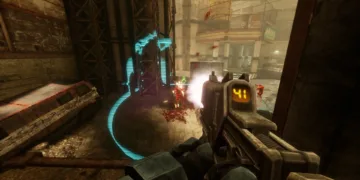
Survival depends on constant motion. High speed encounters demand jumping, dashing, reading patterns, and reacting before the screen becomes a storm of neon fire. Movement becomes Arjun’s first line of defense as projectiles fill the air in rings, spirals, and sudden spreads. The color coded attack system keeps these fights readable under pressure. Blue attacks can be absorbed. Yellow strikes burn through shields quickly. Red projectiles call for precise parries or immediate evasive movement.
The dash grants a brief invulnerability window, and slipping through beams with perfect timing gives combat a crisp, skill based rhythm. Melee attacks provide a fast answer to weakened targets, yet every close range decision carries risk. The player tracks dozens of spheres at once, judges spacing, and keeps repositioning to avoid being trapped. Stillness usually ends a run quickly. The game teaches survival through motion, much like demanding indie action RPGs that treat positioning as a core language. The constant adjustment gives each arena the feel of a dance floor built by someone with hostile intentions.
The arsenal gives that movement a tactical frame. Players use rapid fire rifles, heavy hand cannons, and explosive crossbows, each built around an active reload system. Perfect timing improves stats and speeds recovery, turning reloads into a small test of composure during chaos.
Procedural weapon variants keep the loot loop active. One gun may fire in bursts. Another may send shots that chase targets. Some rifles launch ricocheting rounds that bounce between walls to reach hidden enemies, and other weapons channel concentrated beams that reward steady aim with heavy damage. Each find invites a fresh approach.
Since the player carries one gun at a time, weapon choice shapes the strategy for a full area. Cooldowns, reload timing, range, and modifier behavior all matter, giving combat the tactical texture expected from run based action RPG design without burying the player in needless complexity. A new weapon drop becomes a small strategic question. Can this modifier solve the current arena. Can this firing pattern handle a boss. Can this recovery speed survive the next eclipse. The game keeps asking those questions through gear.
The Soltari Shield works like a combat battery. Holding the shield button lets Arjun absorb blue energy orbs, which then fuel the Power Weapon. That stored force can clear groups of enemies, carve through tougher targets, or punch a path through dense projectile fields. The shield creates a constant risk calculation. Charging it asks the player to hold ground under fire, and dashing keeps Arjun alive when the space closes in. Reading the moment matters. A full shield can produce a devastating blast, melting armor from larger enemies and changing the tempo of a fight.
The shield shares its input with melee, so a tap creates a strike and a hold brings up the barrier. That small control distinction becomes important under pressure. Expert play comes from mastering this toggle and understanding how defense feeds directly into offense. The physical feel of this system matters. Absorbing fire creates tension in the hands because the player is choosing danger for future power. The combat loop rewards nerve as much as aim.
Enemy design pushes those decisions further. The Devastator fires huge sheets of orbs from above. Satellite enemies track Arjun from high altitudes, forcing the player to glance upward during ground level chaos. Boss encounters gain their force from scale, visual intensity, and phased behavior. As health drops, patterns shift, pressure rises, and tactics need to change mid fight. Victory feels earned through reflex, pattern reading, and build awareness.
Combat remains the main pull behind each attempt because every fight asks the player to prove the previous death taught them something. During these battles, the screen floods with color and light, and the hardware holds steady without slowdown. Controller vibration gives every projectile a physical presence, making the action feel immediate in the hands. The best encounters feel like tests of memory and instinct working together. You learn a pattern, recognize the color language, pick a safe lane, and strike before the arena closes again.
The Shifting Landscapes of the Eclipse
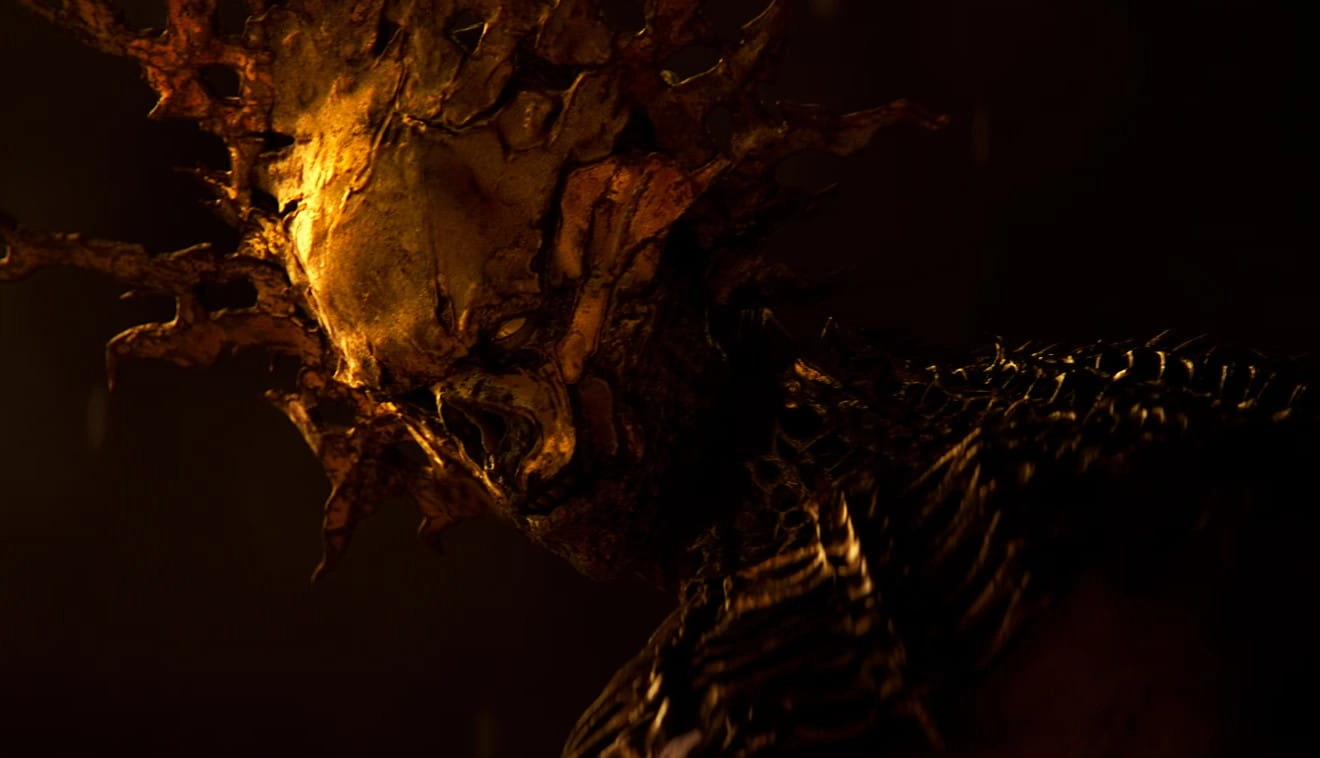
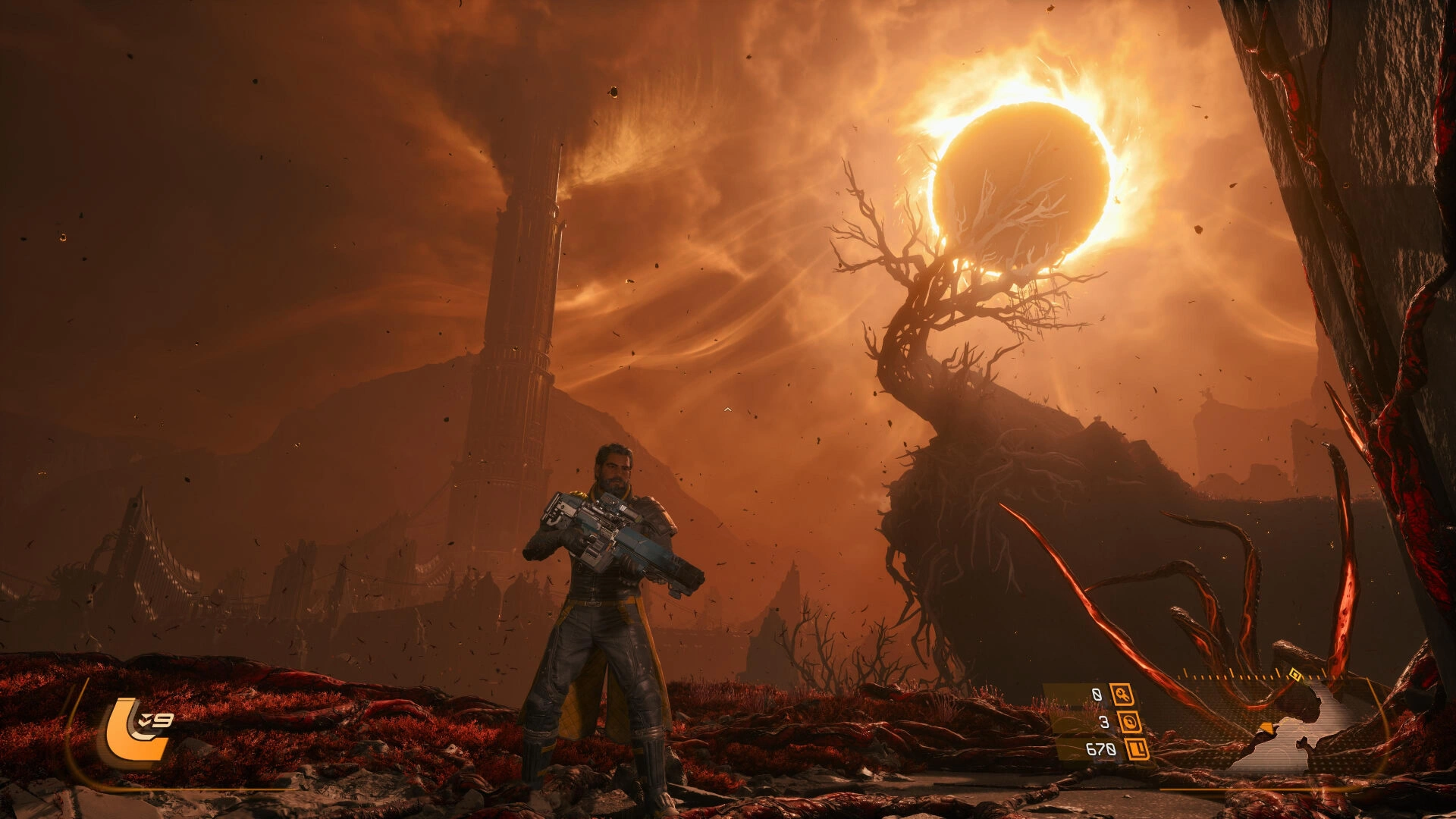
Stone hand structures trigger a full world shift. Alien machinery wakes, tentacles emerge, and a red sky drapes the terrain in menace. This eclipse state brings the corruption mechanic into play. Damage taken during these periods reduces the maximum length of the health bar, and restoring it requires effective use of special attacks or Power Weapons.
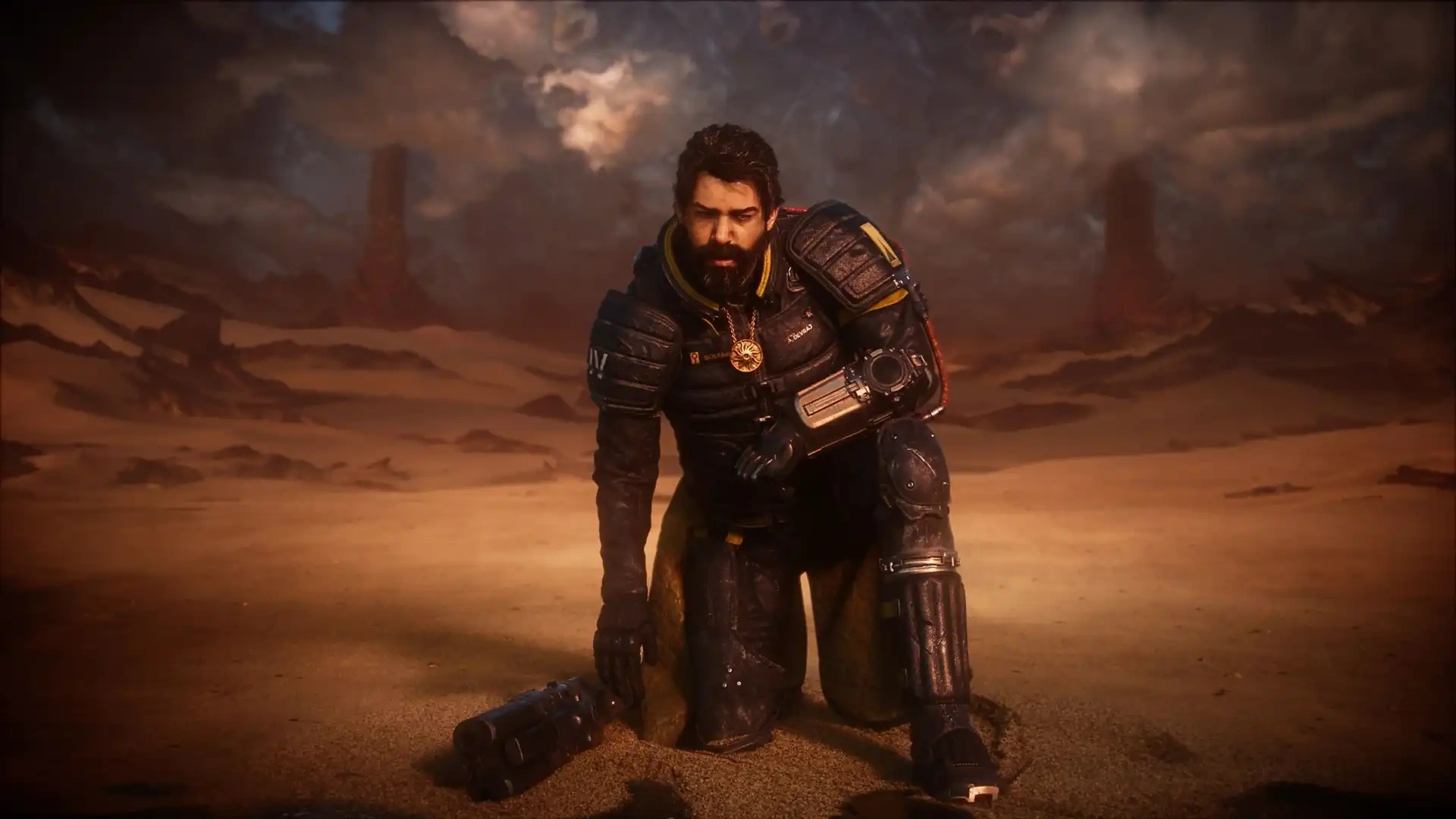
Enemies gain aggression and new patterns, the light changes, and the music grows frantic. Familiar paths feel dangerous again. The player must judge the lure of greater rewards against the cost of permanent health loss within a run. That choice gives the eclipse its bite. It is a mechanical hazard, a visual event, and a narrative reminder that Carcosa is never stable for long.
Eclipse items offer stronger stat increases with harmful penalties attached. One artifact may grant massive damage while reducing dash frequency. Another may cause weapons to jam after Arjun takes a hit. Stacking these items can produce high damage builds with severe risk. Success comes from reading how these trade offs fit the current weapon, shield plan, and player comfort level. Some artifacts increase projectile speed. Others make fall damage harsher. The item system becomes a puzzle of synergies.
A healing on kill artifact can pair with low health damage bonuses, opening creative answers to difficult fights. This structure echoes the best run based RPG systems, where power feels exciting because it demands discipline from the player. The artifacts push players toward builds that feel personal. A cautious player may protect the health bar. An aggressive player may accept brittle defenses for faster clears. The game supports both impulses, then makes each player live with the consequences.
Carcosa is split across biomes such as the Shattered Rise, acid swamps, alien city spaces, and industrial ruins. Map segments connect differently each cycle, changing the route to the objective. Permanent traversal tools, including grapple points and jump pads, create a sense of growth that survives death. These tools open hidden spaces in earlier regions during later attempts, so exploration feels productive across the long arc of play. The acid swamps make footing matter. The ruined alien city gives fights vertical shape.
Each environment alters combat tactics and encourages players to read space with care. Procedural variation keeps the world from feeling fixed, and a rare upgrade found along a side path delivers a clear spark of discovery. Exploration fits the combat because each room asks for a different rhythm. A narrow industrial corridor changes how ricocheting rounds behave. A tall ruin changes how satellite enemies pressure the player from above. The layout becomes part of the build.
The environmental design reinforces the idea of a world in motion. Eclipse risks push players toward harder choices. Success in these zones requires knowledge of the terrain, the current build, and the limits of Arjun’s kit. Walls can shift between runs. New tunnels appear where empty space once sat. The game uses this unpredictability to hide lore fragments that explain the disaster piece by piece.
Architecture becomes evidence. The vanished civilization leaves behind traces of struggle, and those traces give weight to Arjun’s own fight to stay alive. The world tells its story through ruins, blocked routes, sudden openings, and spaces that feel rearranged by a hostile mind. That constant uncertainty keeps the player alert between firefights.
The Cycle of Growth and Meta Systems
Arjun returns to a base camp where other survivors provide a human point of contact between runs. Players spend Lucenite on a permanent skill tree, gaining clear upgrades such as larger health pools and extra equipment slots. This progression makes later attempts feel manageable as the difficulty rises. Building Arjun over many hours gives failure a productive role. Players choose upgrades that suit their habits.
Some lean into defense. Others chase damage. That flexibility supports different approaches to Carcosa’s hazards. Permanent upgrades create a steady sense of momentum, so even a lost run still leaves resources for the future. The camp also gives the loop a narrative anchor. Death returns Arjun to people who are still trying to understand what the planet has done to them.
The structure respects the player’s time. After unlocking a new region, the player can teleport there from the hub and skip early sections. Weapon power scales through proficiency, keeping Arjun competitive in later stages. The option to suspend a run midway helps players with busy schedules. Starting in a later biome grants higher tier gear right away, so the current challenge does not leave the player underpowered.
Proficiency acts as a floor for weapon quality. Higher proficiency produces guns with added modifiers, and those modifiers can alter a weapon’s behavior in meaningful ways. This design keeps repetition from becoming busywork. The player still learns, still earns, and still risks failure, yet the structure avoids forcing the same opening stretch after every death.
Mid game systems add custom difficulty options. Players combine positive and negative modifiers to earn rewards, shaping the challenge around their appetite for risk. Visual accessibility receives serious care. The game includes extensive projectile color coding to support visibility. Options such as automatic reloads and fall protection help the action reach a wider range of players.
High pitch ringing sounds can be disabled. Aim assist sensitivity can be adjusted. These tools make fast combat easier to parse without draining its bite. Expert players can raise enemy health for better rewards, keeping the later game active for players who want a steeper climb. The customization respects different skill levels. Casual players get tools that reduce friction. Hardcore players get levers that sharpen the danger and increase the payout.
Resources gathered during a run persist after death. Lucenite becomes the currency of future survival, feeding a skill tree that branches like a massive trunk. Some skills increase healing item capacity. Others speed shield recharge. This growth loop gives each attempt a lasting purpose.
Arjun feels stronger with each hour, and the meta systems turn repeated deaths into a single ongoing story of adaptation. The structure gives the player a sense that every failure has been folded into the next attempt. That matters for a game built around return and repetition. The mechanical growth and narrative loop support each other because Arjun’s endurance is mirrored by the player’s growing mastery.
The Human Element and Cosmic Horror
Rahul Kohli gives Arjun Devraj a grounded presence. He plays a soldier carrying personal loss and the pressure of a mission breaking apart. Crew members at the hub gain depth as conditions worsen, and their backgrounds clarify the corporate interests behind the expedition. Audio and text logs reveal the history of previous failed missions. Strong voice work helps cover the stiffness of some character models.
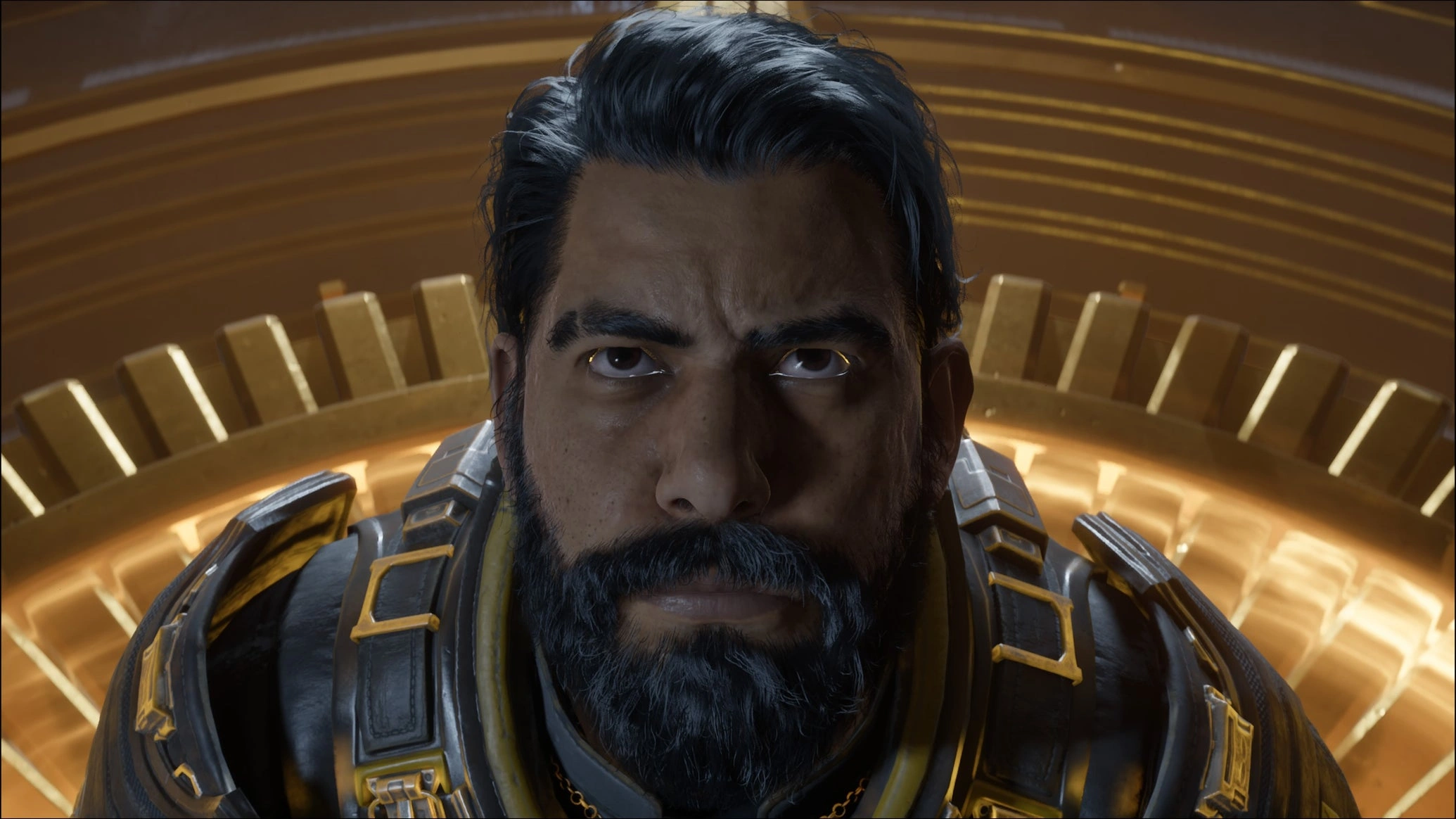
The writing gives Arjun complexity through paranoia, duty, and strained leadership. His conversations with the pilot and engineer reveal the pressure inside the crew before the planet fully consumes them. Arjun’s role as Enforcer gives him professional discipline, and the search for his partner gives that discipline an emotional cost. The performance keeps him human inside a system that wants to reduce people to assets.
Environmental storytelling builds dread through disturbing art. Statues of suffering figures line the ruins. References to classical fiction such as The King in Yellow frame the colonists’ collapse into madness. Carcosa feels active in the horror, almost like an intelligence pressing against the crew.
Soltari’s secrets bring corporate espionage into the cosmic terror, and every note adds another piece to the timeline. Players assemble the history through exploration, which gives each biome a narrative function beyond combat space. The logs and visual details do useful work because they reward curiosity. Searching a side path may uncover an upgrade, a clue, or a trace of the failed missions that came before Arjun’s crash.
Hub interactions add texture between deaths. Radio chatter from other Enforcers gives exploration extra flavor. Flashback sequences reveal Arjun’s past and clarify why finding his partner matters so much. The story works because it ties the player’s mechanical persistence to Arjun’s emotional need.
The pilot speaks about Earth before the power crisis. The engineer doubts the company’s real motives. These exchanges ground the sci fi setting in recognizable fear, loyalty, and exhaustion. Returning to camp becomes a relief because the player can feel the crew’s isolation. The hub is quiet, strained, and useful, a pause that lets the game breathe before sending Arjun back into another hostile layout.
The looping mechanic becomes a narrative device for Arjun’s psychological strain. He remembers his deaths. He tells the crew about events they have yet to witness. Reality starts to feel unstable because his experience no longer matches theirs. The writing studies how a person holds onto identity inside a place built to fracture it. The King in Yellow references remain subtle until later stages, then the horror becomes more direct.
The move from corporate mystery to cosmic terror feels earned, and Arjun’s goal shifts from serving a company to preserving his sanity long enough to reach the final encounter. That shift gives the loop a strong dramatic pull. Each run has mechanical value, and each return also feels like another crack in Arjun’s grasp on the world around him.
Atmosphere and Technical Polish
Unreal Engine 5 supports sharp lighting and heavy particle effects. Bright neon projectiles stand out against dark landscapes, keeping combat readable during intense fights. The architecture carries strong detail and holds performance under pressure. Visual direction moves from cold tones to fiery oranges during the eclipse, signaling a change in mood and danger.
Fast load times preserve momentum after death. Projectile clarity keeps the screen readable, letting the combat systems carry their full weight. This technical polish matters because the game asks players to process a huge amount of visual information at high speed. The spectacle never buries the rules of the fight.
Sound design deepens the dread. Sam Slater’s industrial score builds during boss fights, and exploration is filled with mechanical claps, alien noises, and long stretches of silence. PS5 controller haptics give weapon reloads and shield use a physical snap.
The quiet phases create tension that breaks as soon as combat erupts. Every crackle of energy and every groan of ancient metal reinforces the feeling of being stranded on hostile ground. Heavy industrial sounds fit the cold corporate look of Soltari technology, and organic alien squelches clash against the metal corridors.
These details make Carcosa feel lived in and dangerous. Haptic triggers communicate the weight of the suit, giving the struggle a tactile edge. The technical craft makes the alien world feel tangible, and the dense atmosphere sharpens the horror. The player stays alert even during quiet stretches, which gives the survival experience its lasting grip. The suit feels heavy, the shield feels charged, and the planet feels ready to answer any mistake with another death.
The Review
Saros
Saros delivers intense action that leaves its narrative trailing behind. The combat loop feels rewarding and deep through its shield and absorption mechanics. While the storytelling becomes dense with corporate lore and shifting names, the core experience remains a high point for the genre. It respects the time of the player through smart progression systems. The visual fidelity of Carcosa creates a sense of dread that stays after the credits. It stands as a refined evolution of the bullet ballet style.
PROS
- Tactical shield mechanics create a rewarding flow in combat.
- Unreal Engine 5 visuals provide a haunting atmosphere.
- The lead performance from Rahul Kohli adds emotional weight.
- Teleportation systems respect the schedule of the player.
- Extensive accessibility settings allow for wide skill variety.
CONS
- Pacing issues cause the story to trail behind the action.
- Character models show stiffness during dialogue scenes.
- Randomized item distribution leads to dry spells in power.
- Shotguns and specific variants lack mechanical viability.