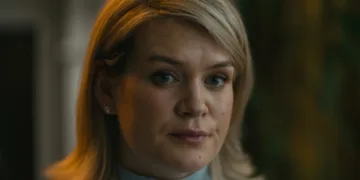






















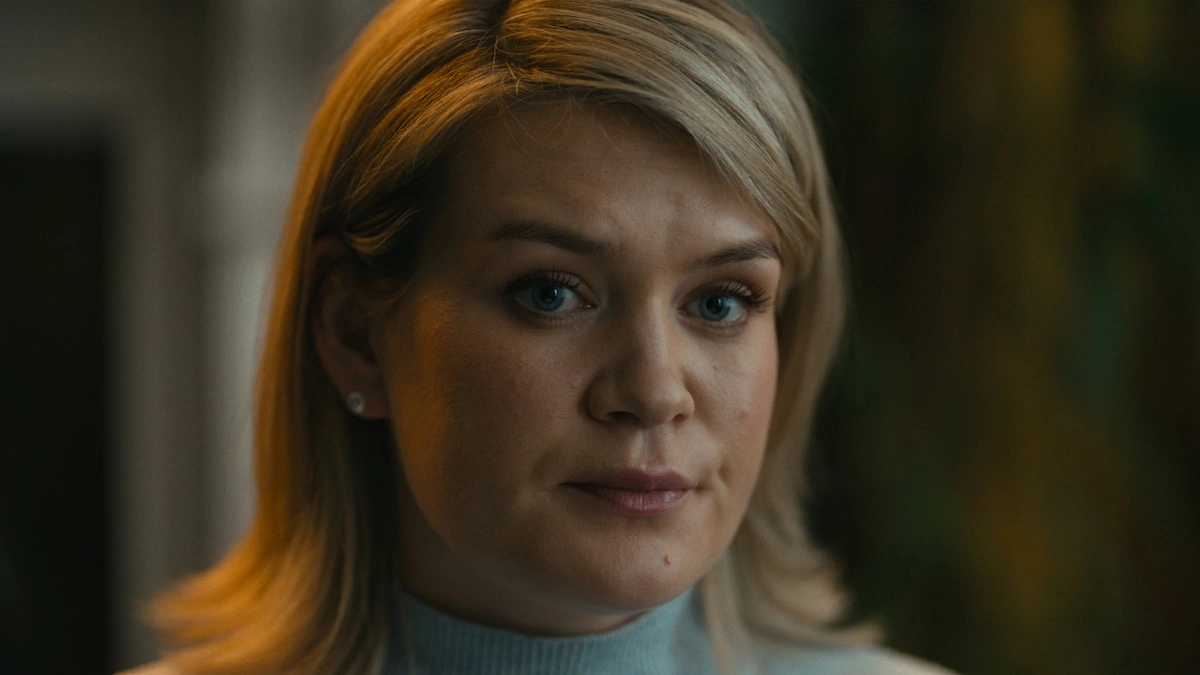

A Tinder swipe often leads to a fleeting connection. For Dr. Caroline Muirhead, it led to a burial site in the Scottish Highlands. Netflix’s Should I Marry a Murderer? traces the wreckage of a life across a three-part narrative built around confession, secrecy, and moral pressure. Caroline is a Glasgow-based forensic pathologist, a woman trained to read death through evidence.
Her life changes after she meets Sandy McKellar, a farmer who appears to offer safety after a previous relationship ended painfully. Their romance moves toward engagement. Then the story turns with one admission: Sandy tells her about a 2017 hit and run. He and his twin brother Robert killed a cyclist named Tony Parsons. They hid the body in a peat bog.
Caroline uses her professional skill to find the remains. She marks the grave with a Red Bull can. From there, the series follows the years after that discovery, as Caroline stays with Sandy to help a secret police investigation. The production avoids the laziest habits of true crime by giving its attention to the internal burden of secrecy.
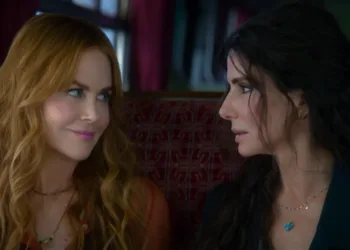
It studies what happens when a home becomes a crime scene and a relationship becomes evidence. Caroline must weigh love against moral duty. That conflict gives the series its shape. She becomes a witness turned spy, a lover turned target, and a person forced into choices with no clean exit.
The Architecture of a Rural Deception
The series opens with rustic comfort. Sandy McKellar first appears as a protective figure: tall, strong, and seemingly dependable. Caroline wants safety after a painful breakup, and the Highland setting gives the relationship the feeling of retreat.
That peace collapses when Sandy confesses the 2017 death of Tony Parsons. Tony was a retired Royal Navy officer and cancer survivor taking part in a charity cycle ride. Sandy and Robert were intoxicated when they struck him. They hid his body on the Auch Estate. The most chilling detail is painfully simple. Tony may have lived if they had sought medical help.
Caroline chooses to act. She leads police to the burial site and marks the location with a Red Bull can. Then the authorities ask something enormous of her. They want her to stay in the relationship, gather evidence, and keep playing the role of loving partner.
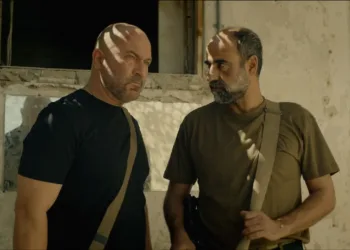
She records conversations in secret. She studies Sandy for signs of remorse. The series builds its narrative mechanics around that performance. Caroline’s daily life becomes a stage set of domestic normality, with a grave sitting beneath the story. She is doing undercover work inside her own life. Few true crime structures are this cruelly efficient.
This section charts the movement from romance into fear with clear, steady force. It shows how affection curdles into confinement. The brothers’ background with a father who introduced them to violence and guns gives context to their cold response to the crime.
They treated the victim as an obstacle. Caroline has to maintain the lie while sharing space with them. The result is a cycle of deception that keeps tightening. Each morning places her beside a man who killed a Navy officer. Each night leaves her waiting for police action while he sleeps nearby. She is alone in a house built out of secrets.
The Mental Erosion of the Secret Witness
The series is strongest when it tracks the mental damage caused by a double life. Caroline lives with a man who killed a Navy officer. She loves Sandy’s gentle side. She fears the drunk version who admits to murder. That split creates a severe psychological burden, and the show understands how exhausting such compartmentalization becomes. She stays because leaving could expose her. If she walks away, the twins may identify her as the informant. The trap has the shape of cooperation.

The documentary follows her slide into anxiety. She uses alcohol and drugs to manage the terror. This is the story of a woman caught inside her own work with the state. The series uses her personal archives to give that ordeal texture. We see private videos. We hear voice recordings.
These materials offer a raw view of her state of mind. With Sandy, she has to remain composed. Alone, she comes apart. The storytelling makes her isolation painfully clear. She cannot tell her parents the truth. She cannot fully trust the investigators. She is central to the case, yet almost entirely abandoned inside it.
This portion of the documentary is difficult to watch because it refuses to make justice look clean. It shows the physical and mental cost of pursuing the truth under pressure. Caroline has no safe place. She is harmed by the crime and by the investigation that follows it. She acts as a spy in her own bedroom and risks her life daily for a system that gives her little care in return.
The series presents her decline with grim patience. She becomes a shell of her former self. Police see her deterioration and offer no meaningful support. She records her thoughts as a way to stay sane. Her voice grows brittle and small. She is a professional who loses her profession and her peace. The series captures that destruction with blunt force, and it earns its discomfort.
Institutional Indifference and the Search for Justice
Josh Allott directs the series with sustained focus on Caroline’s voice. He keeps the usual machinery of police procedure from taking control of the story. The show feels intimate, using interviews and reenactments to keep attention on lived experience. Its sharpest element is its examination of institutional failure.
Police Scotland appears indifferent to Caroline’s safety. Officers fail to protect her identity. They shout her witness status during a second arrest. In a story already full of terrible judgment, that moment lands like bureaucratic slapstick with the humor drained out.
The official responses deepen the wound. David Green, a former head of homicide, dismisses Caroline’s trauma by pointing to her professional status. His argument suggests that being a doctor somehow shields a person from fear. The series uses that view as a key part of its critique. It exposes a legal culture with limited empathy for the people it depends on.
Legal advisor Frances McMenamin provides a counterpoint by stressing the harsh treatment witnesses can face. The series makes a clear case that professional training does not prepare a person for violent crisis. Intelligence and resilience are different things. The show is sharp enough to know that distinction, which is more than can be said for some of the people in authority here.
The production’s power comes from showing justice as a damaging process. It asks viewers to consider the human cost of the law, especially when the system demands cooperation while offering little protection. The failure of Victim Support Services becomes a repeated concern.
Caroline is treated like evidence in motion, a useful object attached to a case file, while her fear and decline remain secondary. That failure is the scandal underneath the scandal. The documentary asks who protects the people who protect the truth. Its answer is bleak. The system appears as cold as the peat bog, blind to the suffering of those who help it function.
Should I Marry a Murderer? premiered as a Netflix original docuseries on April 29, 2026. This gripping three-part British production explores the chilling real-life ordeal of Dr. Caroline Muirhead, a forensic pathologist whose life was upended after her fiancé confessed to a fatal hit-and-run. The series is currently available for streaming globally on Netflix, offering an intimate look at the intersections of romance, crime, and the pursuit of justice.
Where to Watch Should I Marry a Murderer? Online


Full Credits
Title: Should I Marry a Murderer?
Distributor: Netflix
Release date: April 29, 2026
Rating: TV-MA
Running time: 50 minutes
Director: Josh Allott
Writers: Josh Allott
Producers and Executive Producers: Clare Beavis, Josh Allott, Candle True Stories
Cast: Caroline Muirhead, Alexander McKellar, Robert McKellar, Tony Parsons, Mike Wade, Lorna Dawson, Frances McMenamin, David Green
Director of Photography (Cinematographer): Stefano Ferrari
Editors: Heena Singh
Composer: Joel Cadbury
The Review
Should I Marry a Murderer?
This production succeeds as a psychological study of a witness under pressure. It shifts focus from the mechanics of a crime to the emotional toll of institutional neglect. The reenactments occasionally feel staged. However, the raw access to the personal archives of the subject creates a visceral experience. It provides a sobering look at how the legal system treats those who provide the most help. The narrative avoids typical true crime sensationalism. It offers a disturbing portrait of a life dismantled by duty.
PROS
- Unfiltered access to the personal video and audio diaries of the subject.
- Direct and impactful critique of police procedures in Scotland.
- Concise three episode structure that maintains a steady pace.
- Focuses on the witness rather than glorifying the criminal acts.
CONS
- Dramatized scenes can feel unnecessary alongside the authentic footage.
- The narrative perspective remains restricted to a single point of view.






Always appreciate your detailed analyses, thank you!