

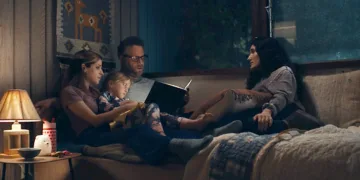







Passenger arrives as a road-trip thriller that grafts modern anxieties onto the familiar chassis of highway horror. Directed by André Øvredal and written by T.W. Burgess and Zachary Donohue, the film follows Maddie and Tyler, a young couple who trade their stationary Brooklyn apartment for a mobile lifestyle. They pack their lives into a customized Mercedes-Benz Sprinter van, seeking freedom on the open road.
That romanticized nomadic freedom curdles quickly into claustrophobic dread. On a dark highway, the couple witnesses a horrific car crash and pulls over to help a dying driver. This single act of goodwill sets a terrifying chain of events in motion. By stopping, they inadvertently invite an antagonistic force into their lives.
A malevolent supernatural entity called The Passenger attaches itself to the couple and stalks them relentlessly across remote landscapes; Joseph Lopez embodies this ghostly presence. The open highway transforms from symbol of freedom into an inescapable trap, converting a modern lifestyle trend into a claustrophobic battle for survival.
The Friction of Nomadic Romance
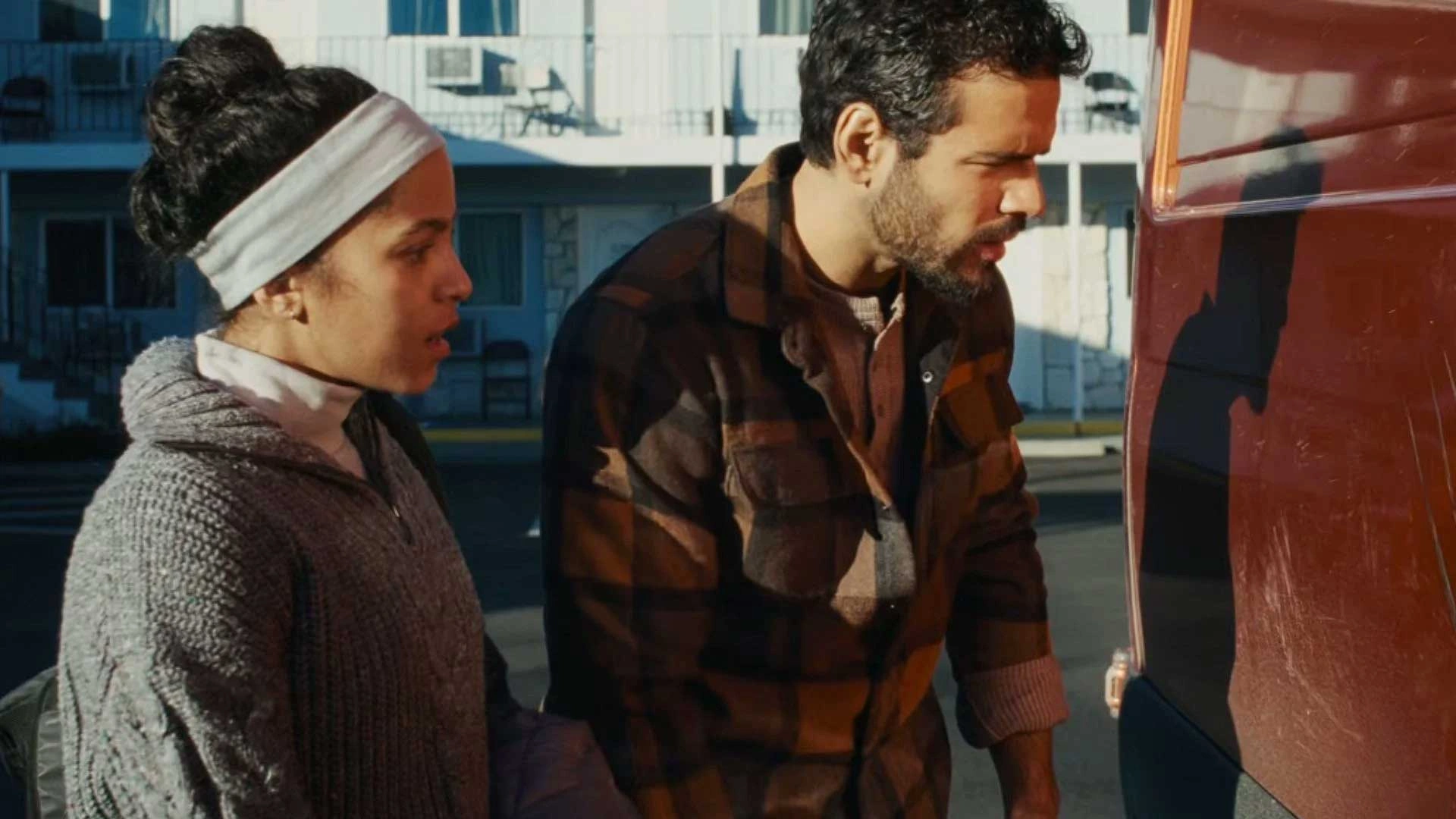
The screenplay plants its roots in the cultural phenomenon of van life, using this specific lifestyle shift as an engine for isolation. Tyler enters the experience with naive enthusiasm, shaped by hundreds of online videos. Maddie projects visible hesitation, carrying an unvoiced anxiety about their sudden displacement. The filmmakers give this shared space tactile, domestic texture. A Saint Christopher necklace hangs from the rearview mirror while a Bob Ross bobblehead bounces on the dashboard.
Lou Llobell and Jacob Scipio carry the emotional weight of these early scenes with conviction. Their romantic chemistry feels authentic, establishing a recognizable, affectionate couple with genuine dimensionality. Their cramped coexistence registers as lived-in, capturing the subtle exhaustion of perpetual instability.
The script then takes a frustrating structural turn in the second half, abandoning the grounded relationship drama and becoming a forced delivery system for generic horror tropes. As the plot accelerates, the protagonists suffer severe lapses in judgment.
Maddie experiences terrifying supernatural occurrences early on and chooses to suffer in silence, keeping the information from Tyler. Once the severity of their situation becomes clear, the couple continues making poor choices, repeatedly driving into desolate areas at night and ignoring basic survival instincts.
The dialogue occasionally hinders the performances during tense sequences. Characters too frequently explain their internal emotional states through direct exposition, bypassing any organic emergence through action. Maddie suffers most from this tendency, saddled with lines that announce her emotional condition to the audience directly.
The supporting cast provides a brief pulse of narrative texture through Melissa Leo as Diana. Encountered at an itinerant community gathering cheekily named Burning Van, Diana functions as a seasoned nomad with knowledge of the entity. She delivers key advice about the rules of the road, warning the couple never to stop at night. Her limited screen time registers as a missed opportunity. Her weathered authority departs the narrative too quickly.
Visual Spaces and Technological Terror
Øvredal and cinematographer Federico Verardi construct a visually engaging experience through spatial tension. The camera moves constantly between tight, claustrophobic close-ups inside the vehicle and expansive long-distance shots of the empty surrounding landscape. This visual language emphasizes the characters’ vulnerability: they occupy a tiny box surrounded by an infinite black expanse.
Øvredal returns repeatedly to a slow, rotating 360-degree camera pan. With each mechanical revolution, the audience develops a dread of the moment the camera stops, anticipating the horrific image that might appear in frame. The technique weaponizes negative space, training the eye to search the shadows.
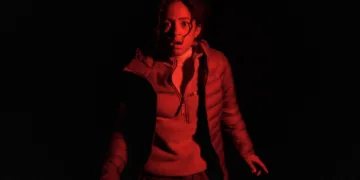
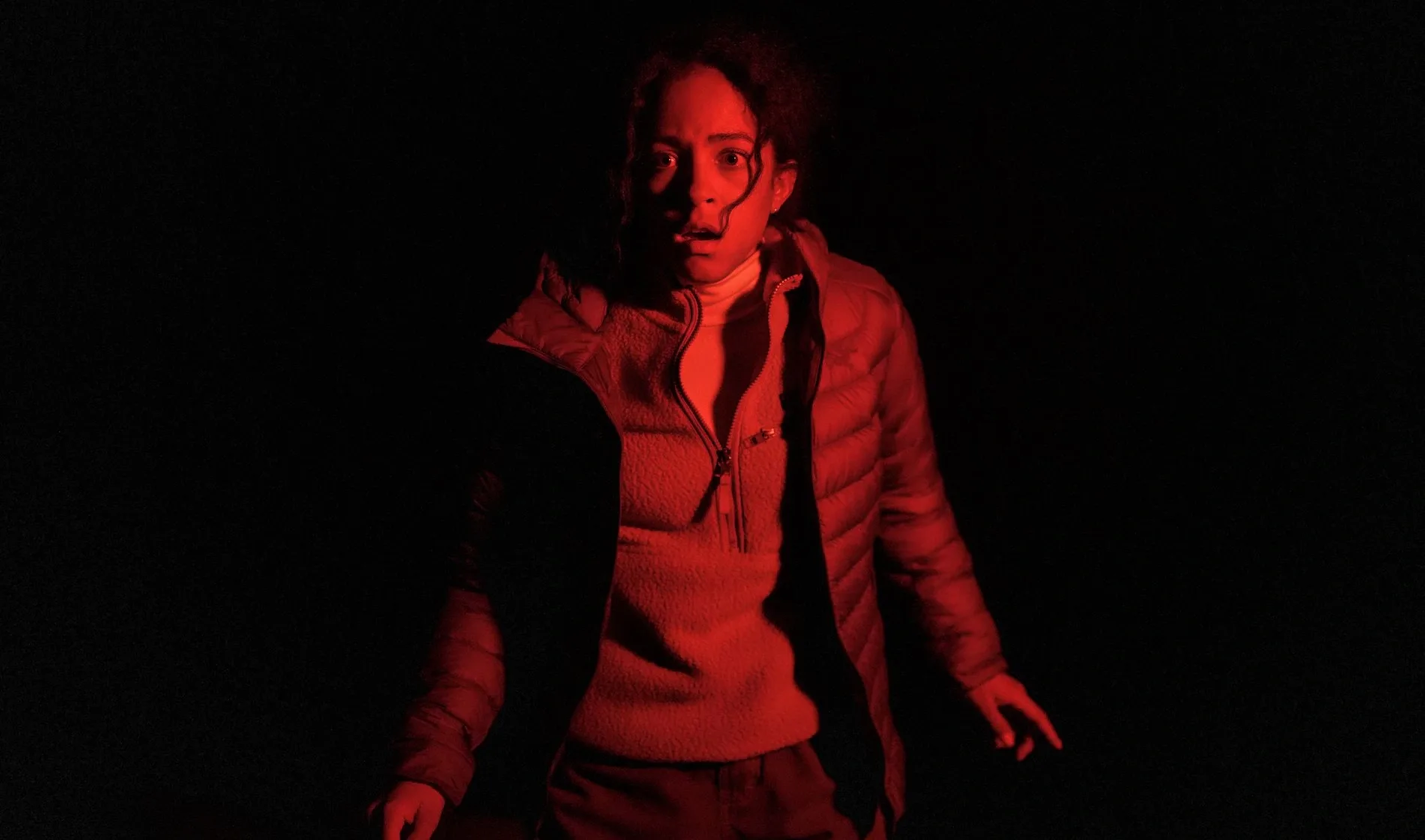
The lighting design amplifies the film’s atmosphere through expressive practical sources. In a standout visual motif, the rhythmic red glow of the van’s blinking hazard lights illuminates Maddie’s face during a moment of distress, casting deep shadows that build significant tension.
Passenger distinguishes itself by integrating modern vehicle technology into its scare mechanics. The filmmakers deploy the van’s exterior backup monitors and camera systems creatively. These digital screens display distorted projections and shifting roadside imagery, warping the surrounding environment into something genuinely unsettling.
Two setpieces demonstrate this technical inventiveness. The first is a single-shot sequence tracking Maddie through a late-night parking lot, where the camera mirrors her mounting paranoia as space and time seem to distort around her. The second is a forest sequence in which the couple uses a portable movie projector as a makeshift flashlight, casting giant, shimmering images of Audrey Hepburn and Gregory Peck from Roman Holiday onto the surrounding trees while hunting for the entity. It is a beautiful, inspired choice.
Auditory Shadows and Visual Exposure
Sound design plays a central role in generating unease through careful aural layering. The film builds an immersive environment from ordinary ambient noise. The simple sound of keys jingling in a dark forest or the sudden blare of a car horn becomes genuinely terrifying.
Christopher Young’s musical score sidesteps cheap, thundering orchestral stings. Young operates partly as a Foley artist, blending restrained orchestration with layers of eerie ambient sound, creating a sustained dread that crawls beneath the skin.
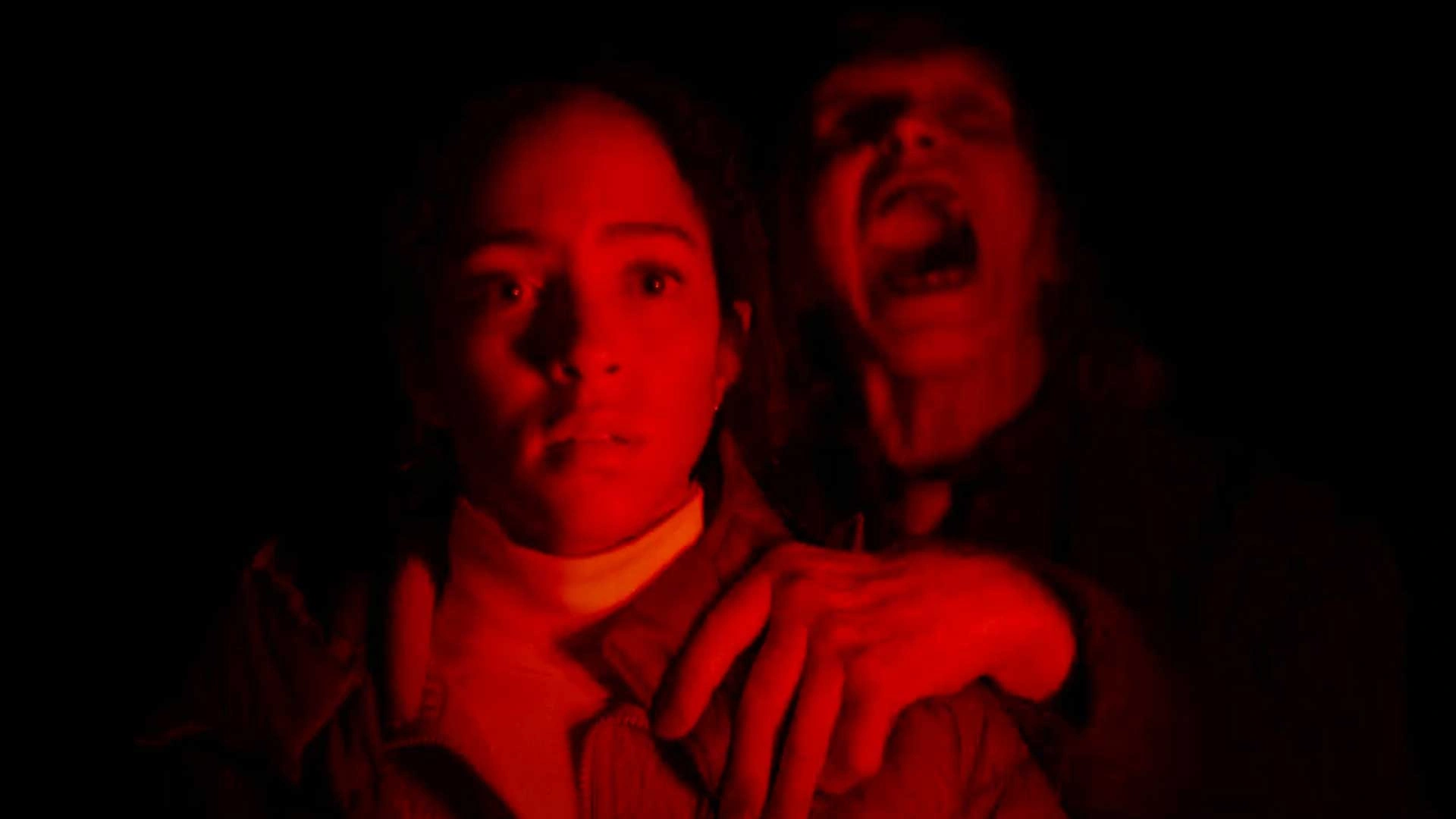
The physical manifestation of The Passenger yields a mixed visual impression. Joseph Lopez adopts a distinct aesthetic, resembling a gaunt, metalcore frontman with a gothic look reminiscent of Brandon Lee in The Crow. In the dark, this design succeeds.
The final act overexposes the entity, and a sleek digital rendering softens its terrifying presence. The digital polish fails to integrate with the practical atmosphere established by the lighting and cinematography.
The narrative also fumbles its folklore. Maddie discovers a connection between the entity’s three-line claw marks and historical American hobo codes, which served as warning symbols for travelers. This promising mythological thread gets touched upon lightly and left undeveloped. The entity’s origins remain a total mystery, and a potentially fascinating subculture is left unexplored.
Efficiency on the Highway
Passenger maintains a tight 94-minute runtime, demonstrating a strong grasp of narrative efficiency. When dialogue lags or character logic strains, Øvredal pivots aggressively to the next setpiece. This brisk pacing keeps the audience on edge, ensuring that momentum rarely dips for long.
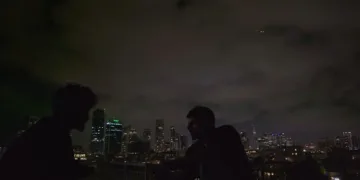
The narrative peaks early with a masterfully tense cold open featuring two unnamed friends. This prologue establishes a high-water mark for pure terror that the main storyline occasionally struggles to replicate.
That momentum carries into the final stretch, though the frenzied climax feels slightly underwhelming relative to the meticulous atmospheric buildup, which incorporated spiritual themes of travel protection and Saint Christopher. The resolution arrives quickly and registers as small.
The film works as an efficient popcorn thriller. It delivers best through a series of startling, well-executed individual sequences; its strengths are immediate and situational rather than cumulative. The narrative depth required to linger past the theater doors remains absent, but Passenger delivers a stylish and scary ride in the dark.
The supernatural horror film Passenger premiered theatrically on May 22, 2026, just in time for the Memorial Day weekend blockbusters. Directed by horror veteran André Øvredal, the movie tracks a young couple whose scenic cross-country van life journey quickly devolves into a terrifying highway nightmare after they cross paths with a demonic entity. Viewers looking to experience the atmospheric dread and innovative scare sequences can catch the film during its current theatrical run, with streaming options expected to follow on Paramount Plus later in the year.
Where to Watch Passenger (2026) Online










Full Credits
Title: Passenger
Distributor: Paramount Pictures
Release date: May 22, 2026
Rating: R
Running time: 94 minutes
Director: André Øvredal
Writers: T.W. Burgess, Zachary Donohue
Producers and Executive Producers: Gary Dauberman, Walter Hamada
Cast: Jacob Scipio, Lou Llobell, Melissa Leo, Joseph Lopez, Miles Fowler, Alan Trong
Director of Photography (Cinematographer): Federico Verardi
Editors: Martin Bernfeld
Composer: Christopher Young
The Review
Passenger
Passenger excels as a slick, technically sharp popcorn thriller that delivers genuine late-night chills through masterful sound design and inventive visual setpieces. However, its terrifying momentum is routinely slowed by predictable horror tropes, frustrating character choices, and an overexposed antagonist. It ultimately favors immediate, well-crafted jolts over lasting narrative depth, making it a highly entertaining but fleeting roadside attraction for genre enthusiasts.
PROS
- Outstanding cinematography, atmospheric practical lighting, and a deeply unsettling, restrained musical score.
- Highly original sequences, such as weaponizing the vehicle's backup cameras and using a film projector as a flashlight in the woods.
- Lou Llobell and Jacob Scipio provide a genuinely likable, lived-in romantic dynamic that anchors the early tension.
CONS
- Protagonists repeatedly make baffling decisions that destroy their believability under threat.
- Fascinating narrative threads, like the American hobo codes and nomadic subculture, are abandoned too quickly.
- The entity loses its terrifying mystique in the final act due to excessive screen time and a sleek, unconvincing digital render.