





























Japan had already lived through the weaponized atom before it was asked to trust the peaceful one. Fukushima: A Nuclear Nightmare places that contradiction near the front of its argument, using mid-century cartoons and promotional films that present nuclear power as clean, controlled, and almost cheerful. The images are unnerving now. Their bright certainty belongs to a country being encouraged, through the American “Atoms for Peace” campaign, to separate technological progress from Hiroshima and Nagasaki.
James Jones and Megumi Inman’s HBO documentary then moves to March 11, 2011. The Tōhoku earthquake shakes buildings and sends office workers scrambling. A tsunami advances across farmland, carrying cars and helicopters with a grotesque ease. At the Fukushima Daiichi Nuclear Power Plant, primary and backup electricity fail. Cooling systems stop working. Fuel rods begin overheating.
The scale matters. Chernobyl had one reactor at the site of its catastrophe. Fukushima Daiichi had six reactors caught inside a rapidly deteriorating emergency, and the workers remaining there were told that failure might threaten Japan’s existence. The film’s 90 minutes concentrate on nine days when that statement did not sound melodramatic.
Waiting for the Next Explosion
Rupert Houseman’s editing gives the disaster a chronology that feels increasingly claustrophobic. Jones and Inman move from tsunami footage to control-room testimony, then back outside for the hydrogen explosions. The cuts narrow the distance between a national emergency and the men trying to understand dead instruments in a damaged plant.
The technical explanations are deliberately simple. Diagrams show how electricity powers cooling systems and how the loss of cooling causes fuel rods to overheat. Hydrogen accumulates. Pressure rises. Anyone unfamiliar with reactor engineering can follow the chain without the film pretending the physics itself is simple.
Ikuo Izawa, the control-room supervisor, provides the documentary’s strongest account of what improvisation looked like inside Fukushima. He describes engineers connecting car batteries in an attempt to restore electrical functions. It is an almost absurd image of technological regression: one of the world’s most advanced industrial nations confronting nuclear failure with equipment borrowed from ordinary vehicles. Then comes an explosion.
Two others follow in the days ahead. Uno Helmersson’s score stays tense without trying to outshout the archival footage, a useful choice when the sight of a reactor building erupting already carries its own soundtrack of dread. The documentary’s pacing can feel repetitive as workers wait for updates, lose communications, and receive incomplete information. Yet repetition is part of the pressure. Every new delay means another hour of heat building somewhere the staff can barely reach. The film makes anxiety procedural.
The Men Who Stayed
Izawa’s recollections shift the film from disaster chronology toward something culturally specific and painfully human. When phone systems become unreliable, he emails goodbye messages to his children and asks family members to care for one another. Around him, workers take photographs in radiation suits, smiling, raising thumbs, and making peace signs for the camera.
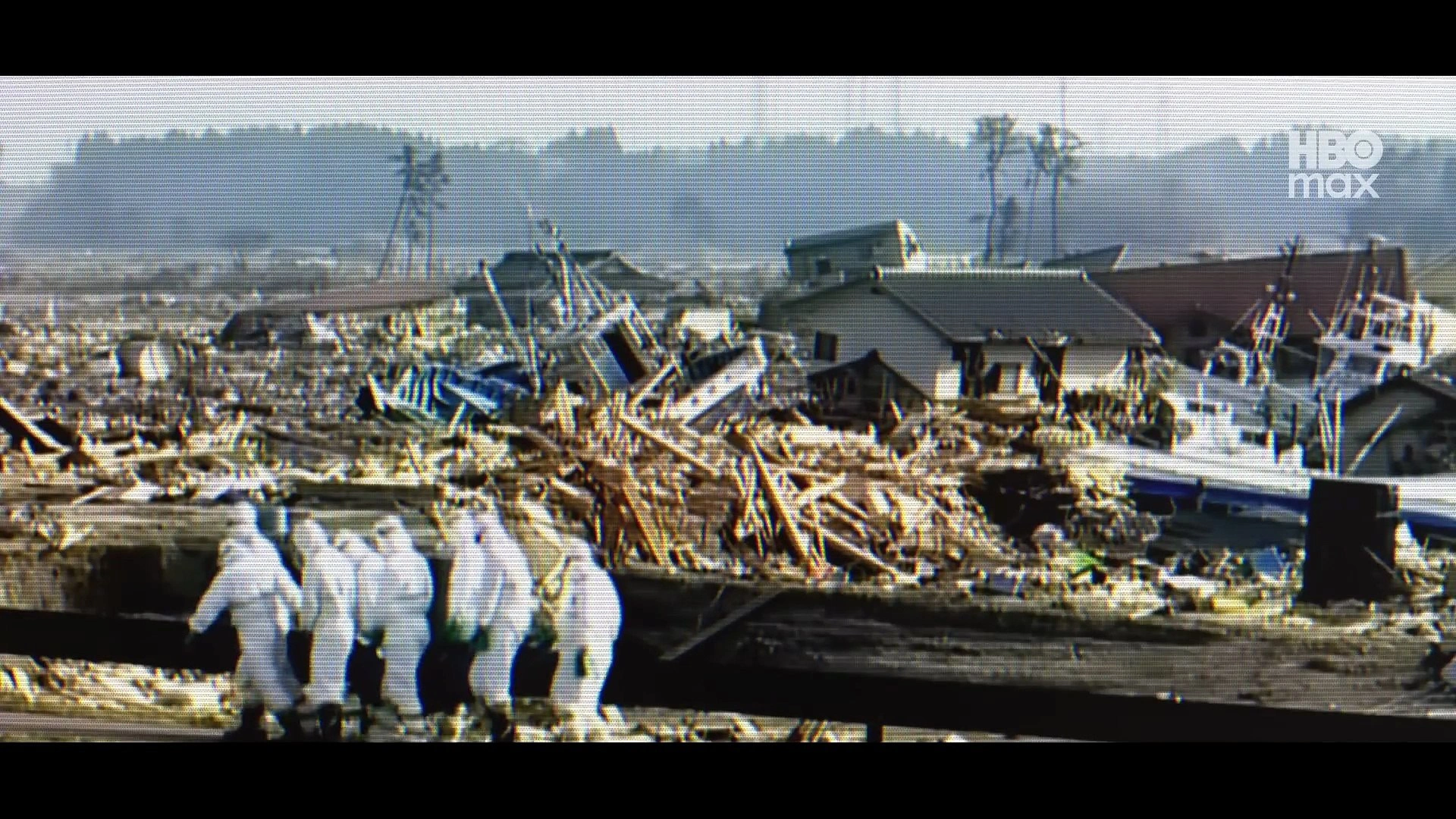
Those photographs resist the easy language often attached to the “Fukushima 50.” Heroism, in international disaster narratives, tends to acquire a polished surface. The men in these images look awkward, tired, and frighteningly ordinary. Some believed the photographs might survive them.
The group itself numbered closer to 70 workers, yet the smaller label became part of the story Japan told about the crisis. Jones and Inman are interested in the people beneath that national symbol. Engineer Katsuaki Hirano recalls the debate over who should attempt to vent a reactor before pressure became catastrophic. Older workers argued that younger colleagues should be protected. Younger workers believed their physical condition gave them a better chance of completing the task. Izawa had to choose.
The selected workers never reached the reactor before an explosion intervened. It is here that the documentary’s devotion to first-hand testimony pays off. A phrase such as “suicide squad” can sound like the language of military cinema. Hirano and Izawa turn it back into an administrative horror: people standing in a damaged workplace, discussing age and survival probability because somebody has to walk toward radiation.
Later, the Tokyo Fire Department’s Hyper Rescue Squad pumps huge quantities of water toward the exposed fuel rods. The intervention sounds primitive beside the technology surrounding the plant. That simplicity carries its own bitter force. The machinery of nuclear modernity failed, and firefighters arrived with water.
Japan’s Safety Myth
The natural disaster explains how Fukushima entered crisis. It does not explain why the plant was so vulnerable. Martin Fackler, then reporting from Tokyo for The New York Times, describes a response marked by fear and confusion. Drivers abandoned deliveries after becoming afraid of radiation exposure.
Supplies that reached the plant sometimes differed from what workers had requested. American offers of help met political suspicion, shaped partly by Japan’s history with the United States and the atomic bombings. International assistance could not enter a historical vacuum because no such vacuum existed.
TEPCO, the Tokyo Electric Power Company, receives the film’s clearest institutional criticism. Testimony indicates that the company had been warned of Fukushima’s tsunami vulnerability and failed to undertake expensive protections. The reason leads into what Fackler describes as the nuclear industry’s “safety myth.” Questioning existing precautions could be treated as disloyal because admitting that safety needed improvement meant admitting that the plant was already unsafe.
It is a peculiarly corporate form of magical thinking. A risk becomes less discussable at the exact moment discussion becomes necessary. The documentary could press harder here. Its attention remains fixed on the men inside the plant, leaving TEPCO’s history and internal decisions less examined than the accusations deserve. The absence is partly built into the subject. Full records of the crisis and the discussions surrounding it remain unavailable, and one TEPCO employee openly questions placing utilities of such national importance under private corporate control.
That gap between institutional opacity and personal memory gives the film its most revealing cross-cultural tension. Postwar Japan was sold nuclear energy through images of rational management and scientific confidence. At Fukushima, the surviving record comes from workers describing car batteries, goodbye emails, failed deliveries, and impossible choices about who should approach a reactor. Izawa calls his testimony a small record of what happened. The adjective is modest. The history around him was anything but.
The gripping British-American feature documentary Fukushima: A Nuclear Nightmare debuted in the United Kingdom via Dogwoof on February 20, 2026, before making its United States television and streaming premiere on HBO and Max on March 10, 2026. Audiences can currently stream the acclaimed non-fiction project online with an active subscription to Max or purchase it digitally through platforms like Amazon Prime Video. Marking the 15th anniversary of the 2011 Tohoku earthquake and tsunami, the film utilizes archival handheld footage alongside firsthand emotional testimonies to chronicle the terrifying nine-day race to avert a total catastrophic meltdown at the Fukushima Daiichi Nuclear Power Plant.
Where to Watch Fukushima: A Nuclear Nightmare (2026) Online


Full Credits
Title: Fukushima: A Nuclear Nightmare
Distributor: HBO Documentary Films, Dogwoof
Release date: February 20, 2026 (United Kingdom), March 10, 2026 (United States)
Rating: TV-14
Running time: 90 minutes
Director: James Jones, Megumi Inman
Writers: James Jones, Megumi Inman
Producers and Executive Producers: Megumi Inman, Blast Films Production Team, HBO Documentary Films Executives
Cast: Government Advisors, Power Plant Engineers, Nuclear Consultants, Emergency Workers, Eyewitness Survivors
Director of Photography (Cinematographer): Jean-Louis Schuller
Editors: Rupert Houseman
Composer: Production Music Department
The Review
Fukushima: A Nuclear Nightmare
Fukushima: A Nuclear Nightmare finds its sharpest tension in the collision between Japan's postwar embrace of nuclear modernity and the institutional secrecy exposed in 2011. James Jones and Megumi Inman let Ikuo Izawa's memories carry the film, turning improvised car batteries, farewell emails, and reactor venting into evidence of human courage abandoned by corporate foresight. The limited scrutiny of TEPCO leaves part of the historical argument unfinished, yet the first-hand record remains frighteningly precise.
PROS
- Harrowing first-hand testimony
- Powerful archival footage
- Clear technical explanations
- Strong postwar Japanese context
- Izawa's deeply human perspective
CONS
- Limited TEPCO background
- Some repetitive crisis beats
- Corporate accountability needs deeper scrutiny