
























![Kingdom Hearts Collection [I-III] Review](https://gazettely.com/wp-content/uploads/2026/10/Kingdom-Hearts-Collection-I-III-1-360x180.webp "Kingdom Hearts Collection [I-III] Review: KHII Holds Steady as Newer Entries Fluctuate 37")



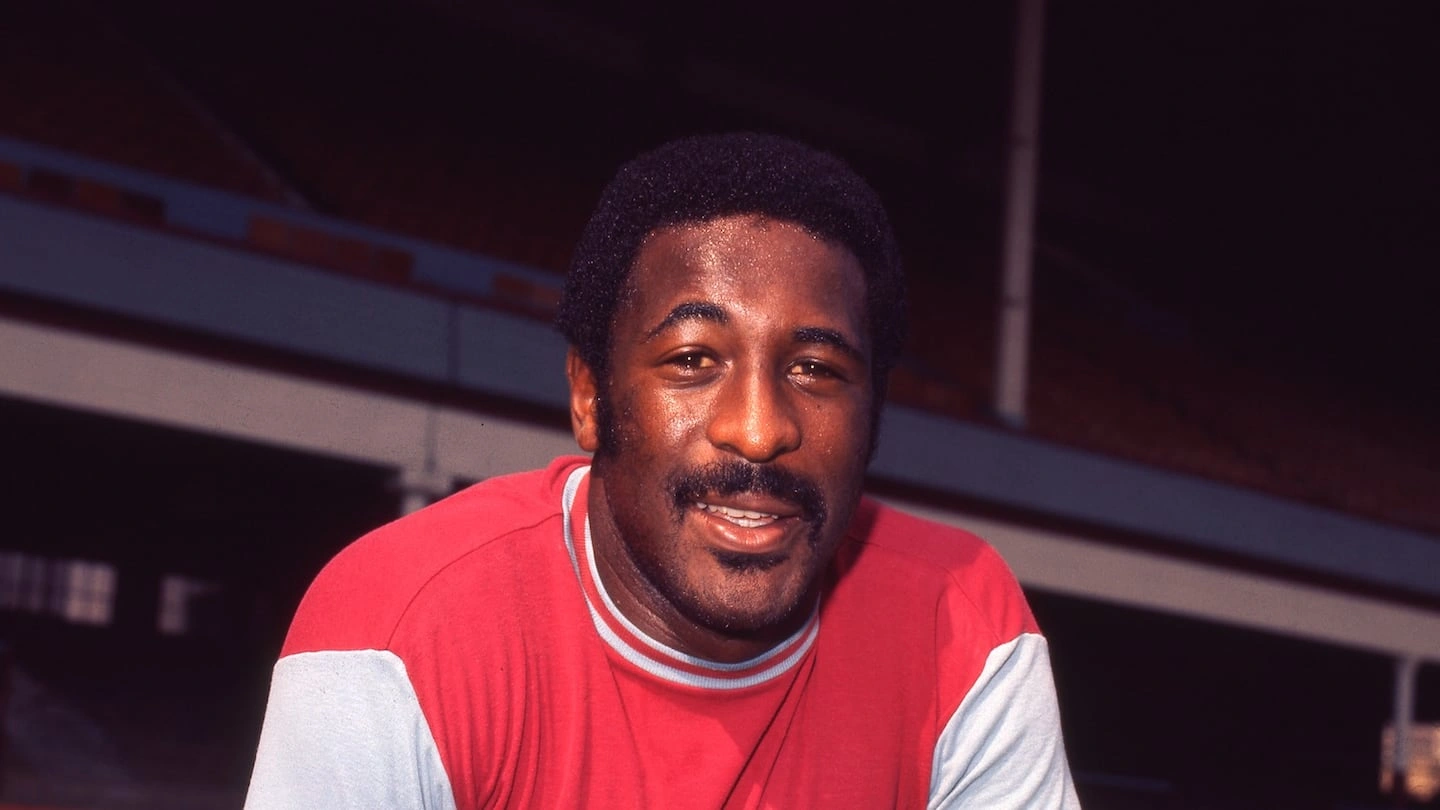

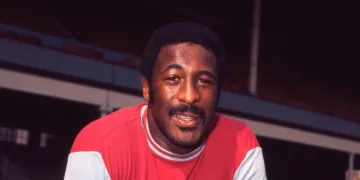
Clyde Best speaks about crossing the Atlantic at 17 with roughly the same dramatic emphasis another man might use to describe changing trains. Dan Egan understands the value of this restraint. Transforming the Beautiful Game: The Clyde Best Story surrounds its subject with players, historians, newspaper clippings and match footage, while Best himself remains softly spoken, almost suspicious of the monument being built around him.
The facts supply sufficient weight. Best travelled from Bermuda to London for a trial, impressed Ron Greenwood and became a West Ham striker who scored 58 goals in 221 appearances. His reserve creates an unusual problem for a sports documentary. Modern profiles frequently depend on subjects narrating their own mythology, polishing each setback into an act break. Best refuses this instinct simply by being himself.
Egan responds by letting other men measure the space Best occupied. Ian Wright’s declaration that his own career would not exist without Best carries force because it follows footage and testimony concerning the hostile terrain Best entered. The documentary places a quiet face beside an enormous historical consequence. The imbalance is revealing.
Excellence Against the Terrace
The match archive performs much of the film’s best moral reasoning. Best drives into defenders, shields the ball and keeps moving after contact. These images acquire a second meaning once interviews describe monkey chants and bananas thrown from terraces. His body was judged as a footballing instrument and turned into a racial target during the same ninety minutes.
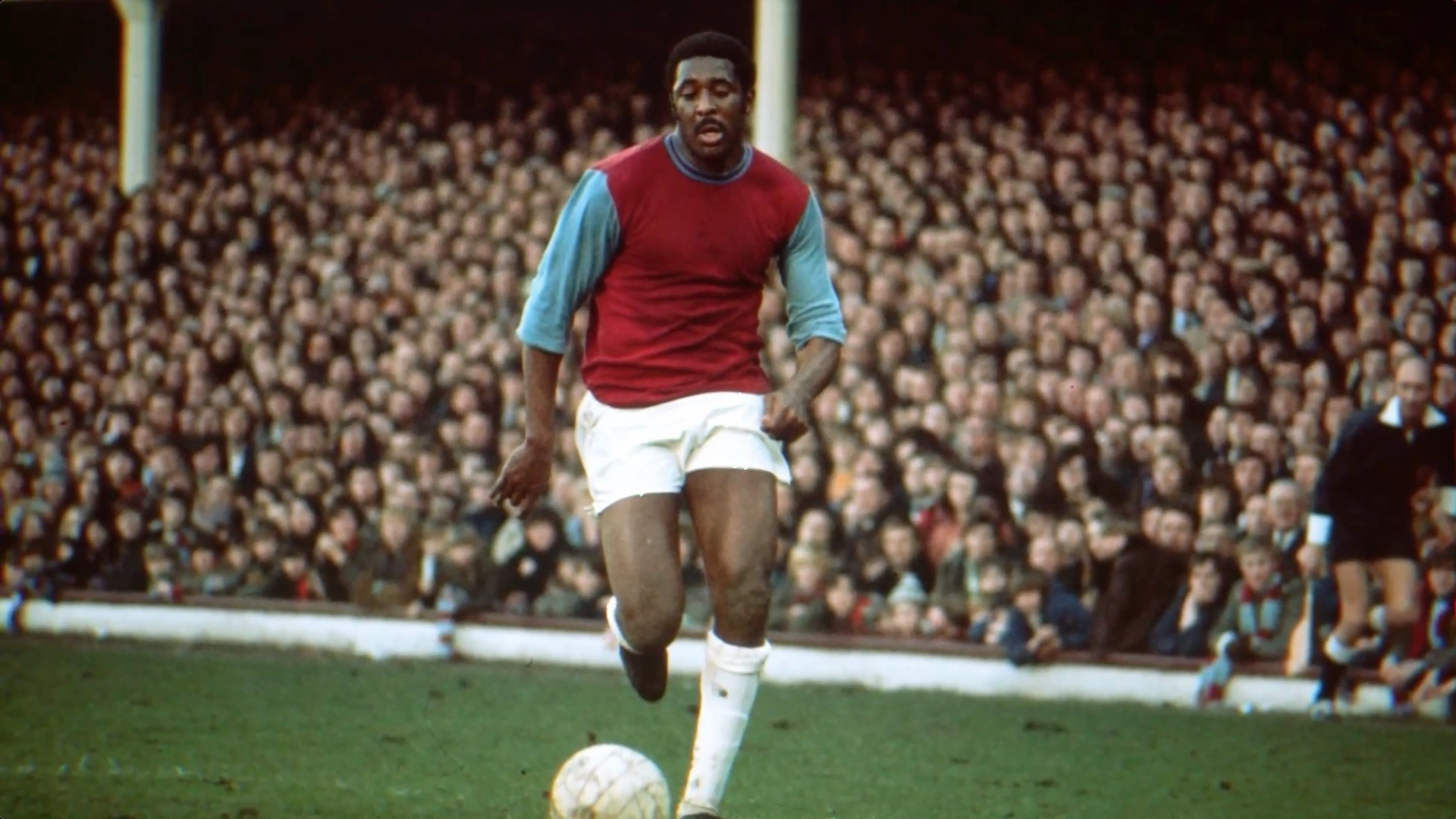
Cinema cannot recreate the psychological texture of that experience without risking vulgarity. Egan wisely avoids dramatic reconstructions of terrace abuse. Instead, newspaper material, archived broadcasts and testimony build the political atmosphere around the footage. Britain in the Enoch Powell and National Front years becomes visible through what spectators felt licensed to shout at a young Black striker.
There is something almost unbearable in Best recalling the advice he received from his parents. Be kind to others. His father also told him he was playing for the people who would come after him. Fine principles, certainly. Rather demanding instructions for a teenager being abused by thousands of adults.
The April 1972 match against Tottenham gives the film a precise historical marker. West Ham selected Best, Clive Charles and Ade Coker together, making them the first English top-flight club to field three Black players in the same match. Egan then reaches backwards to Jack Leslie, the prolific Plymouth Argyle forward believed to have been denied an England opportunity after selectors discovered his ethnicity.
One detail cuts deeper than any speech. Leslie later worked as a West Ham kitman and cleaned Best’s boots. Two Black footballers from different generations occupy opposite sides of English football’s narrow institutional doorway. One was kept outside; the other entered under relentless observation.
When Clyde Leaves the Frame
Egan’s archival technique remains strongest when images are allowed to carry historical friction. Black-and-white match footage gives way to colour. Newspaper headlines sit beside archived news reports. When moving images do not exist, illustrations and family photographs replace them rather than cheap imitation footage.
The childhood sequences, recreated with two boys playing out stories of Clyde and his brother, are especially useful. Egan identifies a gap in the record and marks it honestly. He does not ask contemporary footage to masquerade as recovered history. Then Best leaves West Ham for the Tampa Bay Rowdies in 1976, and the documentary’s framing begins to loosen.
The North American Soccer League expands across the film. So do explanations of American football culture, the Black diaspora, British colonial history and football’s changing racial demographics. Each subject belongs somewhere near Best’s story. Their accumulation slowly pushes him toward the edge of his own portrait.
The crowded interview roster has a similar effect. Viv Anderson, John Barnes, Les Ferdinand, Garth Crooks, Shaka Hislop and others map Best’s influence across generations, yet viewers without detailed football knowledge are frequently expected to understand the significance of clubs, competitions and career trajectories from names and dates alone. Tony D Head’s narration provides movement, though rarely enough orientation.
Best’s family receives far less space. His wife Alfreda appears briefly. His daughter Kimberly offers the wonderfully blunt observation that football is “religion,” then recedes. Siblings Carlton and Marie reveal sharper personal details about Best than many of the decorated football witnesses surrounding them.
A deeper institutional question also remains underlit. Greenwood selected Black players because their football justified selection. The film spends less time examining who protected those players once they entered hostile stadiums, or why coaching rooms and executive offices remained far less accessible. Merit opens the gate. Power decides who owns the ground beyond it.
Playing for Those Who Came After
Best’s quietness becomes increasingly important as the film approaches his later life. Interviewees grow emotional while describing his influence; Best continues speaking as though history happened to someone standing a few feet away. Egan resists correcting this distance.
Ade Coker’s account of becoming lost in South Boston and hiding from a threatening mob also complicates any easy geographic morality. America offered Best a different professional culture through the NASL. Coker’s story makes clear that crossing an ocean did not leave racial violence conveniently behind.
The closing images show Best receiving honorary degrees and attending commemorative events. Egan places the older man before crowds that now recognise what the younger player represented. The visual reversal is striking: the gaze remains, but its declared purpose has changed from hostility to honour.
Has football learned to see differently, or has it simply grown better at celebrating pioneers after asking them to absorb the damage alone? The documentary never holds that question long enough. Best’s father’s words supply the darker answer anyway. Play for the people coming after you. Clyde Best did. Football enjoyed the benefit.
The inspiring sports documentary Transforming the Beautiful Game: The Clyde Best Story held its global premiere at London’s Sadler’s Wells East on March 25, 2026, before embarking on a heavily attended touring theatrical release across the United States this summer. Audiences can catch the film through its ongoing nationwide traveling showcase, which includes upcoming screenings at the Loudermilk Conference Center in partnership with the BronzeLens Film Festival on July 13 and 14, 2026. Narrated by Tony Head and packed with rare archival footage, the film tracks the historic career of Bermudian striker Clyde Best as he braved severe, systemic racism to emerge as one of the first Black football superstars of the English First Division with West Ham United in the 1970s before helping popularize the sport in North America.
Full Credits
Title: Transforming the Beautiful Game: The Clyde Best Story
Distributor: Degan Productions, Sadler’s Wells East, BronzeLens Film Festival
Release date: March 25, 2026 (London Premiere), June 4, 2026 (United States Premiere)
Running time: 68 minutes
Director: Dan Egan
Writers: Dan Egan
Producers and Executive Producers: Dan Egan, Jerry Best
Cast: Clyde Best, Tony Head, Harry Redknapp, Les Ferdinand, Viv Anderson, Ian Wright, Geoff Hurst, Garth Crooks, Shaka Hislop, John Barnes, Rodney Marsh, Howard Gayle, Randy Horton, Bobby Barnes, Patrick Horne, Carlton Cole, Paul Davis, Ade Coker, Kasey Keller
Composer: Roy Hay
The Review
Transforming the Beautiful Game: The Clyde Best Story
Transforming the Beautiful Game: The Clyde Best Story finds its clearest moral argument in old match footage: Best taking another challenge, staying upright, and carrying on while the terraces supply their own ugliness. Dan Egan loses some control when the NASL and wider football history crowd the frame, yet the archive, the testimony of later Black players, and Best’s almost disarming restraint keep pulling the film back toward him. History made Best visible because racism insisted on watching. The documentary asks us to look again, this time properly.
PROS
- Powerful archival match footage
- Best’s quietly dignified presence
- Strong testimony from later players
- Sharp historical connections
- Racism addressed without spectacle
CONS
- NASL section weakens the focus
- Assumes substantial football knowledge
- Family life remains underexplored
- Institutional questions arrive too late







