





















Sixty seconds is enough time to turn a familiar Capture the Flag match into a bluff. One player chooses a hiding place somewhere inside the team’s territory, opponents attempt to read that decision, and a mode built around fixed bases suddenly becomes a game of misdirection.
Last Flag, developed by Night Street Games, builds its five-versus-five matches around that adjustment. Each team hides a flag near its pyramid before searching for the opposing one, carrying it home, and defending the captured objective for one minute. The basic structure remains recognizable to anyone who played Capture the Flag in Team Fortress 2, Halo, or older arena shooters, yet the changing flag position removes the memorized attack routes that shaped those games.
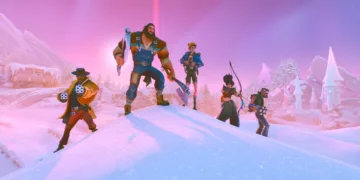
The presentation gives the concept an identity of its own. Contestants arrive dressed for a chaotic 1970s television competition, while an announcer comments on captures, upgrades, and battlefield disasters with game-show enthusiasm. The style fits the rules: players are competing inside a spectacle where every ambush resembles a stunt prepared for prime time.
The Search Before the Capture
Three radar towers divide the match into stages. Controlling one scans part of the enemy territory, gradually removing possible flag locations from the search. Towers also provide forward respawn positions and health regeneration, so teams cannot treat them as optional detours.
This creates an unusual rhythm for Capture the Flag. The early phase resembles a territorial shooter, with both teams fighting through the central lanes of Copper Falls or Snowfield. Once enough sectors have been scanned, the match becomes a search operation. Scout can cross large sections of the map quickly, then launch Falcon Eye to examine rooftops, side paths, and likely hiding places. Finding the flag permanently marks its position, making later recovery attempts less dependent on guesswork.
The best matches move cleanly through these phases. A team secures a tower, identifies the hidden sector, pushes into enemy ground, and escorts the carrier back while opponents scramble to recover. That sequence gives Last Flag a tactical identity missing from hero shooters that divide attention across several unrelated objectives.
Also Read




Scoring exposes a less convincing side of the design. Returning a planted flag takes only a few seconds, and a durable contestant such as Lumberjack can sometimes complete the interaction while absorbing point-blank fire. Defending the captured flag for a full minute can become harder than finding and transporting it.
Teams may gain a safer victory by controlling towers and waiting for overtime points, which weakens the objective around which the entire game has been constructed. The hidden-flag idea changes the traditional CTF family tree in a useful way. The capture rules surrounding it still need refinement.
Contestants, Cashbots, and Team Roles
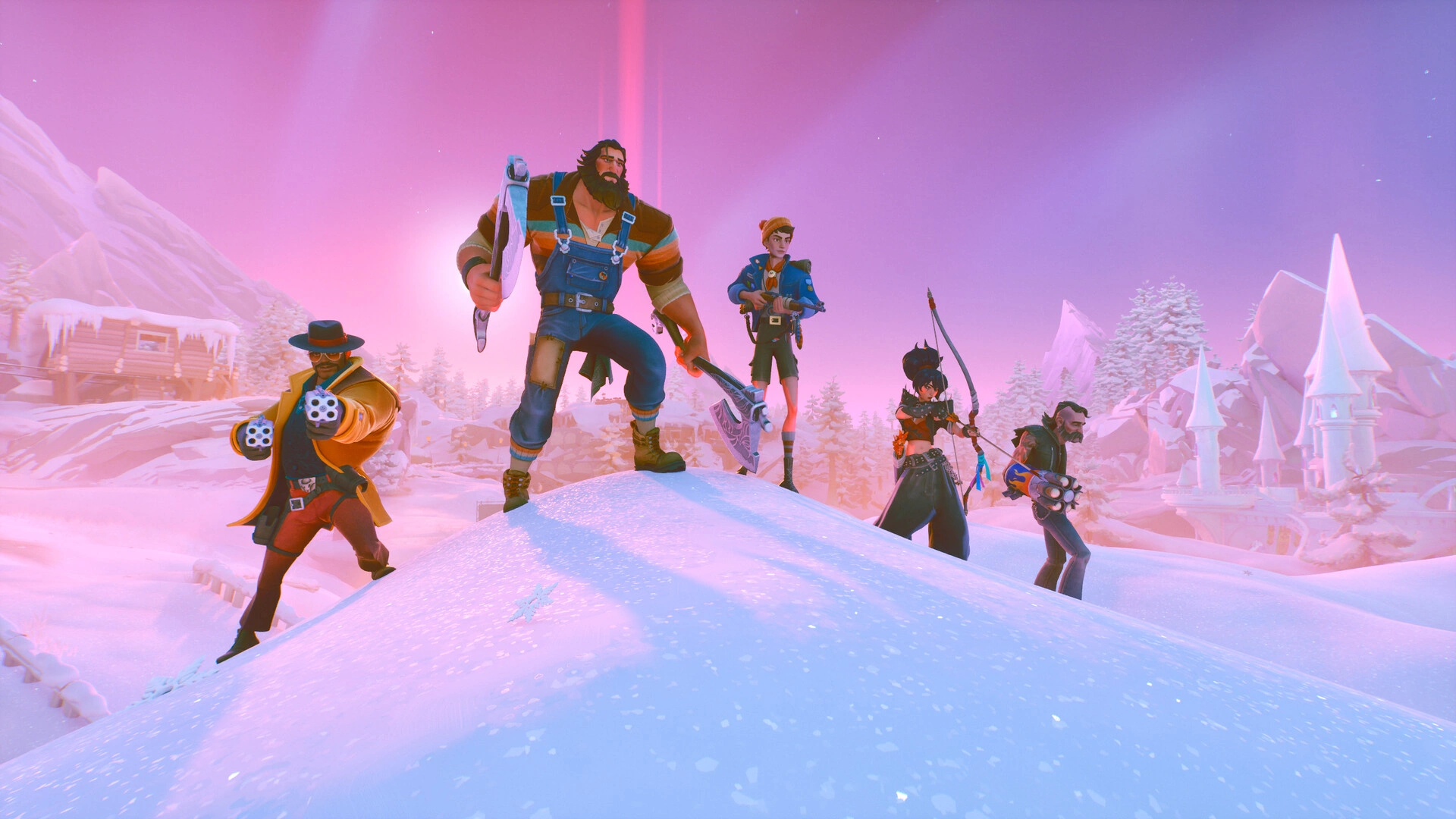
The roster gives each player a clear battlefield function. Lumberjack absorbs damage and dominates close-range encounters, filling the kind of tank role associated with Reinhardt in Overwatch. Scout supplies mobility and reconnaissance. Arsenal controls space with turrets, offers healing support, and uses her Teleportation Gun to rescue allies, displace opponents, or place Lumberjack directly inside a contested area.
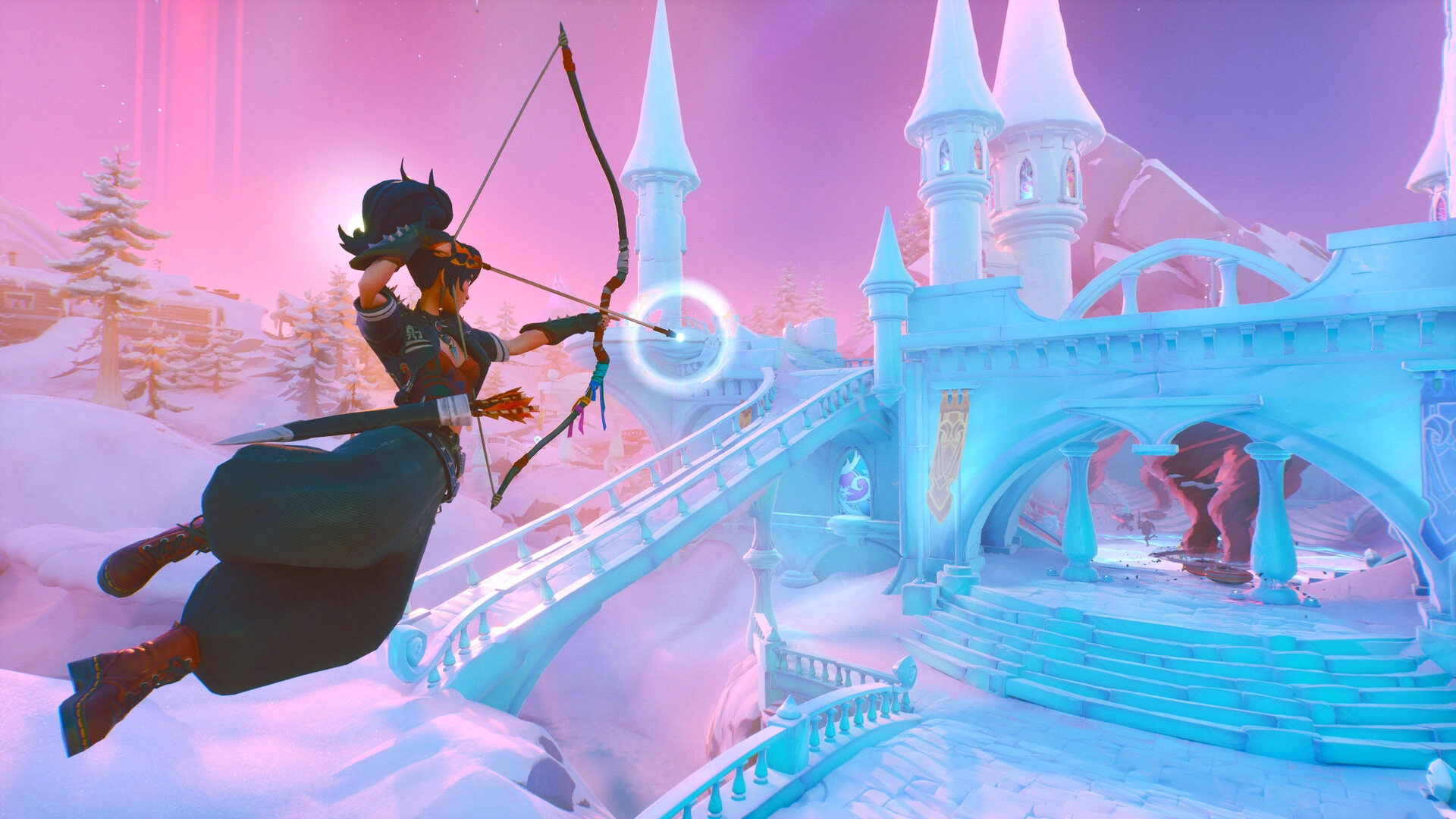
Roadie has a stranger set of tools. Inspired Riff strengthens nearby allies, while Mosh Pit forces enemies caught inside its radius to dance. The animation is funny, yet the ability also creates a valuable defensive window around a captured flag. Tango’s proximity mines suit choke points, though his automatic rifle and explosive Ultimate feel plain beside Arsenal’s teleportation tricks or Scout’s search tools.
Those differences make team composition matter, but they reveal balance problems quickly. Arsenal can contribute damage, healing, displacement, and area control from one kit. Scout covers territory at a speed few contestants can match. Lumberjack’s durability makes him valuable during both tower fights and flag returns. Tango and Roadie require narrower situations before their abilities feel equally decisive.
Cashbots add a small progression loop borrowed from MOBAs. Destroying these neutral machines produces money, while eliminations, tower captures, and hiding the flag supply further income. Players can spend $1,500 to improve either regular ability. Skyfire’s launch begins leaving fire behind, then gains increased damage after another upgrade. Scout’s movement skill remains active longer with investment.
Ability levels and Ultimate charge transfer when changing contestants during respawn, which encourages adaptation without erasing prior progress. The problem is that purchasing upgrades requires a manual visit to the relevant menu. During a fast tower fight or flag chase, unused money is easy to forget until the announcer reminds everyone to spend it.
Communication determines how much these systems matter. Text chat, voice chat, and party tools are available, but random teammates may ignore the search, abandon their assigned role, or fight around towers without planning the next move. A coordinated team makes the hero design click. Five silent strangers can reduce it to scattered gunfights.
Two Maps Cannot Carry the Format
Visually, Last Flag resembles Fortnite. Structurally, it sits closer to Overwatch. Its central objective reaches back to Team Fortress 2 and the arena shooters that treated Capture the Flag as a primary attraction rather than a secondary playlist option. Those comparisons clarify both its appeal and its limits.
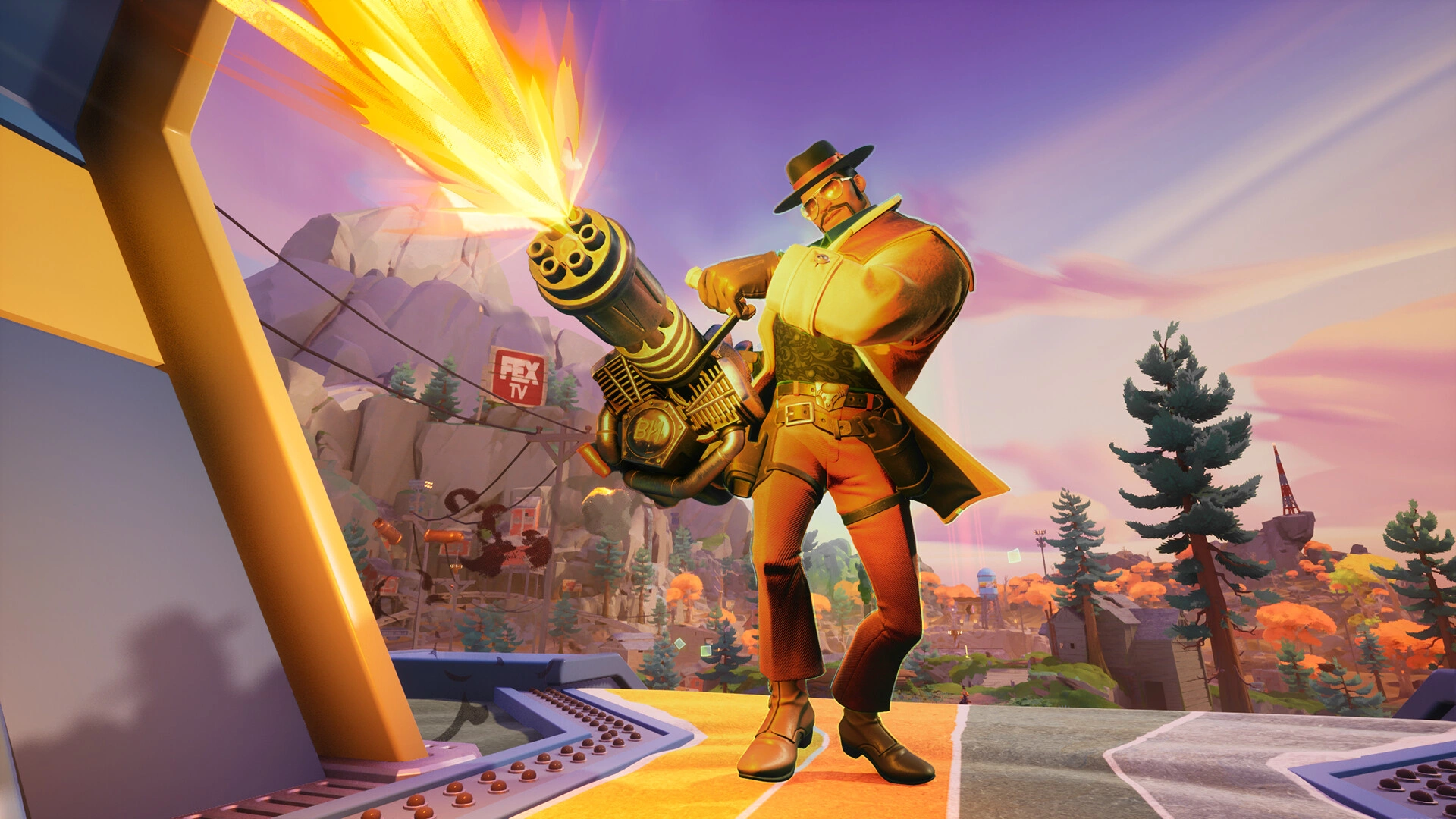
The gunplay works, yet individual weapons lack the weight and personality found in stronger competitors. Tango’s rifle feels familiar from the first burst. Roadie’s grenade launcher fires slowly without producing enough impact to justify its pace. Movement handles the game’s short matches adequately, but it rarely creates the precision or physical pleasure that keeps a shooter engaging after its maps have become familiar.
Copper Falls and Snowfield are thoughtfully arranged. Their three-lane centres produce clear tower battles, while the upper and lower edges hold enough corners, rooftops, and structures to support the flag-hiding phase. Once those locations are learned, the search becomes less mysterious. Two maps cannot preserve uncertainty for long.
The training gym introduces controls with little resistance, while bot battles represent a sharp jump in difficulty. Adjustable bot settings could have created a smoother route for younger players and newcomers before online matches place them beside experienced shooter fans.
Night Street Games avoids the usual live-service pressure. There are no pay-to-win purchases, rotating events demanding constant attendance, or sprawling microtransaction menus. An optional supporter bundle supplies skins and the soundtrack. That restraint is welcome, but it also leaves the existing package exposed. With one main mode and two maps, players can see nearly everything Last Flag offers across a single weekend.
The Review
Last Flag
Last Flag gives Capture the Flag a smart tactical revision through hidden objectives, radar towers, and contestants built around distinct team roles. Its best matches create the coordination and sudden reversals that once made the mode a multiplayer staple. The comparison with Team Fortress 2 and Overwatch becomes less flattering once the limited gunplay, uneven roster, and two-map launch offering settle in. Night Street Games has built a promising foundation, but players can learn nearly every trick it has within a weekend.
PROS
- Clever hidden-flag system
- Meaningful radar-tower battles
- Distinct 1970s presentation
- Strong character synergies
- Restrained monetization
CONS
- Only two launch maps
- Uneven contestant balance
- Lightweight gunplay
- Repetitive match structure
- Heavy reliance on coordination