





























Two explorers stand over the same patch of ground. One sees a pedestal holding something valuable. The other sees a pit filled with bones. Taking another step settles the argument in the least pleasant way possible.
That encounter captures the idea separating The Mound: Omen of Cthulhu from the crowded field of cooperative extraction horror. ACE Team does not settle for hiding monsters in dark corners. It interferes with the information players use to understand those corners, then asks a group of panicking treasure hunters to decide whose senses remain reliable.
Set in 1652, the game sends up to four explorers from a galleon into a cursed South American jungle. Each expedition begins with a contract from the Captain, who may demand a particular object, a logbook, or treasure reaching a set value.
Weapons, food, medical supplies, and tools come from a shared pool. The crew escorts an ox cart through the island, loads it with valuables, and tries to return before the jungle turns fully hostile. The familiar structure resembles Lethal Company and R.E.P.O., yet the resemblance weakens once sanity starts to collapse.
Nobody Sees the Same Forest
The jungle behaves like a living defensive system. Sprinting through vegetation, firing a matchlock weapon, attacking wildlife, or remaining on the island for too long raises its aggression. Shambling Y’m-bhi initially keep their distance. Continued noise brings lunging variants, armed creatures, self-immolating attackers, explosive growths, and threats that appear to materialise from the environment.
Sanity determines how accurately each player perceives those dangers. Safe paths may become holes. Treasure can appear where a trap is waiting. Allies take on monstrous silhouettes, while actual monsters borrow familiar shapes. These effects are assigned individually, so one player cannot confirm what another is seeing by glancing at the same object.
The system reaches its best form through proximity chat. There are no names floating above characters and no permanent outlines marking allies through the foliage. Voices fade with distance, and curses may distort how a teammate sounds. A separated player can die or become corrupted without the others knowing. The jungle may then return a puppet wearing that character’s body.
The resulting encounters are far sharper than a standard mimic attack. A group can reunite, count five people instead of four, and spend several disastrous seconds deciding which body should not be there. Once the false teammate erupts into wormlike limbs, suspicion carries into every later expedition.
External voice chat makes coordination easier, though it removes much of the game’s identity. The Mound needs the uncertainty created by muffled shouting, interrupted warnings, and a whistle that may reveal a friend’s location or bait the group into an ambush.
These systems also make the game unexpectedly funny. Hearing someone insist that the creature piloting their corpse is an impostor, usually while everyone else attacks the wrong person, creates the kind of disaster story cooperative horror depends upon.
Knowledge Is the Real Progression System
Equipment rarely grants power without demanding payment. The arquebus can tear through a creature, yet its reload is slow, its report attracts attention, and rain can render it useless outside shelter. Striking the Medallion exposes nearby treasure while announcing the group’s position. The Mask of Nyarlathotep allows its wearer to pass certain Y’m-bhi safely, but drains sanity and can make that player resemble an enemy.
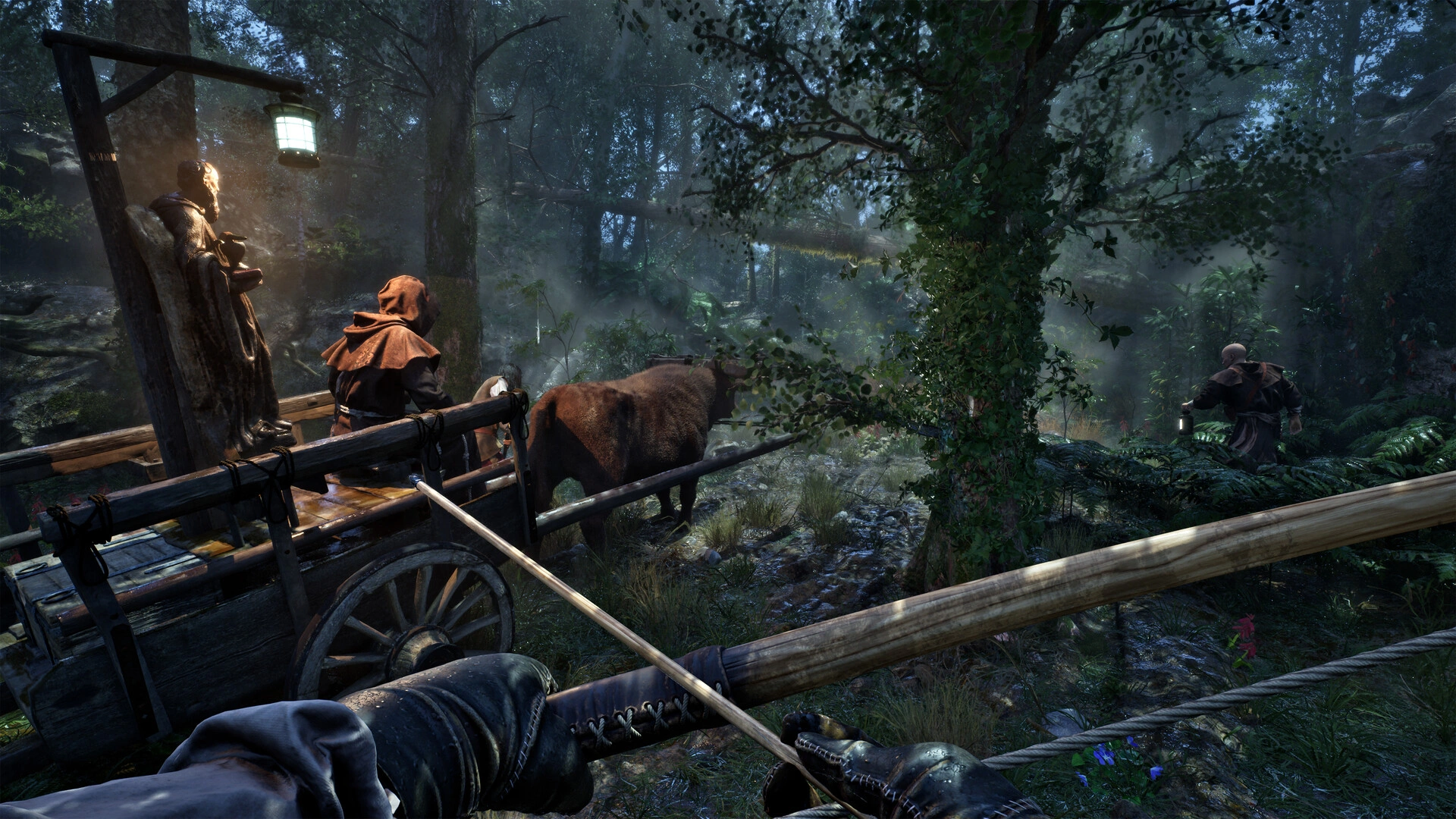
This risk design gives preparation weight. Assigning roles before an expedition matters because the person carrying medical supplies experiences the jungle differently from the player trusted with the firearm. Losing either one can leave the remaining crew with tools they do not understand or cannot use safely.
Learning enemy behaviour becomes another form of advancement. Some Y’m-bhi fake an attack to provoke a premature swing. Others carry guns taken from earlier expeditions. Dense vegetation slows movement, yet cutting it creates noise. Caves offer protection from rain, which can determine if the group still has functioning firepower.
The problem is that the formal progression surrounding this knowledge feels underdeveloped. Successful contracts award XP and Tokens, while artefacts and wood carvings provide passive effects. Their function is explained poorly, and some bonuses are difficult to verify during play. Rescued survivors may unlock another character without altering the expedition loop in a meaningful way.
Early on, practical knowledge compensates for those weak rewards. Memorising the path to a logbook, identifying a Y’m-bhi variant from its movement, or recognising an audio trap makes improvement tangible. Later islands increase pressure faster than the upgrade systems expand the crew’s options. Mastery starts to feel like learning how to survive with the same limited kit.
Combat exposes that imbalance. Slow firearms suit the seventeenth-century setting, but melee swings can feel imprecise, hit reactions lack clarity, and attack animations sometimes leave the player facing the wrong direction. Avoidance is clearly preferred, yet a failed stealth approach can force the crew into a system too awkward to support sustained fighting.
Beautiful, Hostile, and Too Familiar
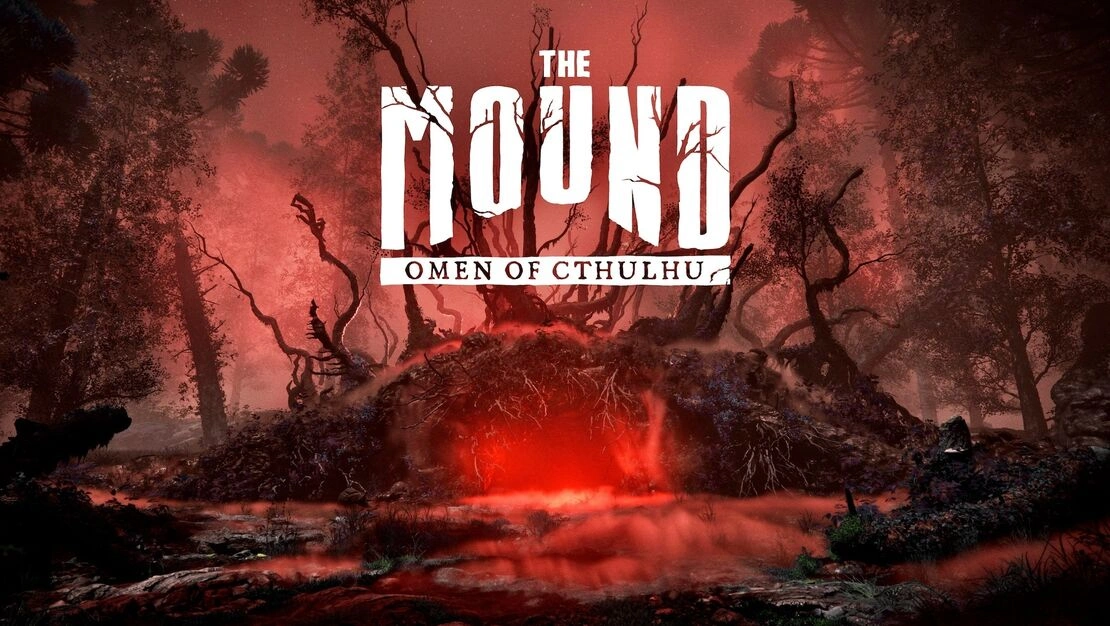
ACE Team’s jungle earns much of its fear through presentation. Thick vegetation obscures movement without turning every path unreadable. Fog and rain reshape familiar routes, while humanlike silhouettes make distant enemies difficult to classify. Later areas replace natural humidity with corrupted growths and harsher lighting, giving the expedition a visible descent toward the Mound.
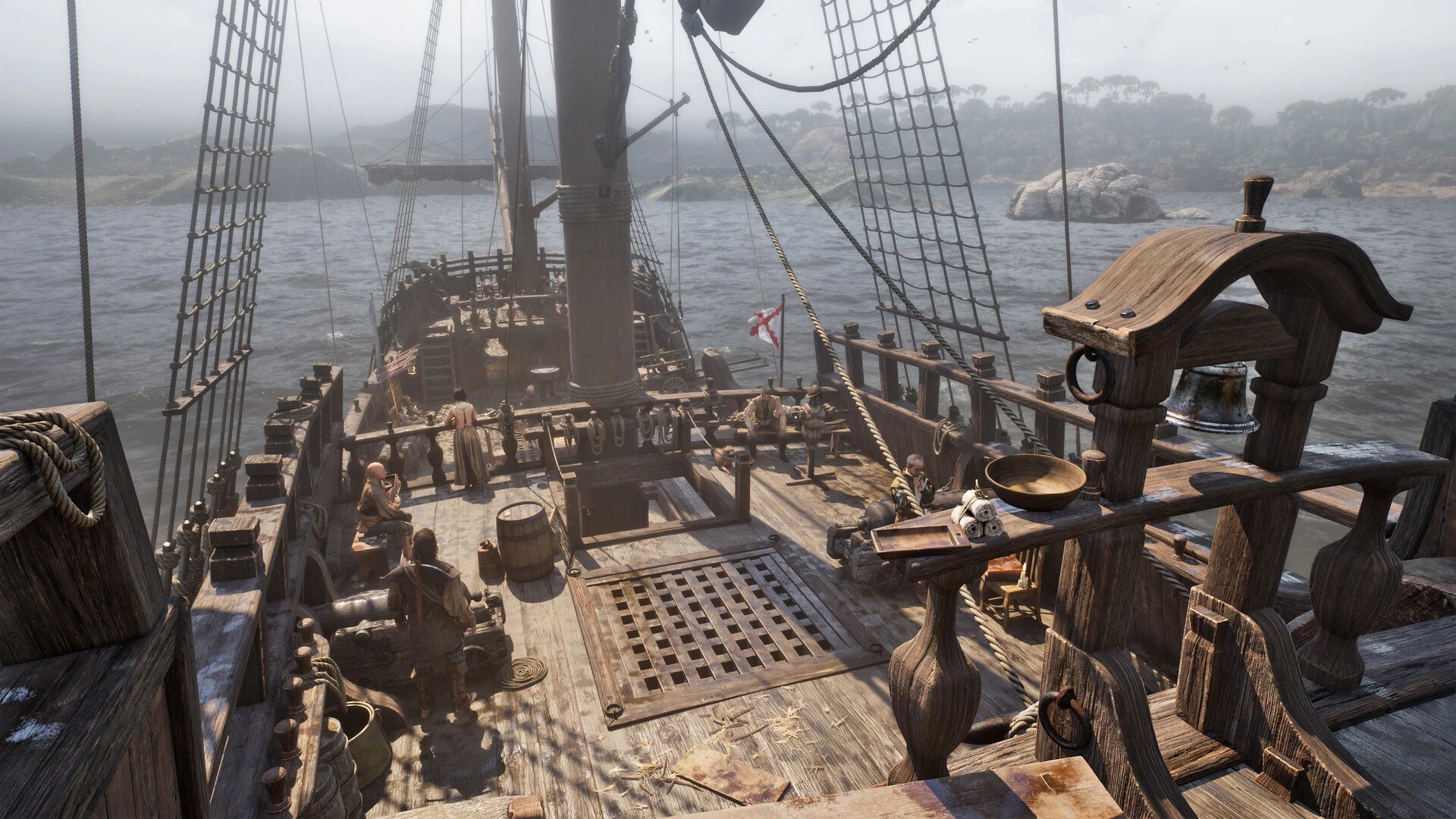
Sound carries even greater weight. Leaves rustle outside the player’s sightline. Screams travel through the trees without revealing distance. A heavy heartbeat accompanies falling sanity, while spatial voices create constant doubt about who remains nearby. Carlito, the ox-cart driver, reciting passages from the Bible while the crew collapses around him supplies a perfectly timed strain of grim comedy.
The ox cart itself is less dependable. It can wander, double back, or behave strangely on uneven ground. Solo expeditions reduce some enemy pressure, yet unreliable companions and cart behaviour reveal how firmly the experience is built around human cooperation.
Repeated contracts expose a larger weakness. Most expeditions revolve around finding an object or reaching a treasure quota. The islands contain alternate routes and concealed areas, but few activities require the full group to perform distinct tasks. There are no substantial cooperative puzzles forcing players to separate, coordinate actions, or use their equipment in complementary ways.
Once hallucinations become recognisable and familiar paths have been memorised, the basic extraction loop has little left to disguise. The jungle can still lie about what stands ahead. It has fewer answers for why the crew should keep walking toward it.
The Review
The Mound: Omen of Cthulhu
The Mound: Omen of Cthulhu separates itself from the co-op horror pack by turning hallucination into a shared mechanical threat. Conflicting scenery, corrupted teammates, spatial chat, and sanity-driven enemy pressure create stories that Lethal Company and R.E.P.O. cannot easily reproduce. Its extraction contracts, awkward combat, unclear artefacts, and weak long-term progression struggle to support that invention across repeated expeditions. ACE Team has built a remarkable jungle and stocked it with too few reasons to master it.
PROS
- Excellent perception-based horror
- Paranoid proximity-chat mechanics
- Detailed jungle environments
- Memorable corrupted-player encounters
- Strong risk-reward equipment design
CONS
- Thin long-term progression
- Repetitive extraction contracts
- Poorly explained artefact systems
- Limited cooperative objectives