

























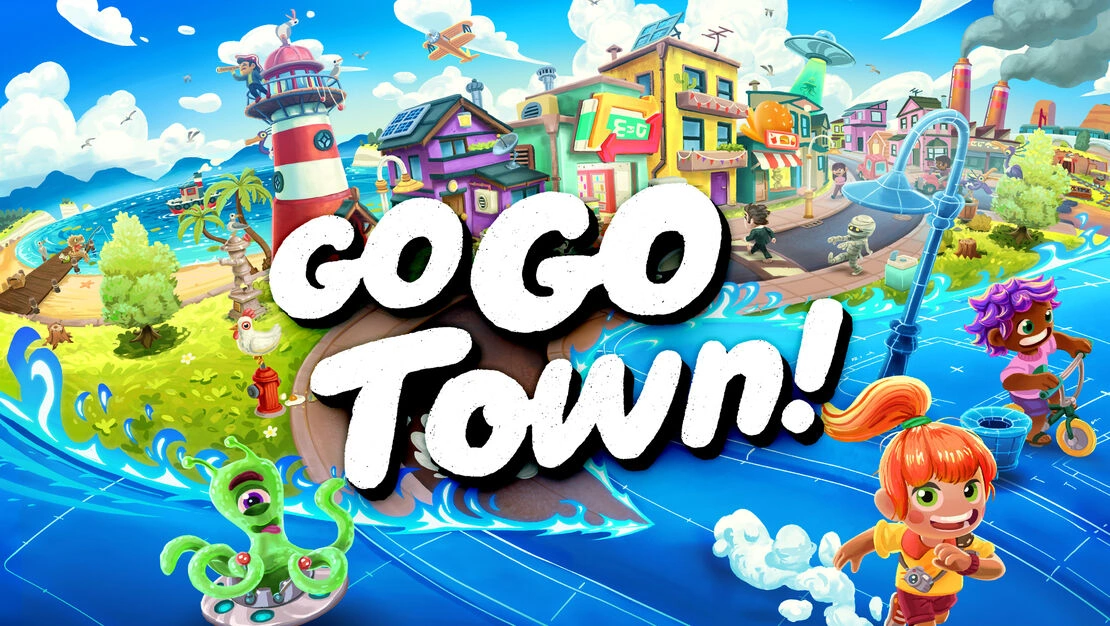

Catching 25 fish sounds like a harmless early assignment until the inventory fills, storage costs too much, and the food businesses that need those fish remain locked behind the next town rank. That small progression snag captures both sides of Go-Go Town!: it constantly gives the player something useful to do, yet it sometimes introduces a problem before granting the proper solution.
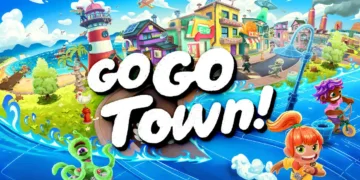
Prideful Sloth places the player in charge of an empty settlement after TownCo appoints them mayor with the enthusiasm of a corporation filling a vacancy nobody applied for. Story mode ties buildings, production machines, and services to milestones, while Create mode unlocks the complete catalogue immediately. Farming, fishing, forestry, and mining provide the raw materials. Tourists arrive by train. Coin and EGO, earned through sales and visitor satisfaction, fund the next stage of expansion.
From Empty Field to Tourist Machine
The basic loop shares Animal Crossing’s gathering habits, Two Point’s service management, and the cascading task pressure of Overcooked. Trees become timber, ore becomes construction material, crops feed restaurants, and stocked shops generate the money needed for another block of roads or attractions. Each town rank adds a machine, business, or amenity, so one completed task rarely feels isolated. A new noodle shop demands ingredients, workers, storage space, and a delivery route.
Tourists can become permanent Townies after the mayor satisfies requests such as building a bench, opening a certain store, or paying a fee. These residents turn manual labour into automation. They harvest resources, staff counters, move stock, and collect rubbish while the player expands elsewhere.
The system needs supervision, though. Storage bins can be locked to particular items, courier stations can prioritise selected businesses, and poorly arranged supply chains leave workers wandering while a nearby shop sits empty.
That friction separates Go-Go Town! from the gentler routine of Animal Crossing. Residents are workers first and personalities second. Robots, aliens, and crossover visitors add visual variety, but few Townies develop into characters worth seeking out. The town feels alive through movement rather than conversation: bikes cross busy streets, customers crowd food stalls, and goods bounce into storage with a cheerful pop.
The Mayor Never Clocks Out
Story mode struggles most during its early ranks. The short tutorial presents several systems quickly, then leaves the player to discover how delivery restrictions, worker assignments, and stock control actually connect. Unlocks may also arrive before the town can support them. Opening a shop is easy; supplying its required ingredients can demand another rank, a new resource zone, or an uncomfortably expensive machine.
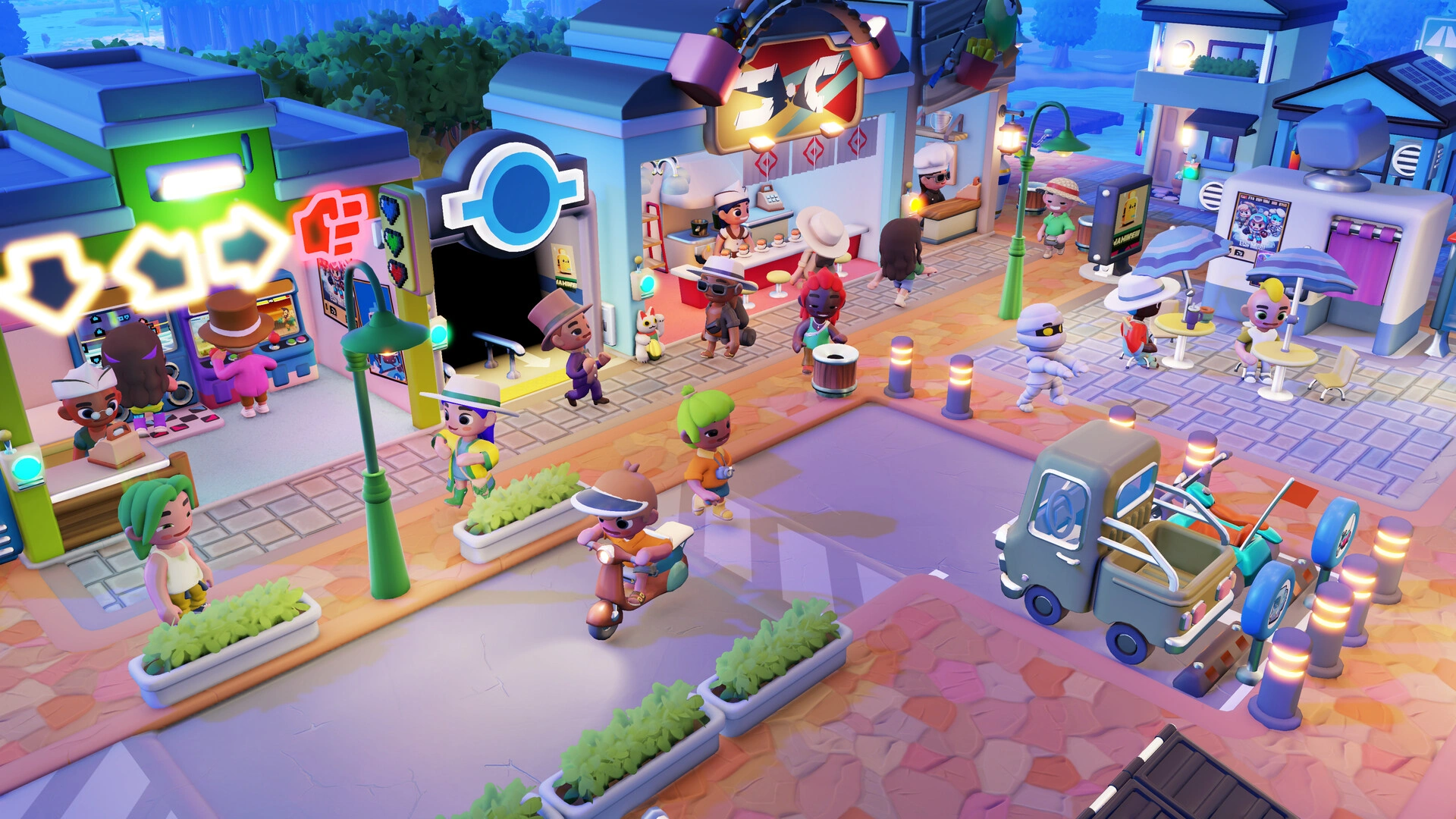
The structure becomes clearer once automation expands. Watching an empty field turn into a dense tourist destination is consistently satisfying, especially when maintenance crews and couriers begin handling jobs that once consumed every minute. Yet the core actions change very little across a long save. Resources are gathered, processed, transported, and sold. Later recipes involve extra stages, but the mayor is still feeding the same economic chain.
Town planning creates a sharper problem. A carefully arranged district can become obsolete when a larger building appears, forcing roads, shops, and decorations to be dragged into new positions. Restructuring is slower than construction, so progress can feel like punishment for planning too early.
A growing population adds litter, empty shelves, and Garbirds that swarm neglected rubbish. Closing the train station offers a smart release valve, stopping tourists long enough to repair the town without fresh bodies pouring onto the platform.
Co-op Chaos and Toy-Town Charm
Cooperative play fits this design better than it first appears. One player can gather ore while another stocks restaurants or redraws the road network. Local and online options support that division of labour, and the host can restrict a Vice-Mayor’s ability to spend money, construct buildings, or unlock upgrades. Parents can keep younger players away from the treasury; friends can grant equal authority and discover how quickly shared government becomes reckless.
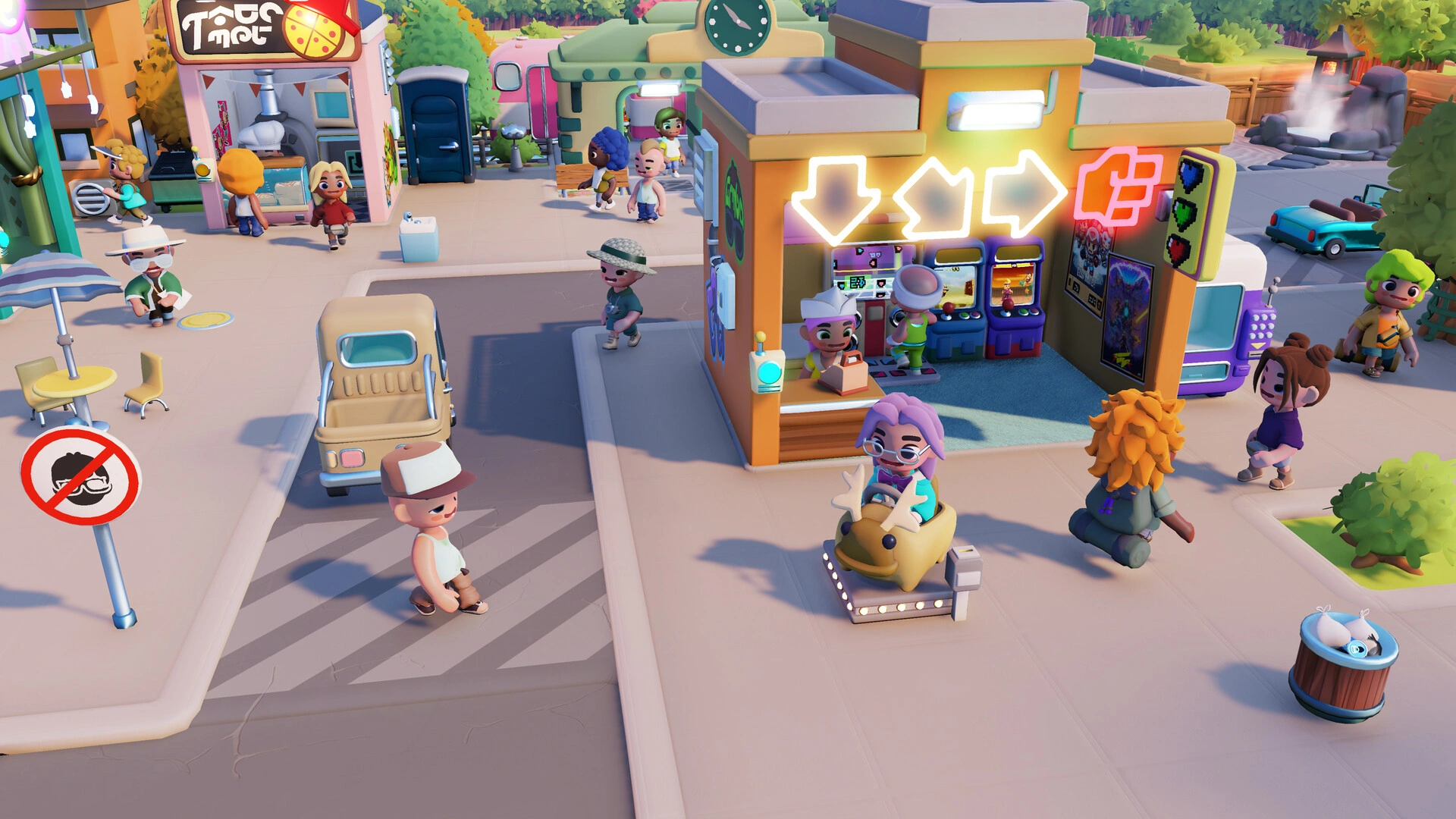
The sandbox contains plenty of distractions from town efficiency. Players can race vehicles through the desert, skateboard into pedestrians, collect rare treasures for the Town Hall, and decorate the mayor’s house. These activities give the game a looser rhythm than a traditional tycoon title. Cities: Skylines asks for long-term infrastructure planning. Go-Go Town! is happier when someone places a noodle shop beside a lake because the view looks nice.
Its bright bobblehead residents, bouncing objects, and fast dance tracks support that playful disorder. Performance remains steady considering the number of characters and assets moving through a developed town, with occasional frame-rate drops rather than persistent trouble.
The Switch version is less polished at the interface level: handheld text is small, building lacks touchscreen or Switch 2 mouse support, and multiplayer is limited to two players. Once two mayors start dividing chores, racing carts, and blaming each other for the overflowing bins, that smaller player count still produces plenty of municipal damage.
The Review
Go-Go Town!
Go-Go Town! borrows the daily routines of Animal Crossing, the expanding infrastructure of a city builder, and the task pressure of Overcooked, then gives each idea enough room to function. Story mode occasionally unlocks problems before their solutions, while repetitive production chains and slow district redesigns become tiring across longer sessions. Yet automation, flexible building tools, steady progression, and excellent co-op keep the municipal machine running. Its citizens may lack lasting personality, but watching an empty field become a crowded tourist trap remains dangerously satisfying.
PROS
- Addictive progression loop
- Flexible automation tools
- Satisfying town expansion
- Excellent local and online co-op
- Cheerful, responsive presentation
CONS
- Uneven Story mode unlocks
- Repetitive production cycles
- Laborious district redesigns
- Forgettable resident personalities
- Small handheld text