
























Anghya tells her husband that, after she dies, he and their son will be alone. She is already looking at the life beyond her own; Anghba seems unable to look past the village that has emptied around them. In Theja Rio’s Angh, their disagreement gives the quiet rooms and paths a terrible intimacy. Anghba can still keep the customs he inherited. He cannot make Amao feel the presence of the people who once kept them with him.
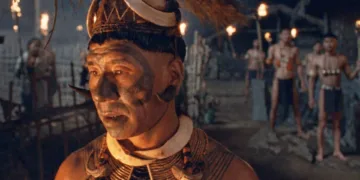
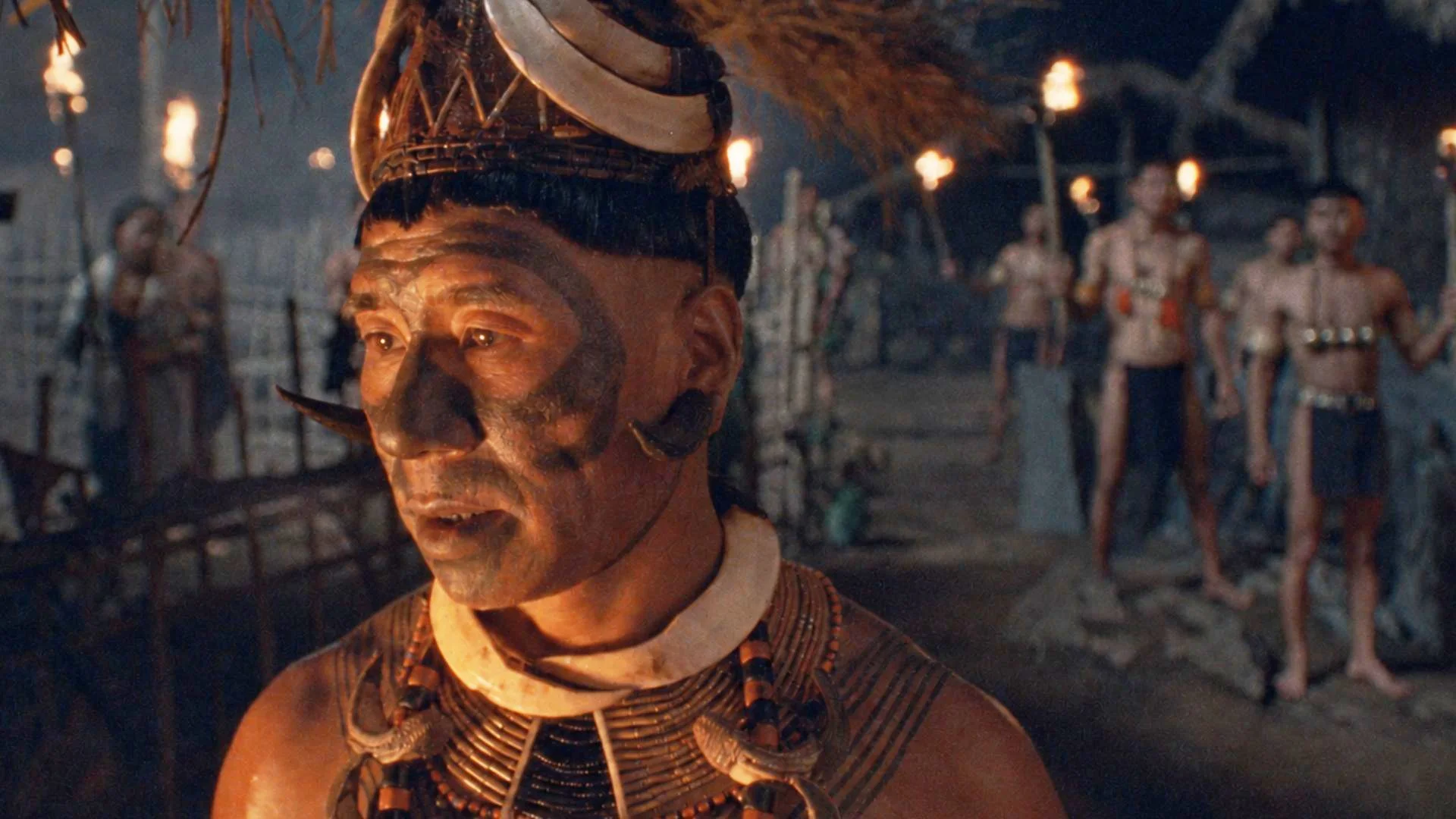
That distance grows while Anghya is alive. Former neighbours, now living in a nearby Baptist settlement, return and offer to take her for medical help. Anghba refuses. His decision has conviction behind it, though the film leaves us in the room with a sick woman and a son who cannot speak his objection. Anghlong Konyak plays the ageing chief with a stillness that can look like strength until someone he loves needs him to bend. Pride offers him a way to withstand the loss of his community. It gives Anghya and Amao little shelter from loss of their own.
The funeral rites bring the difference between father and son into painful focus. Anghba sacrifices the family dog to guide Anghya into the afterlife and preserves her skull according to custom. Rio does not hurry through the discomfort of these acts, or invite us to mistake a child’s distress for a judgment on the people who practiced them. Anghba is caring for his wife as he understands care. Amao has lost his mother and must watch his father carry out what duty requires. Sobino Rengma’s quiet, troubled presence makes the gap between those meanings almost unbearable. The boy is meant to inherit a belief that, at this moment, he can chiefly feel as grief.
Amao finds another sound across the water. Sitting beside a stream, he hears the Baptist congregation sing “Amazing Grace.” The hymn reaches him before any argument does, from a place where children gather and people appear glad to be together.
At the settlement there are different clothes, a radio, and the prospect of help his mother was denied. Rio gives these attractions enough room to register without asking us to forget the missionary’s power. Douglas Henshall’s priest presides over a change that comes dressed in generosity. Amao’s interest is no mystery: the life his father protects has grown very lonely.
A former villager, Hontieh, returns with a warning about the distance conversion has placed between him and his ancestors. His words matter, though Amao is too young and too wounded to receive them as Anghba might wish. One man knows what he has lost by leaving; the boy knows what he has lost by staying. Rio lets both experiences stand while the trees are cut for a road. Each absence of a trunk changes the forest Anghba has known, and the work continues beyond anything he can forbid inside his home.
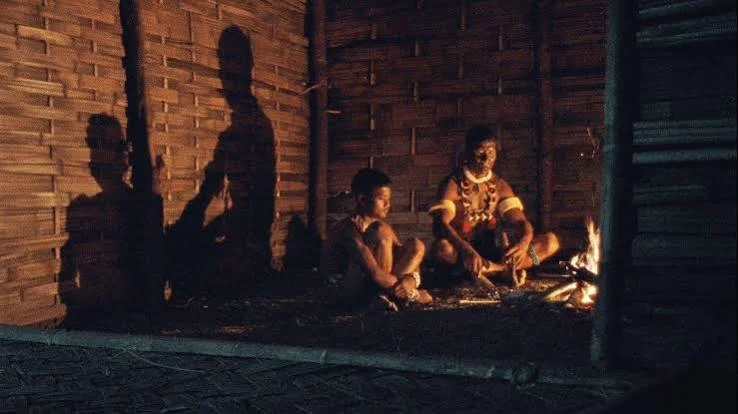
Adam Pietkiewicz’s 16mm photography gives the village a grain that makes its wood, earth, and empty spaces feel touchable. Rio holds to the slow pace of life there, trusting faces and distances to tell us what speech cannot. The close-ups of Amao carry feelings his father cannot hear, while the wider views leave Anghba surrounded by the place he is trying to save.
A dream of the village alive with communal celebration briefly fills those spaces with people again. The scene hurts because the film has spent so much time letting us inhabit them as they are now. It also shows what Anghba remembers when he insists on remaining, a fullness Amao has scarcely been able to know.
There are times when Rio’s restraint makes the missionary harder to examine than the damage unfolding in his wake. We see the appeal of the Baptist settlement and the changes reaching into the village, but the priest himself remains less sharply drawn than the father and son. The narrowness has a cost. It also keeps the film attentive to the place where conversion becomes irreversible for this family: the space between a father’s account of what must endure and a child’s growing need to live elsewhere.
The film grows darker as their closeness becomes harder to sustain. Anghba can hand Amao the rites, show him the land, and tell him to stay near; none of these can restore Anghya or the neighbours who left. Rio’s patience gives Anghba’s fear its full weight without making the boy responsible for carrying it. When Amao looks toward the other village, what he sees there includes things his father should have been able to give him: company, comfort, and a possible life after mourning.
Angh world-premiered at the Toronto International Film Festival on September 15, 2026, where it won the prestigious Platform Prize. Set in 1960s Nagaland, the Konyak-language drama follows a traditional village chief struggling to preserve his community’s identity upon the arrival of an American missionary.
Full Credits
Title: Angh
Distributor: Winter Hymns Films, Undercover Squirrel
Release date: September 15, 2026 (Toronto International Film Festival)
Running time: 1 hour 44 minutes (104 minutes)
Director: Theja Rio
Writers: Theja Rio, James Davies
Producers and Executive Producers: Nancy Nisa Beso
Cast: Anghlong Konyak, Douglas Henshall, Amah Konyak, Genpai Konyak, Sobino Rengma, Wangton Konyak
Director of Photography (Cinematographer): Adam Pietkiewicz
Editors: Jai Vir Rodgers
Composer: Sagar Desai
The Review
Angh
Angh feels the disappearance of a community through the distance growing between a father and son. Theja Rio’s patient images and restrained performances give Anghba’s devotion its dignity while allowing Amao’s need for another life to remain painfully clear. The missionary is less fully drawn than the family he affects, but the film’s attention to grief and inheritance lingers long after its silences end.
PROS
- Father and son’s conflict carries the film’s cultural questions
- Restrained, affecting performances
- Tactile 16mm photography and evocative use of sound
- Funeral rites handled with care
CONS
- The missionary remains thinly drawn
- The forces behind conversion receive limited scrutiny