


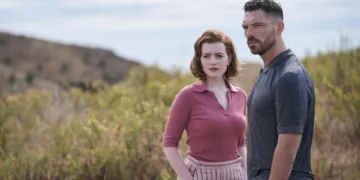













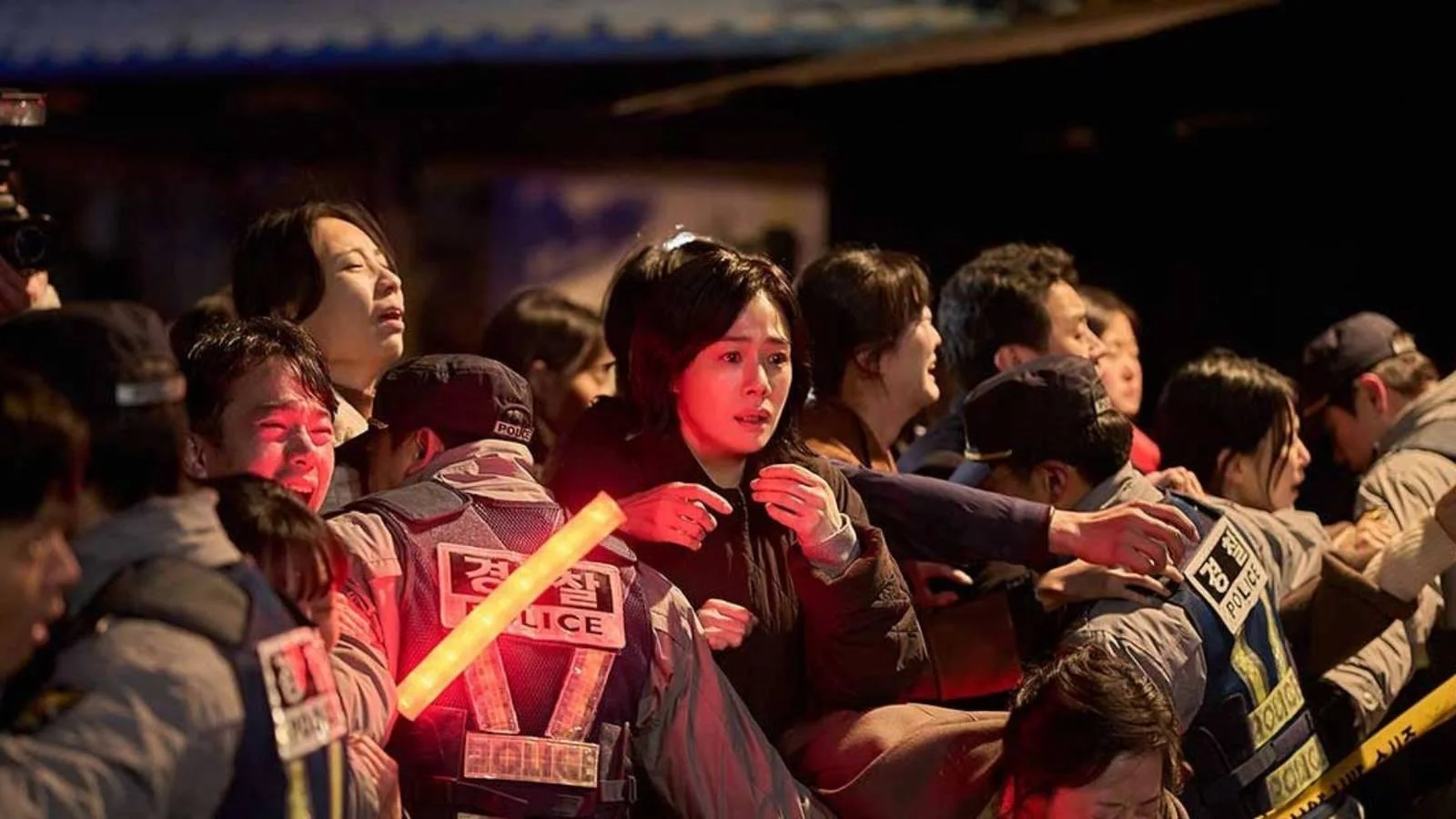

The police have a DNA match. The young man they bring to Ryu So-young is her missing son, Sun-woo, now grown. Yet the child she knows is still waiting at home, ready for breakfast whenever she puts on her glasses. Kim Hyun-joo lets that impossible overlap register before So-young can explain it to anyone else. She looks at the person in front of her and cannot make nine years disappear simply because he has returned.
Bae Hyeon-seong plays the adult Sun-woo as guarded enough to make the reunion uneasy, but his distance has another effect: it exposes how little room So-young has left for a son who can surprise her. The virtual child still speaks to her with the familiarity of their daily routine. The young man has lived through years she cannot account for. Yeon Sang-ho’s Paradise Lost is most affecting when it allows both of those relationships to exist at once, leaving us to feel how frightening a reunion can be for the person who was supposed to want it most.
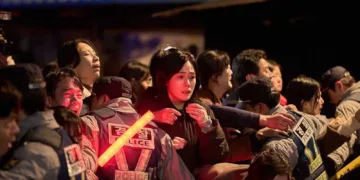
The film earns that discomfort through the way it establishes So-young’s loss. Her son disappears with other children on a school camping trip, and news reports and security footage turn the search into a public spectacle. The suspected site in a mine cannot give her an answer.
Transhuman then offers the parents access to recreations of their children through glasses and a program called Children of Paradise. The company’s presentation uses tearful testimonials and melancholy music to make its offer sound gentle. It is easy to see the appeal before considering what a company might gain from parents who keep coming back.
Nine years later, So-young is still coming back. She eats across from a Sun-woo who remains a child, while other parents have gradually stopped visiting their digital children. That difference matters. The film does not need to declare her attachment unhealthy for us to notice how much of her day is organized around maintaining it.
When the virtual Sun-woo cries and begs her not to leave him, his apparent distress reaches her through the same habits of care she has practiced for years. His feelings may be generated by software; hers plainly are not. The scene works because it gives So-young an emotional obligation without resolving what, if anything, the child himself experiences.
Just before Sun-woo returns, the planned redevelopment of the mine pushes So-young toward another kind of ending. Her boss gives her a key so she can visit the place and say goodbye. Kim plays the prospect of letting go as something So-young must physically gather herself to do. Then the police call. The timing makes the reunion crueler than a simple reversal of tragedy: she has barely begun to imagine life without the child she lost when she is asked to welcome someone who no longer resembles him.
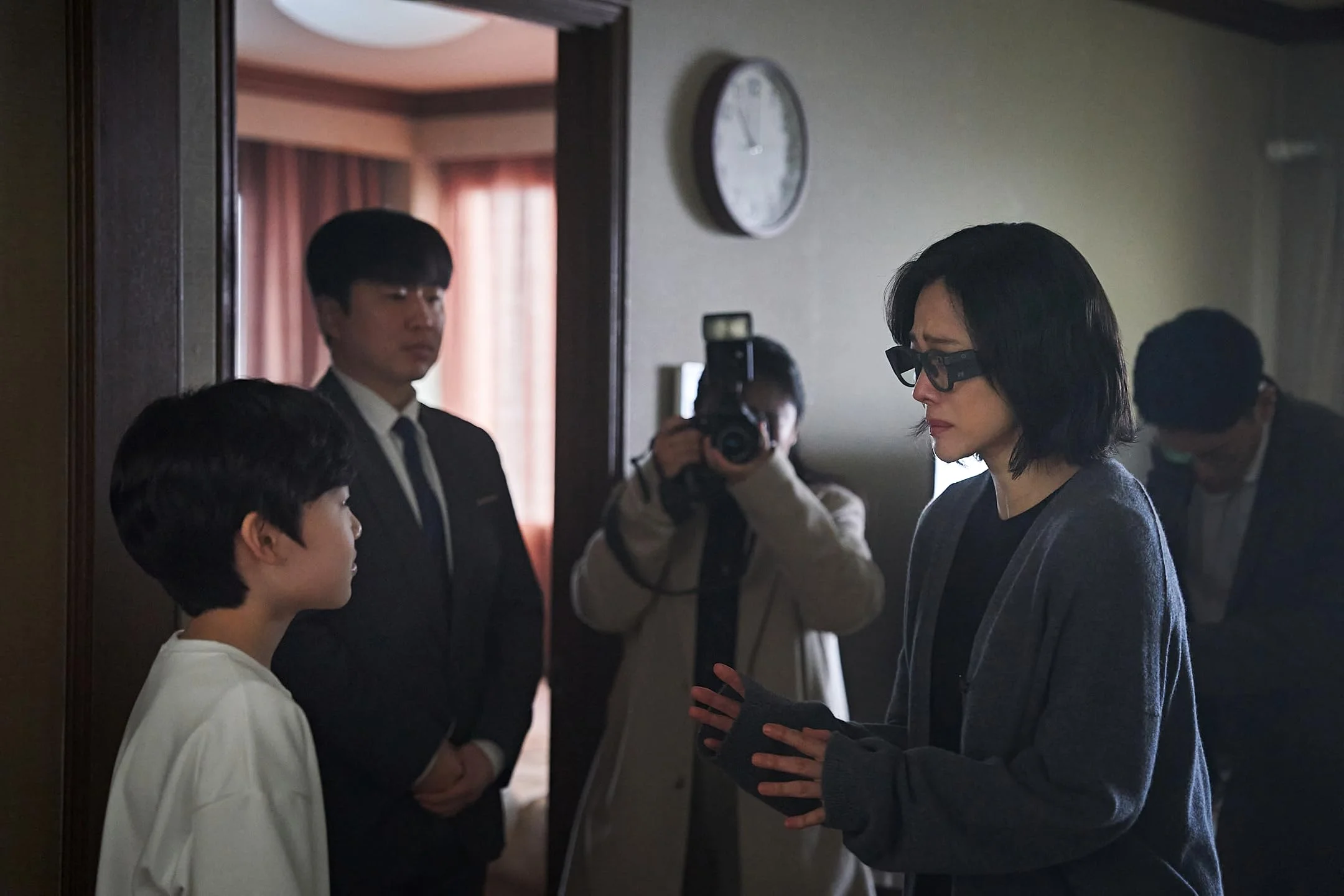
Yeon knows how to make the adult Sun-woo’s presence disturb an ordinary room. He is quiet and difficult to read; the virtual child is expressive, available, and fixed at an age So-young understands. At one point, the film presents the digital Sun-woo in soft light while the young man is steeped in shadow. The image communicates her discomfort quickly, perhaps too quickly. The longer she looks at the grown son as a possible threat, the less the film asks what it would feel like for him to come home and find that his place has been occupied by a version of himself who never changed.
That imbalance grows as the mystery takes over. Sun-woo keeps secrets, a local boy goes missing, and a reporter’s investigation brings danger and violence into the story. The shift generates suspense. It also changes the job the audience is doing. Instead of trying to understand how So-young might care for two irreconcilable versions of her son, we are pushed to watch the adult one for signs of what he might do next. Bae’s guarded performance suits that turn, though the film gives his volatility more room than the pain of being met with suspicion by his mother.
Kim keeps some of the earlier unease alive. Her scenes with the virtual child have the ease of a familiar ritual, while those with the returned Sun-woo demand attention to every pause and reaction. So-young’s preference for the easier relationship can be hard to defend, but Kim makes it understandable as a behavior learned over nine years, rather than a decision made upon seeing him again. The thriller is strongest when its revelations press on that behavior. As the violence escalates, the contrast between the two sons becomes starker, and some of the uncertainty that made their first encounters so painful falls away.
The closing visit to Transhuman reaches for tenderness after that darker turn. It cannot quite restore the difficult balance the film found at So-young’s breakfast table, where comfort, dependence, and love were hard to separate. Kim’s performance leaves a deeper impression than the answers the mystery supplies. Even after the police identify Sun-woo, So-young must learn who is sitting across from her now, and what she has been asking the child in the glasses to remain.
Paradise Lost world-premiered at the Toronto International Film Festival in September 2026. The South Korean psychological tech-thriller follows a grieving mother who must choose between her real, mysteriously returned son and the artificial intelligence simulation that sustained her for nine years.
Where to Watch Paradise Lost (2026) Online
Full Credits
Title: Paradise Lost
Distributor: Well Go USA Entertainment, CJ Entertainment
Release date: September 2026 (Toronto International Film Festival) / October 21, 2026 (South Korea)
Running time: 1 hour 41 minutes (101 minutes)
Director: Yeon Sang-ho
Writers: Yeon Sang-ho, Oh Sung-eun
Producers and Executive Producers: Byun Seung-min
Cast: Kim Hyun-joo, Bae Hyun-sung
The Review
Paradise Lost
Paradise Lost makes So-young’s attachment to a virtual child painfully understandable. Kim Hyun-joo gives the reunion its emotional weight, and the daily breakfast ritual makes the technology’s comfort feel real. As the mystery grows violent, the film spends less time with the difficult relationship between mother and returned son. Its answers are less affecting than the uncertainty it first creates.
PROS
- Kim Hyun-joo’s affecting performance
- An unsettling, credible daily ritual
- A reunion charged with emotional uncertainty
CONS
- Violence narrows the central dilemma
- The adult Sun-woo receives less emotional room
- The closing tenderness feels insufficiently earned