
























The delegates at the 1976 Progressive Conservative leadership convention look unimpressed by Brian Mulroney’s arrival. Matthew Rankin adds snoring to the footage. It’s an easy joke to understand, and a useful one to think about: the sound tells us what the room feels like even though it cannot tell us what anyone there heard. For a moment, an archival image becomes a scene with a director’s opinion attached.
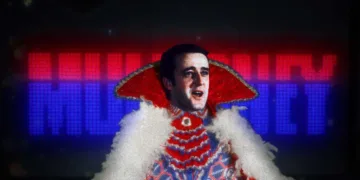
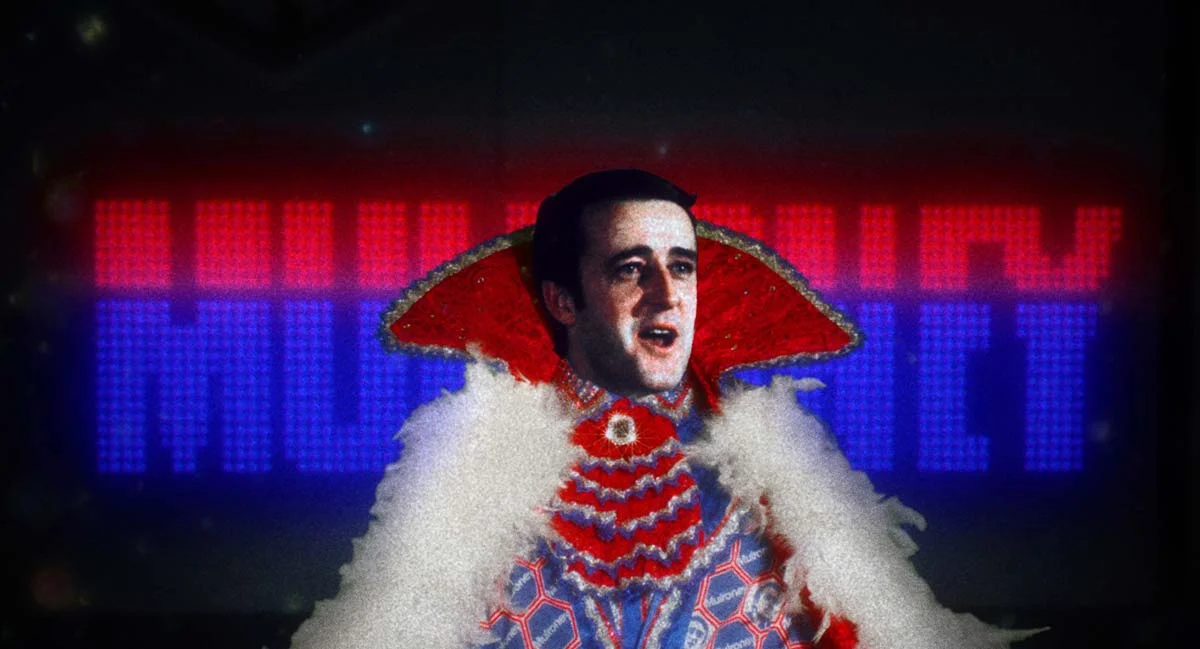
Rankin keeps inviting that kind of second look. He gives Mulroney a flamboyant animated entrance, complete with a cape and a racing car, then returns us to the people the candidate needed to persuade. The invented spectacle makes Mulroney look ready for television; the delegates remain stubbornly in their seats. I laughed at the mismatch, then found myself paying closer attention to the film’s real footage. Rankin has made the act of looking at an old political broadcast feel a little less automatic.
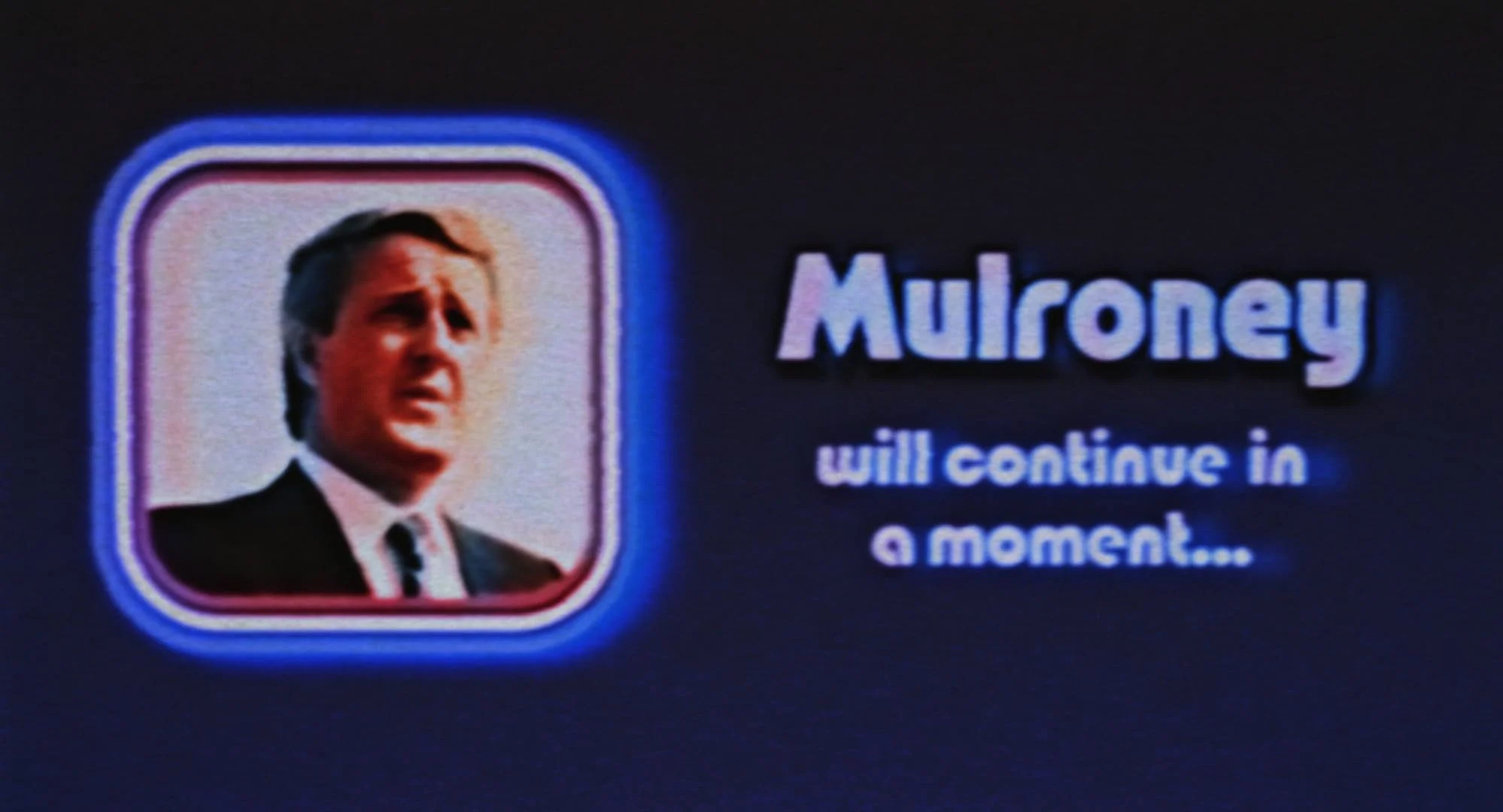
Ladies and Gentlemen, Brian Mulroney follows its future prime minister from that failed 1976 leadership bid to his election victory in 1984. Rankin builds the story from archival footage, fabricated graphics, animation, staged passages, and sounds laid over old recordings.
His editing often moves by association, placing images together for the impression they create as much as for the next event in the timeline. Politicians appear in colorful introductions fit for a television variety show. The device helps a crowded cast of party figures register quickly, while suggesting how easily a public career can become a collection of familiar poses.
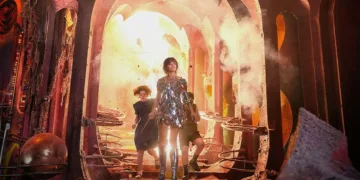
The invented Diefenbaker museum takes the film’s curiosity about political images somewhere stranger. Its exhibits include a partially eaten sandwich and a hall of preserved Conservative brains, with former prime minister John Diefenbaker’s treated like a relic.
Mulroney seeks guidance there, and the sequence lets the party’s reverence for its past look both ridiculous and understandable. A candidate hoping to lead it would want to inherit something from that history. Rankin makes us see how odd the inheritance looks when it has display cases.
Mulroney, though, spends a surprising amount of his own film waiting for Joe Clark’s story to play out. Clark wins the leadership, heads a brief government, and falls before Mulroney gets his chance. That route gives Mulroney’s ascent a political cause; he cannot simply stride into office on the strength of his smile. Rankin cuts back to him observing Clark, inviting us to read calculation in his silence. Those glimpses cannot always make him as interesting as the turbulent party around him, and the documentary occasionally leaves its title subject at the edge of the action.
Rankin’s quick jokes are less dependable when the viewer needs a foothold. His repeated cuts that stop New Democratic Party leader Ed Broadbent mid-speech have a crisp comic rhythm. They also take away another voice just as the film’s rush of names and party maneuvers becomes difficult to sort. Rankin can make a stretch of parliamentary footage lively through timing alone, but the timing does not always supply the political stakes. Viewers who already know the period will catch connections that the film leaves the rest of us to assemble.
That difficulty seems bound up with Rankin’s chosen form. He is most interested in the years when Mulroney learned to command attention, so the film ends with his victory rather than following what he did with power. We can study the costume, the broadcast, the rival’s stumble, and the cut that turns them into a story. I wanted a clearer sense of the governing decisions waiting beyond that final triumph. Rankin’s film leaves us at the point where its dazzling account of how a politician became a national figure would have to meet the consequences of his success.
Ladies and Gentlemen, Brian Mulroney world-premiered at the Toronto International Film Festival on September 15, 2026. The gonzo documentary feature utilizes archival media clips and a collage format to deliver a surreal fever dream chronicling the political rise of Canada’s eighteenth prime minister.
Full Credits
Title: Ladies and Gentlemen, Brian Mulroney
Distributor: National Film Board of Canada
Release date: September 15, 2026 (Toronto International Film Festival)
Rating: PG
Running time: 1 hour 45 minutes (105 minutes)
Director: Matthew Rankin
Writers: Matthew Rankin
Producers and Executive Producers: Pierre-Mathieu Fortin, Nathalie Cloutier
Cast: Brian Mulroney, Pierre Elliott Trudeau, Robert Stanfield, John Turner, John Diefenbaker, Joe Clark
Director of Photography (Cinematographer): Alexandre Lampron
Editors: Matthew Rankin
Composer: Christophe Lamarche-Ledoux
The Review
Ladies and Gentlemen, Brian Mulroney
Matthew Rankin makes Canadian political history funny and surprisingly alert to the way television shapes a candidate’s image. His invented sounds and images make the archival footage worth watching twice. The crowded political timeline sometimes leaves newcomers behind, and the film stops just as Mulroney gains the power it has spent so long examining. I admired the ingenuity even when I wanted a fuller account of its subject.
PROS
- Inventive use of archival footage
- Jokes that reveal how political images work
- Memorable Diefenbaker museum sequence
CONS
- Mulroney sometimes recedes behind Joe Clark
- Dense political references can be hard to follow
- Ends before examining Mulroney’s government