















![Kingdom Hearts Collection [I-III] Review](https://gazettely.com/wp-content/uploads/2026/10/Kingdom-Hearts-Collection-I-III-1-360x180.webp "Kingdom Hearts Collection [I-III] Review: KHII Holds Steady as Newer Entries Fluctuate 37")



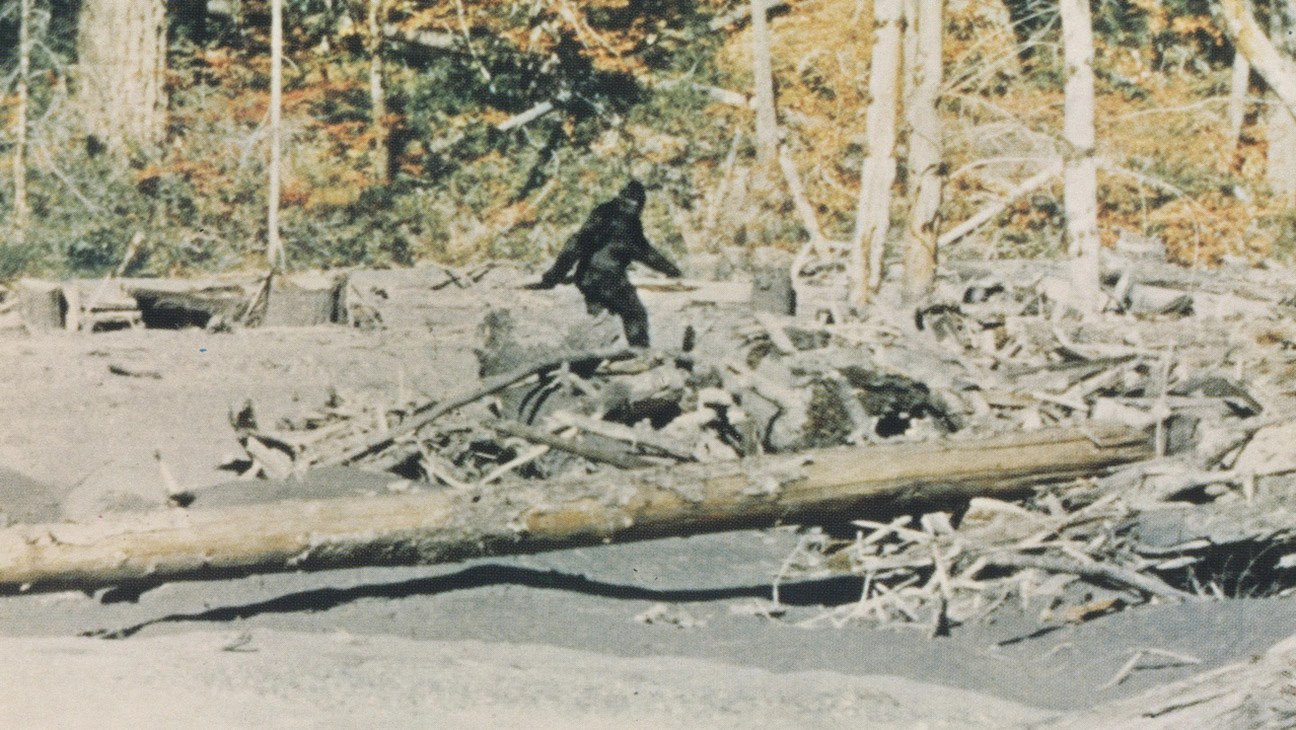

American folklore rarely arrives with a copyright dispute attached. The Patterson-Gimlin film did. Shot in Northern California in 1967, its grainy 59 seconds show a large, humanlike figure crossing a sandbar, glancing toward the camera, and disappearing into the trees. That brief movement created a durable piece of national mythology, one sustained by cryptozoologists, television producers, convention organizers, museum curators, and families arguing over ownership.
Marq Evans’ Capturing Bigfoot treats those images less like scientific evidence than a cultural artifact with a long, unruly afterlife. Rather than assembling an endless tribunal of specialists to inspect every stride, Evans returns to Yakima, Washington, and the aging cowboys who made, promoted, defended, or denounced the footage.
Roger Patterson’s son Clint provides the film with its emotional direction. He grew up worshipping a father who took him on Sasquatch expeditions, then spent adulthood reckoning with Roger’s lies, debts, ambitions, and premature death. Clint wants an answer about the footage, yet his deeper pursuit concerns the man behind the camera.
The Business of Belief
Roger Patterson understood that a myth needs distribution. A former rodeo rider with little affection for regular employment, he self-published Do Abominable Snowmen of America Really Exist?, transformed a Volkswagen van to carry horses, and began filming his search for Sasquatch. His choice to dress Bob Gimlin in an “Apache” costume for an early documentary project speaks to a particularly American form of myth production, where frontier imagery, performance, and commerce occupy the same frame.

Once Patterson returned with his famous footage, he toured it through theaters and auditoriums. Audiences paid to see something they could not replay at home. The arrangement resembles the itinerant exhibition traditions that carried exploitation films, regional curiosities, and ethnographic spectacles across the United States. The Bigfoot clip became a traveling attraction before it became endlessly reproducible media.
Money altered every relationship surrounding it. Patterson died from Hodgkin’s lymphoma before reaching 40, leaving his family with grief and unresolved business arrangements. His brother-in-law Al DeAtley handled the film’s commercial life and became the person who profited from it. Drone footage of DeAtley’s immense house turns wealth into an architectural punchline, particularly after a relative recalls his guiding philosophy toward workers.
Roger’s widow calls the footage a curse. Her phrasing punctures the romantic image of amateur adventurers returning from the wilderness with a miracle. What entered popular culture as proof of an undiscovered creature became, within the Patterson family, a source of resentment, financial imbalance, and fractured inheritance.
Everybody Has a Version
Evans delays the major revelation long enough for the people involved to acquire emotional weight. The early stretch moves patiently through family history, old television appearances, local rivalries, and the developing Bigfoot industry. Viewers hoping for an immediate forensic takedown may find the pace slow. The delay becomes necessary once the documentary begins testing each account.
Bob Gimlin remains certain that the creature was real. His quiet charisma helps explain why convention audiences still treat him as a living connection to the event. Bob Heironimus, once his friend and neighbor, claims he wore the suit. The dispute between them has the texture of a frontier feud conducted through documentaries, books, and public appearances, with each man preserving a different history of the same day.
Author Greg Long widened the conflict through his 2004 book The Making of Bigfoot. Evans uses recordings from Long’s interviews, allowing the dead and absent to enter the film through their own voices. Long’s critics accused him of attacking people who could no longer defend themselves. His work raises an awkward question about folklore: once a private life becomes evidence within a public myth, who retains the right to keep it private?
The believers receive serious attention. Anatomist Jeff Meldrum sees mammalian musculature in the figure’s movement. Makeup and visual-effects specialist Bill Munns argues that 1967 costume technology could not easily produce what appears on screen. Evans does not mock these claims or grant them automatic authority. He lets technical expertise collide with testimony from men who say the event was staged.
Newly uncovered material then applies pressure to every version. The details should be encountered within the documentary, since their force depends on watching the participants absorb them. Meldrum’s discomfort is especially revealing. His response shows a knowledgeable person trying to reconcile fresh evidence with decades of intellectual investment.
What Survives the Answer
The documentary draws a firm line between questioning the Patterson-Gimlin film and dismissing Sasquatch itself. That distinction protects the people who built lives around the search while still allowing Evans to examine the footage without sentimentality.
Larry Lund, the self-described Sasquatch Sleuth, has searched for the creature for six decades. Archival material presents René Dahinden as funny, forceful, and consumed by the hunt, which cost him time with his family. Gimlin, now in his 90s, appears at conventions as a cherished figure. The gathering where Clint and Heironimus attempt to approach him exposes how a supposed investigation of wildlife became a public ritual involving loyalty, betrayal, and celebrity.
Other cultures often place legendary creatures safely in the distant past, protected by oral tradition or sacred geography. The Patterson-Gimlin myth belongs to the age of cameras, ticket sales, television syndication, branded conventions, and competing intellectual-property claims. Its modernity does not weaken it. Modernity gave it circulation.
Clint’s presence prevents this from becoming a clever exercise in debunking. He remembers riding with Roger, sitting beside him during illness, and losing him at 12. Admitting that his father lied does not erase the love or settle the grief. Evans understands that proof can change the historical record while leaving emotional history untouched. The creature may walk out of the frame, but the boy watching his father never does.
Capturing Bigfoot premiered at the South by Southwest Film Festival on March 12, 2026, and is distributed via festival circuits and independent platforms. The documentary examines new evidence surrounding the famous 1967 Patterson-Gimlin film, utilizing newly discovered footage to re-evaluate the enduring cryptid mystery.
Full Credits
Title: Capturing Bigfoot
Distributor: XYZ Films
Release date: March 12, 2026
Running time: 103 minutes
Director: Marq Evans
Writers: Marq Evans, Michelle M. Witten
Producers and Executive Producers: Tamir Ardon, Marq Evans, Nick Spicer, Nate Bolotin, Douglas Hamm, Aram Tertzakian
Cast: Teresa Brooks, Sandy Collier, Bob Gimlin, Clint Patterson
Director of Photography (Cinematographer): Jason Roark
Composer: Jonathan Sadoff
The Review
Capturing Bigfoot
Capturing Bigfoot turns 59 seconds of disputed film into a distinctly American archive of cowboy folklore, private enterprise, wounded friendship, and inherited grief. Marq Evans gives the authenticity debate real force through Bob Gimlin’s certainty, Bob Heironimus’ confession, Greg Long’s recordings, and Jeff Meldrum’s visible discomfort. Yet Clint Patterson carries the documentary, confronting the father he adored through the damage Roger left behind. The opening stretch requires patience, but the late evidence earns its weight because Evans first establishes what every answer might cost.
PROS
- Clint Patterson’s emotional candor
- Patient, human-centered structure
- Strong archival interview material
- Fair handling of conflicting testimony
- Late evidence lands with force
CONS
- Deliberate first-act pacing
- Some peripheral figures receive limited depth
- Revelations may surprise skeptics less