
























![Kingdom Hearts Collection [I-III] Review](https://gazettely.com/wp-content/uploads/2026/10/Kingdom-Hearts-Collection-I-III-1-360x180.webp "Kingdom Hearts Collection [I-III] Review: KHII Holds Steady as Newer Entries Fluctuate 37")



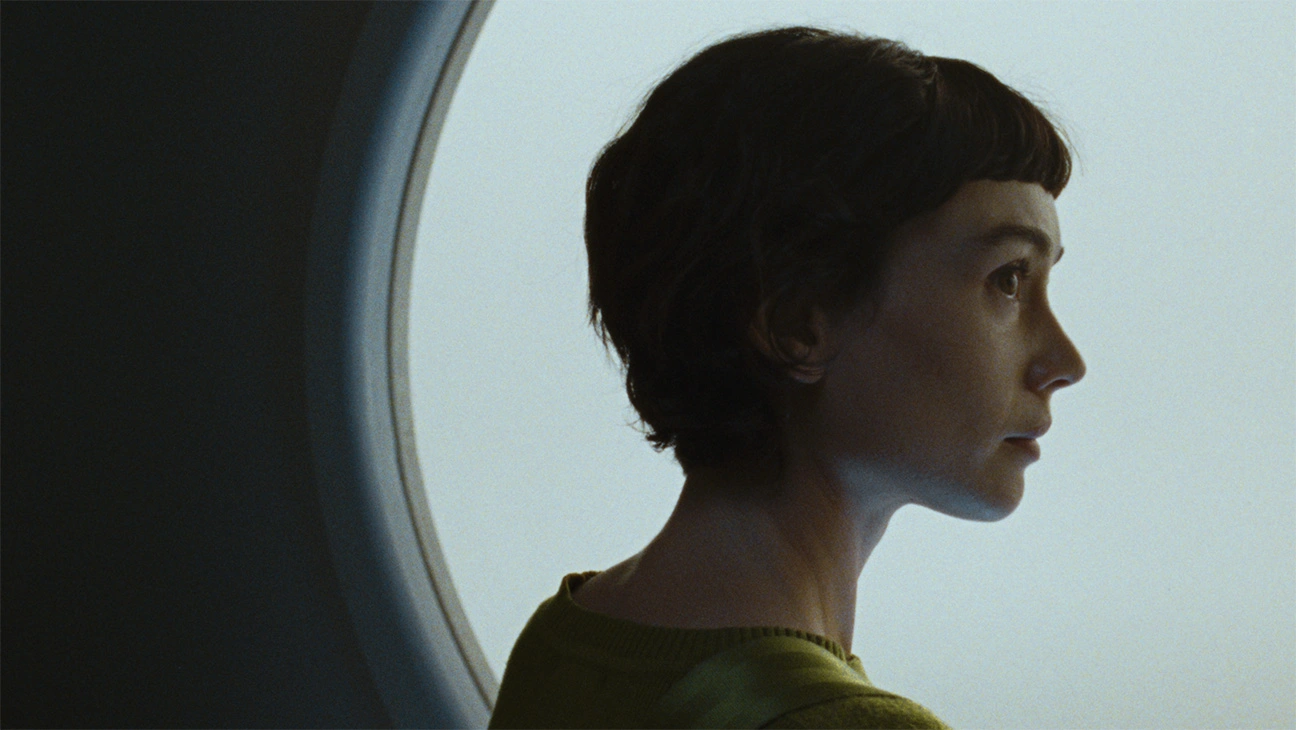

The funniest thing about digital immortality may be how quickly it sends people searching for very old-fashioned absolution. Brian Tetsuro Ivie’s Anima imagines a near future where consciousness can apparently be preserved in the cloud, yet its dying millionaire has little interest in demonstrating the technology. Paul wants a car, a few detours, and some people he should have spoken to years ago. Civilization develops artificial eternity; a man still needs to apologize to his son.
Sydney Chandler plays Beck, an emotionally barricaded engineer recently fired from a company producing robotic pets. Anima Technologies hires her to escort Paul, played by Takehiro Hira, to an appointment where his consciousness will be transferred before his death. Beck needs the money. Paul needs transportation. Neither appears particularly interested in companionship.
The setup threatens a familiar road-movie equation, but Ivie treats science fiction less as subject than provocation. His real question concerns what happens when technology promises infinite time to people who have misused the finite amount already available.
Detours Before Death
Paul immediately complicates Beck’s assignment by insisting on travelling in his vintage Nissan and making several stops. His profession makes the contradiction better: this wealthy customer of digital immortality built his fortune manufacturing buttons, small physical objects whose usefulness barely registers until one goes missing.
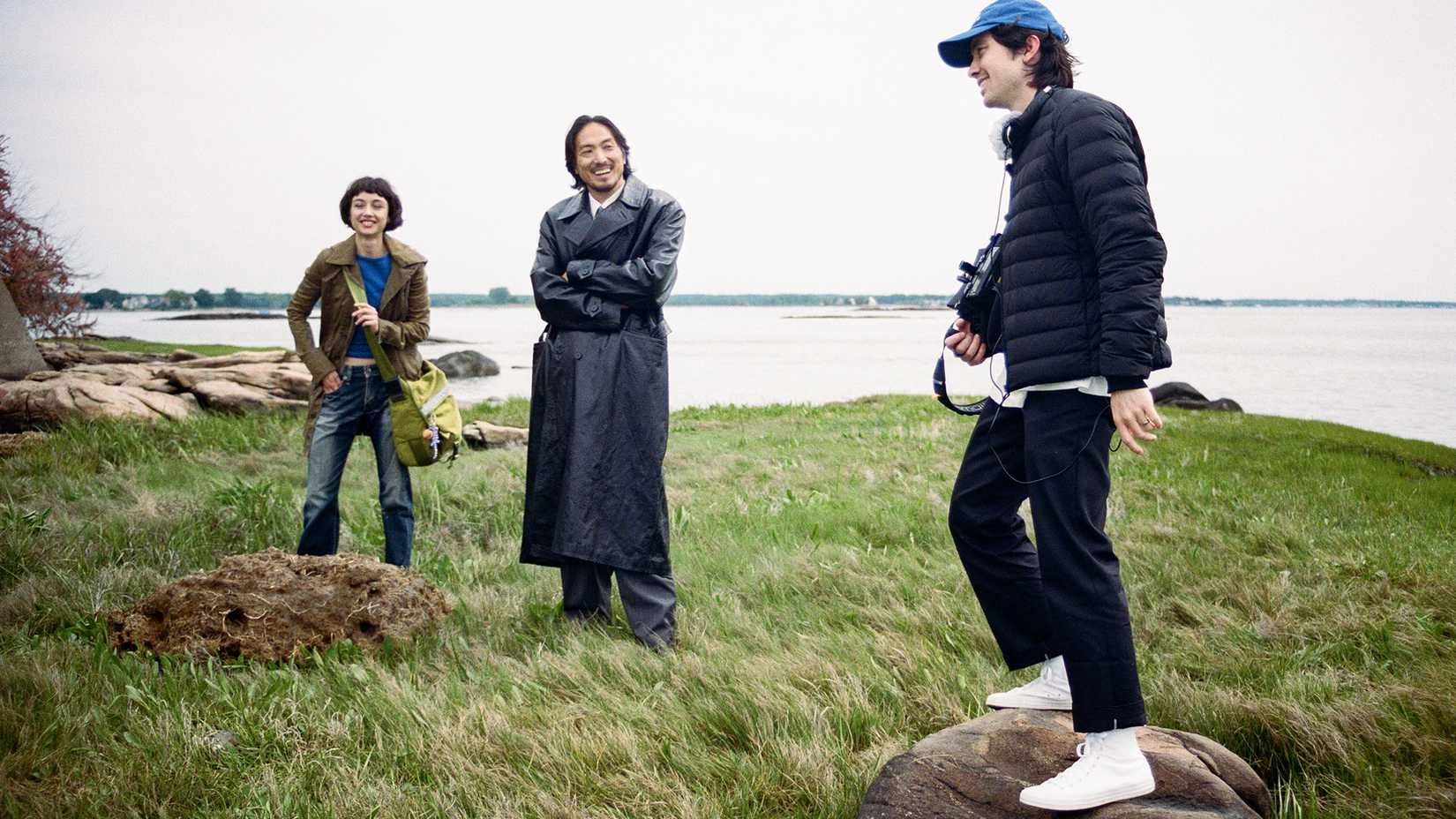
Call it the button principle. Absence creates value retroactively. At first, Paul’s excursions can seem frustratingly opaque. A visit to a former employee, played with cheerful eccentricity by Tom McCarthy, gives Beck another piece of Paul without explaining why she should care yet. His money remains his preferred conversational tool. When Beck objects, he offers payment. When she hesitates, he offers more. Wealth has apparently trained him to regard resistance as an accounting problem.
Then Ryan enters the picture. Paul has a teenage son he has never met, and his attempts to locate him transform those earlier detours from eccentric errands into something sadder. Ryan, played with careful vulnerability by Maximilian Lee Piazza, works around synthetic pets, another quiet joke in a film fascinated by artificial substitutes for living relationships.
His mother Julia, played by Lili Taylor, meets Paul’s arrival with the anger of someone who had to construct a life around his disappearance. The screenplay refuses to turn Paul’s terminal illness into moral amnesty. Death makes his regret urgent. It does not make him right.
Songs for Absent Fathers
Beck has been watching Paul’s failures while carrying a parallel wound of her own. Her late father was a touring musician whose devotion to music left his daughter with an uneasy inheritance: she loves what consumed him and resents what it cost. This symmetry could have become screenwriting geometry, two damaged parent-child relationships neatly aligned for therapeutic purposes. For a while, I feared exactly that. Then Chandler and Hira begin resisting the tidiness.
Chandler rarely announces Beck’s movement toward Paul. Watch instead how her impatience softens during their conversations, how listening gradually replaces the professional detachment she was instructed to maintain. Hira works in the opposite direction. Paul begins as a man accustomed to command, yet his body and circumstances keep stripping authority away. His anxious stare often tells us how frightened he is several beats before the dialogue admits it.
Music becomes the language both characters find easier than confession. Paul initially rejects the radio, making the later soundtrack feel unusually consequential. References to Morphine, Sparklehorse, Japanese folk-rock and Beck’s abandoned musical life establish a past that keeps leaking into this supposed future.
The use of Morphine’s “In Spite of Me” is especially sharp. The song enters where straightforward dialogue would probably cheapen the scene, letting Beck and Paul recognize their respective family damage without translating every feeling into screenplay-approved disclosure.
There is still a certain emotional engineering happening here. The film knows exactly which scar on one character corresponds to which scar on the other. Somehow, the performances keep the machinery from showing too loudly.
The Immortality Business
Ivie’s future barely looks futuristic, which initially seems like a budgetary limitation and gradually feels like the correct philosophical choice. Matheus Bastos photographs wooded roads, record stores, garages, motel rooms and Paul’s old Nissan with more curiosity than Anima’s technology receives.
Anima Technologies itself occupies cool, geometric spaces that suggest a corporation has finally discovered how to monetize the afterlife while retaining tasteful interior design. Marin Ireland’s executive delivers company doctrine with polished emotional vacancy. Beck’s mother Jo, played by Maria Dizzia, calls them “death capitalists.” Hard to improve on that branding.
The technology remains frustratingly underexplained. What constitutes the preserved person? Is this continuity of consciousness, a copy, an elaborate simulation, or corporate language covering metaphysical uncertainty? The film largely refuses the questions.
I went back and forth on that refusal. A richer conception of Anima’s system could have sharpened its ethical stakes. Yet explaining the cloud too thoroughly might have turned the film toward the least interesting mystery available. Paul does not really fear technical failure. He fears having reached death with unresolved evidence of having lived badly.
That distinction gives the physical world unusual importance. Buttons, records, cars, music, real birds against artificial ones, a teenager standing in front of the father who abandoned him. Anima keeps placing tangible things beside promised digital permanence until immortality begins to look strangely weightless. Paul can purchase a version of forever. What he cannot purchase is the missing time before it. The future, it turns out, has solved death before solving regret. Typical.
Anima premiered at the SXSW Film Festival on March 12, 2026. The science fiction road comedy follows a young woman and an old man as they embark on a journey to preserve his consciousness at an experimental facility.
Where to Watch Anima (2026) Online
Full Credits
Title: Anima
Release date: March 12, 2026
Running time: 90 minutes
Director: Brian Tetsuro Ivie
Writers: Brian Tetsuro Ivie, Brev Moss
Producers and Executive Producers: Harrison Allen, Brian Tetsuro Ivie, Chloe Rahal, Alexander Lycette, Jason Pamer, Brev Moss
Cast: Sydney Chandler, Takehiro Hira, Marin Ireland, Lili Taylor, Maria Dizzia, Tom McCarthy, Emil Wakim, Maximilian Lee Piazza
Director of Photography (Cinematographer): Matheus Bastos
Editors: Brian Tetsuro Ivie, Sam Kuhn
Composer: Montell Fish
The Review
Anima
Anima treats digital immortality as a very expensive way of discovering an embarrassingly ancient problem: people tend to appreciate one another shortly after time has become scarce. Brian Tetsuro Ivie leaves the technology deliberately vague, which occasionally makes Anima Technologies feel closer to a metaphor delivery service than a functioning corporation. Yet the road trip gains force once Paul searches for Ryan and Beck recognizes her own damaged relationship with fatherhood in his regret. Sydney Chandler and Takehiro Hira keep every emotional turn restrained, while music carries what neither character can comfortably say. Death remains inevitable. Presence, apparently, requires practice.
PROS
- Chandler and Hira’s restrained chemistry
- Hira’s quietly devastating performance
- Excellent use of music
- Strong father-child parallels
- Tactile near-future production design
CONS
- Emotionally distant early stretch
- Underexplored consciousness technology
- Some initial detours lack dramatic weight







