




























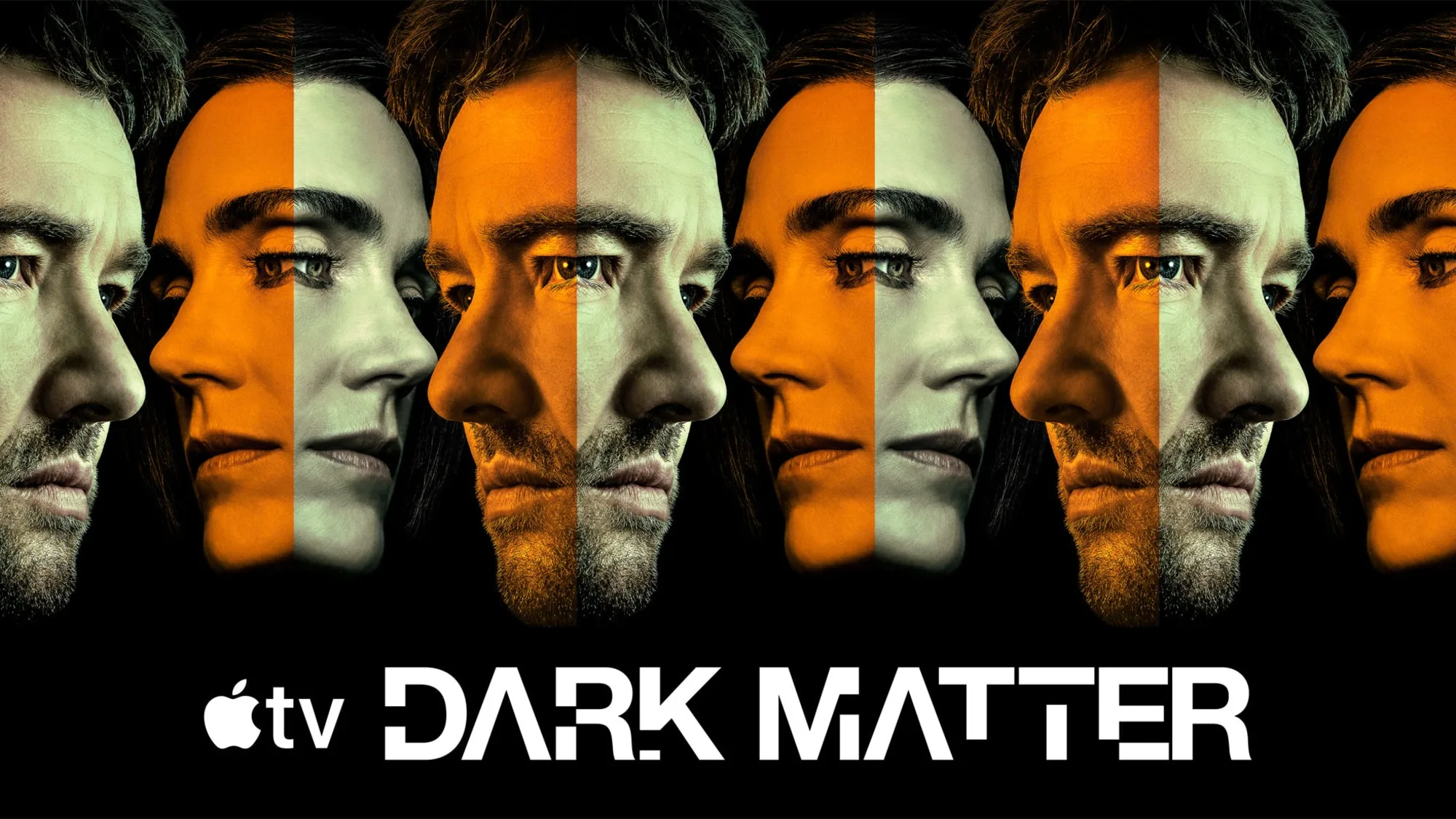

For one hour, the multiverse stops multiplying. Episode 5 follows a displaced Jason as he reconnects with his Deaf mother, Ellie, and begins forming a life with bookstore owner Maria. Sign language changes the rhythm of his relationships, silence receives room to carry meaning, and Joel Edgerton can define this particular Jason without a chart explaining which branch of reality produced him. The episode ventures far from the central Dessen story, yet its narrow focus gives Dark Matter Season 2 its clearest demonstration of what infinite possibility can achieve.
The surrounding season rarely grants its characters such sustained attention. Season 1 used the Box, a device capable of reaching alternate realities, to complicate one straightforward objective: Jason wanted to return to Daniela and Charlie. Every hostile world and alternate life intensified that pursuit. Season 2 inherits a family that has escaped into another Chicago, then dismantles the clarity that previously held the premise together.
An alternate Jason’s intrusion ends the Dessens’ seven months of safety and sends them searching for another home. By the second episode, Amanda and Ryan are navigating their own path, Leighton is chasing an ideal world, Blair is trying to contain his ambition, and an investigator is studying the trail of identical bodies left behind. Each line contains material capable of carrying an episode. Their simultaneous activation leaves the season without a reliable center of gravity.
The clearest organizing question arrives in Episode 3, when one Jason asks his former professors whether the ability to create something makes its use inevitable. Their answer connects scientific curiosity with ego, exploration, and catastrophe. It gives the Box a larger moral function. The device has moved beyond one man’s regret and become a technology that governments, entrepreneurs, and wounded people might use to extract whatever another world possesses.
That conversation provides the season with a governing idea after several plotlines are already competing for attention. Its placement exposes a recurring architectural problem. Important material often enters as another obligation to remember instead of a force that reorganizes what came before. McNamara’s investigation, the different Leightons, Amanda and Ryan’s experiments, and the family’s repeated flight all advance, pause, and return according to the needs of adjacent threads. Consequences remain active, but their dramatic pressure dissipates during the wait.
The matching tattoos adopted by the Dessen family make this difficulty unusually visible. Within the story, they are a sensible defense against replacement. Formally, they acknowledge how much identification work the expanding narrative now demands. A face no longer establishes a person. Every return requires the surrounding world, recent history, and current alliance to be located before the emotional meaning of the exchange can settle.
Also Read






This is where complexity begins interfering with attachment. The issue is not simply the number of Jasons, Leightons, or realities. Each transition spends part of its dramatic energy restoring coordinates. A conversation may concern guilt, grief, or betrayal, yet its first task is confirming which version carries that history. The same multiplication that gives the season its philosophical reach can flatten the difference between one irreversible loss and another branch waiting behind the next door.
Still, the season’s internal logic largely survives the expansion. Character decisions remain connected to established desires, and the Box does not suddenly acquire convenient new rules whenever the story needs an escape. A chase in Episode 3 carries a heavy load of explanation through physical momentum, proving that dense information can remain legible when a sequence has a precise dramatic purpose. The season can handle complication. It struggles with allocation.
Episode 5 works because it stops redistributing attention. The displaced Jason’s encounter with Ellie gives an alternate life consequences that cannot be reduced to novelty. The episode does not need the entire ensemble to validate its importance. It allows one version of a familiar character to develop a distinct emotional history, then lets that history determine the shape and tempo of the hour. The multiverse becomes intimate again.
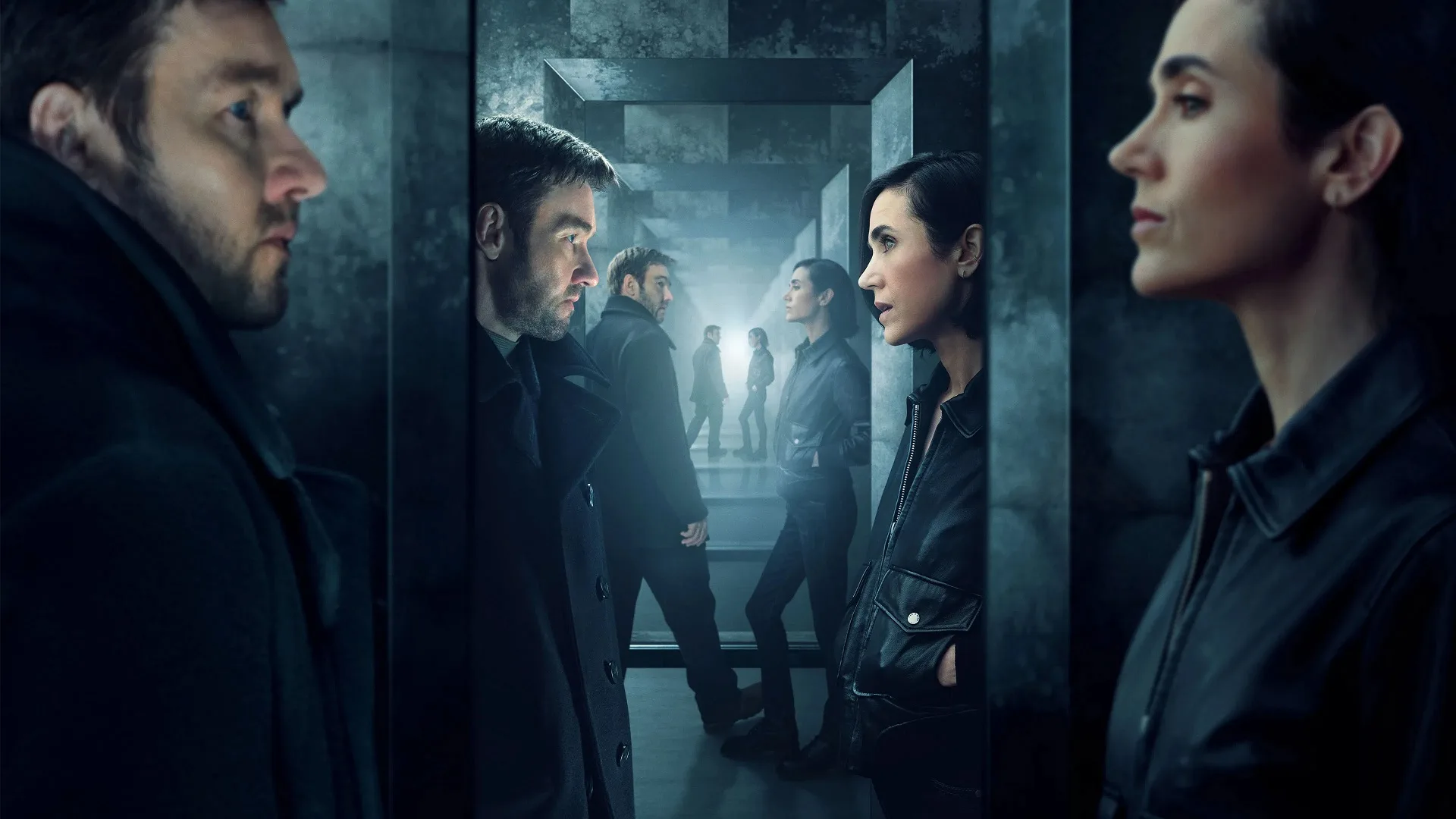
Daniela’s reunion with Gabriel provides another control case. Finding a living version of her deceased father does not restore what she lost. Their scenes preserve distance through guarded pauses and the uneasy recognition that shared identity cannot manufacture shared history. Jennifer Connelly gives Daniela’s grief a brittle specificity, especially when the possibility of recovery collides with the knowledge that this man belongs to another life. The storyline succeeds because the season stays with the contradiction instead of hurrying toward a scientific solution.
These concentrated passages also clarify the value of the expanded ensemble. Amanda and Ryan encounter the damage that intervention can produce in another reality. Leighton and the alternate Jasons imagine healthier worlds as reservoirs of technology, knowledge, and opportunity. Their stories turn the Box from a private expression of dissatisfaction into a system capable of exploitation. The sequel has found a worthwhile reason to continue beyond Blake Crouch’s novel. Its characters now have to consider responsibility toward worlds they can enter, alter, and abandon.
The season’s weakness lies in the distance between that ambition and its arrangement. Several arcs broaden the moral field, but their constant interruption prevents many individual consequences from acquiring comparable weight. Performance helps restore local clarity. Episode 5 separates its Jason through quieter exchanges conducted in sign language, while Daniela’s guarded pauses make apparent normality feel provisional. The architecture repeatedly pulls away just as those choices begin to consolidate a relationship.
Infinite worlds are supposed to destabilize identity. Dramatic priority still requires limits. Season 2 becomes affecting whenever it closes enough doors to let one grief, one relationship, or one mistake retain its shape. The Box can offer these characters endless alternatives. The series has to decide which consequences cannot be escaped.
Dark Matter Season 2 premiered globally on Apple TV+ on August 28, 2026. You can stream the sci-fi thriller series exclusively on Apple TV+, with new episodes dropping weekly on Fridays. The plot picks up after the harrowing events of the multiverse invasion, as Jason Dessen and his family attempt to settle into a safe alternative reality, only to discover that multiversal forces and new threats are relentlessly hunting them across parallel worlds.
Where to Watch Dark Matter Season 2 Online



Full Credits
Title: Dark Matter Season 2
Distributor: Apple TV+, Sony Pictures Television, Matt Tolmach Productions
Release date: August 28, 2026 (Season 2 Premiere)
Rating: TV-MA
Running time: 46–58 minutes
Director: Louis Leterrier, Roxann Dawson, Logan George, Celine Held, Jakob Verbruggen
Writers: Blake Crouch, Megan McDonnell, Jacquelyn Ben-Zekry, Ihuoma Ofordire
Producers and Executive Producers: Blake Crouch, Joel Edgerton, Matt Tolmach, David Manpearl, Jakob Verbruggen, Roxann Dawson, Louis Leterrier
Cast: Joel Edgerton, Jennifer Connelly, Alice Braga, Jimmi Simpson, Oakes Fegley, Dayo Okeniyi, Amanda Brugel, Marquita Brooks
Director of Photography (Cinematographer): John Lindley, Jeffrey Greeley
Editors: David Blackburn, Joe Leonard, Jordan Goldman, Timothy J. Feeley, Bridget Case
Composer: Jason Hill
The Review
Dark Matter Season 2
Dark Matter Season 2 proves that its multiverse can sustain stories beyond Jason’s original journey, especially when Episode 5 and Daniela’s reunion with Gabriel give individual relationships room to develop. Its competing arcs and proliferating identities repeatedly interrupt the consequences that should hold the season together. Focused performances and a richer ethical argument keep the expansion worthwhile, even when its architecture cannot match its ambition.
PROS
- Episode 5’s concentrated storytelling
- Daniela and Gabriel’s restrained reunion
- Expanded ethical stakes around the Box
- Consistent multiverse rules
- Performances that distinguish alternate lives
CONS
- Competing arcs dilute momentum
- Identity tracking burdens scenes
- Ethical framework arrives late
- Consequences weaken between plotlines