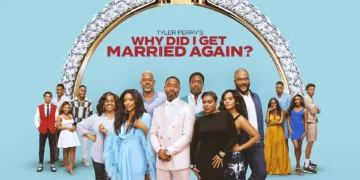

























Sixteen years of franchise history are unloaded in roughly ten minutes, which tells you plenty about the structural problem facing Why Did I Get Married Again? before anyone reaches Lake Como. Marcus and Angela prepare for a celebratory dinner while exchanging updates about friends, marriages, children, and old grievances with the efficiency of people reading minutes from a meeting. Tyler Perry needs to reconnect viewers with characters last seen in a feature film in 2010. The trouble is that the screenplay treats exposition like unpaid debt and settles the account immediately.
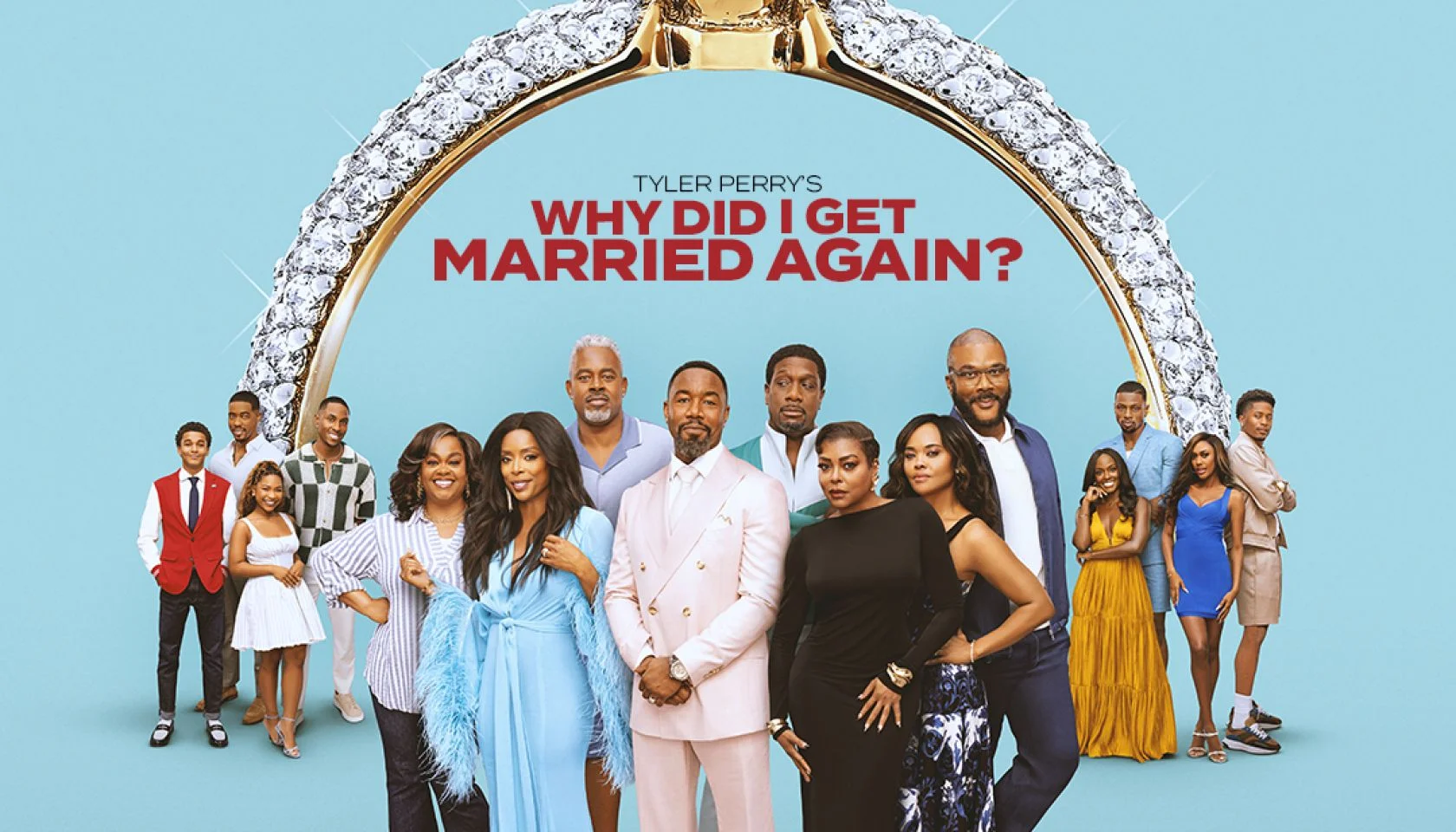
The occasion is the marriage of Marcus and Angela’s daughter Jasmine to Wesley, son of Roselyn, played by Taraji P. Henson. Terry and Dianne return, Sheila arrives with Troy, and Mike resurfaces with a questionable hairpiece and a much younger girlfriend. Janet Jackson’s Patricia is absent, explained away as being on a lecture tour.
Once the introductions are cleared, the central idea becomes apparent. These couples spent the earlier films failing, forgiving, separating, reconciling, and occasionally behaving like people who should never be left near an anniversary dinner. Now their children are old enough to make comparable mistakes. That generational shift gives Perry a strong sequel premise. The script simply has trouble making room for it.
Old Wounds, Familiar Players
The returning cast understands these relationships far better than the screenplay needs to explain them. Tasha Smith and Michael Jai White can communicate years of irritation through a pause or a look before Angela and Marcus even begin arguing. When old infidelities surface again, their exchanges carry the fatigue of people who have supposedly forgiven something without ever placing it completely in the past.
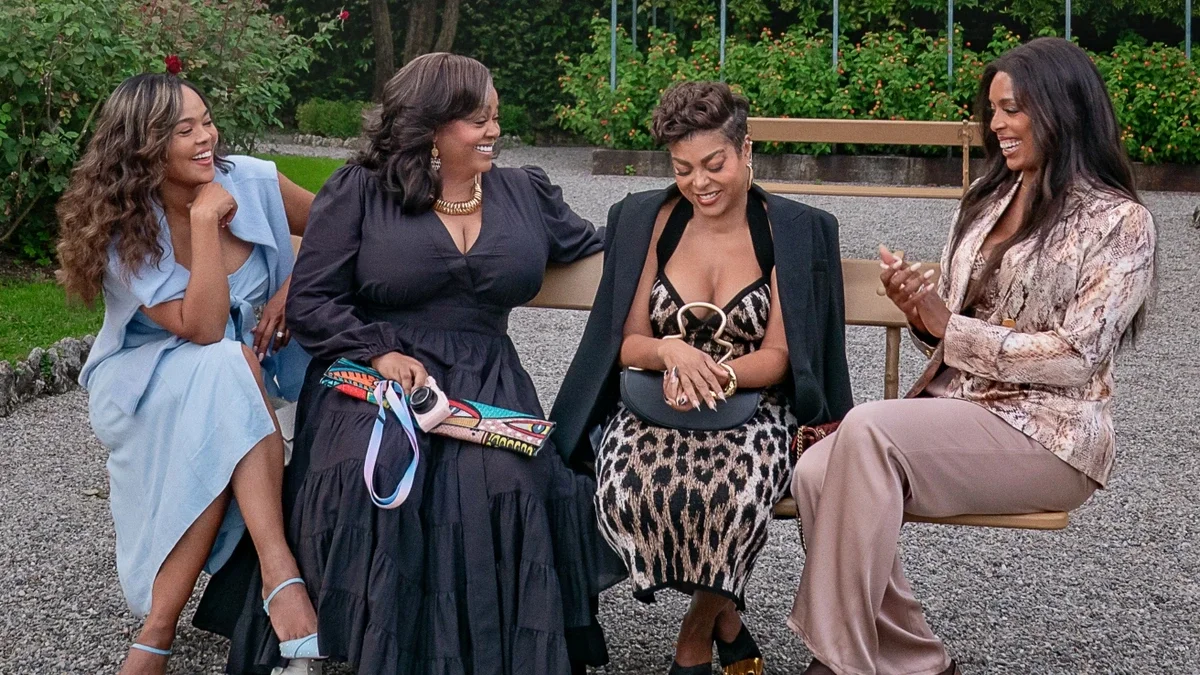
Jill Scott gets quieter material as Sheila deals with her mother’s Alzheimer’s diagnosis. Sheila keeps taking photographs, trying to preserve moments against the possibility of forgetting them later. It is a simple behavioral detail, and Scott plays it without forcing sentiment into every beat. The movie would benefit from trusting gestures like this more often.
Mike receives the opposite treatment. Richard T. Jones returns him to the group as a walking provocation, complete with younger girlfriend Regina, who previously had a relationship with MJ. Perry uses him largely as an ignition switch: Mike enters, somebody gets angry, another embarrassing fact escapes containment.
Henson fits comfortably into the established ensemble as Roselyn. Her best scenes concern Wesley’s resentment over his parents’ breakup. She has spent years protecting his father’s image, concealing his addiction while absorbing their son’s anger herself. Henson lets Roselyn’s practiced composure weaken in small stages, which gives the conflict a progression the screenplay’s louder disputes often lack. The actors remember how to play history. Perry keeps handing them explanations anyway.
The Children Repeat the Pattern
Jasmine and Wesley’s wedding gives the film a neat dramatic mechanism: place two generations of damaged relationships beside each other and see which behaviors have been inherited. The younger characters initially regard their parents’ surviving marriages as evidence of success.
They know the finished product, not the repairs. Affairs, abuse, sexually transmitted infections, separations, and resentments have been edited out of the family mythology. Once problems surrounding Jasmine and Wesley begin surfacing, the parents are forced to dismantle that mythology themselves.
A rehearsal confrontation becomes the screenplay’s major pressure release. Mike exposes information that recalls something Angela suffered years earlier, then Angela discovers that Dianne and Sheila already knew pieces of the situation. The sequence should fracture several relationships at once. Perry instead moves rapidly between revelations, arguments, explanations, and reconciliatory gestures, leaving little time for any single betrayal to change the temperature of the room.
Roselyn’s conflict with Wesley follows a similar pattern. His anger rests on an incomplete version of his parents’ marriage. Her disclosure about his father’s addiction finally gives him the missing information, yet the scene functions chiefly as another truth arriving on schedule.
The younger generation suffers most from this compression. Jasmine, Wesley, MJ, and T.J. frequently operate as mechanisms for forcing the parents to reconsider themselves. Their emotional lives receive less attention than the adults’ reactions to them. A sequel built around inherited relationship habits keeps treating the heirs like supporting evidence.
Beautiful Place, Crowded Screenplay
Lake Como supplies the production with polished villas, water views, formalwear, and wedding imagery. Perry photographs the destination attractively, yet the dramatic rhythm remains closer to an extended television episode. Characters move from one conversation to the next with little connective tissue, and serious subjects accumulate at impressive speed.
Alzheimer’s, addiction, suspected domestic abuse, age-gap relationships, infidelity, STIs, parental anxiety, and long-held resentment all compete for space. Perry rarely allows a scene to sit with one problem before another arrives. The pacing creates a strange effect where nearly everyone has something serious to say and very little of it has time to deepen.
Dialogue compounds the issue. Characters often explain why they are hurt immediately after demonstrating that they are hurt. Arguments become speeches. Discoveries become speeches. Eventually, even conversations about previous speeches start sounding dangerously close to speeches.
Michael Jai White gets one scene that cuts through the congestion. Before Marcus gives Jasmine away, he asks Wesley to protect his daughter and, should his feelings ever change, bring her safely back rather than hurt her. White plays Marcus less as the volatile husband audiences remember and more as a father frightened by how little control remains once his child begins her own marriage. For a few minutes, the screenplay stops stacking problems and lets one relationship occupy the frame. It should happen far more often.
Why Did I Get Married Again? premiered globally on Netflix on September 9, 2026. The comedy-drama follows the beloved group of couples as they reunite for a destination wedding, bringing old conflicts and fresh emotional turbulence to the surface.
Where to Watch Why Did I Get Married Again? (2026) Online


Full Credits
Title: Why Did I Get Married Again?
Distributor: Netflix
Release date: September 9, 2026
Running time: 1 hour 51 minutes
Director: Tyler Perry
Writers: Tyler Perry
Producers and Executive Producers: Tyler Perry
Cast: Tyler Perry, Taraji P. Henson, Jill Scott, Richard T. Jones, Tasha Smith, Michael Jai White, Lamman Rucker, Sharon Leal
The Review
Why Did I Get Married Again?
Why Did I Get Married Again? has a promising structural idea in turning yesterday’s troubled spouses into parents watching the same mistakes surface in their children. Perry keeps burying that idea under exposition, stacked revelations, and speeches that explain emotions the scenes rarely earn. The returning cast still has enough chemistry to make the reunion intermittently enjoyable, with Michael Jai White, Tasha Smith, Jill Scott, and Taraji P. Henson giving the material some needed weight. Lake Como looks expensive. The screenplay still feels assembled in a hurry.
PROS
- Strong returning ensemble chemistry
- White’s wedding scene lands
- Scott gives Sheila real vulnerability
- Sharp generational premise
- Henson fits the group naturally
CONS
- Heavy opening exposition
- Younger characters lack depth
- Conflicts pile up too quickly
- Too many explanatory speeches
- Serious issues receive rushed treatment