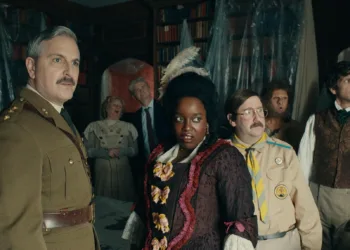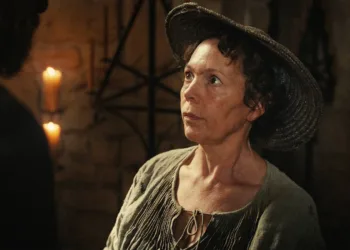













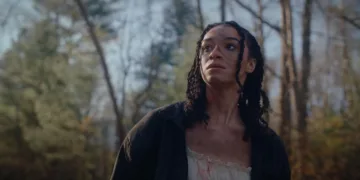

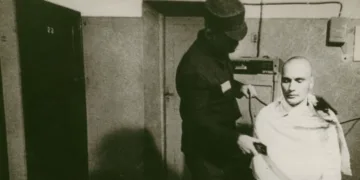










Hospitality is the first moral test in Company, and Casey Affleck keeps repeating it until the gesture begins to look like a curse. A stranger appears during a storm, someone opens the door, and a story passes between them. The pattern begins in 1975, when Evelyn (Emily Alyn Lind) arrives at a Christmas gathering claiming to be lost.
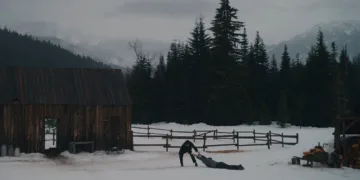
She tells the guests about Tom (Nick Nolte), an aging recluse who discovered Alice (Caylee Cowan) unconscious outside his Colorado cabin in 1953. Alice responds by telling him about Rebecca (Adelaide Clemens) and Emmett (Scoot McNairy), farmers who found a teenage drifter named Caleb (Atticus Affleck) lying in the snow in 1903.
Affleck and co-writer Ron Hansen treat storytelling as a form of temporary shelter. Each narrator is admitted into someone else’s physical space, then occupies an emotional one through speech. The structure has the cadence of folklore, where repetition creates meaning through small variations.
Yet the film distrusts the simplicity of its own device. Mystical voice-over, Hamlet quotations, and philosophical declarations keep insisting that these tales contain coded truths about death, forgiveness, and human connection. The repetition would carry greater force if the screenplay allowed silence to do part of the work.
Caleb in the Snow
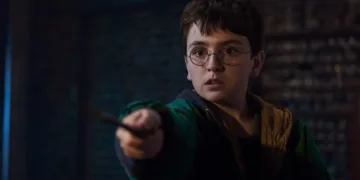
The 1903 story gives Company its clearest dramatic pressure. Rebecca and Emmett bring Caleb into their home while rumors spread of murdered people and animals nearby. Emmett regards the newcomer with immediate suspicion. Rebecca finds something worth protecting in him. Caleb responds to both with the unnerving confidence of someone who seems to have lived several lives before reaching their farm.
He claims to have traveled through Argentina and London. He hints that his age may not match his face. His bleak statement that the world resembles tall grass hiding unseen dangers sounds less like adolescent melodrama once the killings move closer to the household.
Atticus Affleck is strongest when Caleb barely reacts. His still gaze and insolent posture make ordinary conversations feel slightly contaminated, especially when he faces Kleinschmidt, the neighboring farmer played by Ben Mendelsohn. Their extended confrontation finally gives Hansen and Affleck’s dialogue some friction. Mendelsohn turns suspicion into a social weapon, smiling until the threat underneath becomes impossible to miss.
Larger emotional scenes expose the younger Affleck’s limitations. Anger sometimes arrives as performance rather than impulse, and the ornate dialogue leaves him little room to recover. Clemens fares better with less verbal display. Rebecca’s patience toward Caleb never settles into simple maternal concern, which preserves a welcome uncertainty around what she recognizes in him. McNairy supplies a drier counterweight. Emmett’s unease is practical before it becomes supernatural, the response of a man watching an unknown presence quietly alter the balance of his home.
The Monster Behind the Metaphor
The killings, Caleb’s strange history, and the repeated image of outsiders being invited inside eventually disclose what Affleck has spent much of the film hiding: Company is a vampire story. The choice reframes its fixation on hospitality with obvious mythic significance. Entry into the home becomes permission. Mercy becomes a moral transaction. Violence exists beside the possibility that a creature accustomed to taking life might respond differently when offered warmth, food, conversation, or simple trust.
There is rich material here. Tom’s bitterness comes from accumulated regret. Caleb treats danger as the natural condition of existence. Evelyn and Alice turn storytelling into a way of transferring experience between people who may never meet again. The film repeatedly returns to revenge and the possibility of releasing it, asking what remains of a person after grievance has structured years of life.
Yet Affleck keeps translating these ideas into speeches after the images have already suggested them. A line describing death communicating through the “coded messages of a human story” states the film’s intentions with such determination that mystery briefly becomes homework. Literary references accumulate in the same fashion.
The delayed genre shift suffers from this weight. Once the supernatural nature of Caleb and the surrounding stories becomes clear, the revelation changes how earlier scenes are read, but it generates surprisingly little new urgency. The monster was stronger while the film permitted him to remain an implication.
Firelight and Frozen Ground
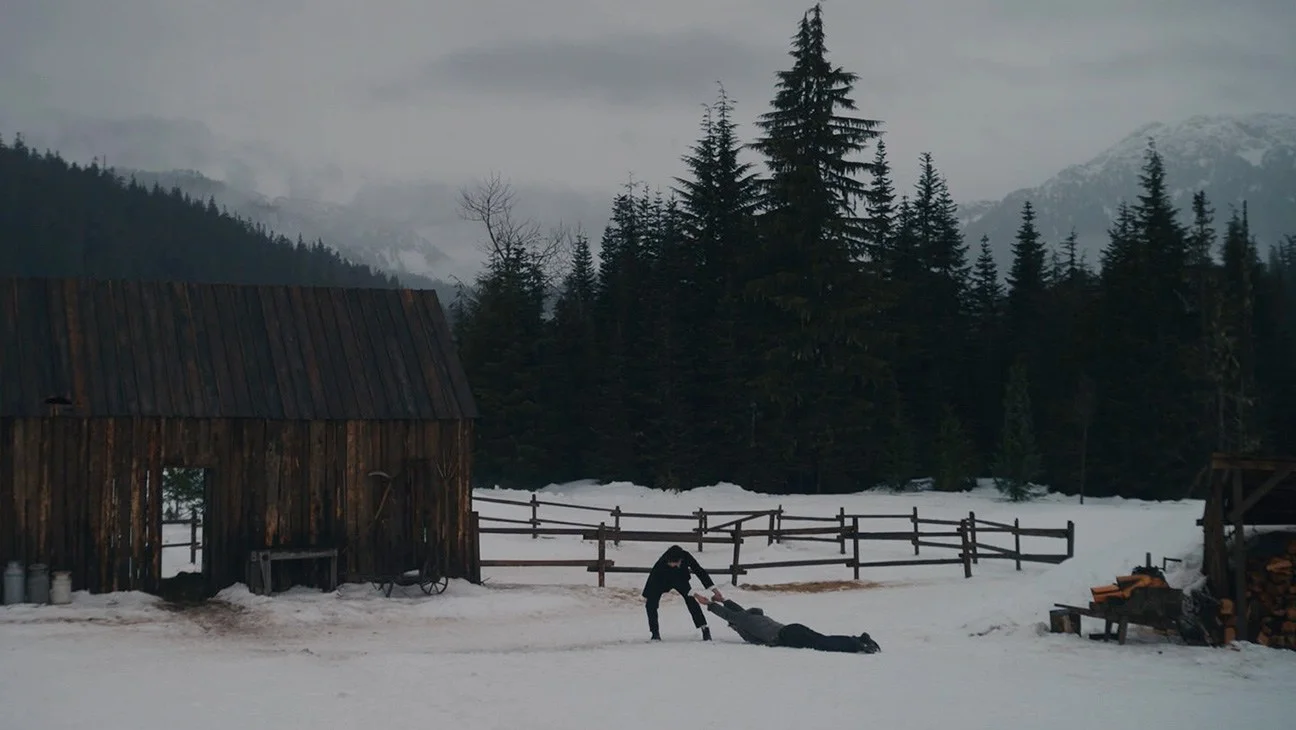
Visually, Company often possesses the restraint its screenplay lacks. Snow isolates cabins from the surrounding world. Firelight flickers across faces that remain difficult to read. The farm interiors feel cramped enough that Caleb’s presence alters a room simply by standing inside it.
The production used eight credited cinematographers, including Masanobu Takayanagi, Adam Arkapaw, Marcell Rév, and Affleck himself. Such fragmentation might suggest sharply divided visual identities between the timelines, yet the film maintains a remarkably consistent earthy texture. Stefania Cella’s period design helps bind those eras together through worn wood, heavy clothing, rough domestic spaces, and objects that appear handled rather than arranged.
Affleck frequently keeps the camera locked in place while characters deliver long monologues beside fireplaces. The approach creates a theatrical stillness suited to oral storytelling, though it can leave the frame waiting patiently for the dialogue to finish. The image becomes a container instead of an active participant.
Nick Nolte resists that problem through physical presence alone. Tom looks eroded by years of isolation, his beard and heavy movements making regret seem bodily. In his scenes with Alice, Nolte can shift from suspicion to tenderness without announcing either state. The performance gives grief a weight that several pages of philosophical narration struggle to equal.
That difference exposes the film’s sharpest contradiction. Affleck repeatedly finds images and actors capable of expressing loneliness, fear, and mercy with striking economy, then surrounds them with language determined to explain what they already made visible.
Company had its world premiere in the main competition at the 83rd Venice International Film Festival on September 8, 2026. The gothic anthology mystery film unfolds across nested narratives of isolation, survival, and grim frontier secrets during a snowy winter night in 1975.
Where to Watch Company (2026) Online
Full Credits
Title: Company
Distributor: Artists Equity, Image Nation Studios
Release date: September 8, 2026 (Venice International Film Festival)
Running time: 1 hour 32 minutes
Director: Casey Affleck
Writers: Ron Hansen, Casey Affleck
Producers and Executive Producers: Noah Fallis, Casey Affleck
Cast: Nick Nolte, Adelaide Clemens, Ben Mendelsohn, Scoot McNairy, Emily Alyn Lind, Caylee Cowan
Director of Photography (Cinematographer): Masanobu Takayanagi, Lachlan Milne, Adam Arkapaw, Marcell Rév, Holger Jungnickel, Joaquin Baca Asay, Noah Fallis, Casey Affleck
Editors: Leslie Jones, Radek Sienski, Julie Monroe, Casey Affleck
Composer: Daniel Hart
The Review
Company
Company turns hospitality into a Gothic ritual, with strangers entering homes, trading stories, and carrying violence across generations. Casey Affleck’s snowy compositions and firelit interiors give the film an austere menace, while Nick Nolte and Adelaide Clemens find human feeling inside its deliberate artificiality. The trouble is the screenplay’s insistence on explaining its philosophy through ornate monologues, literary references, and mystical pronouncements. Its late vampire revelation is clever in concept but weakened by how long the film withholds dramatic urgency.
PROS
- Striking snowy Gothic imagery
- Strong Nick Nolte performance
- Effective period design
- Atmospheric nested storytelling
- Adelaide Clemens’ restrained work
CONS
- Overwritten philosophical dialogue
- Sluggish pacing
- Underpowered genre reveal
- Uneven Atticus Affleck performance
- Static staging during monologues