

























Barbara Kopple keeps pulling the labor struggle away from the bargaining table and toward the people whose bodies absorb its consequences. A UPS driver sleeps in his car. A Bangladeshi courier loses access to the app that pays him shortly after an accident puts him in hospital. Another cyclist never comes home at all. Union Town understands that modern exploitation often arrives without a foreman shouting across a factory floor. Sometimes it arrives as a notification saying your account has been deactivated.
Nearly fifty years after Harlan County, USA, Kopple returns to organized labor with a landscape that barely resembles the Kentucky mining community she documented there. American Dream later showed union power weakening inside a meatpacking strike. Here the workforce has scattered across UPS trucks, Amazon facilities, bicycles, subcontractors, and delivery platforms. That spread becomes the film’s subject and, eventually, one of its problems.
Contracts, Apps, and Disposable Labor
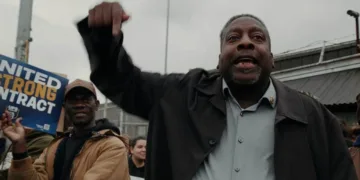
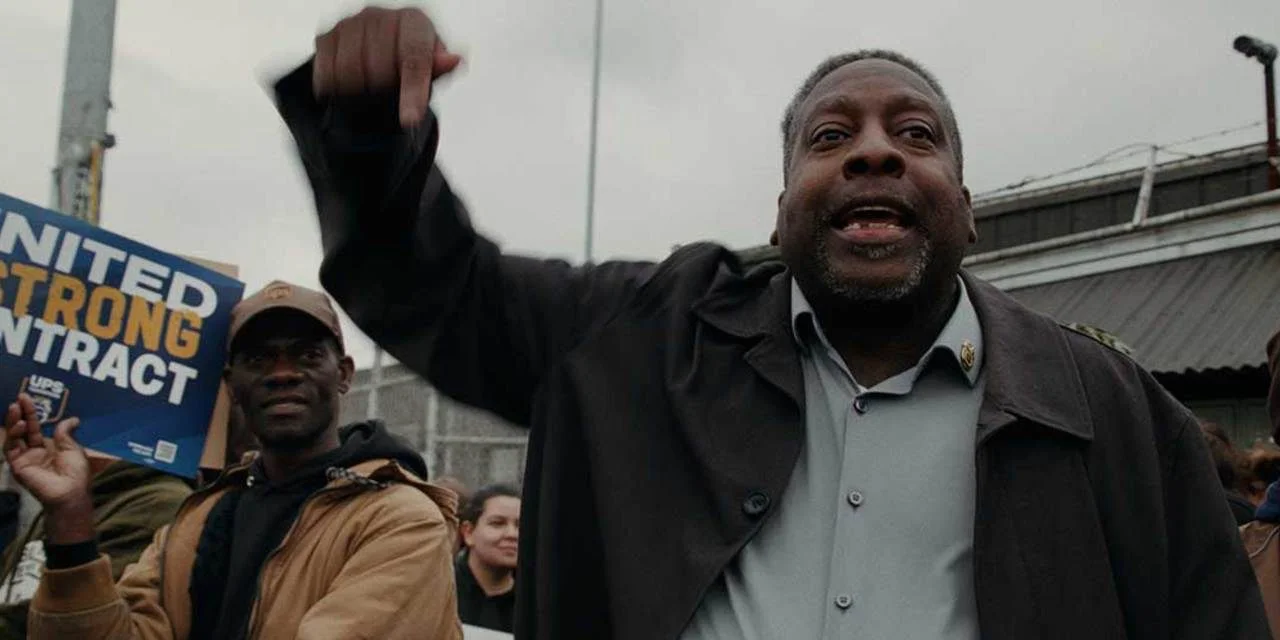
The cleanest story belongs to UPS. Teamster Local 804 prepares for a possible nationwide strike in 2023 as workers push for higher wages, better conditions for part-timers, and air conditioning in new trucks. Organizer Antonio Rosario moves through the workforce trying to maintain collective pressure, and the eventual contract provides something rare in Union Town: a victory you can actually measure.
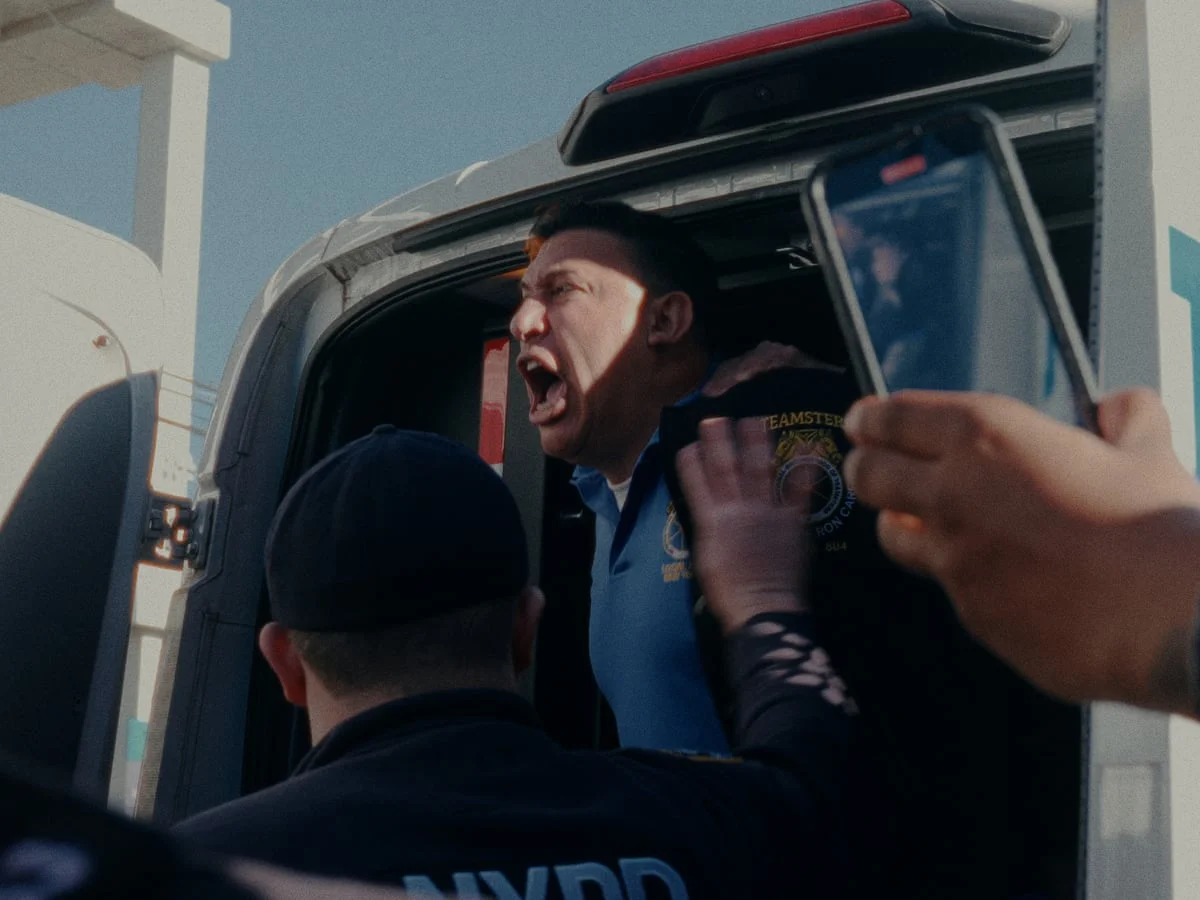
Kopple wisely complicates it. A young part-time employee urges colleagues to reject the agreement and hold out for a $25 minimum wage. Her arguments bring her into conflict with union leadership, turning solidarity from an inspirational slogan into something messier. People can agree that a system is unfair while disagreeing fiercely about what counts as winning.
Amazon workers face a harsher version of the same calculation. Employees at a Maspeth, Queens facility attempt to organize after a driver is fired amid union activity. Workers describe warehouse temperatures reaching 105 degrees, punishing schedules, surveillance, and delivery jobs paying shockingly little. Their campaign builds toward a Christmas-period shutdown, with the familiar corporate machine suddenly forced to acknowledge the people inside it.
The app couriers have fewer protections to begin with. DoorDash-style workers can effectively be fired through deactivation, sometimes with little explanation and little recourse. One Bangladeshi driver describes losing his account four days after being injured at work. The cruelty is almost elegant in its efficiency: the system tracks every delivery until the worker becomes inconvenient.
Faces Behind the Delivery
Union Town becomes strongest whenever Kopple stops mapping institutions and stays beside one person long enough for the system to become tangible. A UPS driver who sleeps in his car still makes time to tend a garden. The detail would be sentimental in another documentary. Here it feels protective, a tiny routine belonging entirely to him after so much of his day has been measured, scheduled, and priced.
An Amazon subcontracted driver describes another contradiction. The company can closely monitor how he performs his work while maintaining distance from responsibility for the conditions surrounding it. Surveillance is intimate. Accountability somehow remains remote.
The delivery cyclists carry the film’s heaviest emotional burden. Their income rewards speed, yet New York traffic punishes the same urgency. Kopple spends time with immigrant workers riding through bad weather, injuries, reckless drivers, and financial insecurity, then attends the funeral of a young Latin American cyclist killed in a collision with an emergency vehicle. Here the documentary’s scattered structure briefly disappears. A labor statistic has a family. A delivery has a rider. An app icon has a funeral behind it.
Kopple struggles to sustain that intimacy across every strand. Harlan County, USA could remain inside one community; Union Town has to move between warehouses, union halls, streets, trucks, political meetings, and organizing campaigns. The film accurately reflects fragmented labor, yet its storytelling becomes fragmented with it. The deliveristas sometimes feel stranded from the UPS and Amazon material, almost waiting for their own documentary to continue.
Who Gets to Stand Together?
The most uncomfortable divisions arrive from inside the workforce itself. Following Donald Trump’s return to office, the Workers Justice Project shifts part of its attention toward teaching immigrant workers how to respond to ICE agents. Elsewhere, an internal Teamsters poll reports roughly 60 percent support for Trump.
Kopple places those facts beside each other and leaves a charged contradiction sitting between them. The film could spend longer there. It also passes quickly over Teamsters president Sean O’Brien’s Republican National Convention appearance, one of several political developments that seem large enough to demand space the documentary cannot spare.
Yet the tension fits what Kopple has been observing all along. These workers share employers, streets, warehouses, and economic pressure without necessarily sharing politics, legal status, age, leverage, or even the same definition of solidarity. Then UPS CEO Carol Tomé appears on television discussing warehouse robots and joking about machines having “no attitude.”
Kopple cuts toward automated parcel sorting. After spending so much time watching workers fight to make themselves visible, Union Town leaves them facing a system increasingly interested in making their presence unnecessary.
Union Town had its world premiere out of competition at the 83rd Venice International Film Festival on September 9, 2026. The documentary follows delivery workers as they take on major corporations and struggle to form unions.
Where to Watch Union Town (2026) Online
Full Credits
Title: Union Town
Distributor: Cabin Creek Films
Release date: September 9, 2026 (Venice International Film Festival)
Running time: 1 hour 46 minutes
Director: Barbara Kopple
Producers and Executive Producers: Barbara Kopple, Hannes Hosp, Peter Palandjian
Cast: Delivery workers and corporate representatives
Director of Photography (Cinematographer): Timothy Grucza, Hannes Hosp, Rachel Beth Anderson
Editors: Francisco Bello, Hannes Hosp, Deborah Peretz
Composer: Jongnic Bontemps
The Review
Union Town
Union Town hits hardest when Barbara Kopple lets workers carry the argument themselves: the courier funeral, the UPS driver sleeping in his car, the Bangladeshi driver losing app access after an accident. Those moments give the labor crisis a human weight that the documentary’s wider political sweep sometimes disperses. Its UPS, Amazon, and deliverista threads never fully lock together, yet the fractures feel revealing too. Kopple finds solidarity surviving inside a system designed to scatter it, right up to that chilling final glimpse of automation replacing the people asking to be heard.
PROS
- Powerful worker testimonies
- Moving courier funeral sequence
- Strong observational filmmaking
- Sharp portrait of precarious labor
- Memorable automation ending
CONS
- Scattered narrative focus
- Delivery-worker thread feels separated
- Political contradictions need greater depth
- Too many labor fronts compete for space