
















A monster is useful because you can kill it. That becomes the strange philosophical convenience inside Dark Hollow, Daniel Byers’ Appalachian creature feature about a community already being eaten alive long before anything with teeth crawls out of the earth. Coal dust hangs in the air. Black lung has already entered family history. Jobs have vanished, homes are threatened, and a mining company keeps acquiring land while tearing apart the landscape that made those homes worth defending in the first place. Then the movie introduces an actual beast.
My first instinct was that the metaphor is almost embarrassingly tidy. Greed becomes a monster. Extraction becomes appetite. The earth coughs up the physical embodiment of everything these people have suffered. Except I am not sure that is what the film actually does.
KC, played by June Schreiner, lives inside a horror story whose villain has no body. Her family carries the damage of coal mining across generations, while the present offers little relief. The company wants property. The air itself has become suspect. Leaving means surrendering the only place these people know; staying means accepting that familiarity can poison you. Even the mine, supposedly finished as a source of livelihood, still contains coal worth fighting over.
Byers spends much of the film in this material rather than rushing toward creature attacks. For some viewers, that patience will read as commitment. For others, it will resemble a monster movie that misplaced its monster somewhere around page thirty.
The problem is less the waiting than what accumulates during it. Dark Hollow has enough social pressure to sustain a slow burn, yet many of its conversations circle familiar misery without revealing much that feels newly specific about the people enduring it.
Characters discuss money, sickness, property, employment, escape. These pressures are real within the film, and several scenes make the town feel less like a setting than a place being gradually erased. Still, the supporting figures often register as positions in an argument before they become people. KC survives that thinness better than anyone.
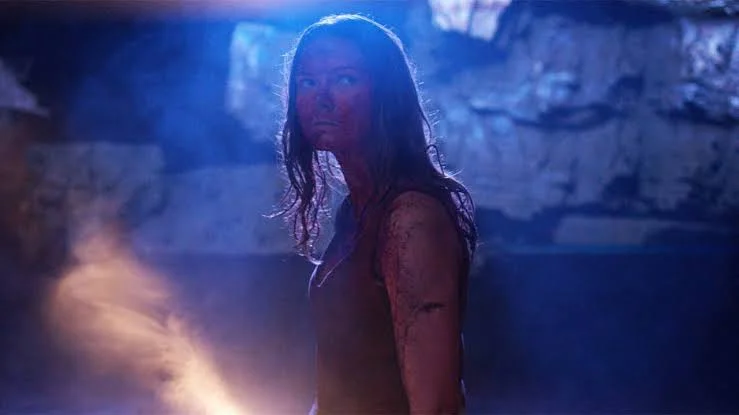
Schreiner gives her frustration a physical weight that the screenplay sometimes lacks. KC does not need a speech explaining what has been taken from her because her anger has already settled into posture, voice, and the permanent exhaustion of someone who has been negotiating with bad options for too long. When she tells the company, “You already took our land. You took our home. Just let us go,” the movie briefly stops pretending it needs symbolism.
That line already contains the monster. Which creates a problem once the literal one starts demanding screen time. Horror gives KC something systemic oppression rarely provides: a target. A corporation cannot be blasted with a shotgun. Black lung does not bleed. Eminent domain does not chase you through a tunnel while covered in drool. The creature transforms diffuse power into physical danger, and physical danger comes with the satisfying possibility of physical resistance.
Call it the combat metaphor: take something politically or economically unmanageable, give it claws, then hand the protagonist a weapon. There is nothing inherently dishonest about that strategy. Horror has always enjoyed making abstractions bite people. What matters is what survives the transformation. Here, the answer keeps changing.
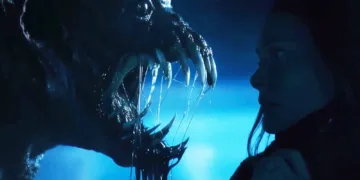
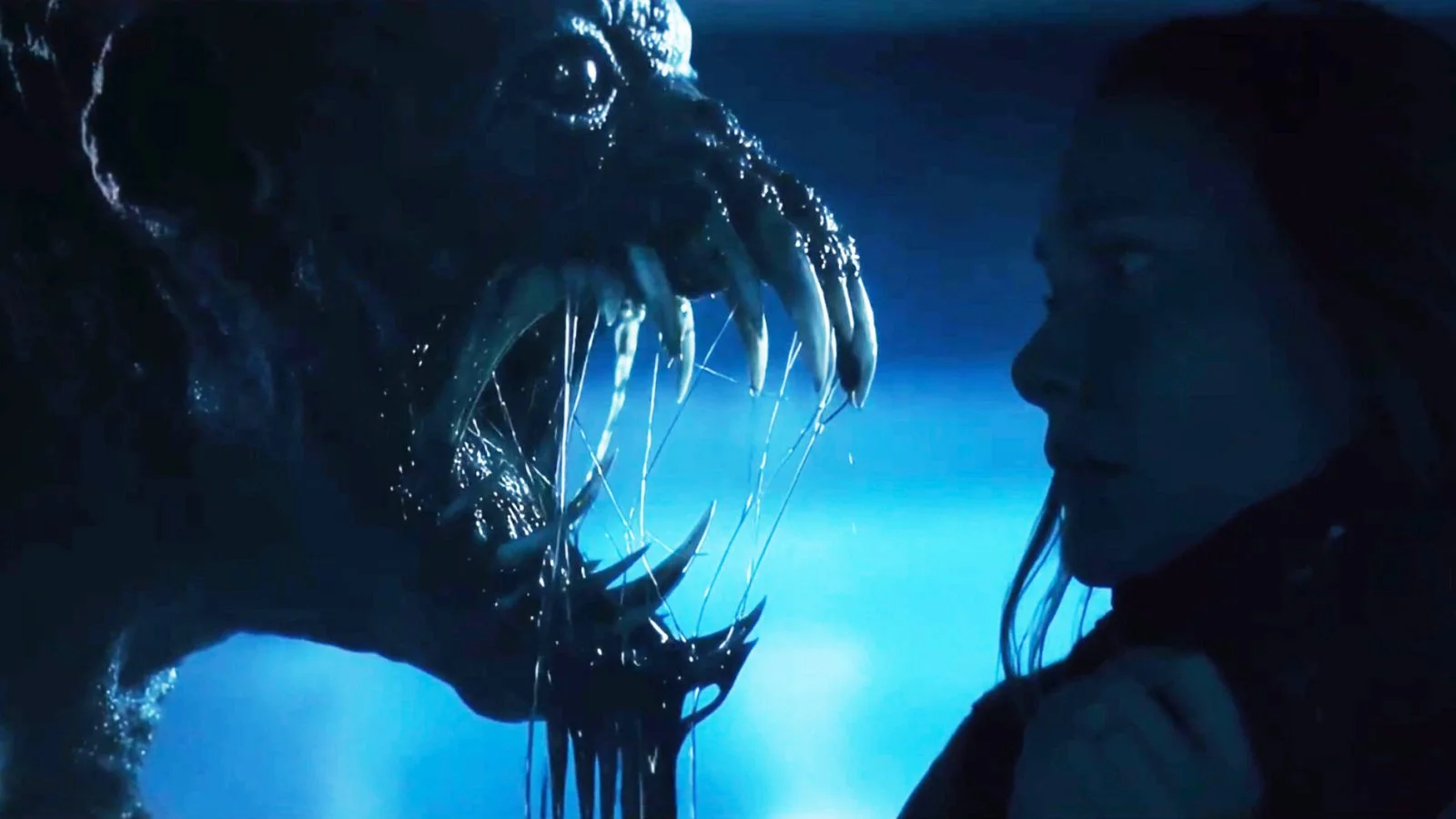
The creature spends much of the film half-seen, appearing through nightmares, darkness, suggestion, and the fear surrounding the mine. That restraint initially helps. The less defined the beast is, the easier it becomes to connect it with the community’s wider dread. It could be anything because, in a sense, everything has already gone wrong. Once the monster becomes physically present, the film has to deal with teeth, effects, movement, blood, and the less philosophical question of how convincing the thing looks. Sometimes it does.
The design is grotesque enough to register, with an abundance of teeth and wet, predatory ugliness. Byers also hides substantial portions of the creature action inside heavy darkness, which preserves some mystery while creating another problem: concealment stops feeling like suspense when the viewer is simply trying to determine what is happening. A few clearer images land harder because the movie has denied them for so long.
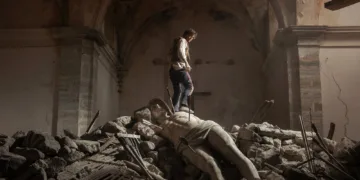
The mine itself becomes the natural destination. It is workplace, graveyard, economic promise, inherited curse, and monster lair all at once. By the third act, Dark Hollow turns that symbolism into a bloodier kind of entertainment. Fire, gore, frantic combat, and KC’s eventual willingness to meet violence with violence push the film toward the creature feature its premise promised. The shift is enjoyable in flashes. It is also intellectually awkward.
For much of the film, KC is trapped by problems she cannot physically defeat. Then horror changes the rules. The forces destroying her community become concentrated into something she can attack. There is genuine catharsis in that, especially because Schreiner has spent so much of the film absorbing pressure rather than releasing it. Yet the cleaner the fight becomes, the messier the metaphor gets.
Destroying a creature does not restore poisoned lungs, return lost work, repair a mountain, or reverse the sale of a home. Dark Hollow seems aware of this, but its final stretch still trades much of its earlier social dread for the pleasures of survival horror. That exchange would sting less if the town and its residents had acquired greater complexity during the long build.
I kept thinking the creature was distracting from the film Byers really wanted to make. Then the opposite started to seem plausible. Perhaps the creature exposes the weakness of that film. Once the monster arrives, we can see how much of the human drama had been depending on the idea of suffering rather than sufficiently developed people. KC is the exception, which is why the climax works as well as it does.
There is a bleak joke buried inside Dark Hollow. The mining company and the creature share an appetite, but only one of them has the courtesy to become killable. KC can enter the mine, pick up a weapon, and fight the thing that wants to consume her. The other monster gets paperwork.
Dark Hollow debuted in select theaters and on digital platforms via Brainstorm Media on September 4, 2026. The creature feature horror film follows a young mother forced into a dangerous hunt against a nightmarish monster that escapes from an abandoned Appalachian coal mine.
Where to Watch Dark Hollow (2026) Online






Full Credits
Title: Dark Hollow
Distributor: Brainstorm Media
Release date: September 4, 2026
Running time: 1 hour 35 minutes (95 minutes)
Director: Daniel Byers
Writers: Daniel Byers
Producers and Executive Producers: Daniel Byers, Zachary Ludescher, Justin Herman, George Henry Horton, Ryan Scaringe, Jonathan Bloch, Will Pinke, Jacob Serlen, Vinay Chowdry, Juan Dominguez
Cast: June Shreiner, David Garelik, J. Stephen Brantley, Brennon Weese, Ian Deighan, Jonathan Spivey, Sean Michael Wilkinson, Sharon Murray
Director of Photography (Cinematographer): Zachary Ludescher
Editors: Jacob Serlen
The Review
Dark Hollow
Dark Hollow has a sharper idea than its execution can consistently support. The Appalachian setting gives its creature genuine thematic weight, and June Schreiner makes KC convincing even when the surrounding characters remain thin. Yet the long build too often mistakes repetition for accumulation, while the bloody finale simplifies a horror the film had spent an hour making harder to contain. Its monster works best before it becomes something KC can simply fight. The other one, naturally, survives.
PROS
- June Schreiner’s grounded lead performance
- Strong Appalachian social context
- Effective mine setting
- Creature metaphor has real bite
CONS
- Supporting characters lack depth
- Slow build often feels repetitive
- Creature action is frequently too dark
- Finale weakens the earlier social dread