























• Latest
  • Trending
Ever After Review

Ever After Review: Prince Charming Deserved a Smarter Nightmare

Imperium Review

Imperium Review: Ordinary Life Beneath an Imperial Myth

Give It a Shot Review

Give It a Shot Review: Male Birth Control Meets Decades of Delay

Burning Review

Burning Review: The Truth Is Less Fantastical and Far Worse

Maya & Samar Review

Maya & Samar Review: Passion Burns Brighter Than Its Politics

Monowave Review

Monowave Review: Emotion Becomes the Language of Play

Cocoon: One Summer of Girlhood Review

Cocoon: One Summer of Girlhood Review: War Reaches the Classroom First

Brailled It Review

Brailled It Review: The Braille Challenge Through Its Competitors’ Eyes

Dark Hollow Review

Dark Hollow Review: Coal Country Horror Finds the Wrong Target

Bucks County, USA Review

Bucks County, USA Review: Five Hours Inside America’s School Board Wars

Silent Hill: Townfall Review

Silent Hill: Townfall Review: The Fog Has Rules Now

Ghost in the Cell Review

Ghost in the Cell Review: Anger Management Has Never Been This Bloody

American Summer Review

American Summer Review: Nostalgia Without the Memories to Match

  • Home
  • Privacy Policy
  • Terms and Conditions
  • Gazettely Review Guidelines
Monday, September 21, 2026
GAZETTELY
  • Home
  • Movie and TV News
    La Bola Negra

    “La Bola Negra” Wins Toronto’s People’s Choice Award, Handing Netflix an Oscar Front-Runner

    Yesim Ustaoglu

    Yeşim Ustaoğlu Returns to San Sebastian With “What Remains,” a Road Movie About a Poet Who Walks Away

    The Dark gets In

    Blue Finch Films Boards Sean Hogan’s Supernatural Thriller “The Dark Gets In” Ahead of Beyond Fest

    In My Father’s Room

    Novelist Maha Harada, 64, Brings Her Directing Debut “In My Father’s Room” to San Sebastian

    Ben Affleck Jennifer Garner

    Ben Affleck Nearly Cast Ex-Wife Jennifer Garner as His Wife in “Animals”

    Aaron Sorkin

    David Fincher Was Aaron Sorkin’s First Pick for “The Social Reckoning,” but Netflix Deal Stood in the Way

    Ke Huy Quan

    Ke Huy Quan Recalls Near-$100,000 “Temple of Doom” Check That Stunned His Family

    Paramount

    Paramount Settlement Talks Pause as Some State AGs Demand Tougher Terms

    Youth Sharon Horgan

    Sharon Horgan Explains the “Youth” Premiere’s Emotional Twist: “It Was Always Going to End Like That”

  • Movie and TV Reviews
    Imperium Review

    Imperium Review: Ordinary Life Beneath an Imperial Myth

    Give It a Shot Review

    Give It a Shot Review: Male Birth Control Meets Decades of Delay

    Ever After Review

    Ever After Review: Prince Charming Deserved a Smarter Nightmare

    Burning Review

    Burning Review: The Truth Is Less Fantastical and Far Worse

    Maya & Samar Review

    Maya & Samar Review: Passion Burns Brighter Than Its Politics

    Cocoon: One Summer of Girlhood Review

    Cocoon: One Summer of Girlhood Review: War Reaches the Classroom First

    Brailled It Review

    Brailled It Review: The Braille Challenge Through Its Competitors’ Eyes

    Dark Hollow Review

    Dark Hollow Review: Coal Country Horror Finds the Wrong Target

    Bucks County, USA Review

    Bucks County, USA Review: Five Hours Inside America’s School Board Wars

  • Game Reviews
    Monowave Review

    Monowave Review: Emotion Becomes the Language of Play

    Silent Hill: Townfall Review

    Silent Hill: Townfall Review: The Fog Has Rules Now

    Graveyard Keeper 2 Review

    Graveyard Keeper 2 Review: Fixing the Grind Without Fixing Every Mystery

    BLACKWOOD Review

    BLACKWOOD Review: Stylish Takedowns, Shaky Foundations

    Sniper Dan Review

    Sniper Dan Review: The Real Skill Is Knowing Where to Look

    The Walking Dead: Streets of Survival Review

    The Walking Dead: Streets of Survival Review: Rick and Company Enter the Arcade

    Woodo Review

    Woodo Review: Finding Wonder Beyond the Screen

    Train Sim World 7 Review

    Train Sim World 7 Review: Three Railways, Three Different Rhythms

    Aniimo Review

    Aniimo Review: Great Creatures Trapped Behind Too Many Menus

  • The Bests
No Result
View All Result
  • Home
  • Movie and TV News
    La Bola Negra

    “La Bola Negra” Wins Toronto’s People’s Choice Award, Handing Netflix an Oscar Front-Runner

    Yesim Ustaoglu

    Yeşim Ustaoğlu Returns to San Sebastian With “What Remains,” a Road Movie About a Poet Who Walks Away

    The Dark gets In

    Blue Finch Films Boards Sean Hogan’s Supernatural Thriller “The Dark Gets In” Ahead of Beyond Fest

    In My Father’s Room

    Novelist Maha Harada, 64, Brings Her Directing Debut “In My Father’s Room” to San Sebastian

    Ben Affleck Jennifer Garner

    Ben Affleck Nearly Cast Ex-Wife Jennifer Garner as His Wife in “Animals”

    Aaron Sorkin

    David Fincher Was Aaron Sorkin’s First Pick for “The Social Reckoning,” but Netflix Deal Stood in the Way

    Ke Huy Quan

    Ke Huy Quan Recalls Near-$100,000 “Temple of Doom” Check That Stunned His Family

    Paramount

    Paramount Settlement Talks Pause as Some State AGs Demand Tougher Terms

    Youth Sharon Horgan

    Sharon Horgan Explains the “Youth” Premiere’s Emotional Twist: “It Was Always Going to End Like That”

  • Movie and TV Reviews
    Imperium Review

    Imperium Review: Ordinary Life Beneath an Imperial Myth

    Give It a Shot Review

    Give It a Shot Review: Male Birth Control Meets Decades of Delay

    Ever After Review

    Ever After Review: Prince Charming Deserved a Smarter Nightmare

    Burning Review

    Burning Review: The Truth Is Less Fantastical and Far Worse

    Maya & Samar Review

    Maya & Samar Review: Passion Burns Brighter Than Its Politics

    Cocoon: One Summer of Girlhood Review

    Cocoon: One Summer of Girlhood Review: War Reaches the Classroom First

    Brailled It Review

    Brailled It Review: The Braille Challenge Through Its Competitors’ Eyes

    Dark Hollow Review

    Dark Hollow Review: Coal Country Horror Finds the Wrong Target

    Bucks County, USA Review

    Bucks County, USA Review: Five Hours Inside America’s School Board Wars

  • Game Reviews
    Monowave Review

    Monowave Review: Emotion Becomes the Language of Play

    Silent Hill: Townfall Review

    Silent Hill: Townfall Review: The Fog Has Rules Now

    Graveyard Keeper 2 Review

    Graveyard Keeper 2 Review: Fixing the Grind Without Fixing Every Mystery

    BLACKWOOD Review

    BLACKWOOD Review: Stylish Takedowns, Shaky Foundations

    Sniper Dan Review

    Sniper Dan Review: The Real Skill Is Knowing Where to Look

    The Walking Dead: Streets of Survival Review

    The Walking Dead: Streets of Survival Review: Rick and Company Enter the Arcade

    Woodo Review

    Woodo Review: Finding Wonder Beyond the Screen

    Train Sim World 7 Review

    Train Sim World 7 Review: Three Railways, Three Different Rhythms

    Aniimo Review

    Aniimo Review: Great Creatures Trapped Behind Too Many Menus

  • The Bests
No Result
View All Result
GAZETTELY
No Result
View All Result
Ever After Review

Burning Review: The Truth Is Less Fantastical and Far Worse

Give It a Shot Review: Male Birth Control Meets Decades of Delay

Home Entertainment Movies

Ever After Review: Prince Charming Deserved a Smarter Nightmare

Arash Nahandian by Arash Nahandian
26 minutes ago
in Entertainment, Movies, Reviews
Reading Time: 5 mins read
A A
0
Share on FacebookShare on TwitterShare on PinterestShare on WhatsAppShare on TelegramSummarize with ChatGPTSummarize with Perplexity

Fairy tales are unusually efficient machines. A red hood, a glass slipper, a wolf, an apple: each object arrives carrying centuries of accumulated meaning before anyone has explained a thing. Horror filmmakers know this very well, which is partly why public-domain folklore has become such attractive territory. Recognition comes free. Interpretation does not.

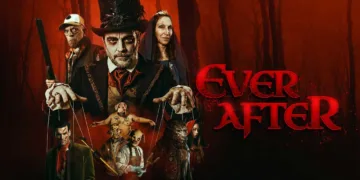
That distinction becomes the central problem with Ever After. Writer-director László Illés and co-writer László Krisztián Gera gather Little Red Riding Hood, Prince Charming, witches, wolves, frogs and other familiar figures inside a remote forest, then turn them loose on a bachelorette party.

The premise sounds almost insultingly easy. It also contains a surprisingly fertile idea. These stories already contain predation, mutilation, sexual anxiety, cruel bargains and dangerous transformations. You barely need to corrupt them. So perhaps accusing the film of intellectual laziness too early would be unfair. For a while, I thought there might be a coherent argument hiding beneath the blood.

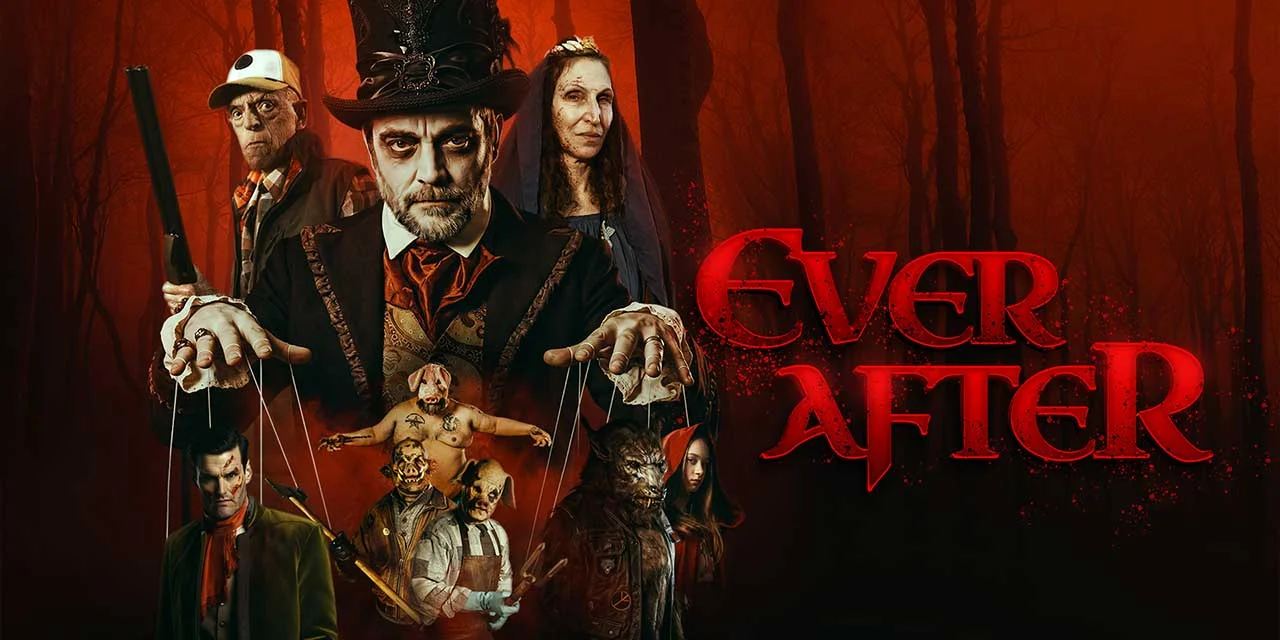
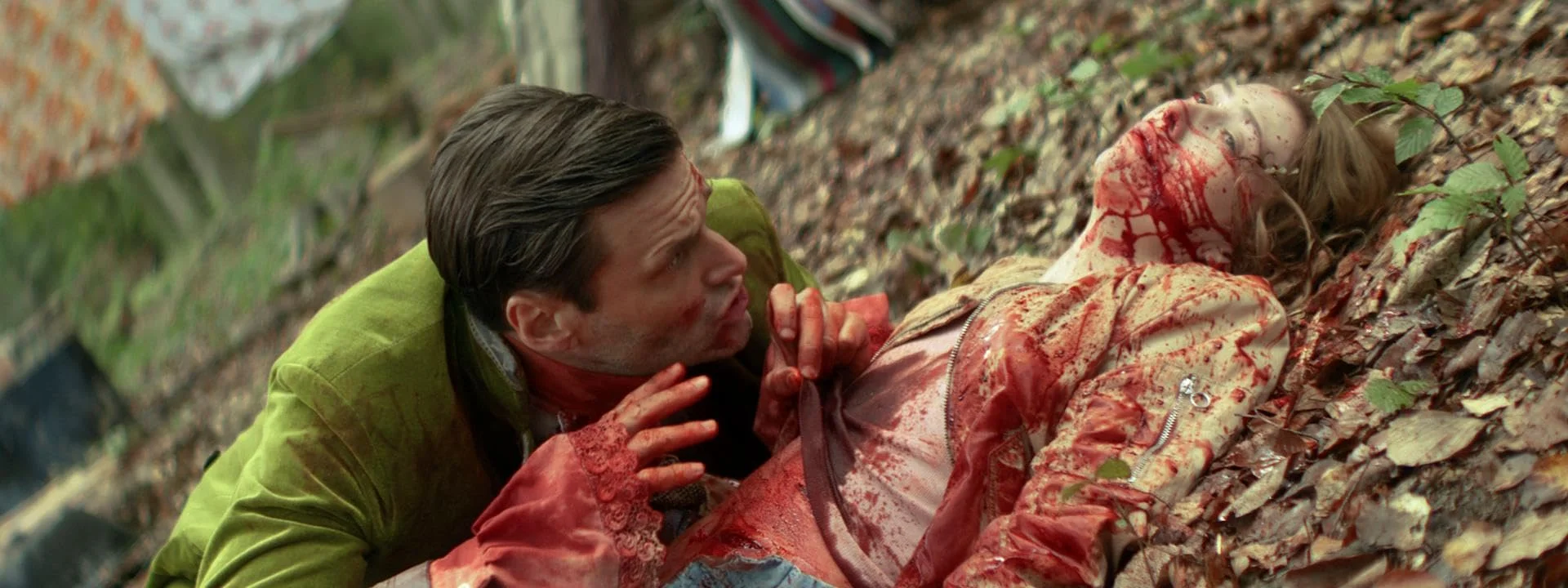
Amy and Helen are preparing to marry, and their friends bring them to a forest lodge for a joint bachelorette party. Soon the group is fleeing killers who inhabit distorted fairy-tale identities, including a grotesque Prince Charming, a witch, a Ringmaster, the Frog King and the Big Bad Wolf. The pairing of marriage and corrupted romantic mythology is obvious, yet potentially useful. Prince Charming, played by Philippe Reinhardt, comes closest to making that usefulness visible.

Reinhardt’s character is childish, sexually threatening and attached to his witch mother with the emotional maturity of a spoiled boy who has somehow acquired access to restraints. His idea of romance has curdled into ownership. Bonnie Aarons, as his mother, pushes the relationship further into grotesque comedy through exaggerated smiles and a sinister maternal presence. Here the film briefly understands that a fairy-tale archetype can function as an argument. Prince Charming is frightening because the title itself has become a joke about entitlement. That is where Ever After becomes interesting. Then it mostly stops.

The forest keeps producing symbols without developing a philosophy that connects them. The Ringmaster arrives with theatrical menace. The Frog King and Big Bad Wolf get their turns. Pig-masked attackers introduce another form of sexual threat. Each encounter adds imagery, gore and another familiar reference, yet the accumulation rarely creates meaning. Call it mythological hoarding: the belief that enough archetypes placed in one location will eventually constitute a worldview. They do not.
Ever After Review

The odd thing is that Amy and Helen should provide the organizing principle. Their marriage sits directly beside the film’s poisoned versions of romance, innocence and happily-ever-after fantasies. An early moment involving a livestreaming fundamentalist homophobe suggests that hostility toward their relationship may become part of the nightmare surrounding them. The film raises the possibility, then largely abandons it. There are traces of sexual predation elsewhere, but little sense that the forest’s rituals express a coherent reaction to Amy and Helen, their marriage or the social hostility introduced earlier.

Put a same-sex couple preparing for marriage inside a world populated by corrupted fairy-tale roles, and every version of Prince Charming, motherhood, innocence and romantic destiny begins to acquire political and psychological charge. Ever After repeatedly approaches that charge, then moves on to the next costume.

I wondered if that judgment was asking too much from a deliberately trashy slasher. Cheap horror does not owe anyone a dissertation. Sometimes a masked lunatic hitting someone with the nearest available object is quite sufficient cultural commentary for an evening. Yet Ever After itself keeps inviting interpretation. Its villains perform roles. Its victims enter the forest while celebrating marriage. Its horrors borrow symbols whose cultural value comes from repetition and reinterpretation. Once the film assembles those pieces, refusing to connect them stops feeling like simplicity and starts feeling like unfinished thought.

Its better performances reveal what stronger commitment could have achieved. Reinhardt provokes an actual response because Prince Charming has recognizable behavioral logic, however repellent. Mark Sheppard’s Ringmaster carries himself with the theatrical confidence of someone who knows the room belongs to him, delivering rhythmic speeches while presiding over the later cruelty.

Aarons understands the required register immediately. Malcolm McDowell and Kane Hodder bring recognizable voices to the Frog King and Big Bad Wolf, though their limited use exposes the film’s strange relationship with its own attractions. It keeps presenting figures as events, then discarding them before they acquire much dramatic weight.

The women fare unevenly as characters, though the performers gain ground once survival replaces partying. Lydia Pearl Pentz’s Wendy spends much of the film abrasive and openly angry, but her frustration becomes increasingly reasonable as the group moves from one disastrous decision to another.

Pentz grows stronger once Wendy shifts into a kill-or-be-killed mode. Maria de Sá gives Amy a similar escalation, pushing her toward near-manic survival energy. These later stretches have behavior, pressure and consequence. Earlier characterization often feels like waiting for the machinery to activate.

At least that machinery can look agreeably nasty. The practical gore supplies the physical ugliness the concept demands, while costumes and makeup distinguish the forest’s inhabitants without pretending they are polished storybook incarnations.

Pans and rotations make occasional use of the woodland environment, while blurred focus and vignette effects give altered states a visual character. Arthur Valentin Grósz’s circus-inflected score is especially well matched to the material, turning parts of the forest into a carnival that has forgotten the difference between performance and punishment.

Yet the film’s 125-minute runtime magnifies every weakness. The first quarter spends a long stretch introducing the group before the horror fully takes control. Later, individual encounters stretch into miniature episodes, one fairy-tale threat giving way to another without enough escalation between them.

Length becomes a form of indecision. A leaner film would not magically solve the thematic problem, but it would force choices. Which archetypes matter? Which relationship anchors the nightmare? Which ritual says something about marriage, desire, childhood or violence? At two hours and five minutes, Ever After can postpone those decisions by adding another villain.

That may be the strangest failure here. Fairy tales endure because every generation alters them, finding new fears inside old shapes. Ever After has the shapes. It has the blood. Occasionally, in Prince Charming’s warped romantic fantasy or the Ringmaster’s theatrical sadism, it even finds an idea. Then the forest fills up again.

Ever After opened exclusively in theaters across the United States and Canada on September 4, 2026, distributed by Level 33 Entertainment. The horror film follows a bachelorette party in a remote forest that falls prey to a sadistic cult murdering tourists while disguised as characters from classic fairy tales.

Where to Watch Ever After (2025) Online

Unfortunately, we couldn't find any streaming offers.
Source: JustWatch

Full Credits

  • Title: Ever After

  • Distributor: Level 33 Entertainment

  • Release date: September 4, 2026

  • Running time: 1 hour 30 minutes (90 minutes)

  • Director: László Illés

  • Writers: László Illés

  • Producers and Executive Producers: László Illés, Jeremy Hirsch, Fahd Habeeb, Marci Matthews, Roy McClurg

  • Cast: Mark Sheppard, Michael Berryman, Bonnie Aarons, Malcolm McDowell, Kane Hodder, Philippe Reinhardt, Maria de Sá, Lydia Pearl Pentz

  • Director of Photography (Cinematographer): György Takács

  • Editors: László Illés

  • Composer: Asche

The Review

Ever After

4 Score

Ever After has a useful horror idea buried beneath an excess of unused symbolism. Prince Charming, the Ringmaster, practical gore, and the carnival-like score occasionally show what this fairy-tale nightmare could have been. Too often, though, recognizable archetypes arrive as attractions rather than arguments, while Amy and Helen’s marriage never becomes the thematic anchor the setup promises. At 125 minutes, accumulation turns into indecision. The forest contains plenty of monsters. What it lacks is a reason for most of them to be there.

PROS

  • Philippe Reinhardt’s grotesque Prince Charming
  • Mark Sheppard’s theatrical Ringmaster
  • Effective practical gore and carnival-like score
  • Some strong fairy-tale imagery

CONS

  • Fairy-tale symbolism rarely develops into meaning
  • Amy and Helen are underwritten
  • Episodic villain encounters weaken escalation
  • Excessive 125-minute runtime
  • Promising social themes are largely abandoned

Review Breakdown

  • Overall 0
Tags: Bonnie AaronsEver AfterFeaturedHorrorKane HodderLászló IllésLevel 33 EntertainmentMalcolm McDowellMark SheppardMichael BerrymanPhilippe Reinhardt
Previous Post

Burning Review: The Truth Is Less Fantastical and Far Worse

Next Post

Give It a Shot Review: Male Birth Control Meets Decades of Delay

0 0 votes
Article Rating
Subscribe
Connect with
Login
I allow to create an account
When you login first time using a Social Login button, we collect your account public profile information shared by Social Login provider, based on your privacy settings. We also get your email address to automatically create an account for you in our website. Once your account is created, you'll be logged-in to this account.
DisagreeAgree
Notify of
guest
Connect with
I allow to create an account
When you login first time using a Social Login button, we collect your account public profile information shared by Social Login provider, based on your privacy settings. We also get your email address to automatically create an account for you in our website. Once your account is created, you'll be logged-in to this account.
DisagreeAgree
guest
0 Comments
Oldest
Newest Most Voted

This Week's Top Reads

  • Is This Seat Taken? Review

    Is This Seat Taken? Review: A Satisfying Mental Workout

    1287 shares
    Share 0 Tweet 0
  • Agatha Christie’s Tommy & Tuppence Review: Two Great Detectives Need Sharper Mysteries

    0 shares
    Share 0 Tweet 0
  • Tom Pelphrey Wins First Emmy, Dedicates It to Pregnant Kaley Cuoco

    0 shares
    Share 0 Tweet 0
  • Fauda Season 5 Review: Revenge Crosses the Mediterranean

    1 shares
    Share 0 Tweet 0
  • Trust Review: Squandered Potential and an Incoherent Plot

    6 shares
    Share 0 Tweet 0
  • Youth Review: Growing Up Does Not End at 50

    1 shares
    Share 0 Tweet 0
  • The Perfect Lie Review: The Dinner Club Knows How to Keep a Secret

    0 shares
    Share 0 Tweet 0

Must Read Articles

Silent Hill: Townfall Review
Reviews Games

Silent Hill: Townfall Review: The Fog Has Rules Now

3 hours ago
Ghost in the Cell Review
Movies

Ghost in the Cell Review: Anger Management Has Never Been This Bloody

3 hours ago
Gandhari Review
Movies

Gandhari Review: A Rich Mythology Trapped Inside a Familiar Thriller

22 hours ago
Lovesick Review
TV Shows

Lovesick Review: Revolution Outside, Restriction at Home

1 day ago
Daniel and the Fiery Furnace Review
Movies

Daniel and the Fiery Furnace Review: Its Quietest Moments Burn Brightest

1 day ago
Loading poll ...
Coming Soon
Which of Alfred Hitchcock's 1960s thrillers is your all-time favorite?

Gazettely is your go-to destination for all things gaming, movies, and TV. With fresh reviews, trending articles, and editor picks, we help you stay informed and entertained.

© 2021-2026 All Rights Reserved for Gazettely

What’s Inside

  • Movie & TV Reviews
  • Game Reviews
  • Featured Articles
  • Latest News
  • Editorial Picks

Quick Links

  • Home
  • About US
  • Contact Us
  • Advertise with Us
  • Review Guidelines

Follow Us

Facebook X-twitter Youtube Instagram
No Result
View All Result
  • Gazettely | Movie, TV & Game Reviews, News, and Rankings
  • Movies
  • Entertainment News
  • Movie and TV Reviews
  • TV Shows
  • Game News
  • Game Reviews
  • Contact Us

© 2024 All Rights Reserved for Gazettely

wpDiscuz
0
0
Would love your thoughts, please comment.x