
























Equipping a Super Hornet with laser-guided bombs commits its special-weapon capacity to the ground battle. Enemy fighters remain somebody’s problem, and Ace Combat 8: Wings of Theve gives you useful ways to make them your wingmen’s. They can cover you, concentrate attacks on a selected target, or break away to engage independently. A loadout decision made in the hangar becomes a division of labor in the air. Preparing for a mission includes deciding which problems you intend to solve yourself and which ones you will entrust to the squadron.
That arrangement becomes particularly interesting with electronic warfare aircraft such as the EA-6B Prowler. Concentrating on air defenses while wingmen handle fighters makes a support role viable, although you still have to defend yourself when attackers get through.
You can configure your companions’ aircraft and authorize their special weapons, giving preparation a practical connection to command. The limitation is that orders apply to the group. Distinct aircraft roles encourage separate assignments, but you cannot direct each pilot individually. Squadron composition has finer distinctions than the command interface can consistently express.
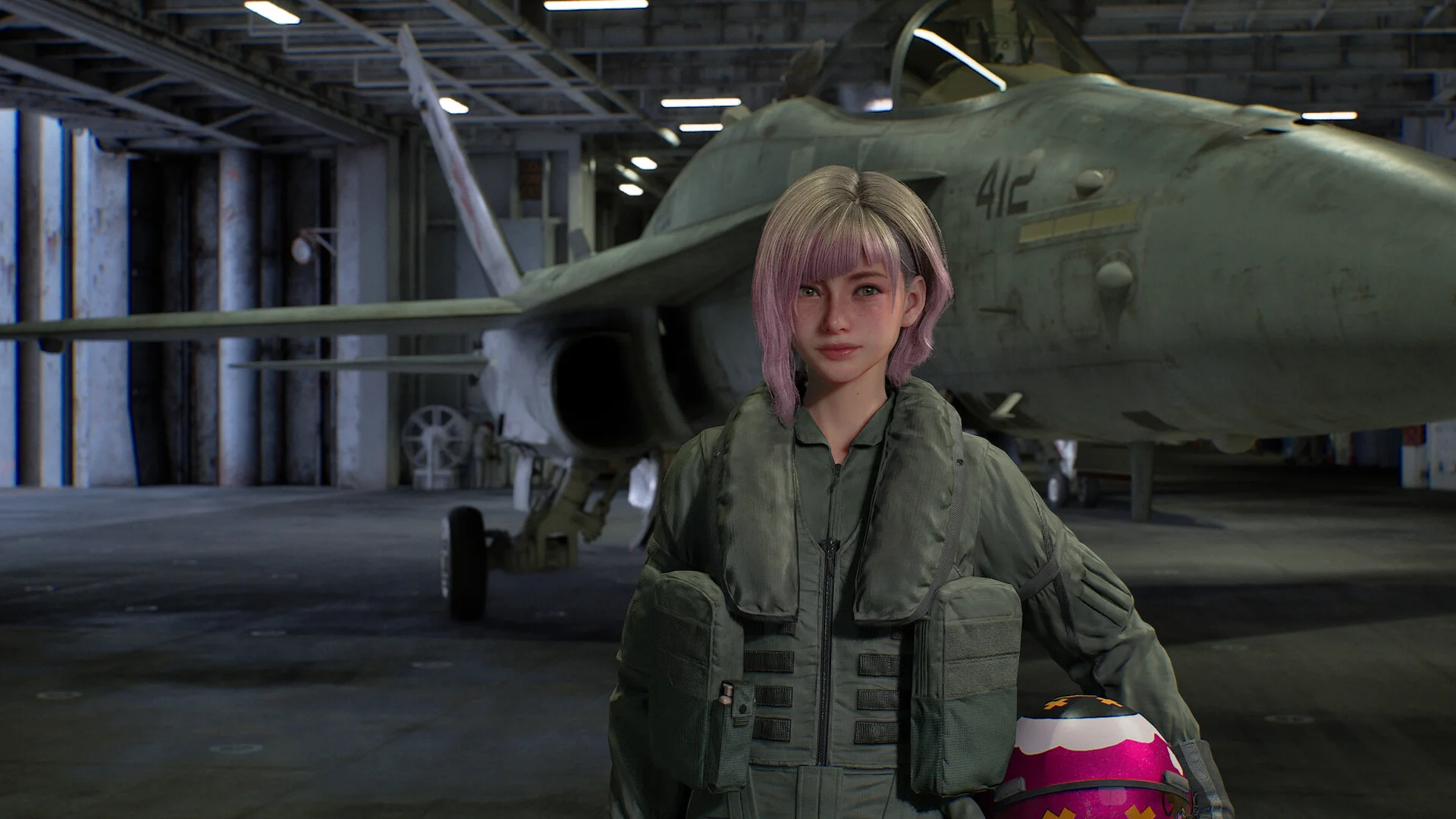
The situation suits Joker Flight, a squadron assembled aboard the carrier Endurance as the Federation of Central Usea fights Sotoa’s invasion. Following the opening aircraft’s destruction and your rescue, you inherit the identity associated with the legendary Wings of Theve. The country needs an exceptional pilot to believe in. Combat gives that exceptional pilot reasons to rely on other people. Selecting their equipment and making room for their contributions lends the leadership role substance beyond the reputation the story hands you.
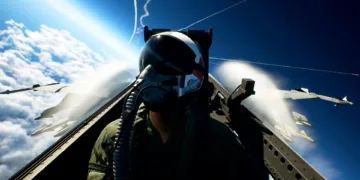
Aircraft handling keeps those equipment decisions from becoming abstract. The F/A-18C feels comparatively heavy outside low-speed maneuvering, while the F-14 offers greater freedom at the expense of stability at high angles of attack. The larger A-6E and EA-6B roll slowly enough to make evasive positioning a consideration.
Choosing a support aircraft commits you to handling its disadvantages as well as using its specialist weapons. These differences suit an arcade flight-combat game: they give aircraft recognizable demands without making every engagement an exercise in operating procedures.
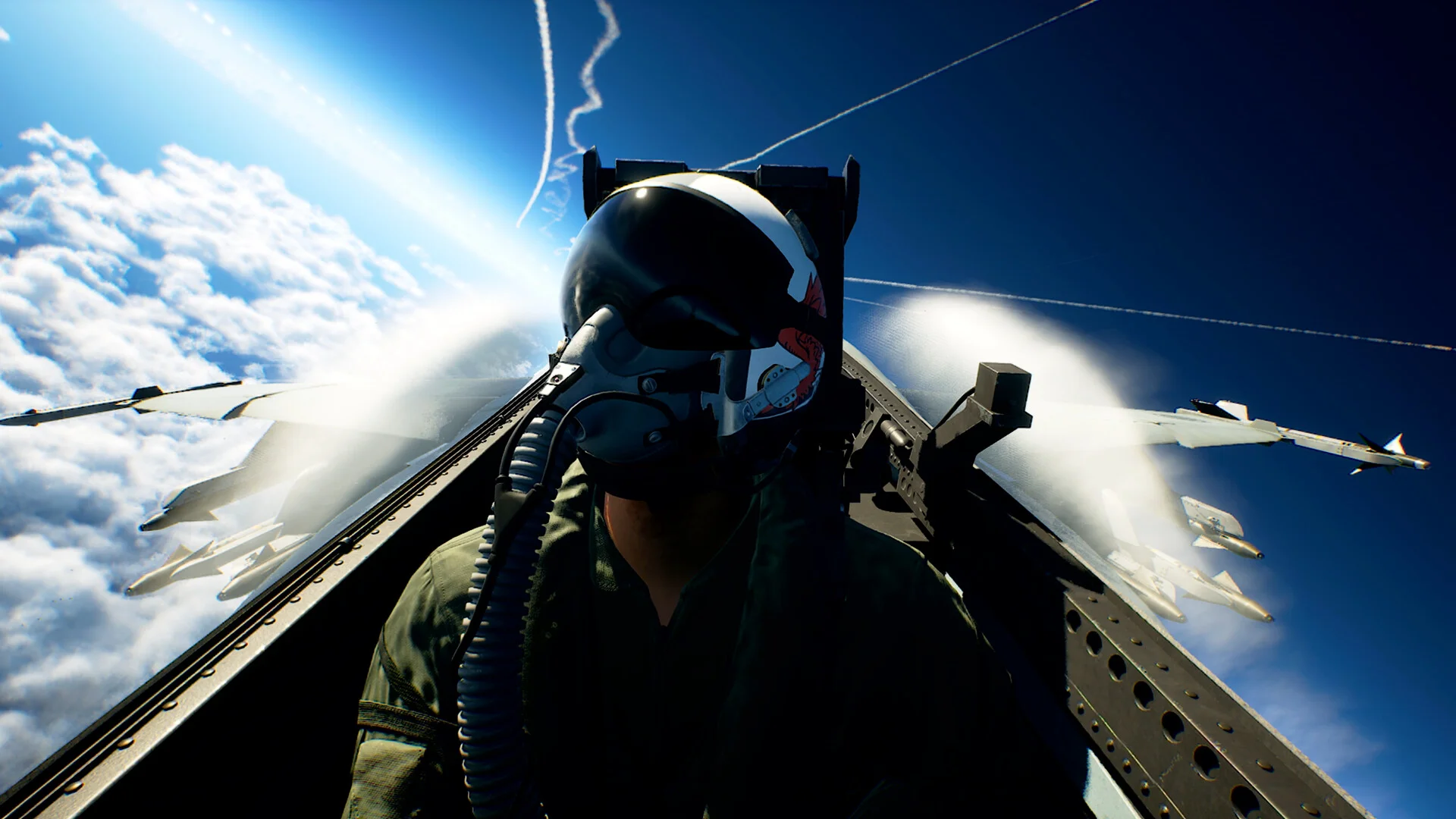
Expert controls expose that handling through direct control of roll and pitch. The simplified option reduces the freedom available for positioning, so simplification does not automatically make a difficult maneuver easier. Radar use and frequent target switching help keep the battle legible, while cockpit viewing brings its own compromise: a useful perspective for orientation, but slower camera movement when checking behind you. Sonic booms register speed, and vibration, camera shake, and explosions make combat forceful. Those effects intensify the flying without replacing the information needed to survive it.
The campaign’s 30 missions give preparation several distinct purposes. Score-based destruction favors efficient target selection; escorts demand attention to somebody else’s survival; identifying disguised armed ships asks you to establish what deserves a shot. Low-altitude radar avoidance and precise tunnel flying change the demands again.
Ground-support sorties give bombs and attacker aircraft an obvious use, while aerial superweapons and Land Battleships expand the scale of the targets. The variety works because mission objectives can change the value of equipment you already understand, rather than simply furnishing another backdrop for the same loadout.
The Aircraft Tree feeds those decisions with currency earned through mission performance. New aircraft open different capabilities, while parts improve statistics such as acceleration and speed within each aircraft’s slot limits. An upgrade does not erase the role of the machine carrying it.
That distinction preserves a reason to reconsider your aircraft instead of treating the newest purchase as a universal answer. Special-weapon selection adds another decision: carrying two types provides flexibility, while concentrating on one gives a clearer purpose to the sortie and increases your dependence on wingmen elsewhere.
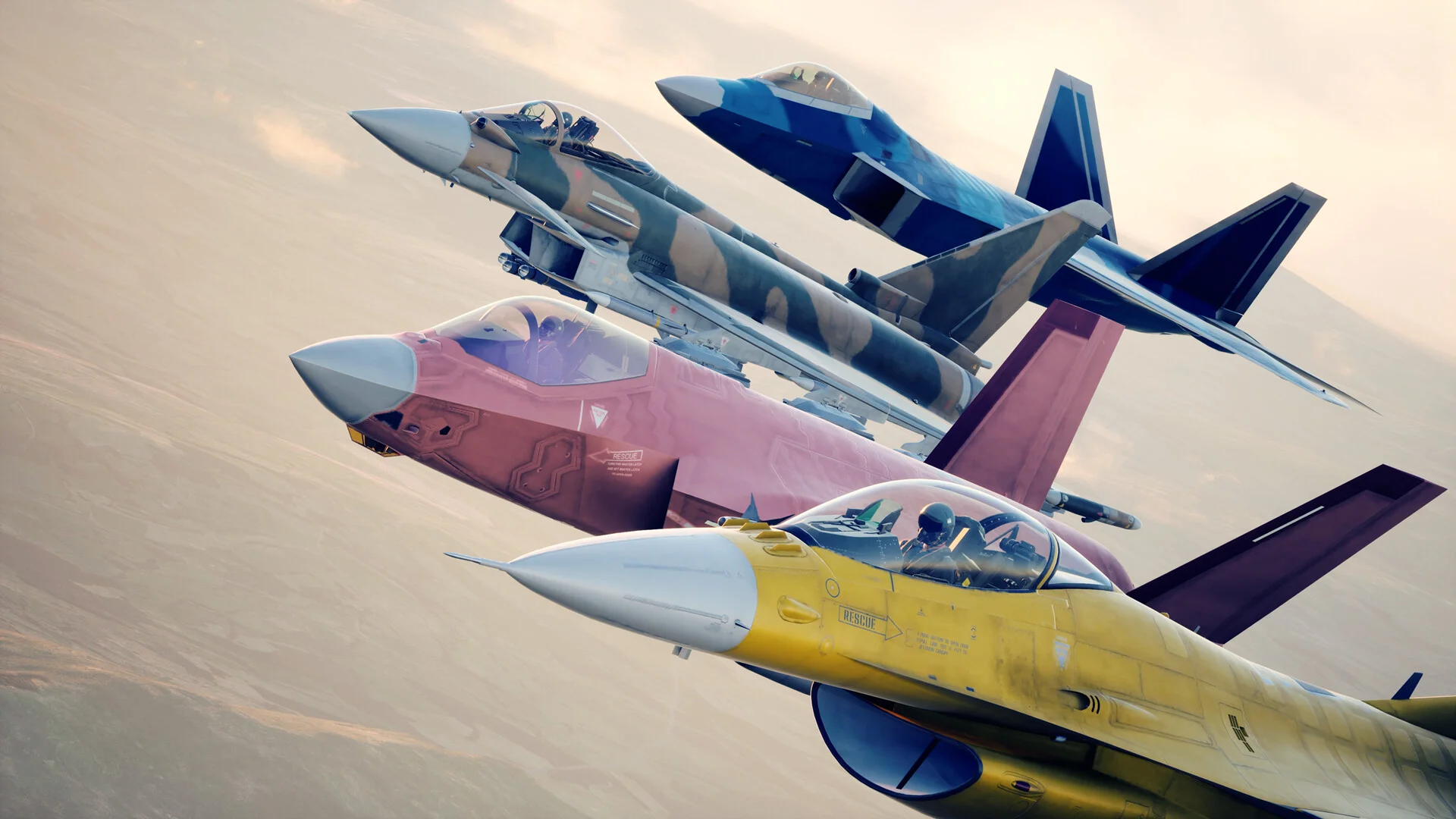
Performance ranking complicates the campaign’s otherwise helpful checkpoints. Recovering from a failed escort keeps a demanding mission from requiring a complete restart, but checkpoint use can affect the rank and currency awarded alongside completion time and enemies destroyed. The game accommodates recovery while retaining an incentive to execute the plan cleanly. That gives replaying a mission a mechanical purpose, though the available evidence does not establish that repeating sorties is necessary to keep progression moving.
Narrative delivery makes less effective use of participation. First-person cutscenes place you among the carrier’s personnel, then repeatedly request inputs to shake hands, accept an object, or leave a helicopter. Looking around can establish presence; pressing a button to permit the next predetermined gesture interrupts it. Standing at attention gives you very little to decide. The contrast with wingman orders is particularly sharp because combat has already demonstrated how a small input can redistribute work and change your immediate circumstances.
Radio dialogue presents a harder problem. Baxter, Tasha, and Coster accompany you through combat, allowing their voices to occupy the same space as their useful actions. Yet several overlapping conversations, sometimes accompanied by yes-or-no responses during dogfights, compete with target tracking and missile avoidance.
The game asks you to perform the role while listening to information that explains its significance. Cope’s continuing voice after his death adds a personal pressure to the inherited identity, but that material needs attention the busiest missions cannot reliably spare. The grandeur of “Everflow” and the late choral track supports the scenario’s emotional scale; music cannot make simultaneous dialogue easier to follow.
Online play carries squadron preparation into a separate progression system built around a customizable mercenary pilot. Co-Op Assault has two four-player teams competing for score against computer-controlled enemies, while Co-Op Warfare combines opposing teams with computer-controlled forces.
Eight-player Emergency Sorties focus collective firepower on colossal weapons. These formats give aircraft specialization several possible uses, though their long-term progression and online reliability deserve a provisional judgment. The Air Base lobby’s preparation and training functions matter here because coordination can begin before the shooting does.
Human teammates can negotiate the individual assignments that campaign commands compress into a shared order. A ground-attack specialist can ask for fighter cover, and another pilot can choose equipment with that responsibility in mind. That makes the commitment to a slower support aircraft a decision other people can prepare around. A Prowler pilot can explain the intended division of labor before launch, giving the squad a chance to adjust its aircraft instead of discovering the plan under fire.
The Review
Ace Combat 8 Wings of Theve
Ace Combat 8: Wings of Theve makes squadron leadership tangible through aircraft specialization, weapon allocation, and dependable wingmen. Its varied missions give preparation a purpose, while distinct handling makes those choices felt in combat. Group-wide orders limit precise delegation, and the story’s overlapping dialogue and routine button prompts use player attention poorly. The flying sustains the heroic role most convincingly when success depends on trusting somebody else to handle part of the battle.
PROS
- Loadout choices create meaningful tactical tradeoffs.
- Useful wingmen make squadron preparation matter.
- Distinct aircraft handling preserves specialist roles.
- Varied objectives encourage different approaches.
CONS
- Group-wide commands limit individual assignments.
- Overlapping dialogue competes with combat.
- Routine cutscene prompts interrupt immersion.