





























The first Minecraft Dungeons sent you from one self-contained mission to the next. Its sequel replaces that map of destinations with an interconnected Overworld, where caves and rifts lead into dungeons and a stray path might hide a platforming challenge or a useful piece of loot. The main quest still guides you through the landscape, so this is hardly Minecraft’s limitless playground. Yet the trip between fights now matters. A settlement, a detour, and the entrance to a dungeon can feel like parts of the same expedition.
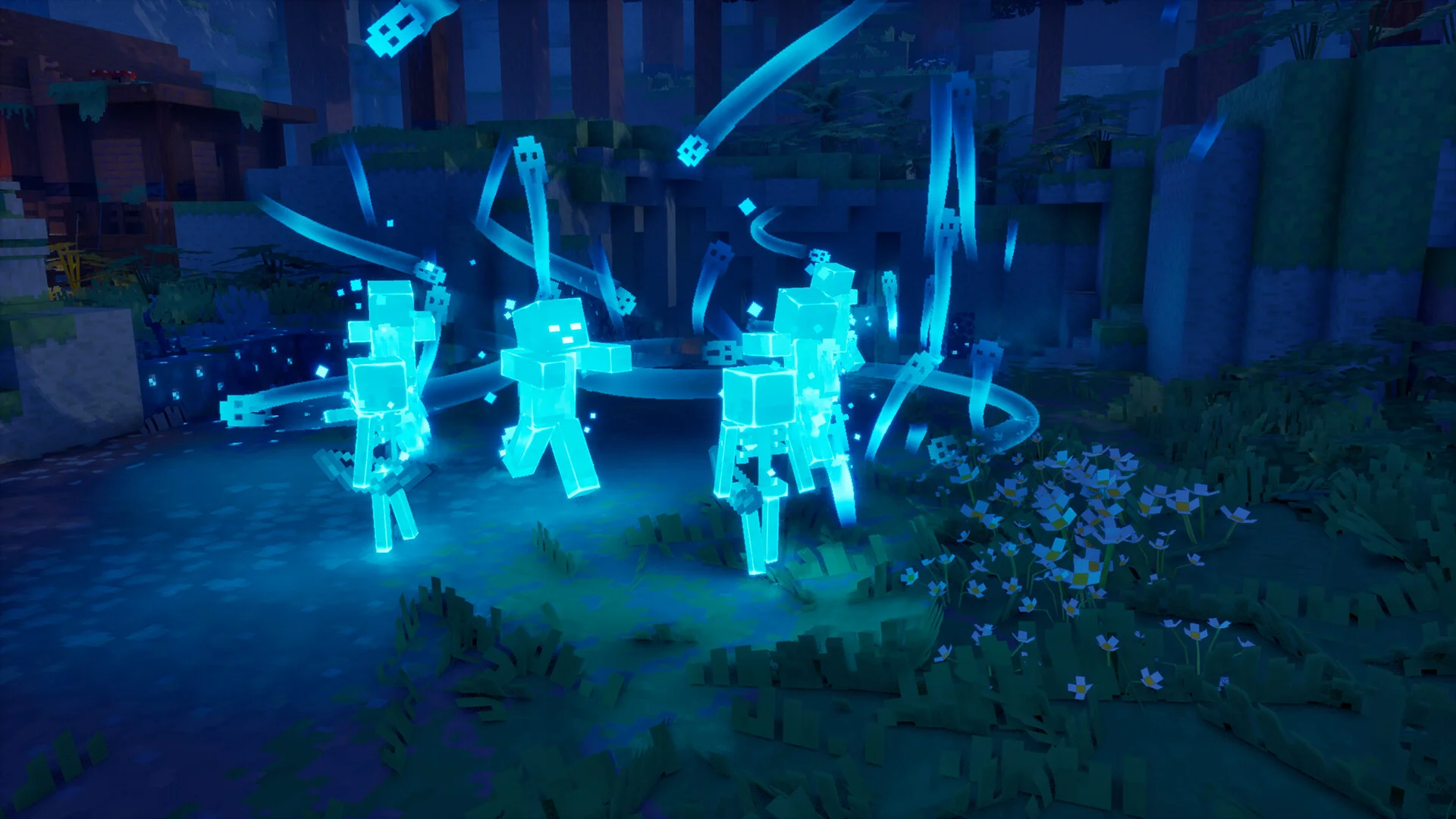
The Sift gives that expedition somewhere worth going. Its soul-filled terrain, corrosive pools, and strange creatures look and sound distinct from the familiar Overworld mobs. Some of its inhabitants seem to converse through music, a lovely idea for a dimension that exists beyond the usual Minecraft scenery. The disappointment is how little your actions change once you arrive. Most encounters still ask you to clear another route through enemies. The new setting gives Minecraft Dungeons II an identity of its own, while its dungeons seldom find equally distinctive things for you to do there.
An Illager council’s attempt to draw power from the Sift supplies the reason to travel between the two worlds. The story is light enough to leave a co-op session moving, though the council receives little development beyond its threat to the Overworld. Its ending also offers scant payoff for the pursuit. Compared with the first game, the improvement lies in how the world connects the missions, rather than in the tale that sends you through them.
Fighting through those missions feels better than it used to, partly because your hero can finally jump. Alongside the original’s melee attacks, ranged weapons, artifacts, and dodge, jumping lets you evade some incoming attacks, cross small traversal challenges, and land a ground slam in a crowd. That sounds like a modest addition until a screen fills with mobs and another way to reposition becomes useful. The chunky character designs usually make targets readable, although explosions and overlapping effects can still obscure a busy encounter.
The extra movement does not make every fight inventive. Many ordinary enemies remain variations on the familiar rhythm of attacking, dodging, and waiting for an opening. Bosses put greater pressure on that rhythm, especially when a dangerous attack catches you with your single healing potion still recharging. A player whose equipment is lagging behind can face a sharp difficulty spike; a strong combination of upgrades can make the same basic combat feel much easier. That swing points to the sequel’s most interesting improvement, and one of its most persistent frustrations.
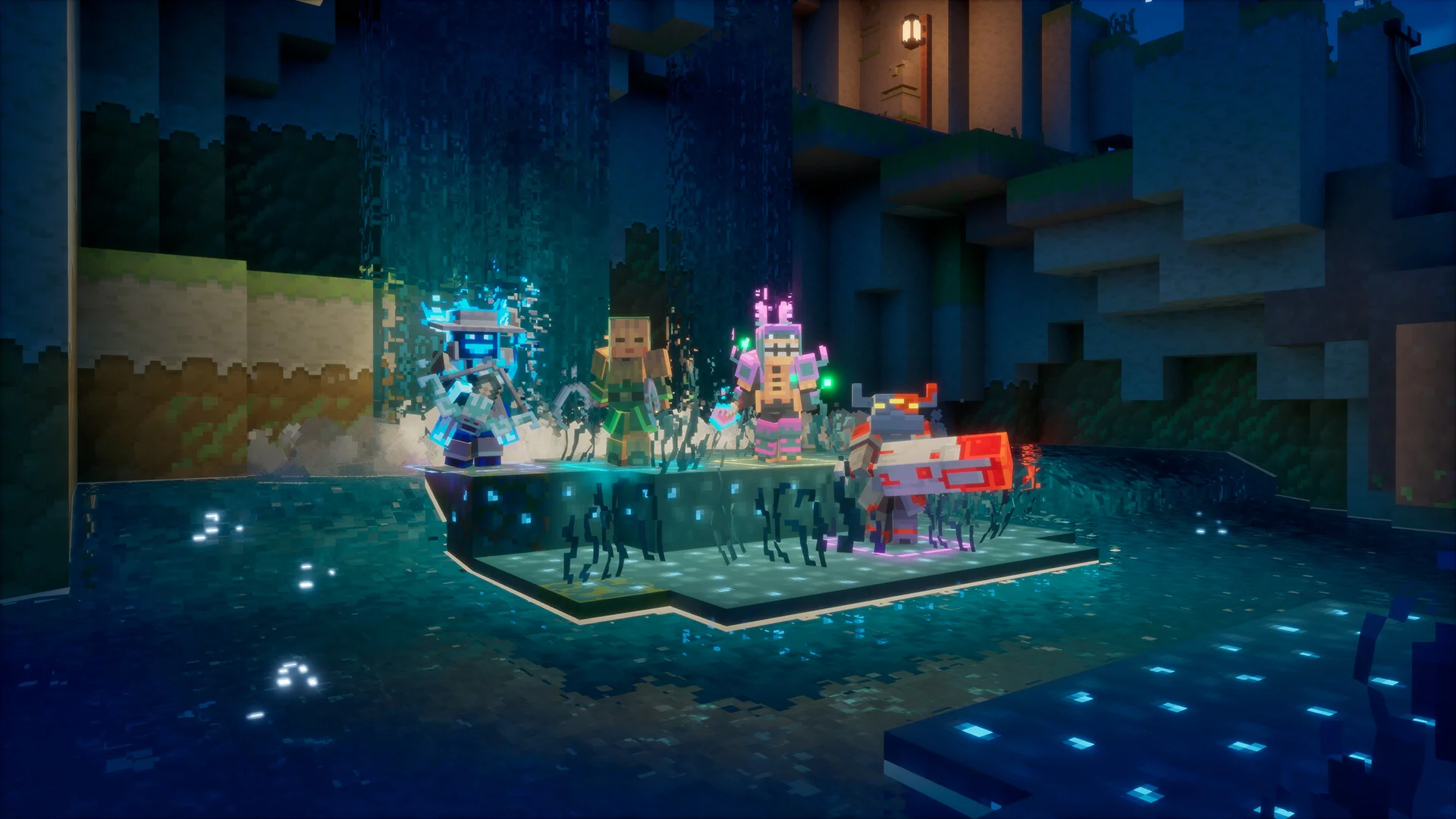
Your equipment remains your character build. There are no classes or skill trees assigning a permanent role, but the original’s limited armor setup has expanded into several slots alongside weapons, artifacts, talismans, and enchantments. A hammer that shocks nearby enemies and a crossbow whose shots pierce targets can be supported by armor that improves healing. Upgrade those pieces together and there is a clear pleasure in seeing a collection of drops become a deliberate fighting style. A blacksmith can raise a favored item’s power, so finding a better number need not mean immediately abandoning a weapon you enjoy.
Getting to that point is less dependable. Early on, your choices are often shaped by whichever weapons and armor happen to drop. Someone hoping to fight at range may instead find that their strongest available gear favors heavy melee combat. Enchantments and additional slots eventually give you room to correct course, but the game can take time to let you pursue a specific idea. Compared with a class-based action RPG, this approach makes it easy to change direction. Compared with the build you might have hoped to make, it can feel like waiting for permission from the loot table.

Co-op softens some of that friction. Healing totems and team buffs give players reasons to consider one another’s loadouts, while objectives involving separate keys briefly reward splitting up and regrouping. The quick inventory also lets someone adjust equipment without making the whole party wait through a lengthy pause. Even so, everyone shares the same basic movement and combat abilities. Distinct team roles come from the gear players find and improve, so the quality of that loot matters to a group as much as it does to a solo hero.
The campaign moves briskly enough that the gaps in a build may only become obvious when it is nearly over. After the final fight, Soul Storms offer tougher enemies and better rewards, while unfinished quests and dungeons remain available. These activities can be satisfying if refining equipment is its own reward.
They offer fewer reasons to test a perfected setup in a substantially different challenge. The first Minecraft Dungeons grew into a game with broader postgame variety; judged at this stage, its sequel’s expanded build options run ahead of what its endgame asks players to accomplish with them. There is a fine new hammer to upgrade, and a familiar dungeon waiting at the end of the trip.
The Review
Minecraft Dungeons II
Minecraft Dungeons II is a clear step forward from the first game. Its interconnected world makes exploration matter, jumping improves the feel of combat, and expanded equipment gives players room to shape a build. The Sift is memorable, even if the missions make limited use of it. Loot can take too long to support a chosen playstyle, and the thin endgame gives a finished build little to prove. It is an enjoyable co-op sequel whose best ideas need stronger challenges to sustain them.
PROS
- Interconnected world rewards detours
- Jumping makes combat livelier
- Expanded gear supports satisfying builds
- The Sift has a distinct identity
CONS
- Loot can delay build control
- Repetitive ordinary encounters
- Thin endgame







