




























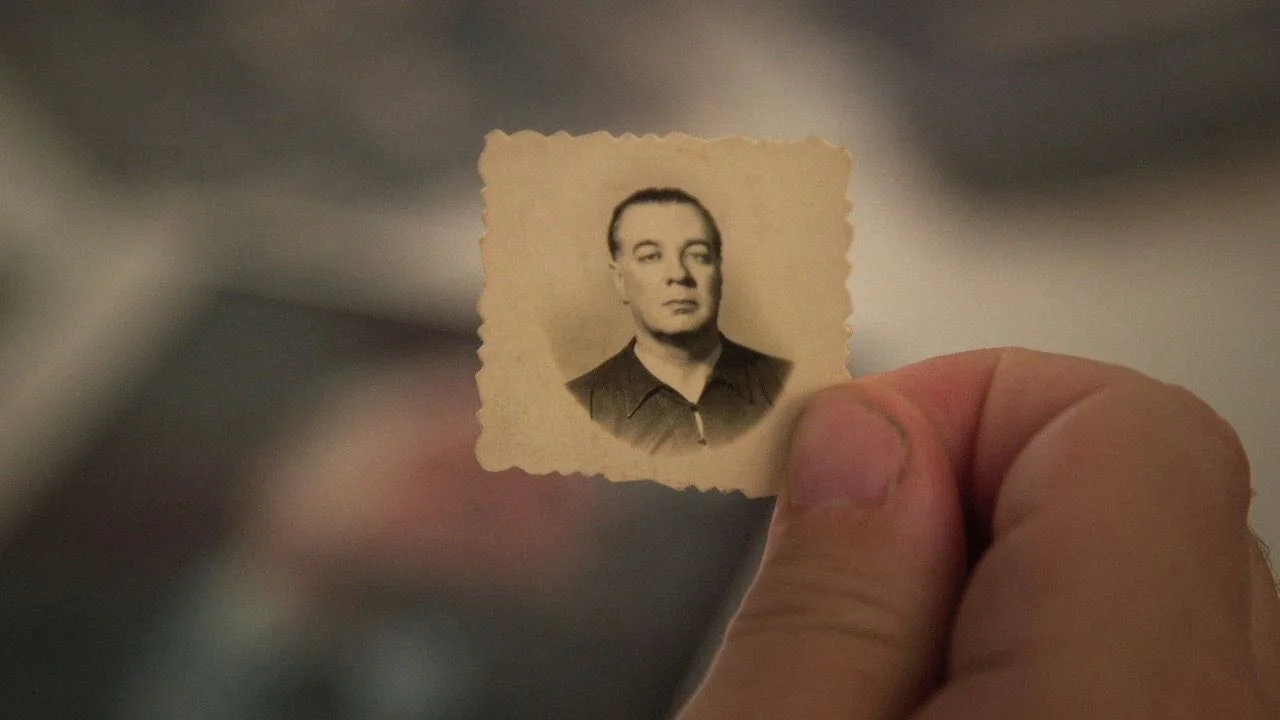

A notebook of tiger drawings has an excellent biography waiting for it: the young Borges, already drawing the animal that would haunt his imagination. Ernesto Montequín looks closer. A name in the notebook raises doubts about its supposed owner, and the drawings may belong to someone in Borges’s family instead. The story does not survive contact with the object quite as neatly as its admirers might wish. Montequín has found a clue, though not necessarily a solution.
The handwritten manuscripts pose a different problem. Borges fills pages with alternate lines and revisions before leaving readers a finished text that conceals those discarded possibilities. Which version tells us most about him: the sentence he chose, or the choices he refused? I began to suspect that the documentary was using uncertainty as a convenient excuse to keep looking forever. Yet the notebook gives that uncertainty a practical value. Without Montequín’s doubt, a pleasing mistake could pass for evidence.
Mariano Llinás builds Life of Jorge Luis Borges from such acts of scrutiny. He and Montequín examine letters, drawings, books, and manuscripts, then travel to places associated with the Argentine writer. Llinás narrates, appears on camera, and lets us see parts of the film taking shape.
A magnifying glass makes the archival work look like detective business, while Montequín’s measured attention meets Llinás’s appetite for speculation. Across roughly five and a half hours, divided into three parts and alphabetically marked chapters, the inquiry gathers enough material to furnish several tidier biographies. Tidiness has little appeal to Llinás.
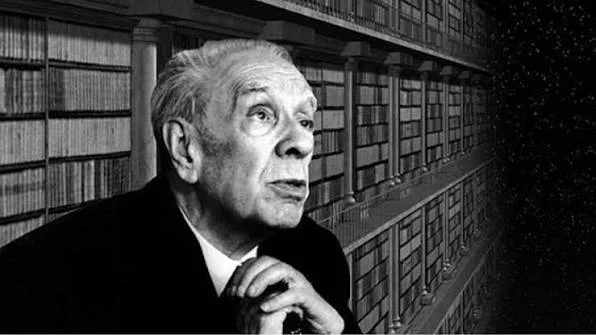
His visible screenplay, sometimes shown as a Word document, is especially revealing. Borges revised his sentences; Llinás arranges the surviving pieces of Borges’s life. The film invites us to compare those activities, then leaves an uncomfortable difference between them.
A writer can choose the final form of his own work. A biographer chooses on behalf of somebody who can no longer object. Llinás’s camera adjustments and first-person narration make that power easier to notice. They also give him a great deal of screen time (a biographer is rarely accused of being camera shy for five hours).
The journeys initially seem to promise firmer ground. If papers invite competing interpretations, surely a street or building can at least confirm where someone stood. Llinás finds a former resort reduced to a marker, a railway station gone, and an Icelandic hotel that no longer exists. The search records changes to the world Borges occupied, but it cannot restore the conversations or thoughts that took place there. An empty location is still evidence of something. It simply declines to say as much as a filmmaker might want.
Llinás often understands this better when he allows an excursion to disappoint him. His family and crew enter the record; the hunt for Borges becomes a record of the people doing the hunting. A stretch devoted to getting the color of a notebook to appear correctly on camera catches the absurdity of trying to make an object tell the truth before interpretation has even begun. It also tries my patience. The film’s digressions can reveal how knowledge is made, and they can consume time because Llinás enjoys them. His freedom needs that distinction.
The larger test arrives when the evidence concerns Borges’s politics. In a staged interview with Laura Paredes, his public conservatism comes into sharper view. The film addresses his admiration for Pinochet and his initial support for Videla’s military dictatorship; his later distance from Videla does not cancel the earlier position. Here my affection for Llinás’s playful method faltered. A mistaken attribution in a notebook rewards further inquiry. Support for men exercising state violence demands a judgment, even if the full measure of Borges’s motives remains inaccessible.
The film makes room for that judgment, though its buoyant manner does not always sit easily beside it. Llinás has spent hours teaching us to distrust the simple account of a life. That lesson remains useful, provided it does not turn every fact into another delightful ambiguity. The film imagines literature as a territory shared across borders, while Borges publicly supported dictators whose regimes endangered other lives. The contradiction belongs in the biography. It cannot be solved by locating one more manuscript.
Late in the film, the attention Llinás has lavished on Borges moves toward Montequín. His connection to the late filmmaker Edgardo Cozarinsky, and the sight of him reading a eulogy, bring another life into an investigation that had seemed capable of extending indefinitely.
I had taken the film’s scale for a claim that enough looking might finally disclose Borges. Watching Montequín speak, I found a humbler possibility: the years spent reading a person also become years in the reader’s own life. The archive cannot give Llinás a complete Borges. It has already changed what Montequín carries with him.
Life of Jorge Luis Borges premiered at the Venice Film Festival in September 2026. The sweeping documentary explores the legendary author’s life, literature, and history through an exhaustive review of his personal papers, books, and the places he inhabited.
Full Credits
Title: Life of Jorge Luis Borges
Distributor: El Pampero Cine, Luxbox
Release date: September 6, 2026 (Venice Film Festival)
Running time: 5 hours 30 minutes (330 minutes)
Director: Mariano Llinás
Writers: Mariano Llinás
Producers and Executive Producers: Mariano Llinás, Laura Citarella, Alejo Moguillansky, Agustín Mendilaharzu, Ezequiel Pierri
Cast: Mariano Llinás, Archival Subjects
Director of Photography (Cinematographer): Agustín Mendilaharzu
Editors: Ignacio Codino
Composer: Gabriel Chwojnik
The Review
Life of Jorge Luis Borges
Llinás turns Borges’s manuscripts, lost addresses, and disputed artifacts into a lively inquiry about how a life becomes a story. Some digressions outlast their discoveries, and the film’s playful manner strains against Borges’s political record. Still, its search gains force when attention shifts to Montequín and the life he has spent reading another man’s work.
PROS
- Archival discoveries make interpretation suspenseful
- Vanished locations challenge easy biographical certainty
- Montequín’s eulogy gives the inquiry human weight
CONS
- Some digressions consume time without deepening the search
- The buoyant tone sits uneasily beside Borges’s politics
- Llinás’s presence occasionally crowds his subject







