






















Jay-Z recalls making peace with his estranged father while he was recording The Black Album. His mother had urged the reconciliation; his father died a month later. The camera stays with Jay-Z as he describes the relief of having spoken to him in time. In the bare room, without a cutaway to take over the story, the emotion across his face has time to register.
Elsewhere, “4:44” asks him to face a different kind of past. Jay-Z says he has listened to the song less than almost any other he has made. Its apology remains on the record for anyone to hear, while he speaks cautiously about the pain behind it and the work of repairing it. Rubin asks if he has made progress. “Definitely,” Jay-Z replies. The answer may be entirely sincere, yet the brief exchange leaves an uneasy distance between a confession fixed in music and a life still being lived.
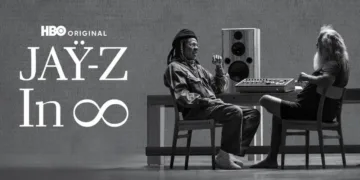
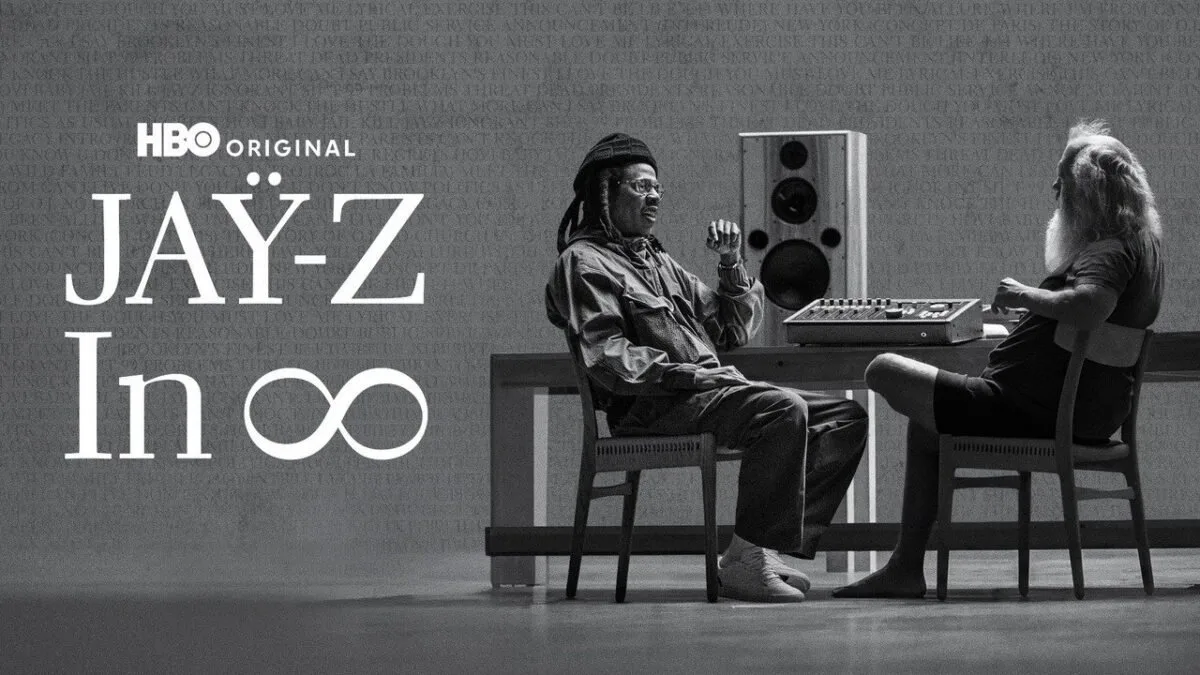
Rick Rubin’s eight-part Jay-Z in 8 gives such distances room to appear. At Paris’s Palais Brongniart, Rubin plays songs from across Jay-Z’s career and invites him to unpack their words, origins, and lingering associations. Bradford Young photographs their conversations in black and white. Two speakers, a table, and the men listening together are often enough to fill the frame. The setting makes the songs feel unusually present: old recordings arrive in a room where their author has grown older, then have to answer to the person he is now.
Some of the series’ pleasure is exact and immediate. Jay-Z explains how “I keep one eye open like CBS” invokes the network’s eye-shaped logo while sounding out “see BS.” He describes building entire songs in his head, and speaks of how long he may spend finding a line with several meanings. Rubin’s delight is easy to share when an apparently effortless phrase opens up under scrutiny. These passages give the listening sessions a purpose beyond admiration. They let us hear the labor inside an ease Jay-Z has spent decades making sound natural.
A song can also keep the trace of another person. Discussing “Brooklyn’s Finest,” Jay-Z remembers how quickly his friendship with the Notorious B.I.G. formed, the meals and laughter that followed their recording together, and B.I.G.’s suggestion that they move to Atlanta. The proposed future has a different sound now that one of them did not live to see it. Jay-Z need only recount the conversation for the track to feel crowded with what came after. Here the series trusts memory to alter the music without requiring every lyric to be decoded.
Rubin’s long familiarity with Jay-Z helps create that ease, though it also governs what the room can hold. Their conversation about “Kill Jay-Z” touches on the song’s attempt to put an old ego to death without staying long with the painful incidents named in its verses.
When they reach Jay-Z’s “Jail” collaboration with Ye, they discuss Ye’s objection to the “red cap” line but leave the relationship around it largely unexamined. Rubin does sometimes ask a direct question, as he does about the progress described after “4:44.” More often, his wonder at what Jay-Z has written becomes the end of an inquiry. The restraint feels humane in one exchange and incurious in another.
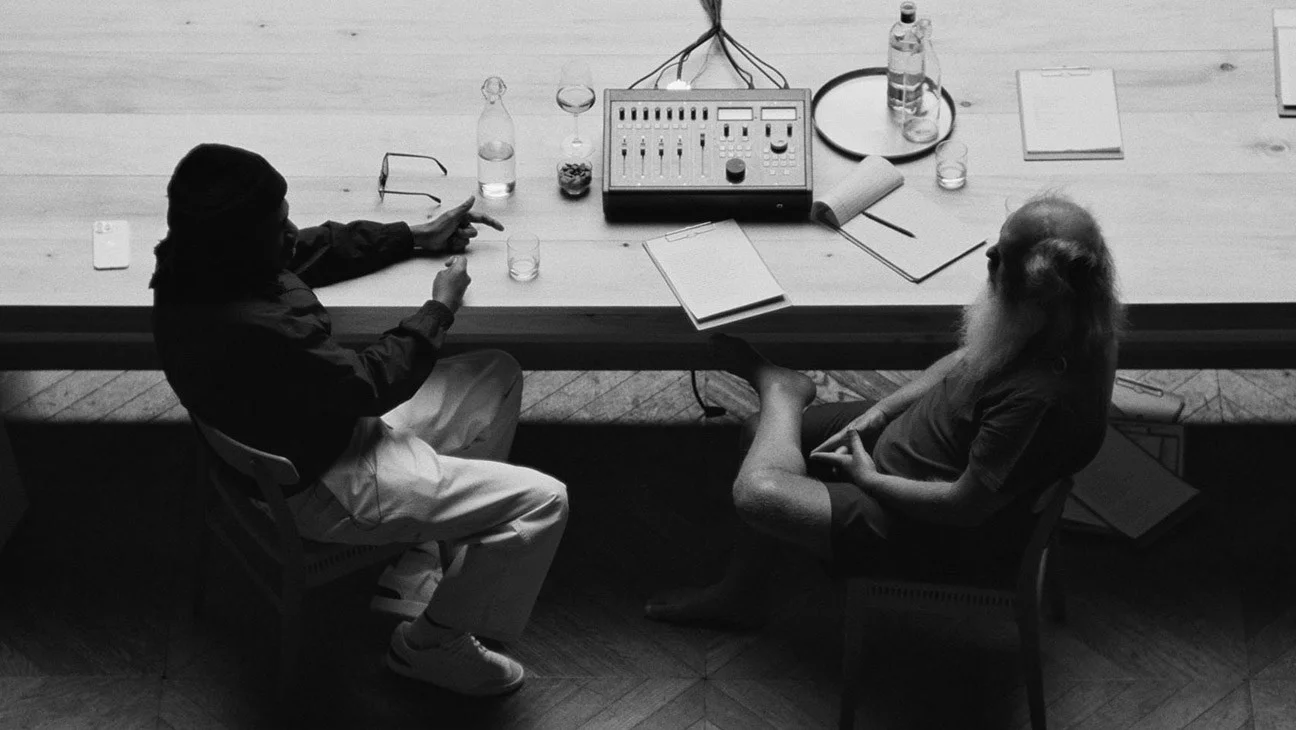
That uncertainty is part of sitting with the series. Jay-Z has no obligation to make every private hurt legible for an audience, and Rubin’s closeness may be what allows the conversation about his father to happen at all. Still, the camera and the long running time invite a feeling of access that the conversations cannot always sustain. Jay-Z can revisit a line, explain its construction, and tell a story from the room where it was recorded. At other moments, he chooses a few words and moves on. The film rarely presses against that choice, leaving its silences to feel alternately tender and carefully protected.
Eight episodes make the distinction harder to ignore. Rubin often plays a track, the words appear onscreen, and Jay-Z recites or explains them after we have heard them. An account of how a line changes meaning can justify the time; a slower repetition of its plain meaning cannot.
The series moves among periods and subjects without building much sense of arrival. Episode seven steps away from the playback arrangement for a direct interview, sometimes returning to stories already discussed, before the last episode restores the earlier routine. The shift briefly promises another way to know its subject, then makes the familiar room feel smaller.
There are passages here that make one want to return to the records: a joke concealed in a syllable, a friendship audible behind a collaboration, a father’s death newly present beside the relief of reconciliation. The series is less sure when to leave those passages alone. Jay-Z says he seldom listens to “4:44,” though its words remain available to everyone else. For all the hours Rubin spends asking him to listen again, that admission is among the hardest things the film allows us to hear.
JAŸ-Z in 8 premiered on HBO Max and MUBI on September 18, 2026. The eight-part documentary series features rap icon Jay-Z sitting down with legendary producer Rick Rubin over two days in Paris to unpack his lyrics, career milestones, and creative process.
Where to Watch JAŸ-Z in 8 Online


Full Credits
Title: JAŸ-Z in 8
Distributor: HBO Max, MUBI, Prime Video
Release date: September 18, 2026
Rating: TV-MA
Running time: 37–60 minutes per episode
Director: Rick Rubin
Writers: Not publicly specified
Producers and Executive Producers: Jay-Z, Daniel Kaluuya, Rick Rubin, Leila Mattimore, David Rohde
Cast: Jay-Z, Rick Rubin
The Review
Jay-Z in 8
Jay-Z in 8 is most affecting when an old recording brings a person or regret back into the room. Jay-Z’s account of reconciling with his father, and his reluctance to revisit “4:44,” give Rubin’s spare format a quiet force. His close listening also reveals the care inside a seemingly effortless line. Across eight episodes, though, repeated explanations and questions left unasked make that intimacy feel carefully bounded. The songs endure beyond the conversations meant to explain them.
PROS
- Revealing accounts of songwriting and memory
- Spare photography gives emotional moments room
- Jay-Z and Rubin share an easy familiarity
CONS
- Lyric explanations sometimes repeat the obvious
- Sensitive exchanges often stop too soon
- Eight episodes lack a sense of progression