











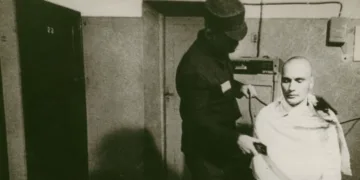









Hosni Ghunim’s home movies have a little extra polish. He worked as a videographer, so the footage of his children at Christmas or dancing around the house sometimes comes with titles and editing touches that an ordinary family tape might lack. Young Colette and her brother Ramsey seem at ease in front of his camera. Then Colette draws our attention to something else in the recordings: a word from her mother, Iza, or a disapproving look that brings her play to a stop.
As the footage moves into Colette’s teenage years, the face she presents to the camera grows less open. Editing can make a pattern visible by placing moments from different years in conversation. It cannot tell us everything that happened between them.
Colette Ghunim understands that distinction in Traces of Home, her documentary about trying to know her parents as people with childhoods of their own. She has the archive Hosni made. To learn what it leaves out, she has to ask him and Iza questions neither parent has found easy to discuss.
The family built its life in Schaumburg, Illinois, where the children grew up with the holidays and routines captured on those tapes. Colette now feels unable to speak freely with either parent, especially her mother. She decides to travel with them to the places they left behind: Hosni’s childhood home in Safed and Iza’s family in Mexico. It sounds like a straightforward documentary plan. Go back, hear the stories, understand the distance at home. What holds my attention is how often a place or a story answers one question while making the next one harder.
Hosni’s return carries the history of his family’s displacement from Palestine. Reaching the place itself is difficult. The family travels through a complicated land crossing, and Colette is briefly questioned before they can continue. That experience brings the conditions of the present into a journey driven by childhood memory. Once there, Hosni has to reckon with a home he remembers from when he was very young and with the years he has lived away from it. At times he shuts down. Colette’s camera can stay with him through those silences, though filming cannot make him explain what he feels.
The trip to Mexico gives Colette a different kind of access. Iza reconnects with relatives, and the family learns further details of why her mother, Conchita, fled an abusive husband. Even escape had obstacles: Conchita’s American citizenship did not allow her simply to bring Iza into the United States without her husband’s permission.
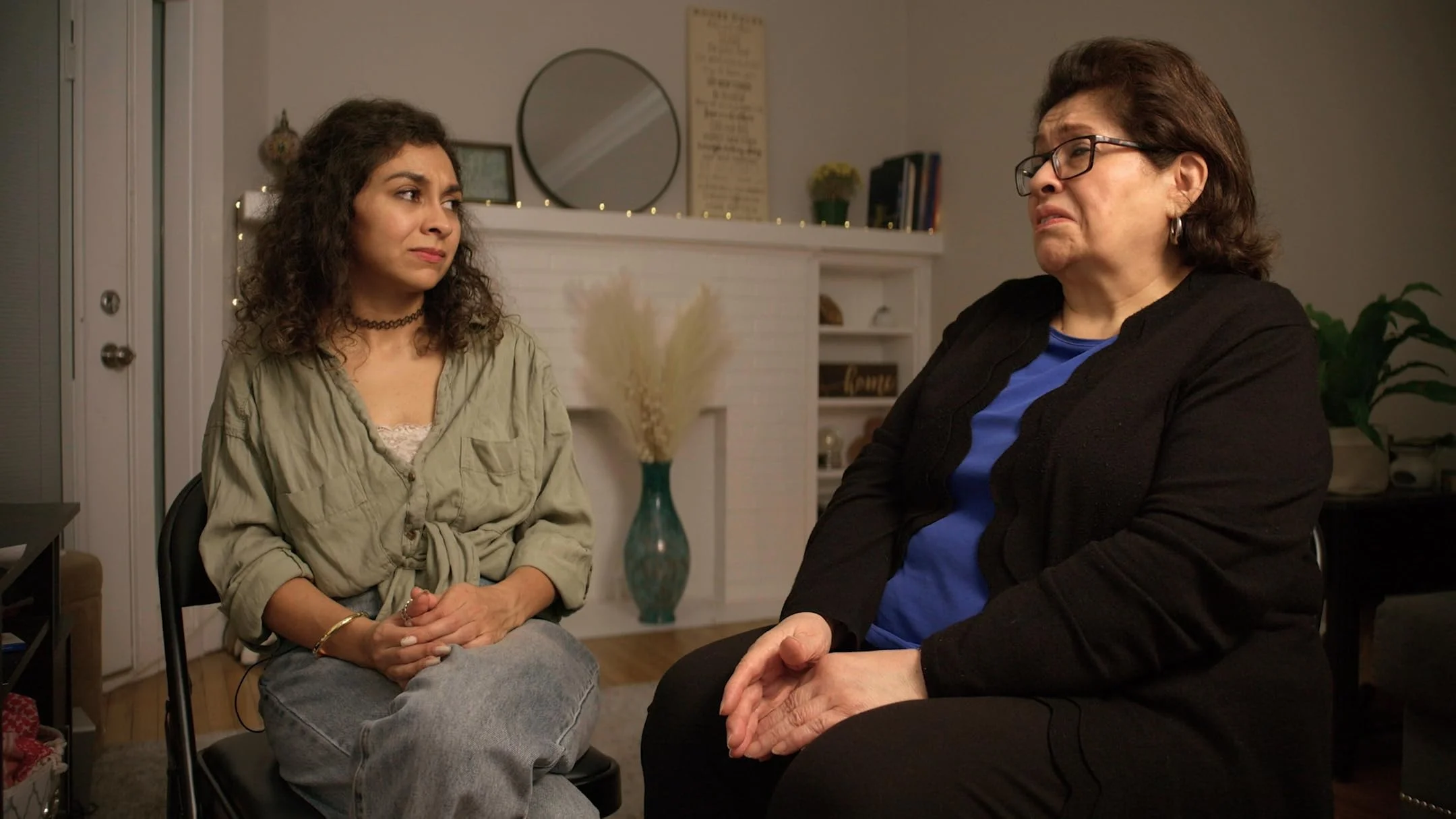
The practical cruelty of that detail gives weight to a history Colette knew too little about. It also changes how we hear Iza’s corrections in the old footage. Colette has reason to remember the hurt they caused; learning what Iza survived does not erase it. The documentary makes room for both experiences.
That is where the film’s movement between past and present does its best work. A home movie can show a mother’s reaction and a daughter’s face, but it cannot supply the years that formed either person. The visits fill in part of that missing history, then send us back to the Illinois recordings with a changed sense of what we are watching. Hosni’s carefully made videos preserved a lively family life. Colette’s use of them lets her examine why she came to feel guarded within it. The same images serve both purposes.
There is a risk in arranging two returns within one film. Hosni’s displacement and Iza’s flight from violence could start to look like matching explanations for their behavior as parents. The details resist that neatness. Hosni’s uneasy arrival and withdrawal have a different shape from Iza’s reunion with relatives and the story of Conchita’s escape. Colette gains understanding from each trip, but understanding is still something she must bring back into a difficult relationship. A journey cannot do that work for her.
Nor is Colette outside the habits she is trying to understand. Hosni spent years recording his family; she now approaches him with a camera of her own. She recognizes that filming can offer a way into conversations she might otherwise avoid, and she worries about keeping that distance when her father is overwhelmed.
I appreciated the film most when it allowed that uncertainty to remain practical and immediate. The question is not settled by a confession or a return to a childhood address. When Hosni falls quiet, Colette still has to decide what she can learn by continuing to film and what she might hear by being beside him.
Traces of Home received a limited theatrical release in the United States on September 18, 2026, following an acclaimed festival run. The feature-length documentary follows a biracial filmmaker who travels with her Palestinian father and Mexican mother back to their homelands to confront generational trauma and displacement.
Where to Watch Traces of Home (2026) Online
Full Credits
Title: Traces of Home
Distributor: Watermelon Pictures
Release date: September 18, 2026 (Limited Theatrical Release)
Running time: 1 hour 33 minutes (93 minutes)
Director: Colette Ghunim
Writers: Colette Ghunim, Sara Maamouri
Producers and Executive Producers: Capella Fahoome, Colette Ghunim, Dan Rybicky, Sara Maamouri, Melissa Barrera, John Leguizamo, Dena Takruri, Keith Wilson, Malik Nabulsi
Cast: Hosni Ghunim, Iza Ghunim, Ramsey Ghunim, Colette Ghunim
Director of Photography (Cinematographer): Rafic Saadeh
Editors: Colette Ghunim, Sara Maamouri
Composer: Omar Fadel
The Review
Traces of Home
Traces of Home makes unusually thoughtful use of a family’s own footage. Colette Ghunim’s editing changes how we read those childhood images, while the trips to Safed and Mexico reveal histories the camera could never capture. I admire the film’s willingness to leave its hardest question open: how much can understanding a parent change a relationship already shaped by years of distance?
PROS
- Home movies gain new meaning through editing.
- The two family histories retain their differences.
- Colette questions what her camera can accomplish.
CONS
- The archive cannot fully explain the family rift.
- The paired trips sometimes invite too neat a parallel.