









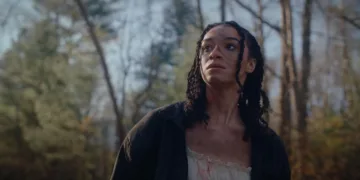









Arsa’s father made sculptures for a patron who wanted pleasing statues. After his death, she gathers plastic and other debris from the shore and makes sculptures of her own. MASBEDO’s Arsa connects the two practices through flashbacks, giving the eighteen-year-old’s work a history without making her explain it. She has inherited her father’s craft and rejected the terms under which he used it. That is a sturdy foundation for a character who says little.
Her days on a sparsely populated island off Sicily have their own order. She collects what the sea deposits, sells some of it to a recycler who arrives by boat, and works alone with the rest. Through binoculars, she watches visitors from a distance. These activities establish a life that can be interrupted, rather than solitude offered as a picturesque personality trait. Gala Zohar Martinucci is especially effective within that routine. Her guarded presence gives Arsa’s attention to objects and people a weight the dialogue rarely has to supply.
The film’s images make that attention understandable. Arsa repeatedly dives toward a bronze statue half-buried underwater. Against the black volcanic rock and dark water, the search has a physical urgency that her quieter hours on land sometimes lack. The statue also extends the film’s interest in making and recovering things, although MASBEDO wisely leave its meaning open. Their visual-art background shows in the patience of these passages. A dive has time to become an action Arsa chooses, rather than an illustration of a theme already explained to us.
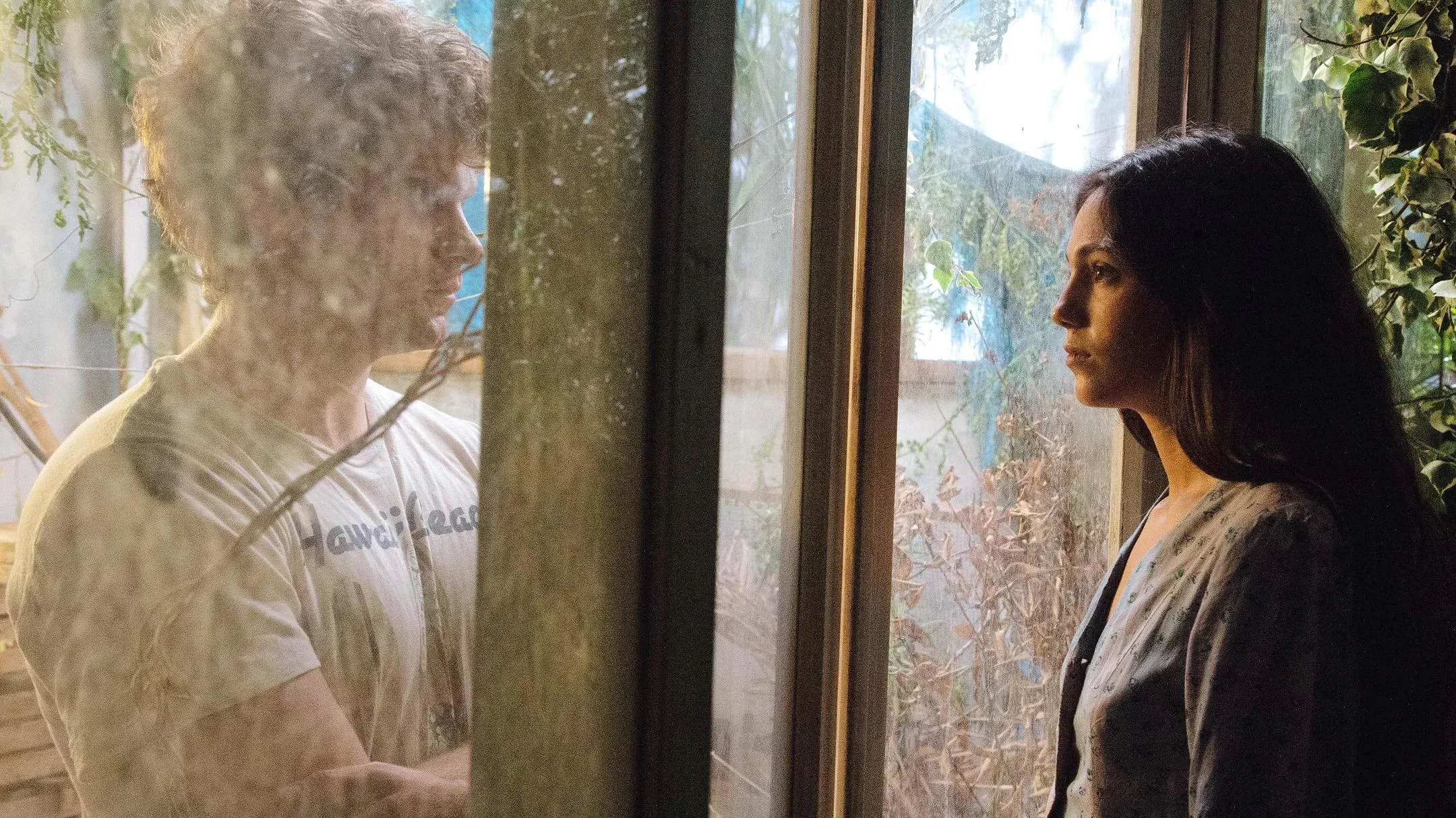
Then three young men rent a neighboring house, and the film asks its carefully arranged solitude to support a relationship. Andrea, played by Jacopo Olmo Antinori, is drawn to Arsa. He has lost his father too, a parallel that gives them a possible point of contact. Their encounters leave room for curiosity and discomfort: Andrea keeps trying to approach someone accustomed to observing others from afar, while Arsa does little to make herself legible to him. Even sleeping with him does not mean she will answer his emotional interest.
That resistance is credible. The difficulty is what the story builds from it. A shared bereavement can start a conversation; here, it often has to stand in for the conversation. Glances and silences carry the attraction, but later encounters do not consistently revise what we know about either person. Andrea remains drawn to an enigma, and Arsa remains one. The film need not turn her into someone who explains herself for his benefit. It does need the disruption of her established life to gather some force as the scenes accumulate.
The uneven pacing follows from that problem. The father’s flashbacks supply information about Arsa’s inheritance, while the underwater passages give her preoccupations a vivid form. Andrea’s arrival ought to put pressure on both. Instead, the film often moves among memory, present-day encounters, and dreamlike imagery without making their order feel necessary. Its willingness to drift suits Arsa’s isolation for a while. Across a feature, though, atmosphere cannot perform every job the story has left vacant. The question is not simply where a scene falls in her timeline or mind, but what it allows the next scene to do.
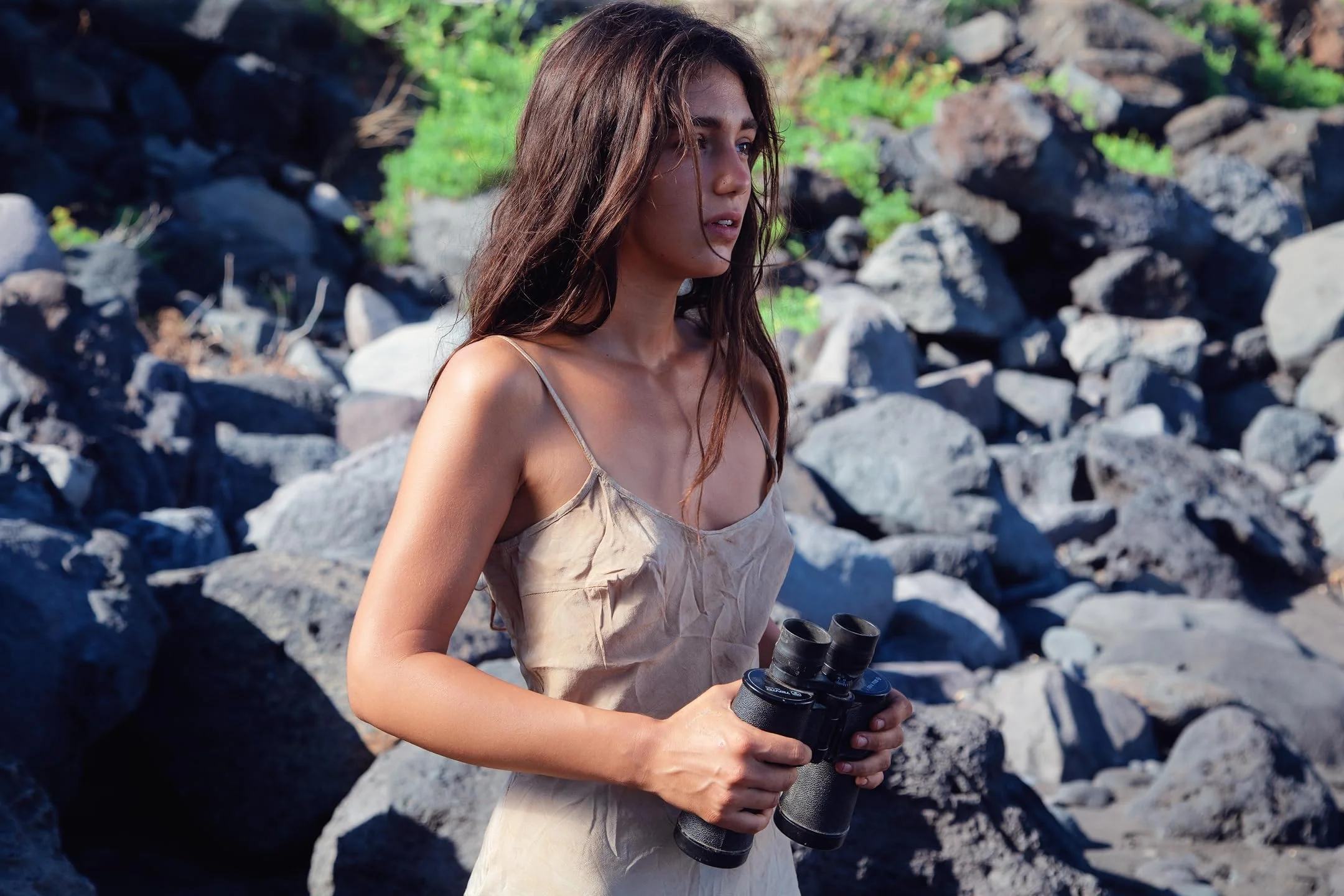
Martinucci helps the film hold together through those stretches. She does not soften Arsa’s reserve to make the romance easier to read, and Antinori gives Andrea’s attempts to reach her a human basis. Their performances leave open the possibility of connection without promising it.
MASBEDO’s camera is less consistent in what it wants from Arsa. Close attention to her face and body can register her guardedness, yet repeated proximity sometimes makes her an object of study while preserving the same distance from her inner life. When Andrea’s fascination becomes part of the story, the film has an opportunity to examine that act of looking. It does not always make its own looking feel as considered.
Andrea’s failure to reach Arsa could have been a result rather than a gap in the writing. The film has already established how she uses binoculars to keep visitors at a manageable distance; his fascination reverses the direction of that gaze without guaranteeing intimacy. But when even their sexual encounter leaves his emotional outreach meeting the same reserve, distance ceases to develop as a dramatic condition. It becomes the state in which the film leaves them.
Arsa received a limited theatrical release in the United States on September 18, 2026. The atmospheric Italian drama follows an isolated young woman living on the volcanic island of Stromboli whose solitary routine is disrupted by outsiders.
Full Credits
Title: Arsa
Distributor: Alción Production, IFC Center, Laemmle
Release date: September 18, 2026 (United States)
Running time: 1 hour 34 minutes (94 minutes)
Director: Masbedo
Writers: Masbedo
Producers and Executive Producers: Not publicly specified
Cast: Gala Zohar Martinucci, Jacopo Olmo Antinori, Giovanni Cannata, Tommaso Ragno, Lino Musella, Luca Chikovani, Michele Sinisi
The Review
Arsa
Arsa gives its protagonist a convincing life through her sculptures, the island, and Gala Zohar Martinucci’s guarded performance. Andrea’s arrival should put that life under pressure, but their encounters seldom change what we understand about either of them. MASBEDO can make distance visible; the story struggles to make it develop.
PROS
- Arsa’s sculpting gives her solitude a concrete history
- Striking underwater and volcanic imagery
- Martinucci sustains the film’s quiet stretches
CONS
- Arsa and Andrea’s relationship gains little dramatic force
- Dreamlike passages slow the story’s development
- The camera studies Arsa without consistently deepening our understanding of her