


















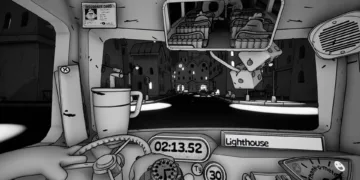


A bus ticket costs stamps, and stamps come from helping people. That small rule gives TOEM 2 its pace: arrive somewhere new, listen to a resident’s peculiar problem, and decide how much of the town to investigate before moving on. You need only enough stamps for the next ride. The remaining requests, wildlife photographs, and hidden outfits are there for anyone who wants to stay. Progress is clear, but curiosity determines how long a place holds you.
The camera makes that choice interesting. From the roaming view, a missing object can look inaccessible or disappear into the scenery; through the viewfinder, the world shifts to first person and offers another angle. Looking beneath a porch for something you could not readily spot while walking is a modest puzzle, yet it explains why photography works as an interaction rather than a collection of snapshots. A resident’s request changes what you pay attention to, and finding the answer changes your relationship with a space you thought you had already surveyed.
That loop carries the protagonist from their grandmother’s house toward the Whirlhill Festival, earning bus fare by doing good deeds along the way. TOEM 2 keeps the first game’s gentle structure, but its towns have room for stranger encounters and recurring friendships.
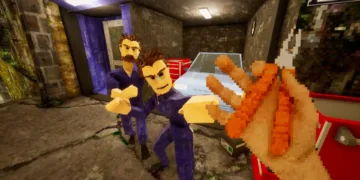
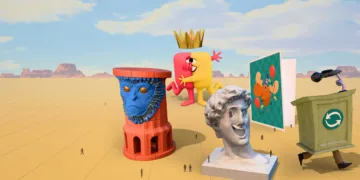
Cropton’s farmstead includes a scarecrow afraid of crows and a woman with a cloud for a head. Those details give the errands a local character. You are solving small problems for particular people, even when the solution amounts to finding the right subject for a photograph.
The sequel also asks the camera to do work beyond taking pictures. Companions in the main areas provide attachments for tasks such as cutting vines, hammering nails, or working with screws. A farmer’s trouble with allergy-inducing vines, for example, becomes something you address throughout the area instead of resolving in a single exchange. It gives a friendship a mechanical consequence and gives you a reason to reconsider parts of the environment as you explore.
These tools expose a limit in the interface, though. Aiming the camera lets you use an attachment, but you cannot move while it is raised. When buds sit at different angles around a plant, cutting them means aiming, lowering the camera, walking to another position, and aiming again.
Shifting position to find a good photograph makes sense; repeating those steps to operate scissors feels cumbersome. The distinction matters because the best camera puzzles reward a change in how you see, while this task mainly demands another round of input.
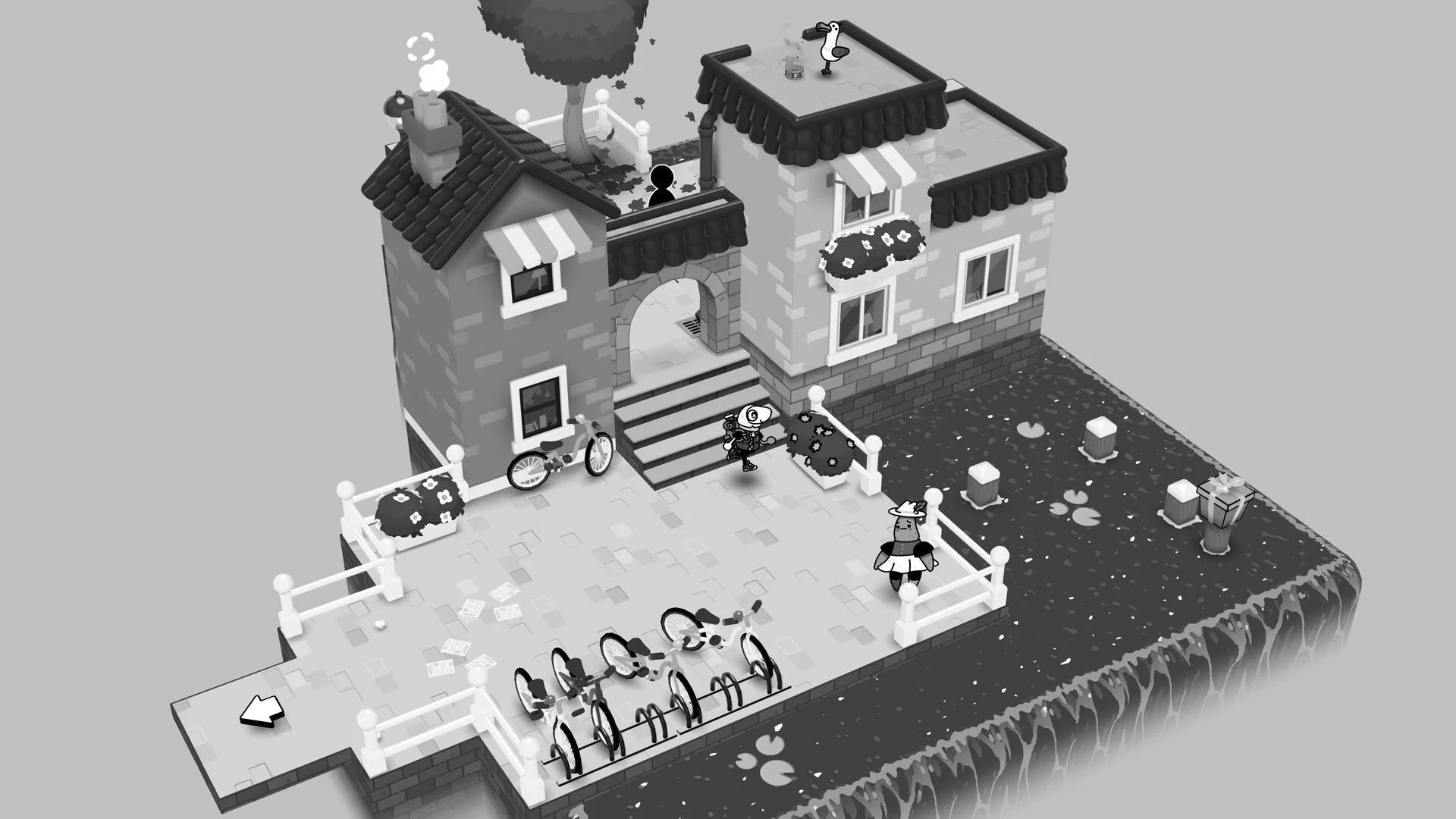
Jumping and light climbing fare better as additions. They make crossing the larger environments livelier without turning TOEM 2 into a demanding platformer, and the freedom to move pairs well with a world built to be inspected from different angles.
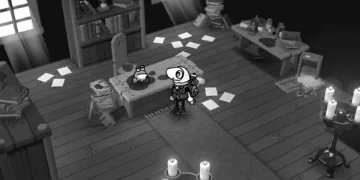
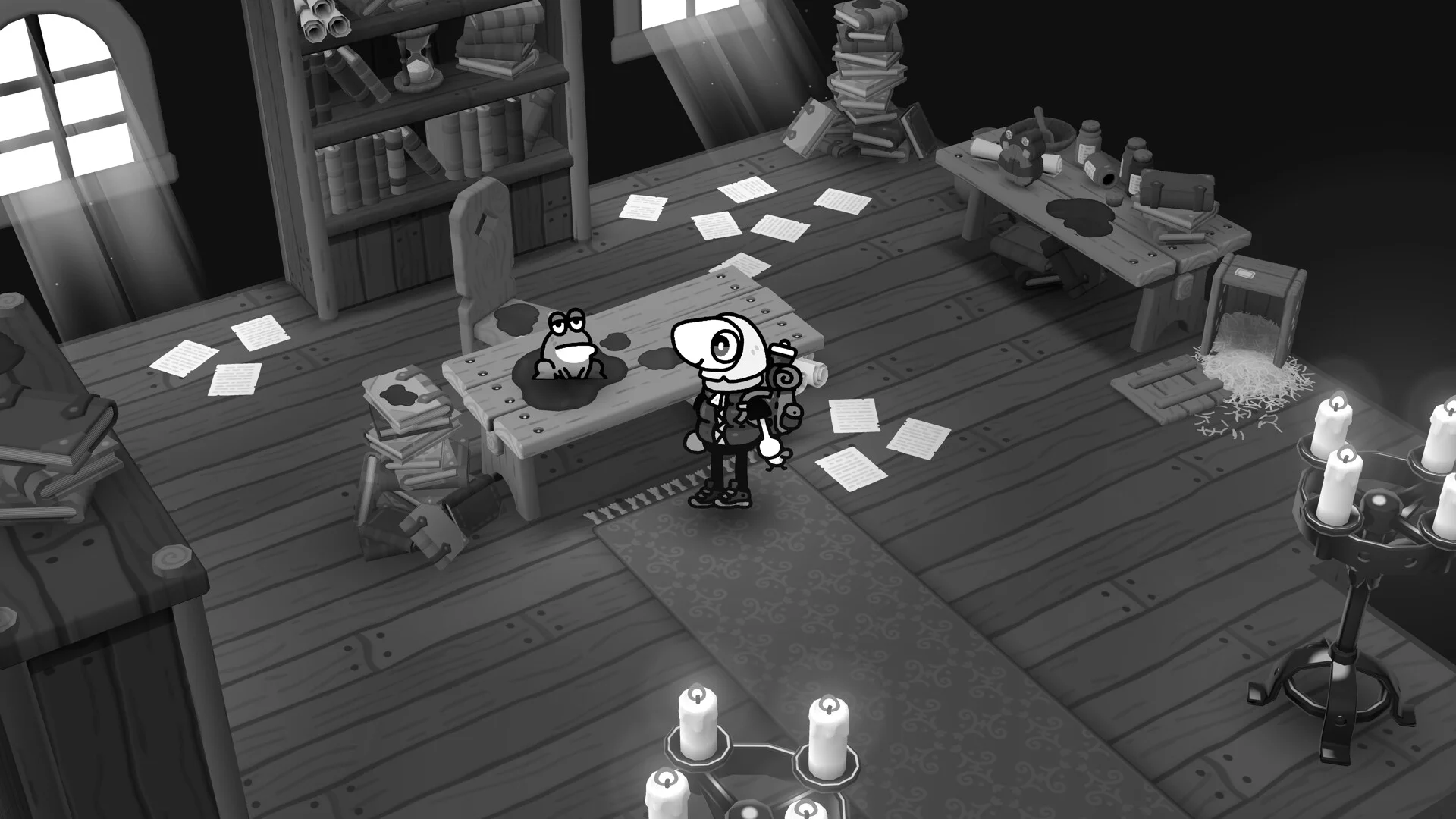
Its monochrome characters retain their flat, illustrated look against dimensional spaces. The contrast becomes especially useful when you raise the camera: a place that reads one way while wandering can reveal a hiding spot or a route when viewed directly. The relaxed music gives you time to notice those details without making every search feel urgent.
The optional activities understand that pleasure, too. Photographing unusual creatures for the compendium gives you a reason to look beyond the objects residents ask you to find. Outfits reward further searching, although neither pursuit changes the central loop as substantially as the perspective puzzles do.
Since the trip can be finished in roughly three to four hours, lingering over those discoveries feels less like clearing a backlog than extending a visit. It also means the new abilities have limited time to develop. Just as their possibilities become familiar, the journey is nearing its end.
The familiar shape of the journey leaves its final payoff less surprising than the first game’s. That leaves the small interactions to distinguish the sequel. Finding an object beneath a porch changes what you know about a space; cutting another bud around a plant only clears another target.
The Review
TOEM 2
TOEM 2 gives its familiar photography loop room to breathe through livelier movement, fuller towns, and puzzles that reward a closer look. The camera attachments are less graceful when simple tasks require repeated repositioning, and the brief journey ends before those additions can develop much further. Its most satisfying discoveries still come from finding an angle that changes what you know about a place.
PROS
- Perspective puzzles make photography rewarding
- Towns and residents invite exploration
- Jumping makes movement livelier
- Optional discoveries suit the unhurried pace
CONS
- Camera tools can be cumbersome
- New abilities have little time to develop
- Familiar final payoff lacks surprise